

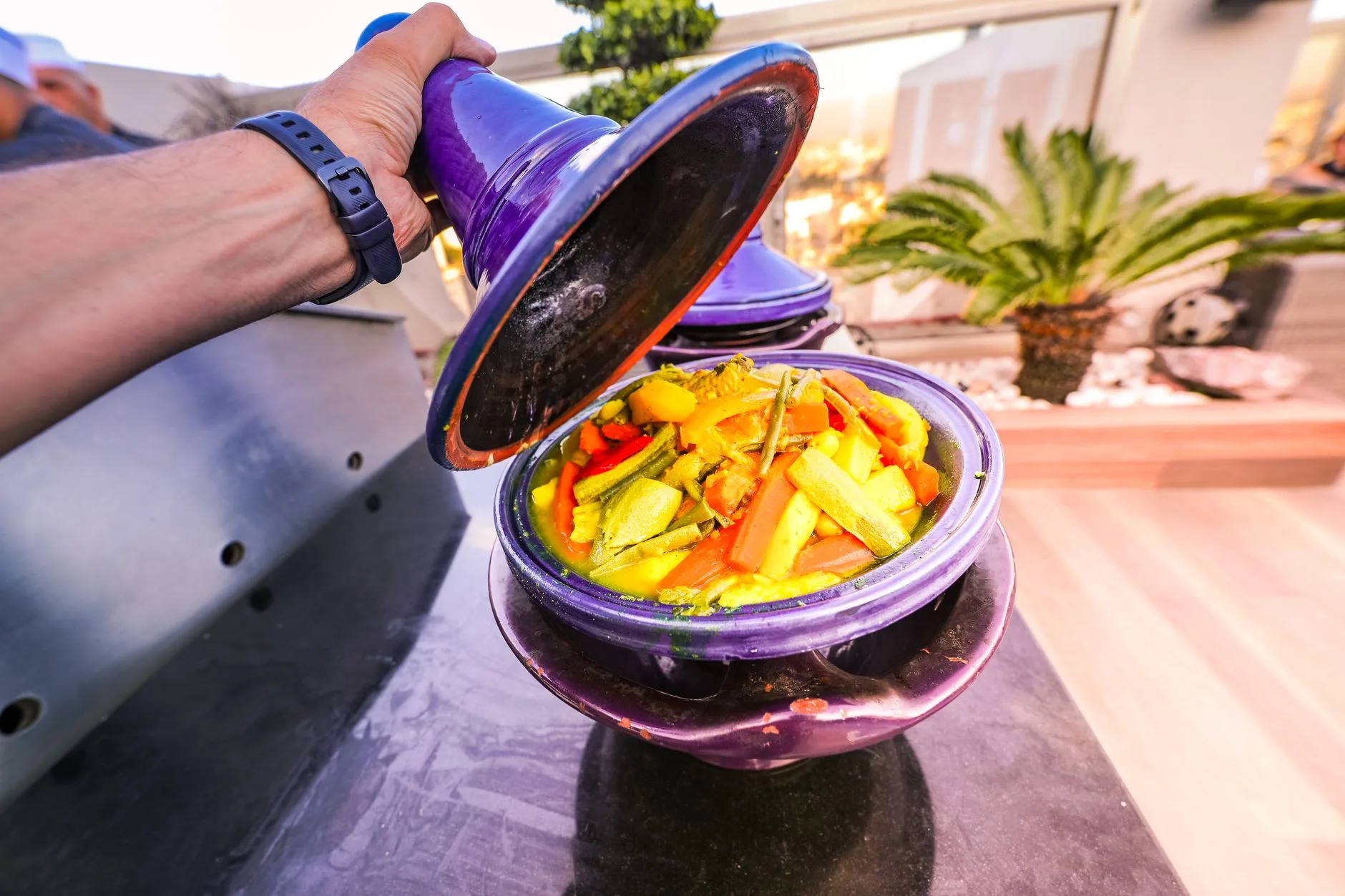
Moroccan food is built around shared meals, slow cooking, fragrant spices, fresh herbs, bread and tea. This practical guide explains what to try and how to order with confidence.
01. Tagine: Morocco's signature dish
Tagine describes both the conical cooking vessel and the slow-cooked dish prepared inside it. Common versions combine chicken, lamb or vegetables with preserved lemon, olives, prunes, almonds or seasonal ingredients.
Tagines are often served with bread rather than rice. The dish may arrive very hot, so let it cool slightly and share it at the table.
02. Couscous and shared meals
Couscous is closely associated with family meals and is traditionally served on Fridays, although restaurants may offer it on other days. It can be prepared with vegetables, chicken or lamb, and portions are generous.
Moroccan meals are often social. Try a selection of salads, vegetables and shared plates instead of ordering only one large main dish.
03. Mint tea, bread and Moroccan hospitality
Moroccan mint tea is both a drink and a gesture of welcome. It is usually prepared with green tea, fresh mint and sugar, though you can ask for less sweetness before it is poured.
Bread is central to many meals and can be used to share sauces and food. Eat slowly, accept hospitality graciously and ask before photographing cooks, vendors or diners.
04. Pastries, street food and regional flavours
Look for pastries made with almonds, honey, sesame, orange blossom water and flaky pastry. Marrakech is known for lively medina food, Fes for refined traditional cooking, and coastal towns for seafood.
Markets can be an excellent way to try local dishes. Choose busy stalls with visible cooking, clean surfaces and fast turnover, and ask the price before ordering when it is not displayed.
05. Vegetarian meals, Ramadan and food safety
Vegetarian meals are widely available, including vegetable tagine, couscous, salads, lentils and soups. Explain allergies clearly because stock, butter, bread and shared cooking surfaces can affect a dish.
During Ramadan, daytime restaurant schedules may change and the evening iftar meal becomes an important social moment. Respect people who are fasting and check local opening times.
Drink bottled or reliably filtered water if you are unsure about the local supply. Introduce unfamiliar foods gradually if you have a sensitive stomach.
Frequently Asked Questions
What is the most famous Moroccan dish?
Tagine and couscous are among the best-known Moroccan dishes. Mint tea, harira, pastilla, salads and pastries are also important parts of the food culture.
Is Moroccan food spicy?
Moroccan food is usually aromatic rather than extremely hot. Cumin, ginger, saffron, cinnamon and paprika add flavour, while chilli heat varies by dish.
Can vegetarians eat in Morocco?
Yes. Vegetable tagine, couscous, salads, lentils and soups are widely available, but explain dietary needs clearly and check stocks and cooking methods.
Is street food safe in Morocco?
It can be when you choose busy stalls with visible cooking, good turnover and clean handling. Avoid food that has been exposed or sitting for a long time.
Related Guides
Private Driver vs Rental Car in Morocco: Which Is Better for Your Trip?
Compare hiring a private driver with renting a car in Morocco, including cost, flexibility, mountain roads, cities, desert routes, comfort and safety.
Morocco Honeymoon Guide: Romantic Riads, Desert Camps and Coastal Escapes
Plan a romantic Morocco honeymoon with ideas for Marrakech, the Atlas Mountains, the Sahara, Essaouira, riads, desert camps and private travel.
Agafay Desert vs Sahara: Which Should You Choose?
Compare Agafay and the Sahara by distance, scenery, activities, overnight stays and atmosphere to choose the right Morocco desert experience.
Plan a flavour-filled Morocco journey
Our Marrakech-based team of local experts designs tailor-made Morocco trips around your dates, budget and travel style.
Request a Quote