

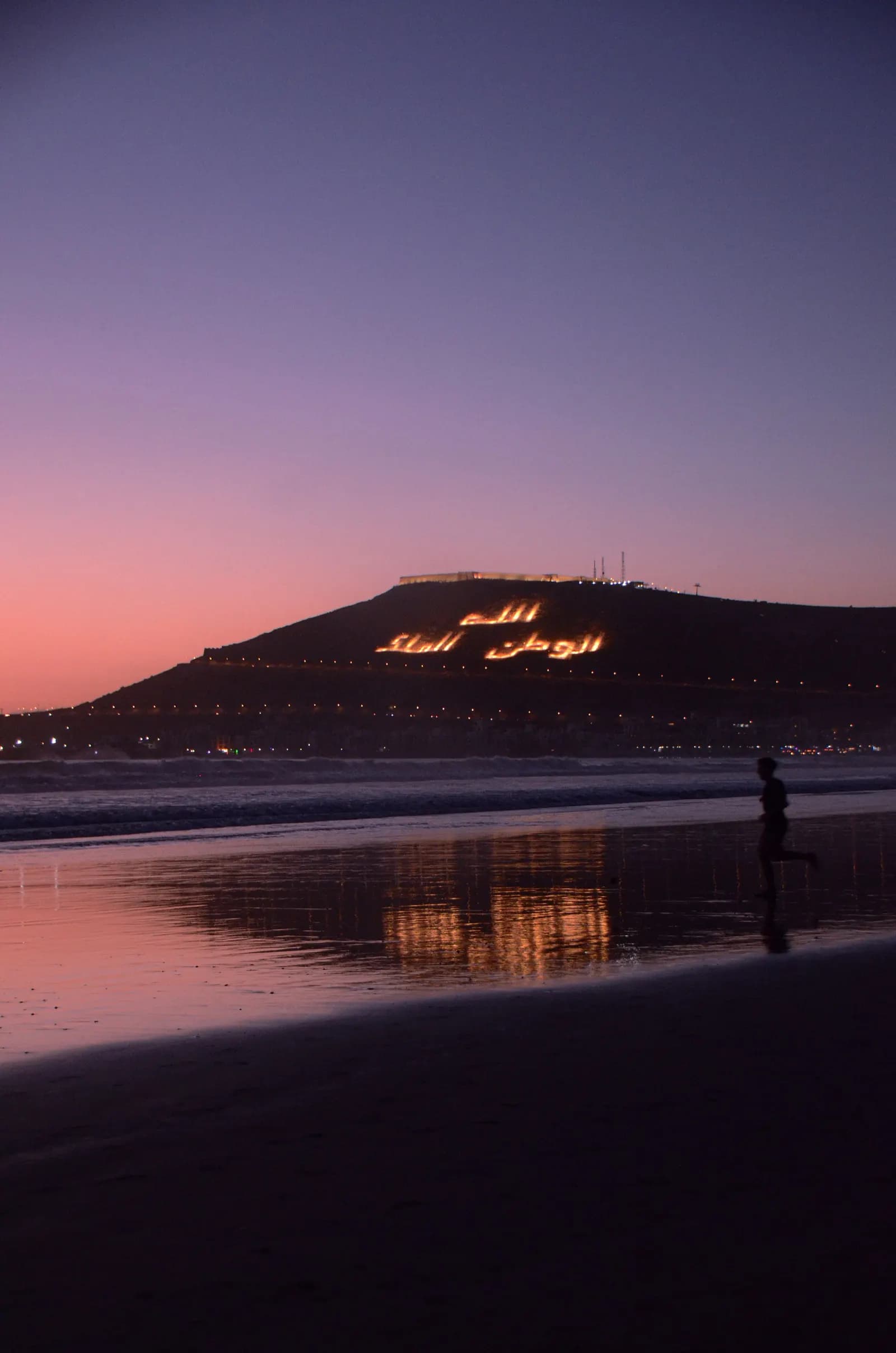
No medina, no thousand-year history — Agadir was rebuilt after the 1960 earthquake as a modern beach city. What it offers instead: the best sand on the Moroccan Atlantic, and day trips worth the trip alone.
01. What Agadir is, honestly
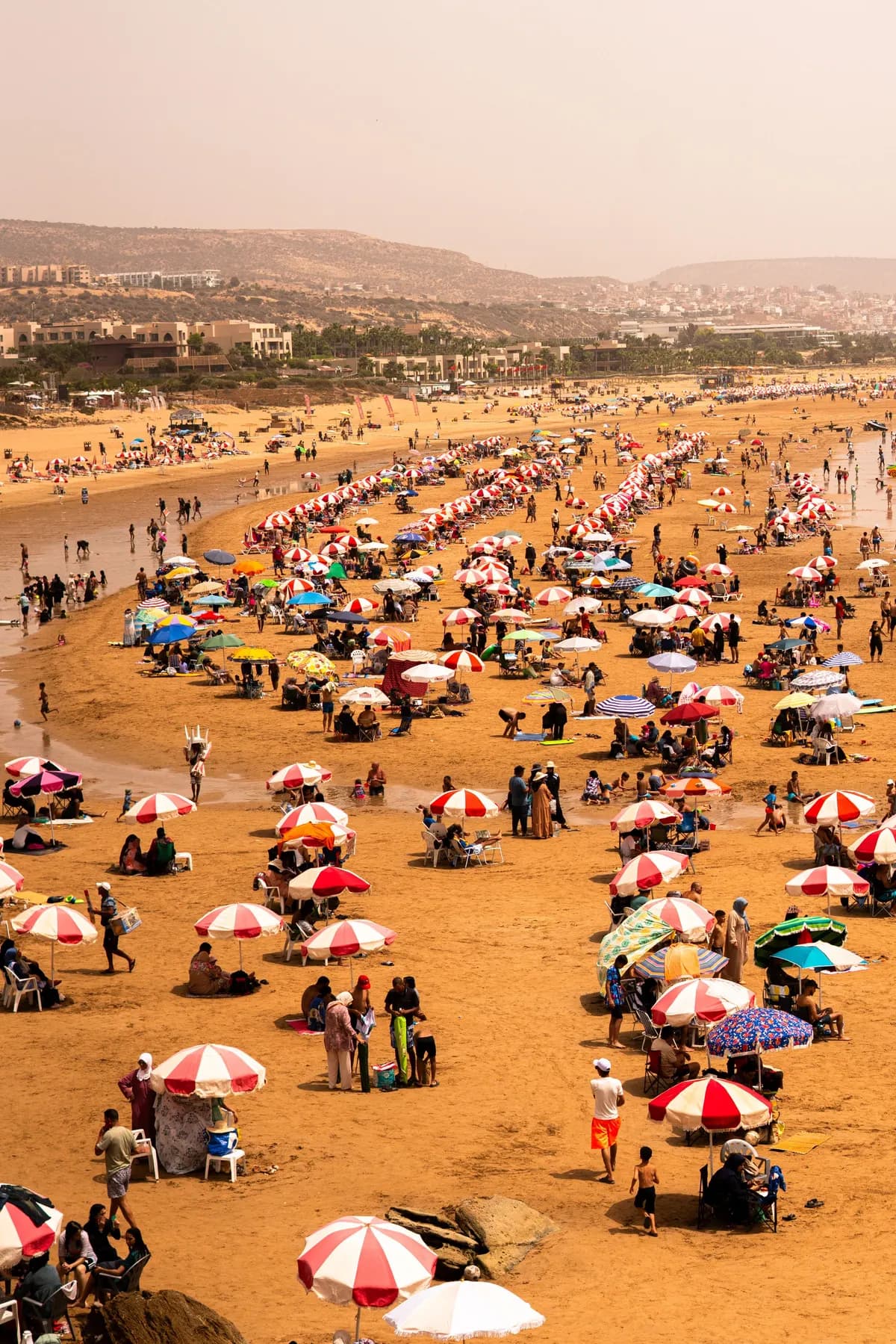
Agadir is the least expected recommendation in a Morocco guide, and it deserves an honest framing: there is no medina, no souk maze, no thousand-year history to walk through. The city was almost entirely destroyed by the 1960 earthquake and rebuilt as a modern grid of wide boulevards and beachfront blocks. Travelers arriving expecting a smaller Marrakech are disappointed within an hour.
What Agadir actually is: the country's best beach city, a long crescent of Atlantic sand, mild weather nearly year-round, and a base that quietly unlocks some of Morocco's strongest coastal and valley day trips. If you want sun, water and recovery time after the medinas, Agadir delivers exactly that. If you want atmosphere, read the Tangier or Essaouira guides instead.
02. The beach: the reason people stay
Agadir's beach runs roughly six kilometres along the bay — one of the longest urban beaches in Africa — with a promenade, the Corniche, of restaurants, cafés and hotels behind it. The water is clean, patrolled in the main swimming zones, and the sand is wide enough that it never feels crushed even in high season. Surf schools line the northern end; the southern end drifts quieter.
The climate is the quieter selling point. Agadir rarely sees the inland extremes — winter days hover around 18 to 20°C, summer peaks around 28°C tempered by the Atlantic breeze, and rain is scarce most of the year. For a European winter escape, it is genuinely one of the most reliable options on the continent's southern edge.
03. The Oufella kasbah
Above the bay, the hilltop Kasbah du Oufella holds the earthquake's most visible scar: a ruined guardtower and the remains of the old fortress, with reconstructed walls and an inscription in Arabic recording the disaster.
The viewpoint over the modern city and the bay is the closest Agadir gets to a monument, and sunset up there is worth the short taxi climb or walk. It is a fifteen-minute visit, not an afternoon — but it anchors the city's history better than any plaque.
04. The weekly souk and the market question
Agadir's Souk El Had, the Sunday market out toward Inezgane, is one of the largest in the south — a working market where locals shop for everything from spices to livestock, with a tourist-fringe section selling argan oil, leather and crafts at softer haggling pressure than the Marrakech souks.
Nearby Inezgane holds its own big market days midweek — Wednesday and Thursday are the traditional days, though you should confirm locally — and those are local rather than visitor-oriented. This is the closest thing to souk life in the city. If the market is the core of your Morocco trip, Agadir is the wrong base; if you want one good market morning plus beach days, it fits.
05. What is actually within a day trip
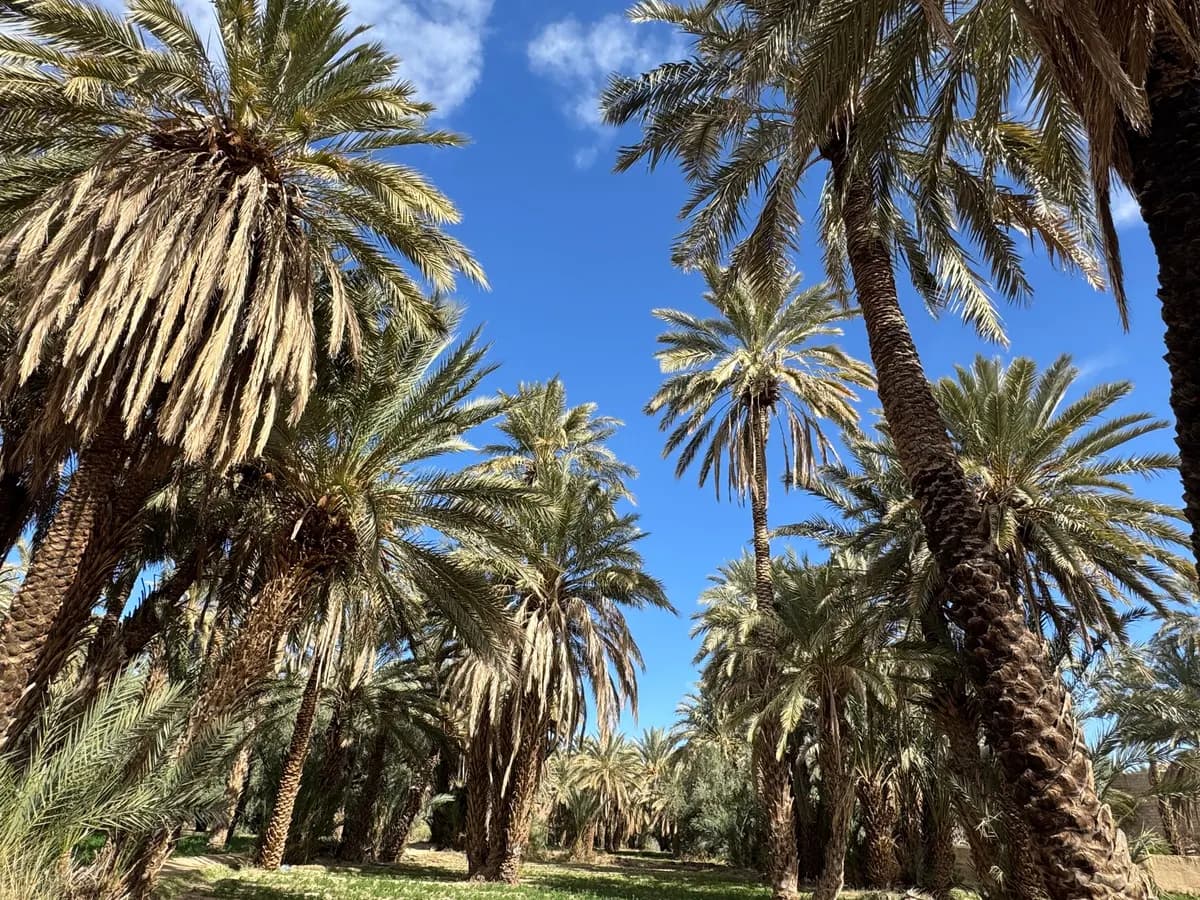
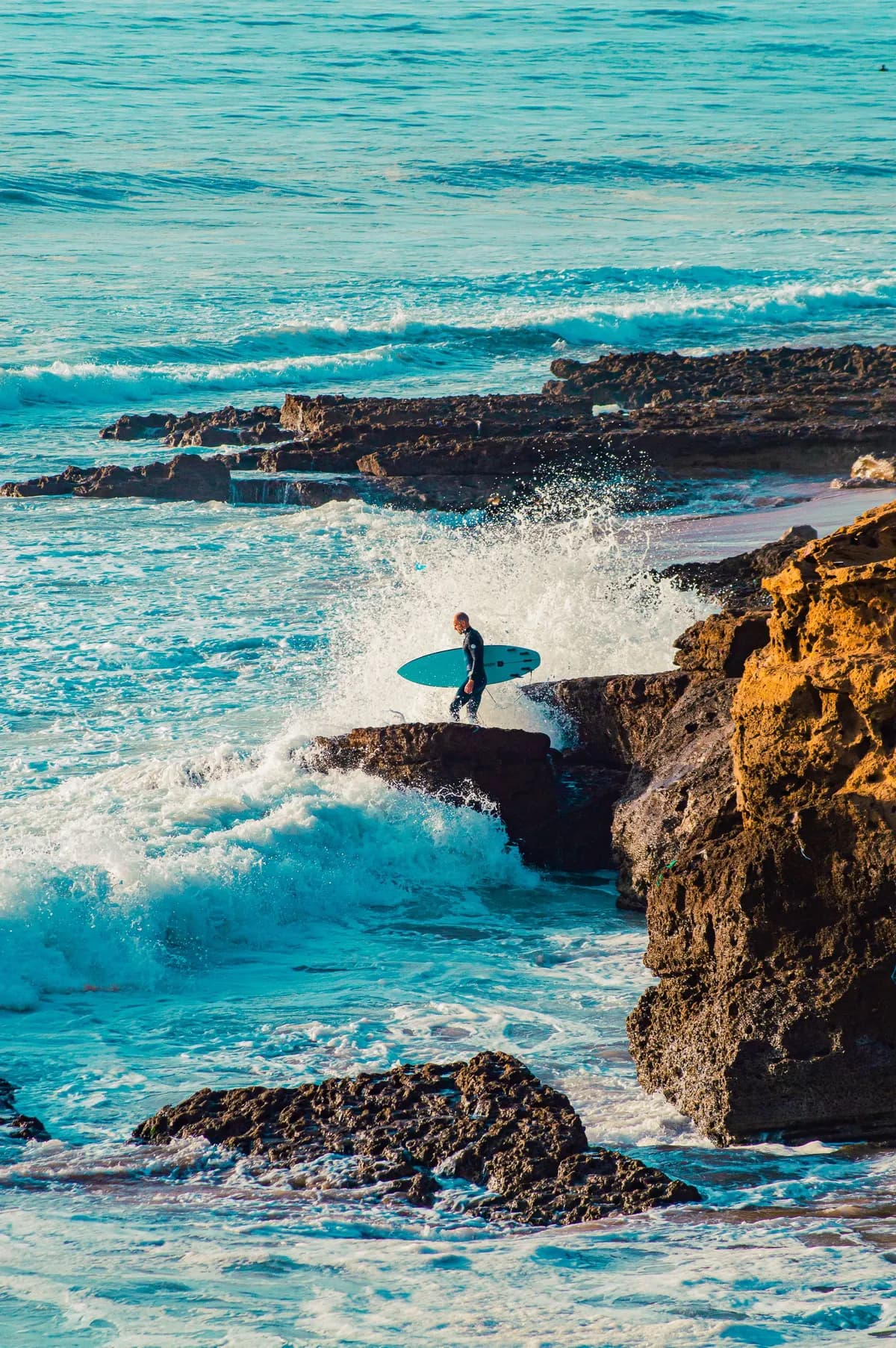
This is where Agadir stops being a plain beach resort. Taghazout and the surf coast lie 20 minutes north: the fishing village turned surf capital, with Anchor Point and the string of breaks that draw surfers worldwide, while Paradise Beach and the cafés make a good non-surfing day too. The drive up the coast road, with the Atlantic on one side and argan trees on the other, is pleasant in itself.
Paradise Valley is roughly an hour inland, about 35 to 58 km depending on the route — a palm-filled gorge with natural rock pools in the river. Water levels are seasonal, best after winter rains and low in dry summers, and the walk down to the pools is moderate. Weekends fill with local families, so a weekday visit is a different experience.
Souss-Massa National Park, south of the city, is the estuary and dune habitat where the critically endangered northern bald ibis has been reintroduced — one of the rarest birds on earth, and a genuine birdwatching draw. Flamingos and other waterbirds are common in the wetter months.
Crocoparc, on the city's southern edge, is an unusual garden-park of Nile crocodiles in a botanical setting; better than it sounds, and a solid family option. And Taroudant, about an hour east, is the ochre-walled little Marrakech with intact ramparts, a good weekly souk and far fewer visitors; the argan cooperative stops on the road there pass the famous goats in the argan trees, which is exactly the cliché it sounds like and still worth one photograph.
Legzira Beach, further south toward Sidi Ifni, has a great red-rock arch on the Atlantic — its more famous twin collapsed in September 2016, and what remains is still one of the coast's most dramatic scenes. It is a long day trip or an overnight.
06. Day trips vs staying: the honest math
Most visitors meet Agadir as a beach extension — three or four nights after a medina-heavy north, or as a winter escape flown into directly, because Al Massira airport has heavy European charter traffic in season.
As a touring base it is weaker than Marrakech: the good day trips are 30 to 90 minutes out each way, and the northern imperial cities are a full day's drive. Use it for what it is — rest, surf, valley days — not as a hub for the classics.
07. Where the city eats
Seafood is the point. The Corniche restaurants plate the day's catch with a view; the fish market area lets you pick and have it cooked; local dishes lean toward grilled sardines, ray fish and chermoula-prepared plates rather than the tagine repertoire of the interior.
Breakfast and sunset cafés on the promenade carry the rest of the day. This is casual, seaside eating — not the food-culture destination Fes is, but excellent in its own register.
08. Getting there and away
By air, Al Massira Airport lies about 25 minutes from the centre, with year-round European services and domestic links; it is the easiest arrival in southern Morocco for sun-seekers.
By road, the modern motorway links Agadir north to Essaouira and Marrakech — roughly two and a half to three hours to Marrakech — and east to Taroudant, while the coastal N1 continues south to Sidi Ifni and Tiznit.
By bus, CTM and other national operators run comfortable services to Marrakech, Essaouira, Taroudant and Casablanca — the practical budget option.
09. When to go
Year-round works, which is unusual for Morocco. Spring and autumn balance beach and inland day-trip weather. Winter is the quiet draw — warm days, cheap accommodation, and the green season for Paradise Valley after the rains.
Summer is beach weather but breezy-cool some mornings, and August fills with domestic holidaymakers; the coast road to Taghazout gets busy on weekends. For surf, the big swells land autumn through winter.
10. Agadir vs Essaouira vs Taghazout
Travelers comparing the three coast options usually want this split: Agadir for a proper beach holiday with hotel infrastructure and family facilities; Essaouira for medina atmosphere and windy seafood evenings; Taghazout for surf-camp culture and village scale.
They are close enough to combine — an Essaouira-to-Agadir coast run, or Taghazout surf days before an Agadir hotel wind-down, covers all three characters in a week.
Frequently Asked Questions
Is Agadir worth visiting in Morocco?
Worth it if you want beach time, mild winter weather and coastal day trips — surf at Taghazout, Paradise Valley's pools, Souss-Massa's wildlife. Skip it if you came for medinas, souks and imperial-city history; the 1960 earthquake left Agadir modern and low on old-city atmosphere. Many travelers pair it with Essaouira or Marrakech instead of substituting it for them.
How far is Agadir from Marrakech?
About two and a half to three hours by road via the modern motorway, less by direct bus or transfer; there is no train link. Most road trips combine the two with a stop in Essaouira or at the Tizi n'Tichka approach, and some itineraries use Agadir as the coastal end of a Marrakech loop.
What is there to do in Agadir besides the beach?
Day trips carry the variety: Taghazout's surf coast 20 minutes north, Paradise Valley's palm and rock pools about 45 minutes inland, Souss-Massa National Park's birdlife and the crocodile park on the city's edge, plus Taroudant's ochre-walled old town and the weekly Souk El Had market. The hilltop Oufella kasbah viewpoint is the city's own short excursion.
Is the water warm enough to swim in Agadir?
The Atlantic here is cool — swimmable most of the year for most people, warmer in autumn and early winter after the summer warms it, coolest in spring. It is not Red Sea or Mediterranean warmth; beachgoers who mind cool water should weigh that against the reliable sunshine. Wetsuits are standard for surfing, not swimming.
How does Agadir compare with Essaouira?
Essaouira has the medina, the history and the windy seafood-evening atmosphere; Agadir has the bigger, calmer beach, more hotel infrastructure and easier family logistics. Essaouira suits culture-first travelers; Agadir suits a proper beach holiday. They are about two hours apart by road and pair well in one trip.
More Morocco tours
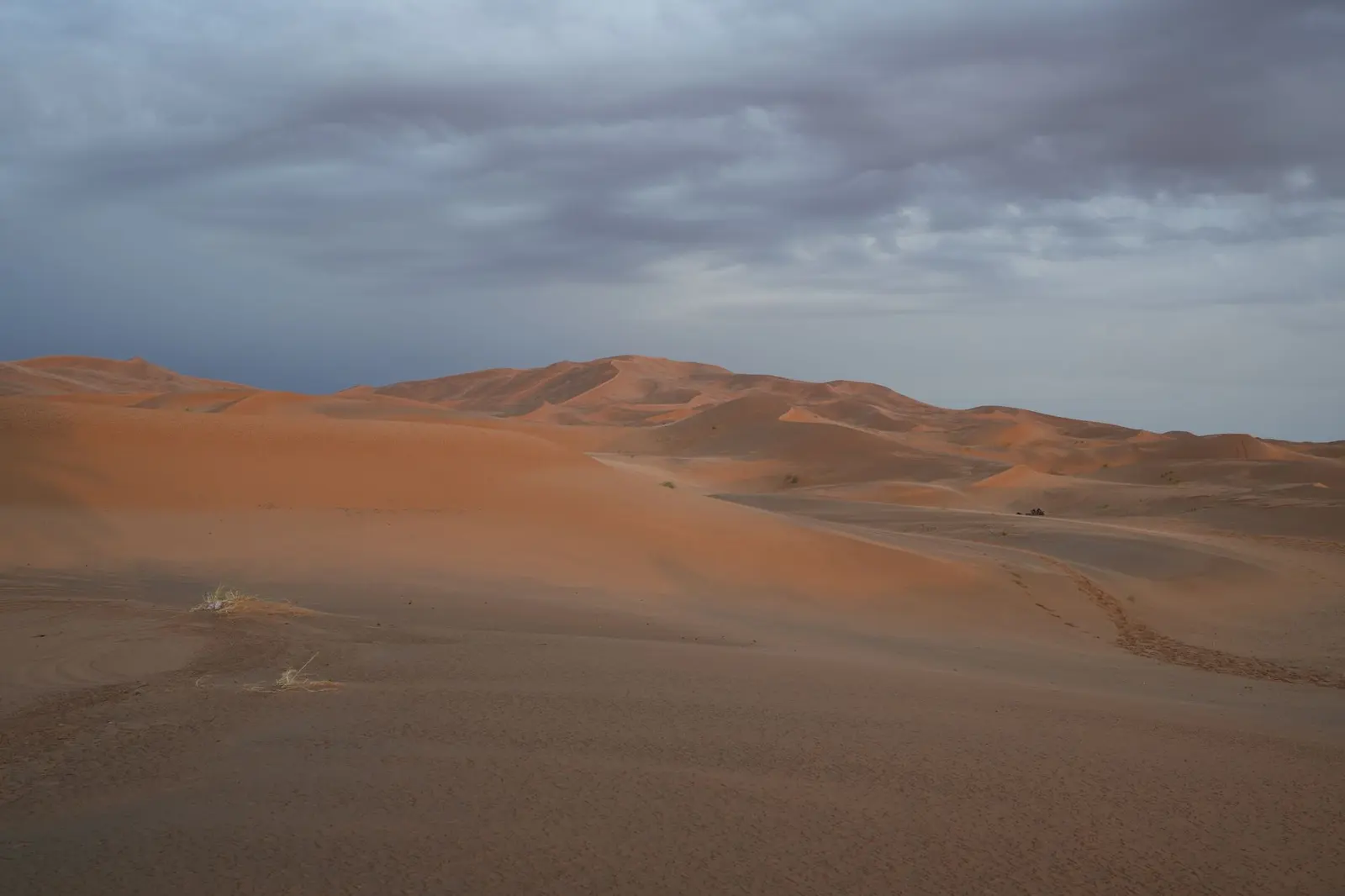
3 Days
3-Day Luxury Marrakech to Fes Desert Tour via Merzouga
Three private days from Marrakech over the High Atlas to Aït Ben Haddou, then east through Skoura, the Valley of Roses and Todra Gorges to a luxury camp on the Erg Chebbi dunes — finishing north through the Ziz Valley and the Middle Atlas at your accommodation in Fes.
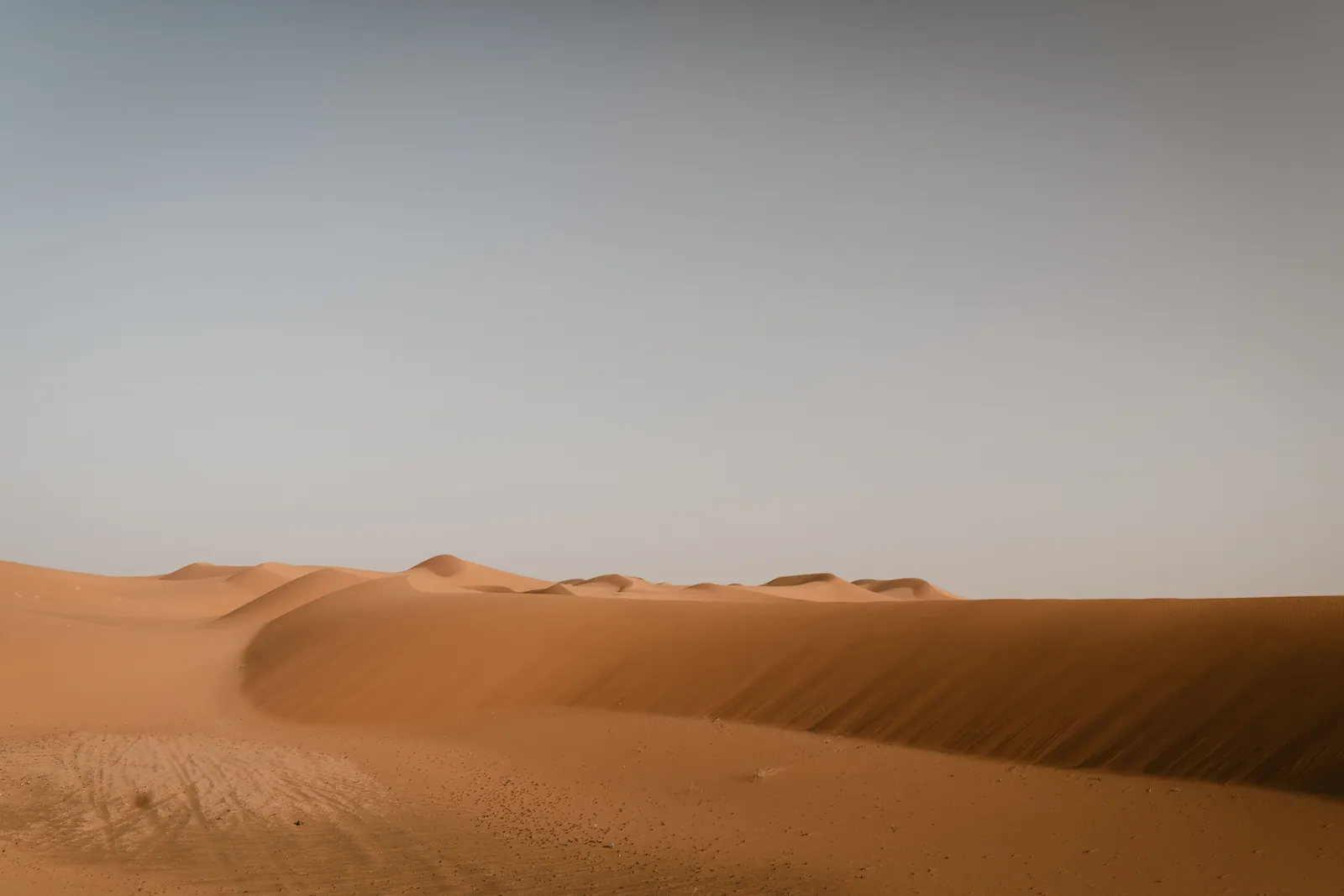
Classic Sahara
Merzouga
The road south ends at Erg Chebbi, the tall dunes people picture when they picture the Sahara. You take a 4x4 for the last stretch to camp and get the hour before sunrise while the sand is still cold.
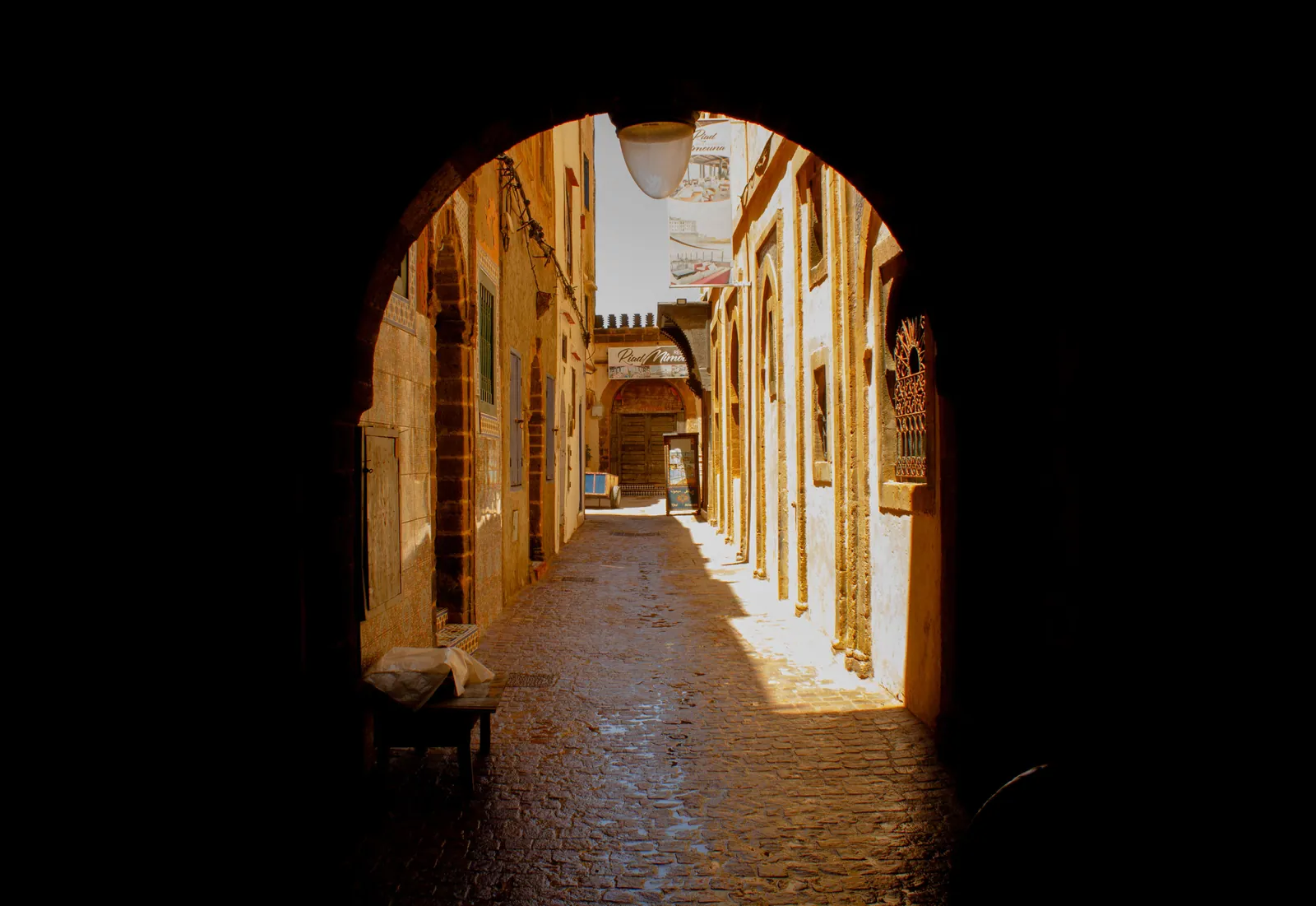
1 Day
Essaouira Day Trip from Marrakech
A day on the Atlantic: the blue and white medina, the ramparts above the harbour, the workshops behind them. The drive is flat and the town is walkable, so it works as a coast day from Marrakech.
Related Guides
Taghazout Travel Guide: Surf, Beaches and Morocco's Atlantic Coast
Plan a Taghazout trip with practical advice on beaches, surf lessons, village life, cafés, transport, seasons, families and nearby coastal excursions.
Ferry From Spain to Morocco: Algeciras, Tarifa and Tangier Med Explained
A practical guide to the Spain–Morocco ferries — Tarifa vs Algeciras, Tangier Med vs the city port, vehicle rules, passport control, booking advice and how the crossing fits a Morocco road trip.
Tangier Travel Guide: The Kasbah, the Strait and Morocco's Most European City
How to visit Tangier — the kasbah and medina walk, Cap Spartel, the Caves of Hercules, Café Hafa, the Al Boraq train, ferries from Spain and how to fit Tangier into a Morocco itinerary.
Liked this guide?
Give it a like on Instagram and tag us from your Moroccan adventure.
Tell us your dates — we will tell you whether Agadir earns a slot on your route
Our Marrakech-based team of local experts designs tailor-made Morocco trips around your dates, budget and travel style.
Request a Quote