It is called the oldest university in the world, it has taught continuously for more than a thousand years, and its gates are closed to non-Muslim visitors. Both halves of that are worth understanding before you go.
01. What it is
Al-Qarawiyyin began in 859 as a mosque, founded by Fatima al-Fihri, a woman from a family of Tunisian origin settled in Fes. Students gathered around it, and over the following centuries the mosque became an institution of learning: theology, law, astronomy, medicine and mathematics, taught in a courtyard next to the prayer hall.
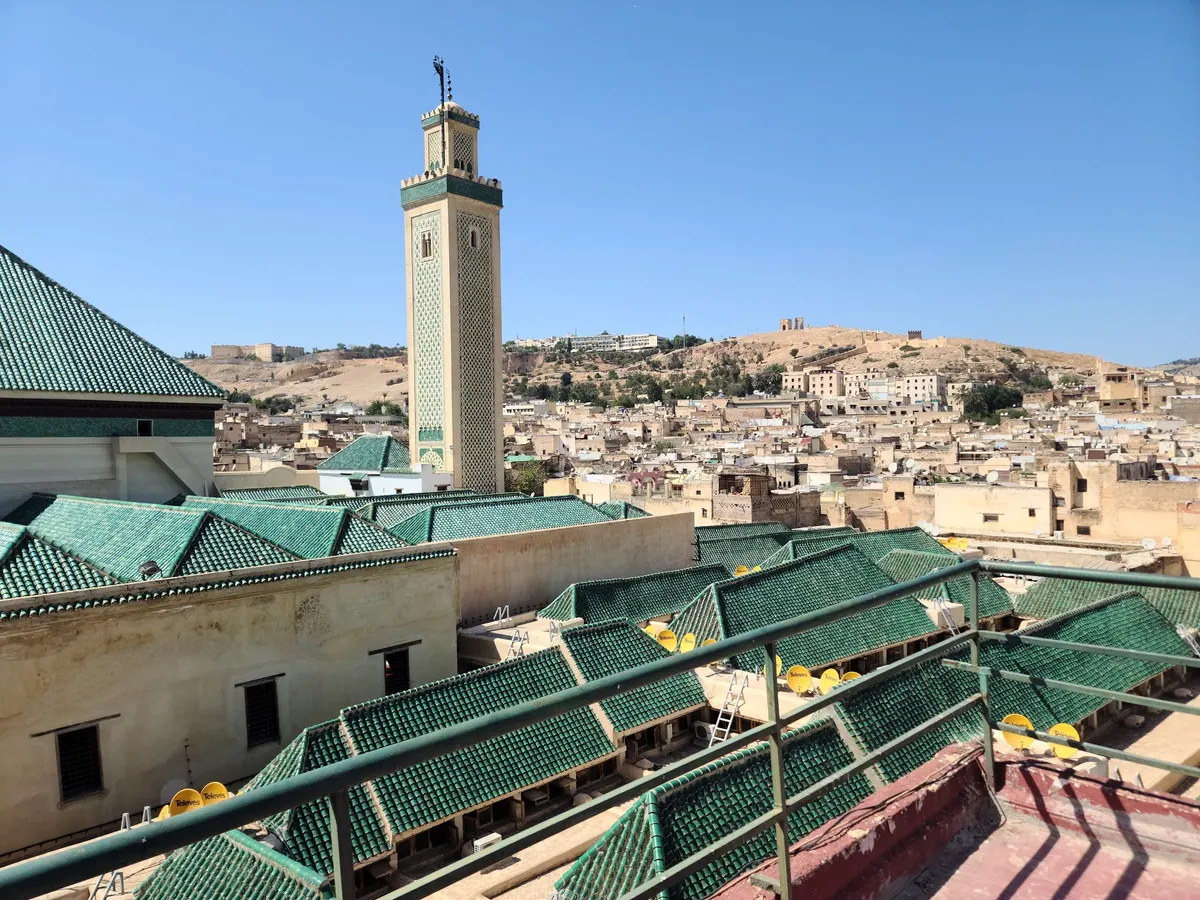
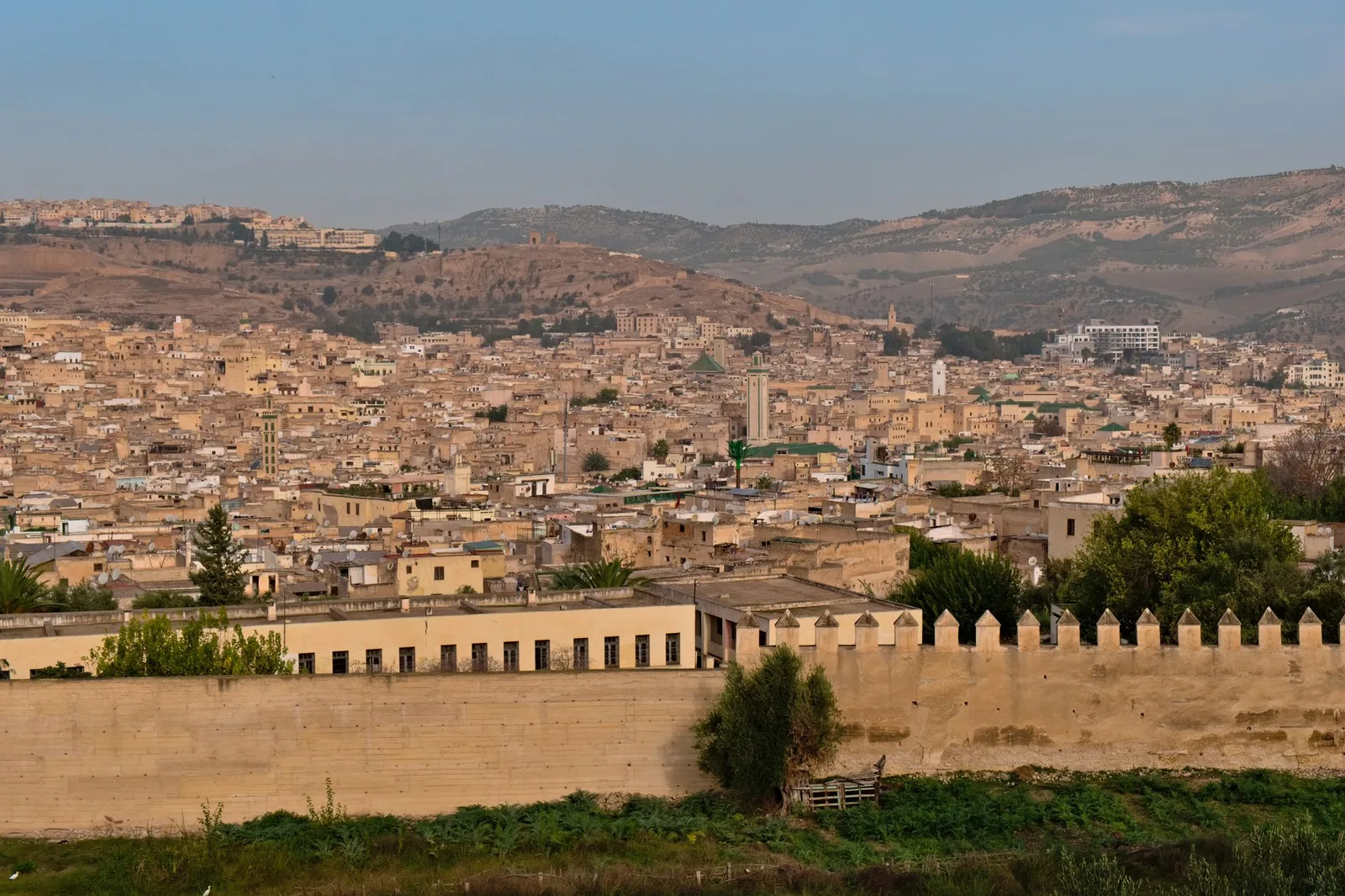
The complex sits in the middle of the Fes el-Bali medina, around the square that bears its name, and its green-tiled roofs and square minaret are the largest single structure in the old city. Everything in the medina routes around it.
02. The oldest university claim
Al-Qarawiyyin holds the Guinness record as the oldest continuously operating educational institution in the world. The claim is not that it was the first place anywhere that taught advanced subjects — that argument also runs to Bologna and to older centers in the Islamic world — but that it never closed: the teaching has run in the same institution, on the same site, since the ninth century.
The point is not the label. It is that a university education in Europe's medieval sense was being organized here while the European university system was still forming, and that the person who founded it was a woman in a period when that was unremarkable in Fes and almost nowhere else.
03. Can you enter?
No. The mosque is an active place of worship, and like almost every working mosque in Morocco it is closed to non-Muslim visitors. There is no ticket, no tour and no arrangement that changes this; the courtyard, the library and the prayer hall are for worshippers and students.
The correct experience from outside is a respectful one: walk the square, see the gates, listen to the prayer carrying over the medina's rooftops. The building does not need you inside it to make sense.
04. The library
The Qarawiyyin library was restored in a major project completed in 2016, and it holds manuscripts including a copy of the Qur'an from the ninth century written on camel skin, attributed to Fes's own calligrapher. The restoration returned the library to working order after decades of decline.
Access for ordinary visitors has been limited and irregular since the restoration — it is not a standard walk-in museum. If seeing it matters to you, ask locally about the current arrangements before building your day around it.
05. What you can actually see
The main gates, the green-tiled roofs and the minaret from the surrounding streets and squares; the courtyard glimpsed through the Bab el-Gueissa gate from a respectful distance; and the rooftops of the medina's terraces and cafés that look down on the complex.
Immediately next door and by the same architect's age is the Andalusian Mosque, built around 860 for the same community from al-Andalus. It shares the walls and the story, and from the street level the two read as one long frontage of green tile and carved plaster.
06. How to visit respectfully
Prayer times quiet the whole quarter; during the calls, step out of doorways and off the thresholds rather than stopping in them. Photography from the street is normal and accepted, but lenses pointed at people praying inside courtyards are not.
The streets around the square are narrow and working — delivery carts, residents, students. Keep to a walking line rather than stopping in the middle, and treat the gates as doors to someone's workplace, because they are.
07. What to pair it with
The Bou Inania Madrasa, five minutes north, is the building most visitors confuse with al-Qarawiyyin — and unlike the mosque it is open and ticketed, with: carved cedar, zellij and stucco from the fourteenth century. Doing both in one walk shows the two faces of learning in old Fes.
The Chouara tannery and the Souk el-Attarine spice market are in the same quarter, so the natural route is: Bou Inania, the Qarawiyyin square and gates, the souk lanes down to Chouara. Allow half a day at an unhurried pace.
08. Common mistakes
The first is turning up expecting to tour the interior. That information is widely available but arrives late for many visitors; check before you walk across the medina.
The second is treating the square as a photo stop and leaving in four minutes. The minaret from the square, the call to prayer overhead and the library story are the visit — spend the time, then continue north to Bou Inania rather than backtracking through the souks.
Frequently Asked Questions
Can non-Muslims enter the al-Qarawiyyin mosque?
No — like nearly all working mosques in Morocco it is closed to non-Muslims. The exterior, gates and rooftops around it are the visit.
Is it really the oldest university in the world?
It holds the Guinness record as the oldest continuously operating educational institution, teaching on the same site since 859. Older teaching centers existed; none has run continuously as long.
Can you visit the library?
The library was restored and reopened in 2016 and holds ninth-century manuscripts, but visitor access has been limited and irregular. Ask locally about current arrangements.
Where are the best views of it?
From Place Qaraawiyin and the surrounding streets, and from the medina's rooftop cafés and terraces that look over the green-tiled roofs and minaret.
What should I visit nearby?
The Bou Inania Madrasa, five minutes north — open, ticketed and one of the finest carved interiors in Fes — plus the Chouara tannery and Souk el-Attarine in the same quarter.
More Morocco tours
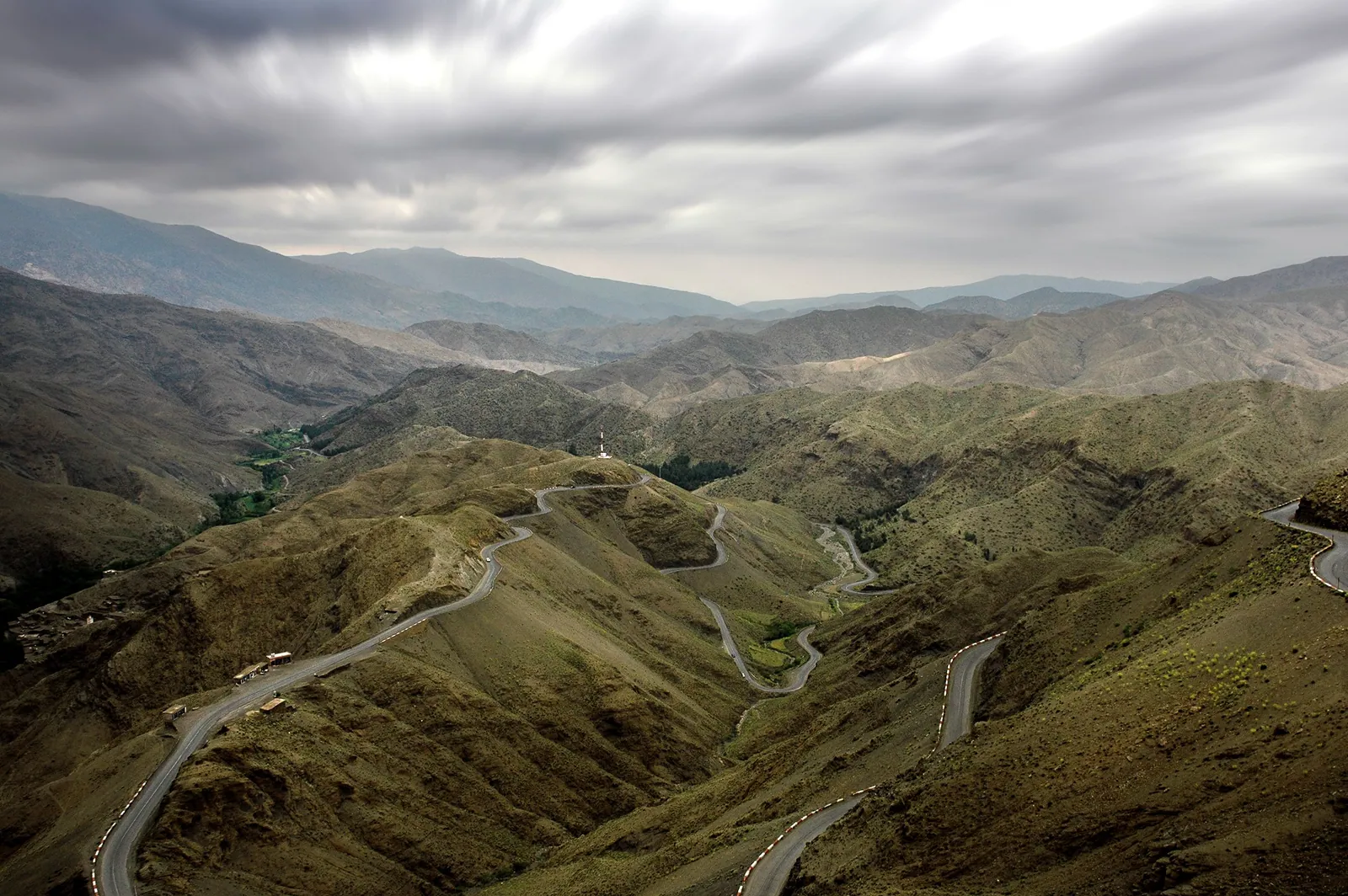
7 Days
7-Day Morocco Tour: Casablanca to Marrakech
A week from Casablanca to Marrakech through royal cities, mountain passes, ksar country and the Sahara. The most driving of the seven-day options — and on this one the drive is half the point.
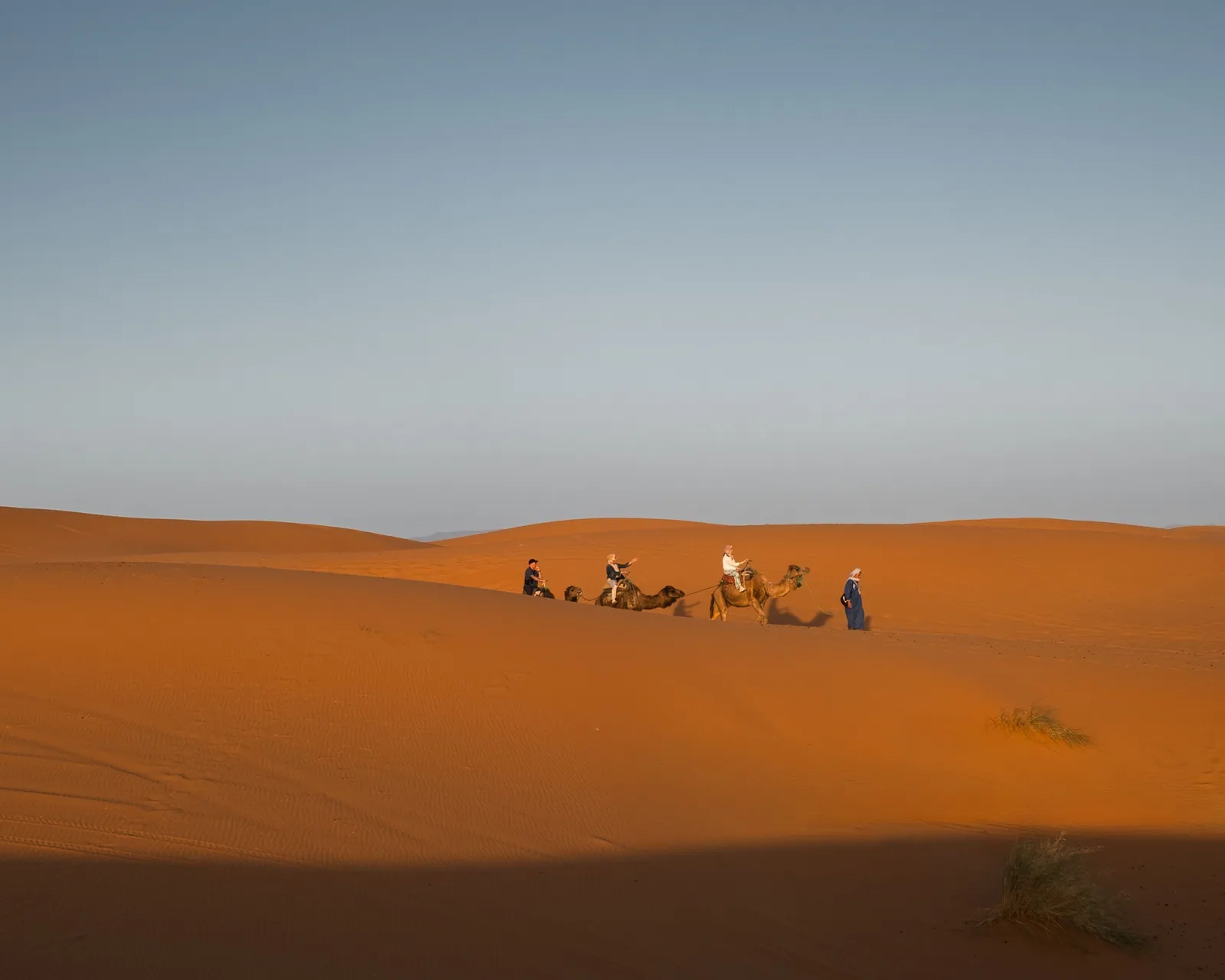
14 Days
14-Day Morocco Itinerary for First-Time Visitors
Two weeks for a first visit: imperial cities, mountains and sand, with enough days between them that nothing is hurried. Fourteen is the length at which Morocco stops feeling like a tour and starts feeling like a trip.
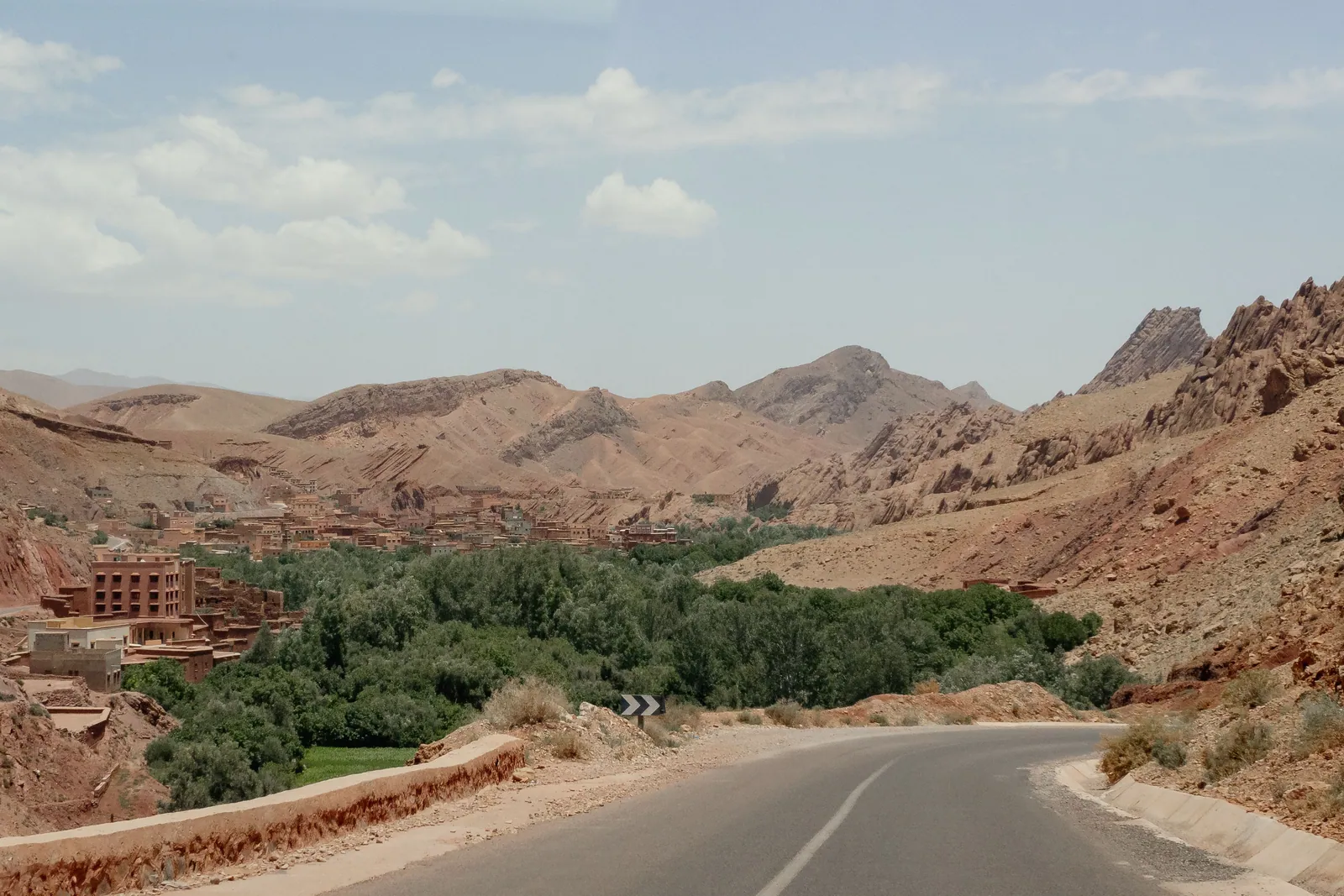
12 Days
12-Day Cultural Tour of Morocco
Twelve days from the Sahara to the Atlantic and up into the Rif — the widest spread on this list. Take it if this is your only trip: you see it once, not half of it twice.
Related Guides
Hassan II Mosque: Visiting Casablanca's Atlantic Mosque
How to visit the Hassan II Mosque in Casablanca — the only mosque in Morocco open to non-Muslim visitors: official ticket prices, guided tour times, what you see inside and how the visit fits a day in Casablanca.
Chouara Tannery, Fes: How to Visit Without Getting Pulled In
Chouara is the largest of the three tanneries still working inside the walls of the Fes medina, and the most photographed sight in the city. It is free to visit, has no entrance and no official hours — here is how the terraces work, when the light is best, and how to see it without being hustled.
Koutoubia Mosque: Marrakech's Minaret and How to See It Properly
The Koutoubia Mosque is Marrakech's defining landmark — a 12th-century Almohad minaret that inspired the Giralda in Seville and the Hassan Tower in Rabat. What you can visit, where the best views are, and the honest answer on going inside.
Liked this guide?
Give it a like on Instagram and tag us from your Moroccan adventure.
Ask us how al-Qarawiyyin fits into your Fes medina walk
Our Marrakech-based team of local experts designs tailor-made Morocco trips around your dates, budget and travel style.
Request a Quote