

Every rooftop in central Marrakech eventually points at the same tower. The Koutoubia has been the city's compass for eight centuries, and it is still the first thing locals use to give directions.
01. What the building is
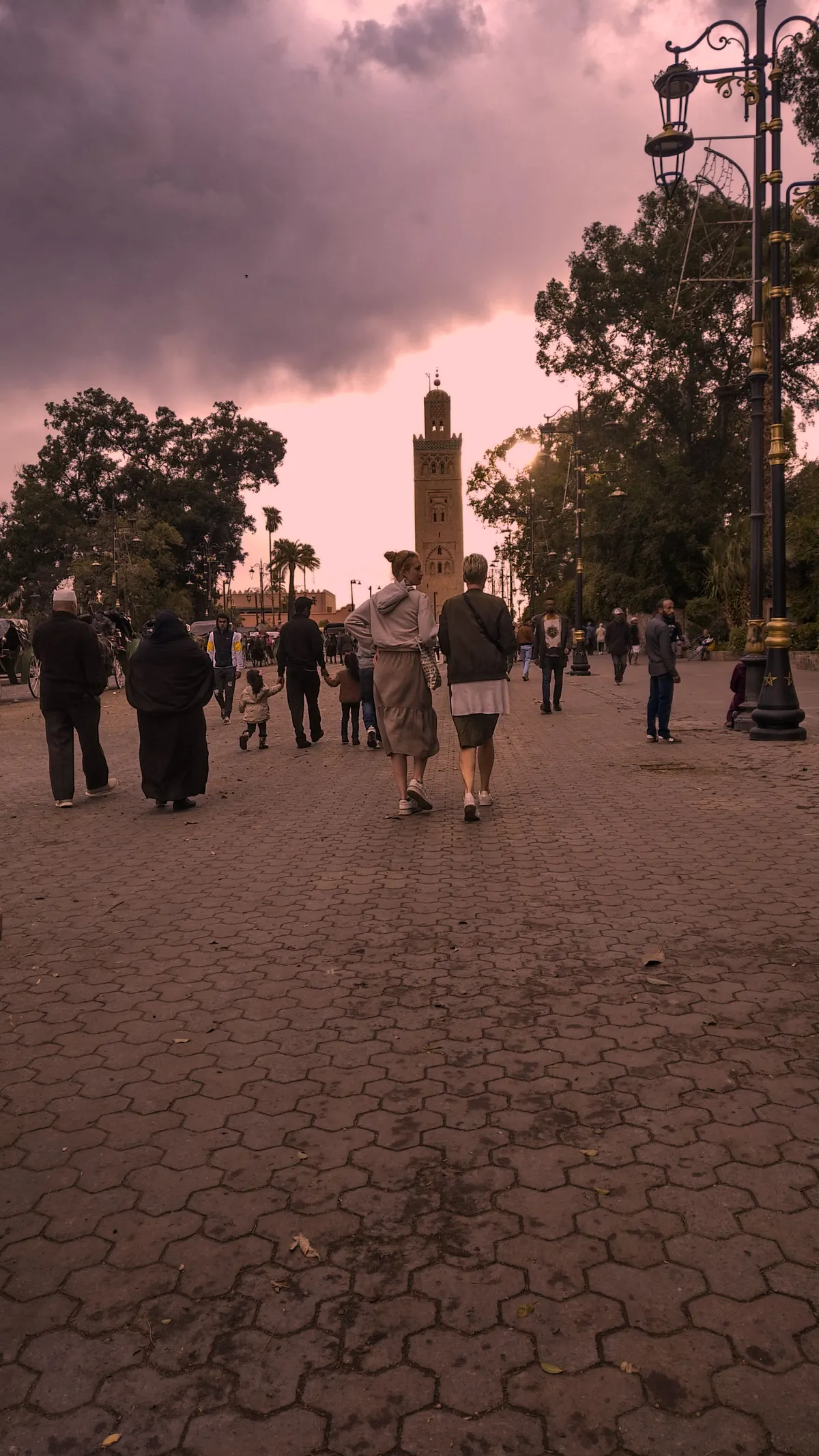
The Koutoubia Mosque was built in the second half of the 12th century under the Almohad sultans, and its minaret — about 77 metres of ochre stone topped with copper spheres — is the tallest historic minaret in Morocco. It is a working mosque, and the largest in Marrakech.
The name is a corruption of kutubiyyin, the booksellers who once traded around it: for centuries the market around the mosque was where manuscripts changed hands. The ruins of an earlier mosque, slightly misaligned with Mecca and abandoned for the corrected one, are still visible in the garden.
02. The mother of minarets
The Koutoubia's proportions were copied across the Islamic west. The Giralda in Seville and the Hassan Tower in Rabat are its direct descendants — the same square tower, the same decorative logic of sebka lattice and paired arches. When you have seen all three, you are looking at one architectural idea carried across a continent and two religions.
The copper spheres on top have their own legend: the same three balls supposedly sat on all three towers, and only the Giralda's are still in place. What is certain is that the silhouette has anchored the Marrakech skyline so long that the city never grew a competing one.
03. Can you go inside?
No. Like nearly every working mosque in Morocco, the Koutoubia is closed to non-Muslim visitors, and there is no ticket office, no tour and no exception. Anyone offering to get you in is selling you nothing.
What is open is everything around it: the gardens, the esplanade edge and every rooftop and terrace in the medina. This is one of those monuments that is genuinely complete from outside — the building was designed to be read across the city, which is exactly how you will see it.
04. The gardens
The garden on the mosque's south side is free, open day to night, and the best ground-level view of the tower. It is a formal French-style garden — hedges, palms, orange trees — with the ruins of the first mosque running along one edge.
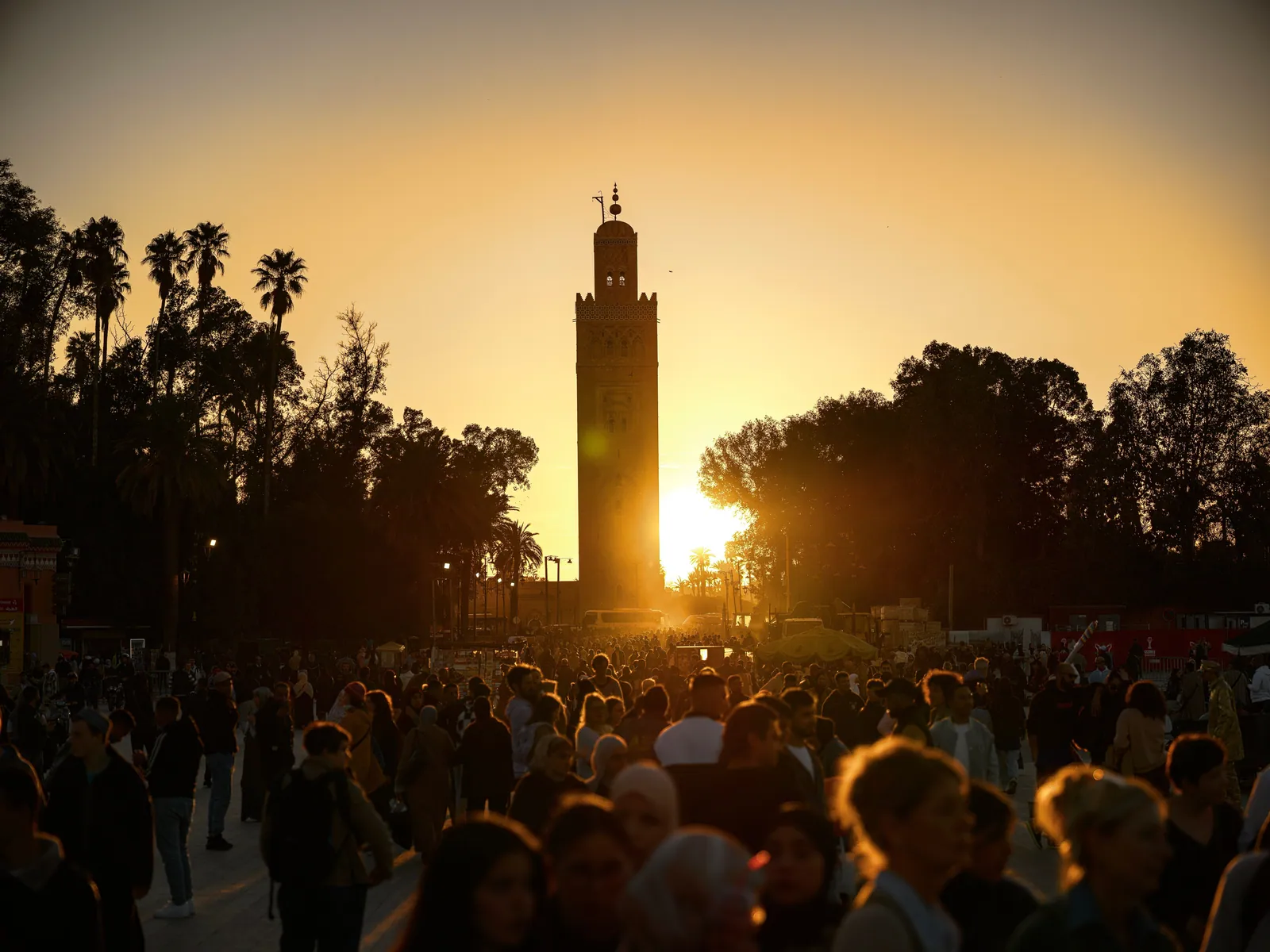
People come here for the sunset hour: the stone turns from ochre to copper as the light drops, and the call to prayer starts from the tower itself. It is an ordinary evening scene in Marrakech — families walking, someone selling orange juice at the gate — and one of the most reliable free experiences in the city.
05. The best views
From the ground, the garden and the Mohammed V avenue roundabout. From above, the medina's rooftop cafés around Jemaa el-Fna — Le Grand Balcon and Café du France face the tower directly — and the terraces of riad hotels inside the souks.
For the classic photograph, stand on Jemaa el-Fna in the late afternoon with the tower behind the market crowd, or take the garden at golden hour for the tower alone. Sunset is when the light is right; midday flattens the stone into pale sand.
06. Around the mosque
The Koutoubia sits at the hinge between Jemaa el-Fna, the souks and the Gueliz district, which makes it a natural meeting point on any day in the medina. The gardens close behind you into the souk alleys; the walk to Jemaa el-Fna takes five minutes.
Nearby and worth combining: the Saadian Tombs and El Badi Palace a short walk south, the souks to the north, and the whole square-and-garden sequence at dusk is one of the city's standard evening walks.
07. Practical details
The exterior and gardens are free and can be seen at any hour of the day; the gardens stay open late into the evening. There is nothing to book. Modest dress is expected in the garden around the mosque, and the call to prayer is a moment to stand still rather than photograph up close.
The one caution is the self-appointed guides around the garden who insist the inside can be visited for a fee. It cannot. A polite no, in French or Darija, ends it.
08. Common mistakes
The first is spending the visit hunting for a way inside. There is none, and every minute spent on it is a minute not spent on the garden, the souks or a rooftop at the right hour.
The second is coming only at midday. The tower's whole effect is in low light — at noon it is a pale square against a white sky. Come back at sunset if your day in Marrakech allows it; the same view reads completely differently.
Frequently Asked Questions
Can non-Muslims enter the Koutoubia Mosque?
No — like nearly all working mosques in Morocco it is closed to non-Muslim visitors. The gardens and esplanade around it are open and free.
What are the opening hours and is there a ticket?
There is no ticket and nothing to book. The gardens are open day to night, generally from about 8:00 until after sunset.
Is the Koutoubia the tallest minaret in Morocco?
At about 77 metres it is the tallest historic minaret. The Hassan II Mosque in Casablanca, completed in 1993, is taller overall.
When is the best time to visit?
Sunset. The stone turns copper-coloured, the call to prayer comes from the tower, and the light on the tower from Jemaa el-Fna is at its best.
Can you take photos of the mosque?
Yes, from outside and in the gardens — it is the most photographed building in Marrakech. Be respectful around prayer time and do not photograph worshippers.
More Morocco tours
8 Days
8-Day Yoga & Desert Journey in Erg Chigaga
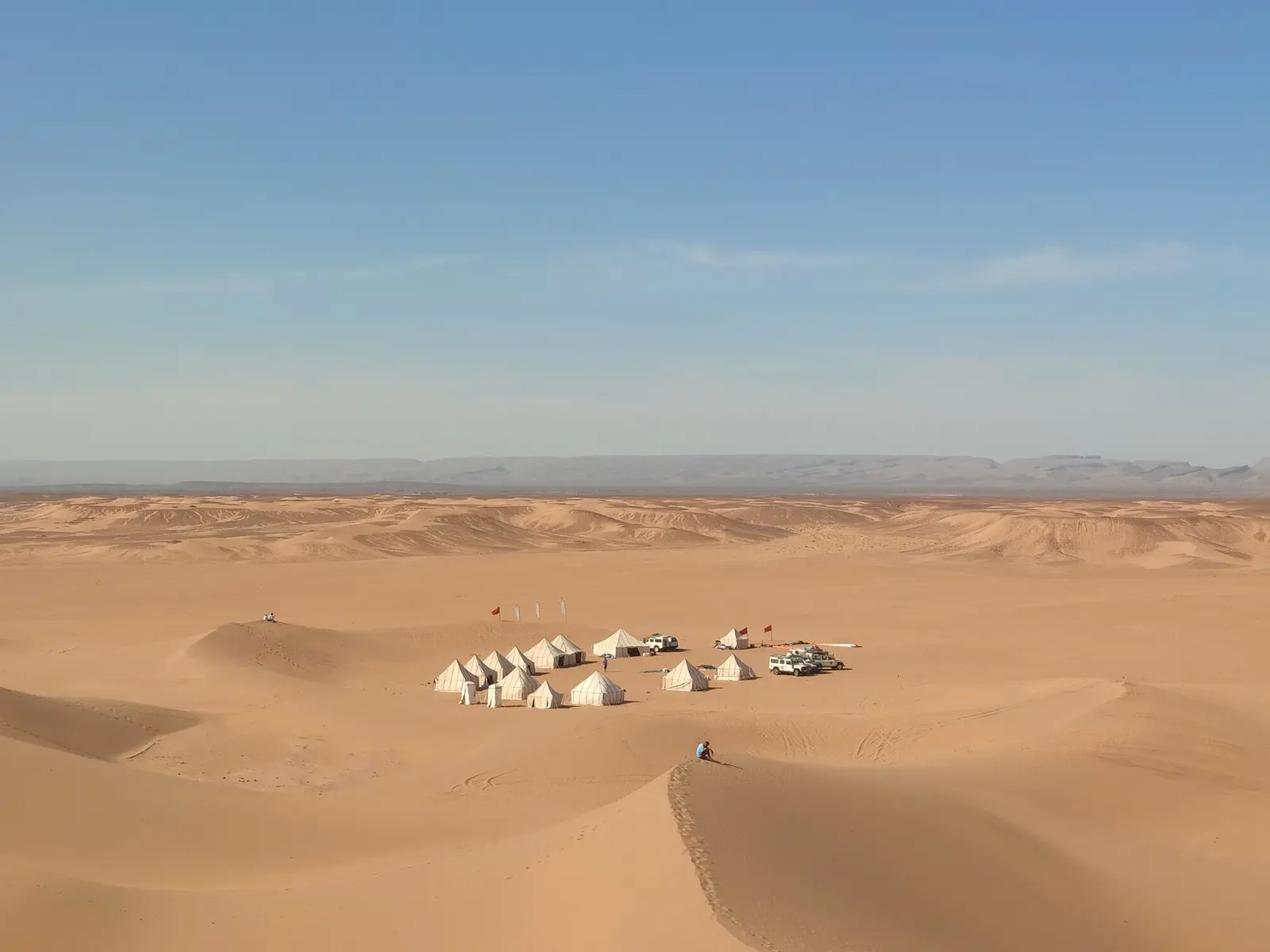
Eight days from Marrakech to a fixed nomadic camp in the dunes of Erg Chigaga: gentle treks with a support 4x4, daily yoga in the open, and five nights at the rhythm of the Sahara without moving camp.
Near Marrakech
Agafay Desert
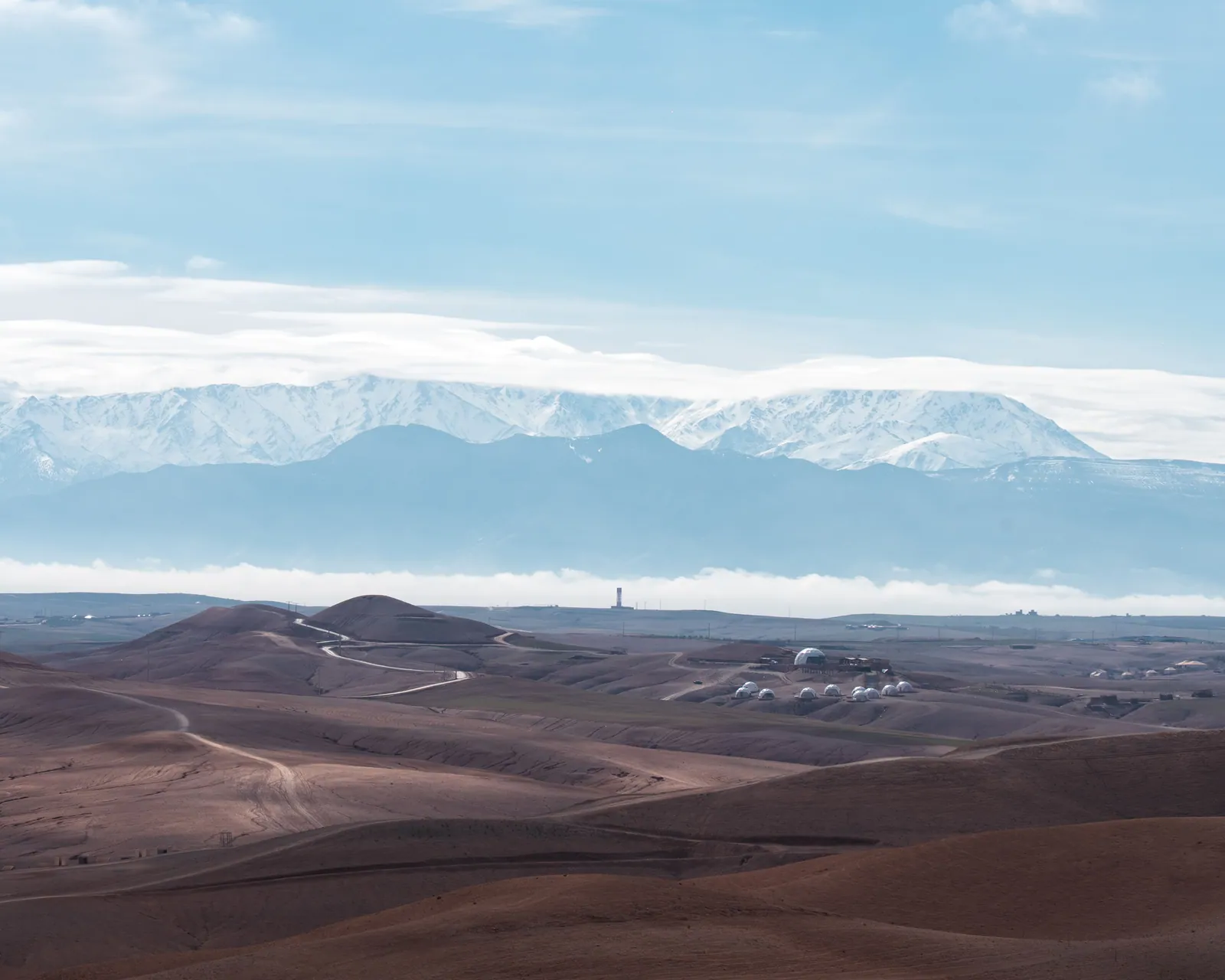
A dry, rocky desert close to Marrakech, with no dunes — bare hills, open horizons and camps laid out for dinner after dark. The short transfer is the point: one night either side of a city week.
7 Days
7-Day Morocco Tour: Casablanca to Marrakech
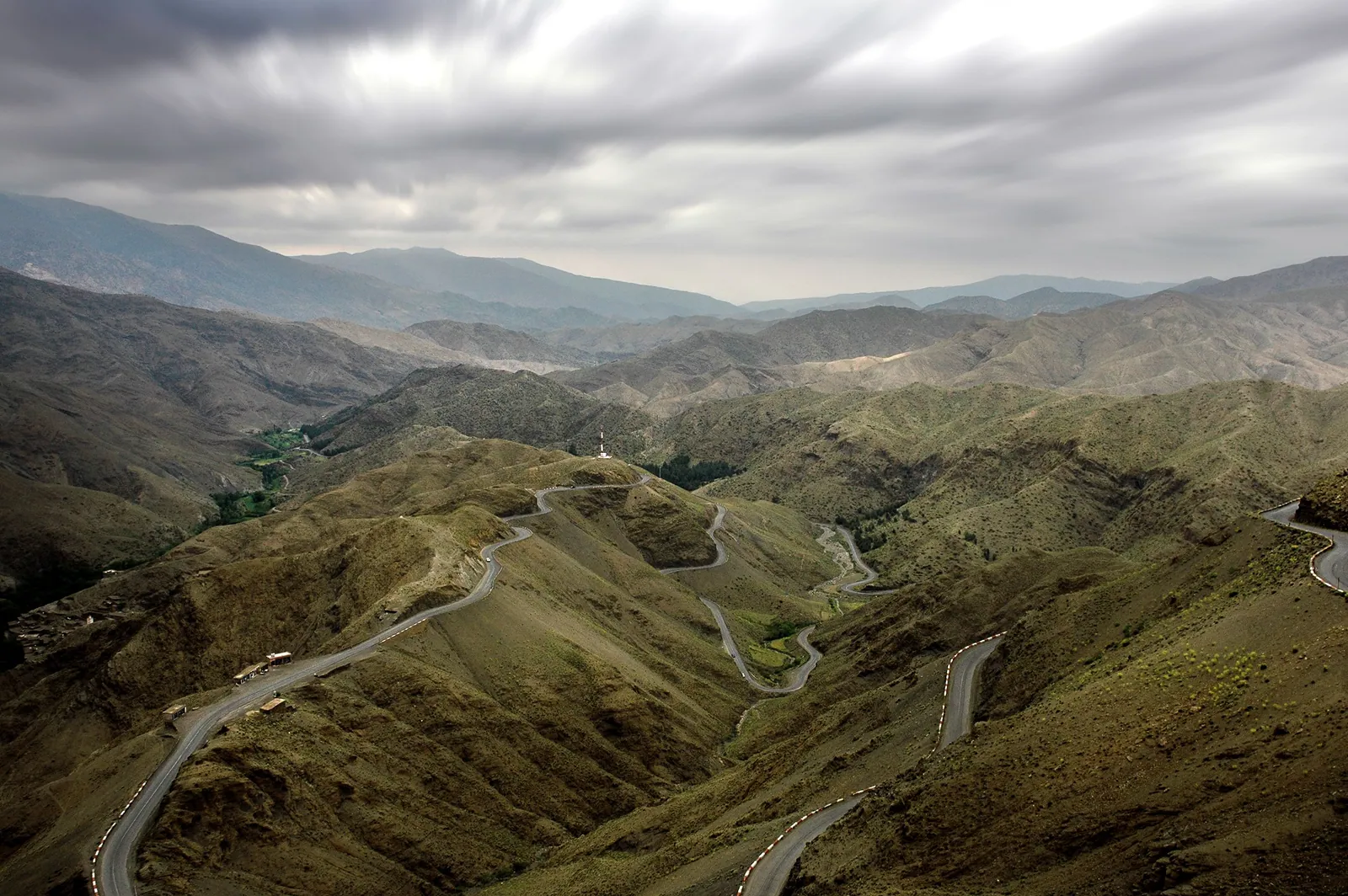
A week from Casablanca to Marrakech through royal cities, mountain passes, ksar country and the Sahara. The most driving of the seven-day options — and on this one the drive is half the point.
Related Guides
Hassan Tower and the Mausoleum of Mohammed V, Rabat
Rabat's central monument is two buildings in one esplanade: an unfinished 12th-century Almohad mosque with its tower, and the white-marble mausoleum of the Alaouite kings. Both are free to visit — hours, the guard ceremony and how it fits a Rabat day.
Hassan II Mosque: Visiting Casablanca's Atlantic Mosque
How to visit the Hassan II Mosque in Casablanca — the only mosque in Morocco open to non-Muslim visitors: official ticket prices, guided tour times, what you see inside and how the visit fits a day in Casablanca.
Rabat Travel Guide: The Best Things to See and Do
Discover Rabat, Morocco's calm coastal capital, with practical advice on the Kasbah of the Udayas, Hassan Tower, the medina, museums, transport and the best time to visit.
Liked this guide?
Give it a like on Instagram and tag us from your Moroccan adventure.
Ask us how the Koutoubia fits into your Marrakech days
Our Marrakech-based team of local experts designs tailor-made Morocco trips around your dates, budget and travel style.
Request a Quote