
It is the only mosque in Morocco non-Muslims may enter, and it stands on a platform over the Atlantic, close enough to the water that the surf reaches the prayer hall.
01. What the mosque is
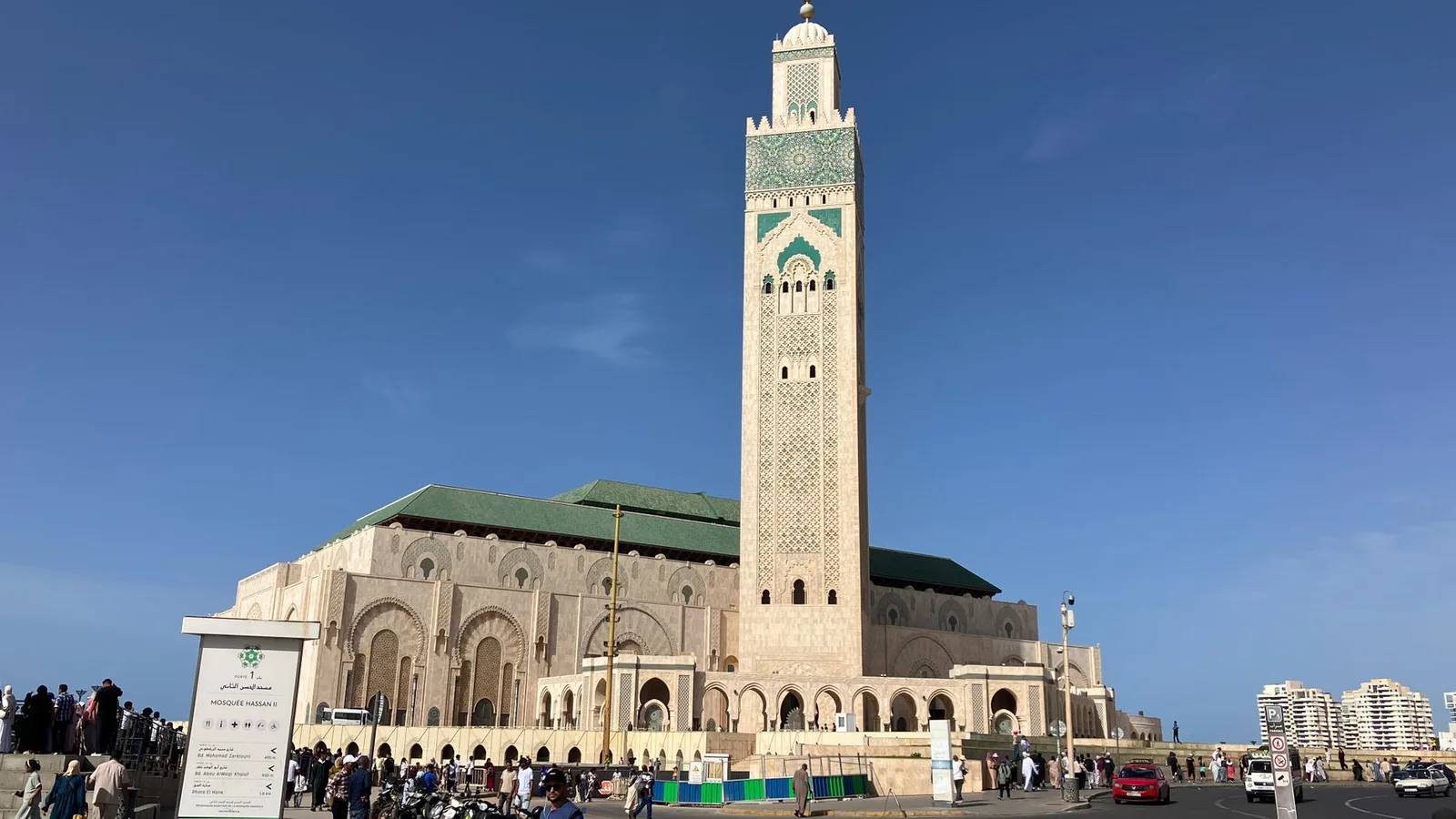
The Hassan II Mosque was completed in 1993 as a gift from King Hassan II to the city of Casablanca. The architect, Michel Pinseau, put it on a platform pushed out over the sea, and the result is the largest mosque in Morocco and, at about 210 metres, the tallest minaret anywhere.
Some numbers give the scale: the prayer hall holds around 25,000 worshippers, the esplanade another 80,000, and the roof over the hall retracts. It took six years and thousands of Moroccan craftsmen — carveurs of cedar, masters of zellij mosaic, plaster and marble workers — to build it.
02. The one mosque in Morocco open to non-Muslims
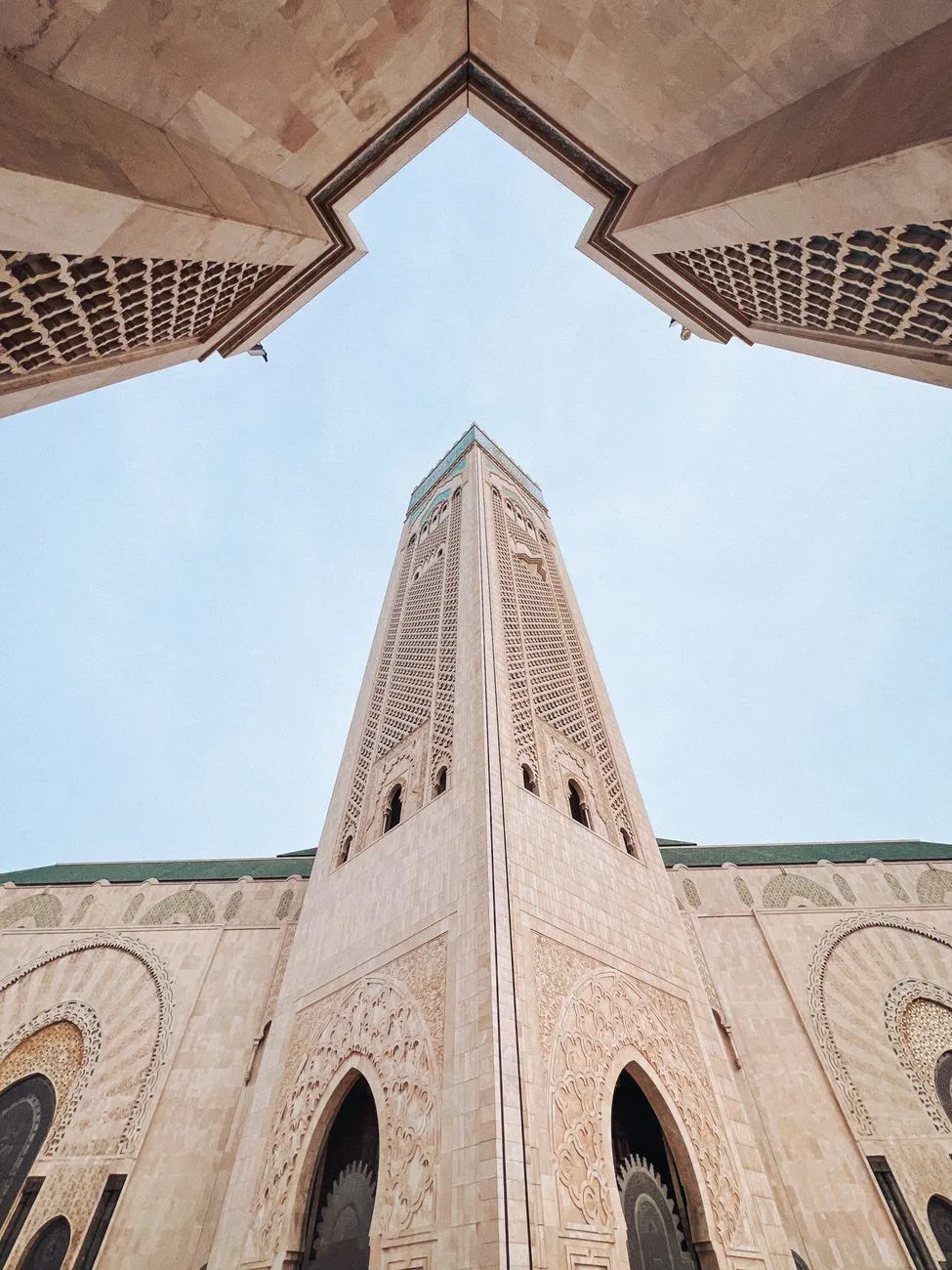
Morocco's working mosques are closed to non-Muslim visitors, with this single exception, and even here access is by guided tour only. You cannot wander the halls alone: a guide collects each time slot and walks a fixed route through the hall, the library and the ablution rooms.
Buy tickets at the official office near the mosque, not from anyone on the street. Several of the tour slots run in different languages, so pick one when booking if a specific language matters to you.
03. Prices and opening hours
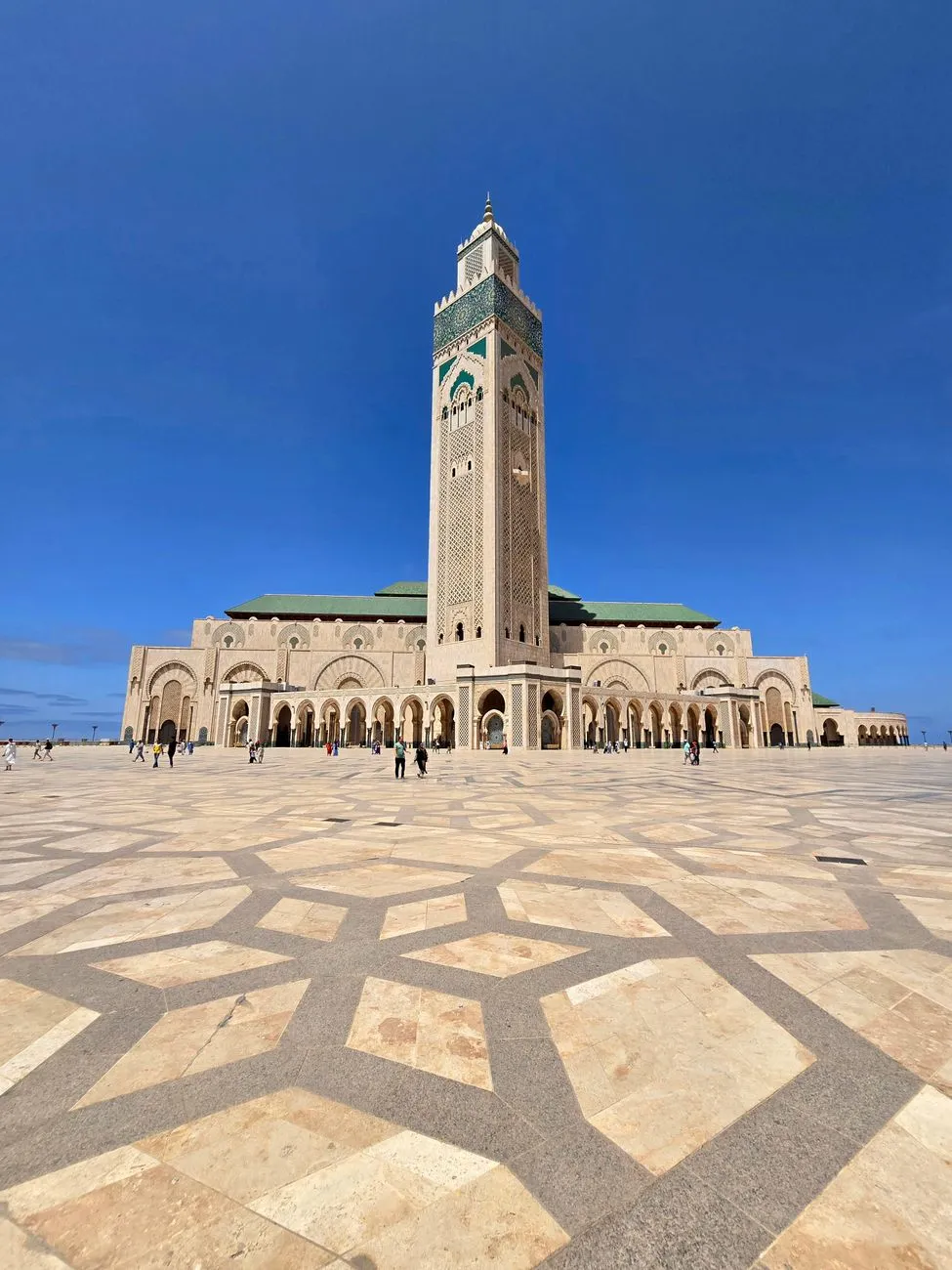
Foreign adults pay 140 MAD, Moroccan residents and foreign students 70 MAD with valid ID, and children aged 6 to 12 plus Moroccan students 30 MAD. Children under 6 enter free. Tickets are sold at the official ticket office by the mosque.
Guided visits run through the day — typically around 9:00, 10:00, 14:00 or 15:00 and 16:00, with more slots in summer — and last about 45 to 60 minutes. The mosque closes to visitors during prayer times, and Friday, the weekly holy day, is the quietest visiting day. Prices and hours shift; treat the numbers as your working baseline and confirm locally.
04. What you see inside
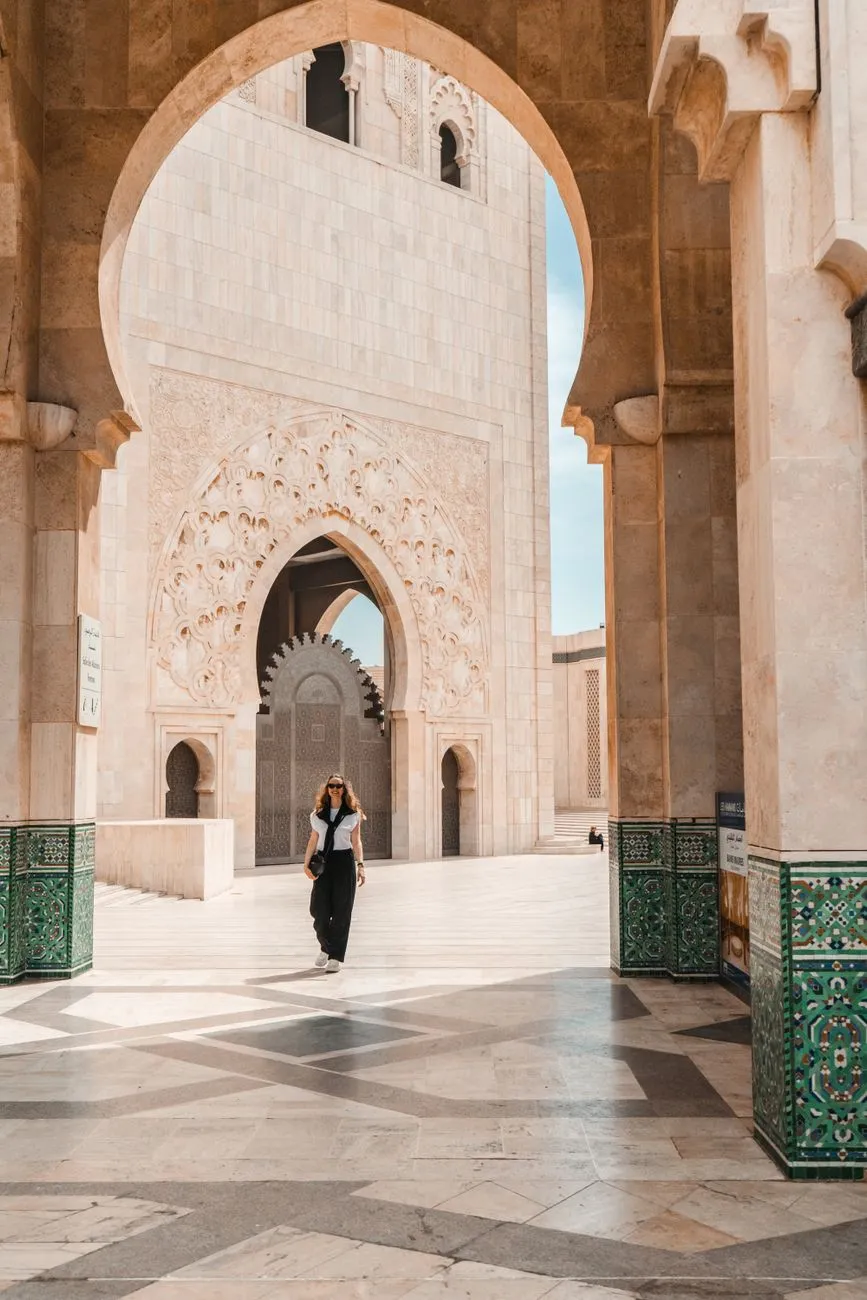
The interior is a catalogue of Moroccan craft: carved and painted cedar ceilings, zellij tile in green and cream, marble columns, gilded woodwork and hand-carpeted floors. The mihrab niche is fine Moroccan marble, and the ablution fountains are worked stone, not decoration applied after the fact.
The detail most people remember is the roof — a section of the prayer hall ceiling retracts, which was the King's stated wish that rain could fall inside the prayer hall. Whether it is open on your visit is a matter of the day's weather and the guides' discretion.
05. Outside on the Atlantic platform
The mosque sits where the city meets the ocean, and the sea platform is part of the visit. The waves break against the supports below the esplanade; on rough days the spray reaches the walkways, and the sound carries into the buildings.
This is also the best photography in Casablanca. Late afternoon light on the stone against the Atlantic is the shot people come for, and the Corniche cafés a few minutes north give you the reverse view of the whole building with its minaret.
06. Rules, dress and behaviour
Dress modestly: covered shoulders and knees, no beachwear. A headscarf is not required for women, though many visitors bring one; everyone removes shoes before entering carpeted areas, and the guides hand out bags for them.
Photography is generally allowed inside, but follow your guide's instruction — some areas and prayer moments are off-limits. The mosque is an active place of worship, not a museum: keep voices down, stay with your group, and do not walk in front of people praying.
07. How it fits a Casablanca day
Casablanca is a half-day city for most itineraries, and the mosque is the reason. Pair it with the Petite Medina and a walk along the Corniche, or with lunch at the port area; the visit itself takes about an hour door to door from the ticket office.
If you are day-tripping from Marrakech or Rabat, arrive for an early slot — the morning light on the Atlantic façade is cleaner than the midday glare, and the tour groups thin out before the afternoon.
08. Common mistakes
The classic error is turning up at prayer time and finding the doors shut; check the day's prayer times and plan around them. The second is buying from a street tout offering a faster ticket — there is no faster ticket, and the official office is the only seller.
The third is rushing the exterior. Most of the building's drama is outside on the platform, so leave time after the tour rather than heading straight back to the taxi rank.
Frequently Asked Questions
Can non-Muslims enter the Hassan II Mosque?
Yes — it is the only mosque in Morocco open to non-Muslim visitors, and only on a guided tour. Tickets come from the official office by the mosque.
How much is the ticket?
140 MAD for foreign adults, 70 MAD for Moroccan residents and foreign students with ID, 30 MAD for children aged 6 to 12, free under 6. Confirm current prices before you go.
How long does the visit take?
The guided tour lasts about 45 to 60 minutes. Allow around two hours in total including the ticket queue and the sea platform.
Is there a dress code?
Covered shoulders and knees for everyone; no beachwear. A headscarf is not required for women, and shoes come off in the carpeted areas.
Can you visit the mosque during Ramadan?
Yes, and it is atmospheric — but visitor hours shorten and the evening prayer is exceptionally busy. Go early in the day and expect the schedule to differ from normal weeks.
More Morocco tours
Day Trip
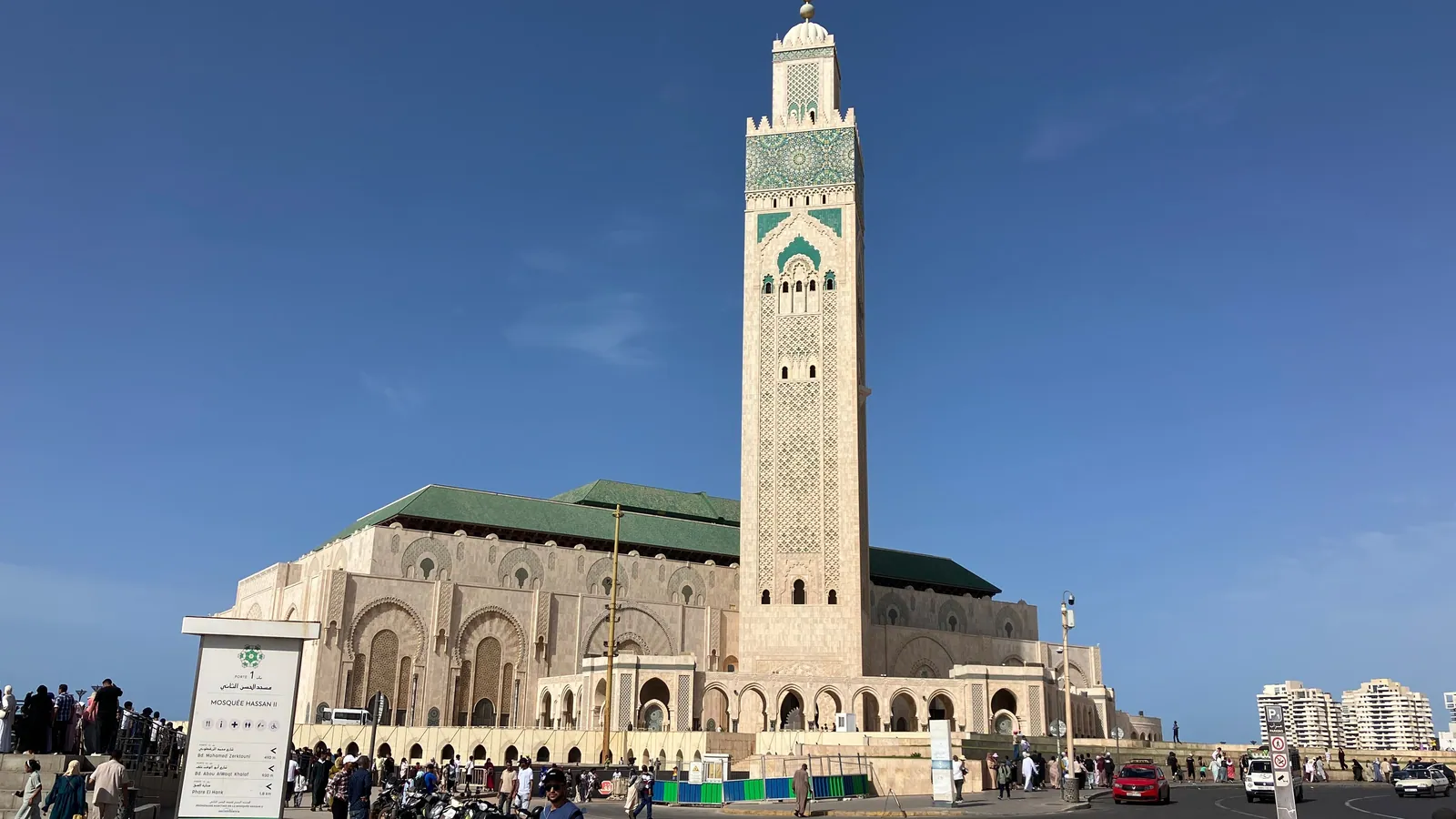
Casablanca City & Hassan II
The Hassan II mosque, the Art Deco quarter and the Corniche, walked with a guide. Half-day or full-day: the mosque anchors it and everything else fits around your schedule.
Near Marrakech
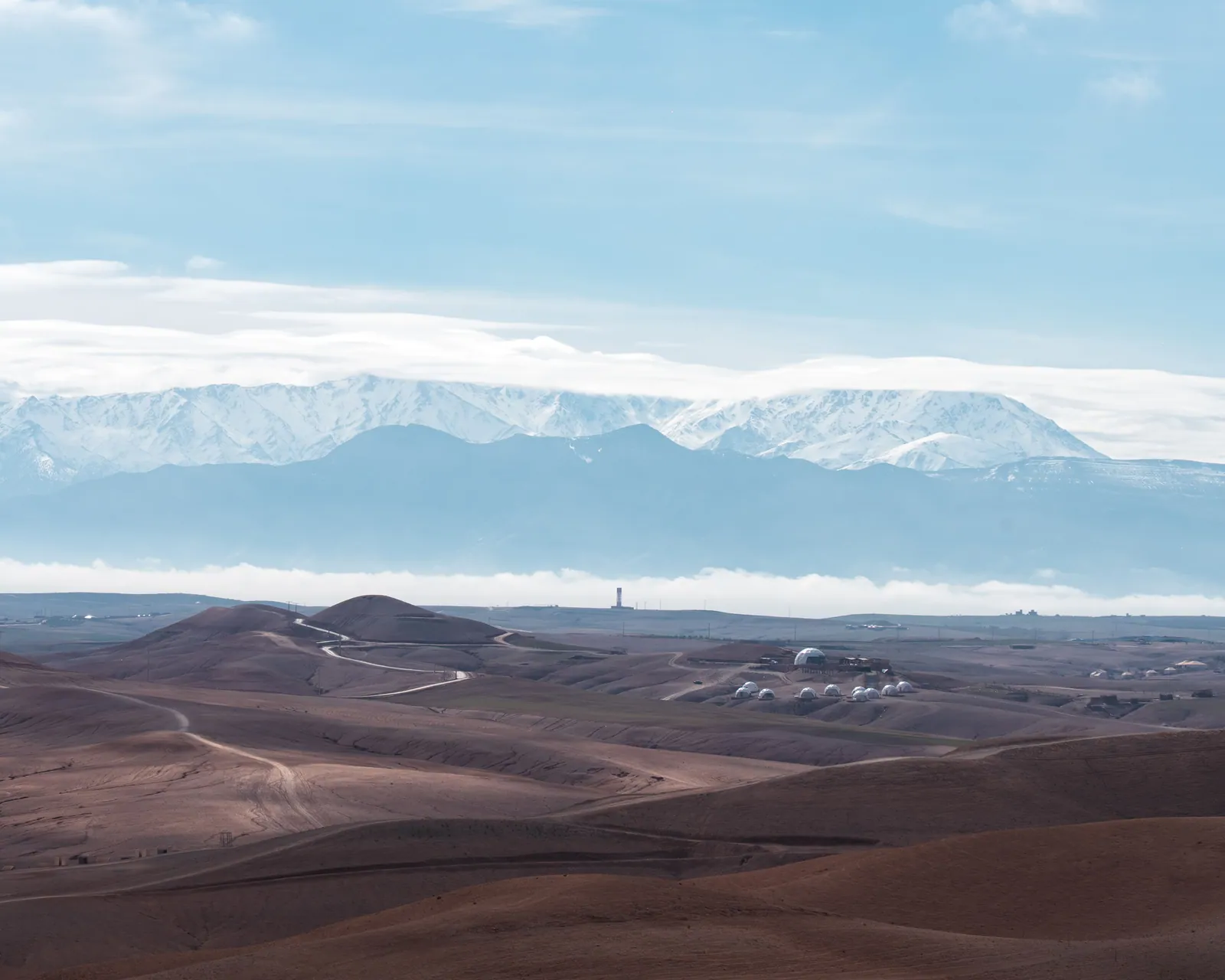
Agafay Desert
A dry, rocky desert close to Marrakech, with no dunes — bare hills, open horizons and camps laid out for dinner after dark. The short transfer is the point: one night either side of a city week.
14 Days
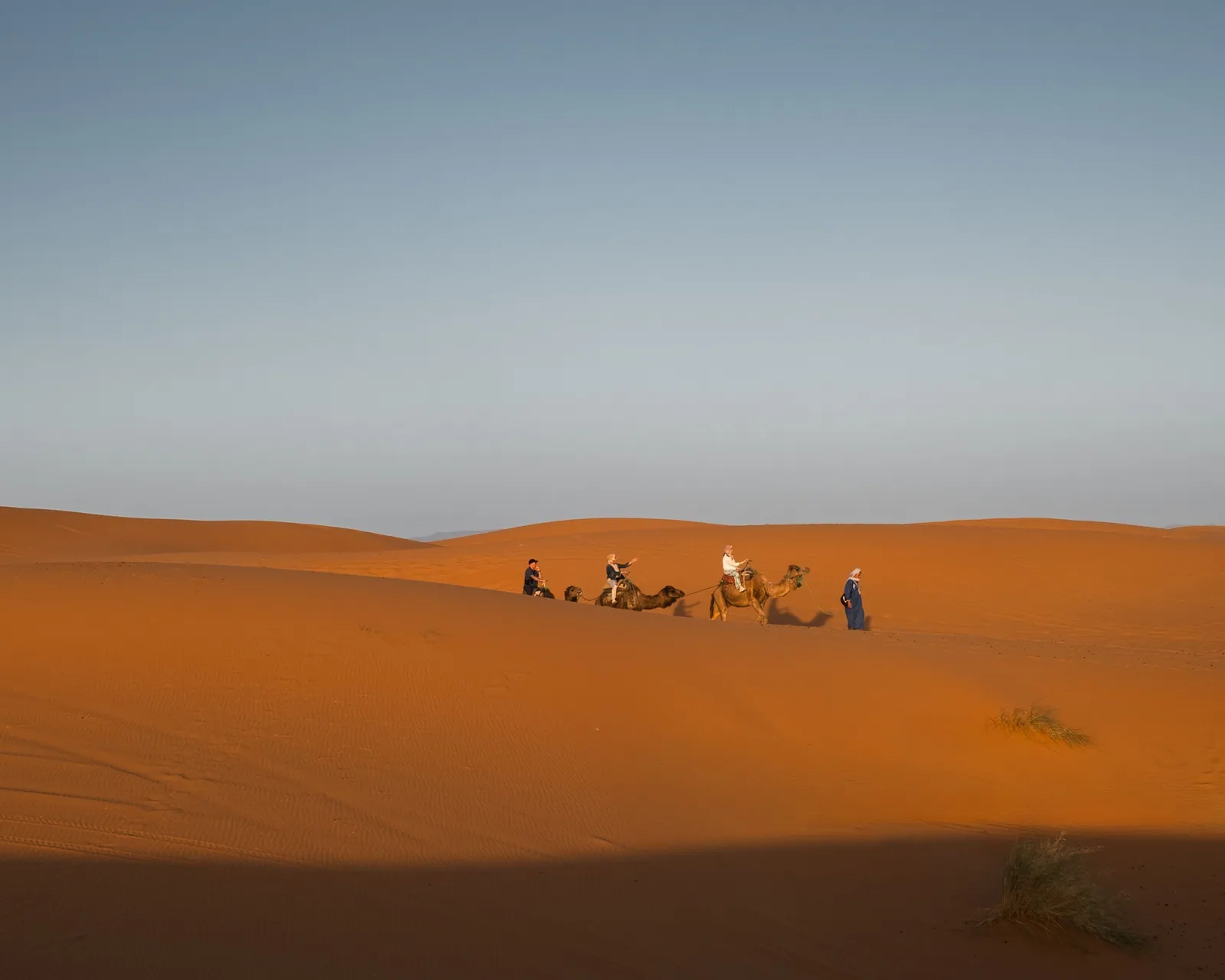
14-Day Morocco Itinerary for First-Time Visitors
Two weeks for a first visit: imperial cities, mountains and sand, with enough days between them that nothing is hurried. Fourteen is the length at which Morocco stops feeling like a tour and starts feeling like a trip.
Related Guides
14-Day Morocco Itinerary: Cities, Atlas and Sahara
A practical 14-day Morocco itinerary linking Marrakech, the High Atlas, the Merzouga dunes, Fes, Chefchaouen and the Atlantic coast, with realistic driving times.
Rabat Travel Guide: The Best Things to See and Do
Discover Rabat, Morocco's calm coastal capital, with practical advice on the Kasbah of the Udayas, Hassan Tower, the medina, museums, transport and the best time to visit.
Moroccan Arabic Phrases: The Darija Words Visitors Actually Need
The Moroccan Arabic (Darija) phrases that work in real situations — greetings, shopping, tea, taxis and polite refusals — with pronunciation and the cultural rules behind them.
Liked this guide?
Give it a like on Instagram and tag us from your Moroccan adventure.
Ask us how the Hassan II Mosque fits into your Casablanca itinerary
Our Marrakech-based team of local experts designs tailor-made Morocco trips around your dates, budget and travel style.
Request a Quote