You do not need sentences. You need about twenty words, said with a smile — because the moment you try, the door opens differently.
01. The language of the street
Moroccan Arabic, Darija, is the language spoken in the street, the souk, the taxi and the riad, and it is not the Arabic of the Quran or of textbooks. It is a dialect with a Berber, Amazigh backbone, dressed in French and Spanish vocabulary absorbed from a century of being everyone's neighbor.
English is spreading in the tourist economy, French works almost everywhere, and yet the single highest-value phrase in this guide is shukran — thank you — because the moment you try, the door opens differently. Nobody expects a visitor to speak Darija; the effort is the message.
02. The five that do the most work
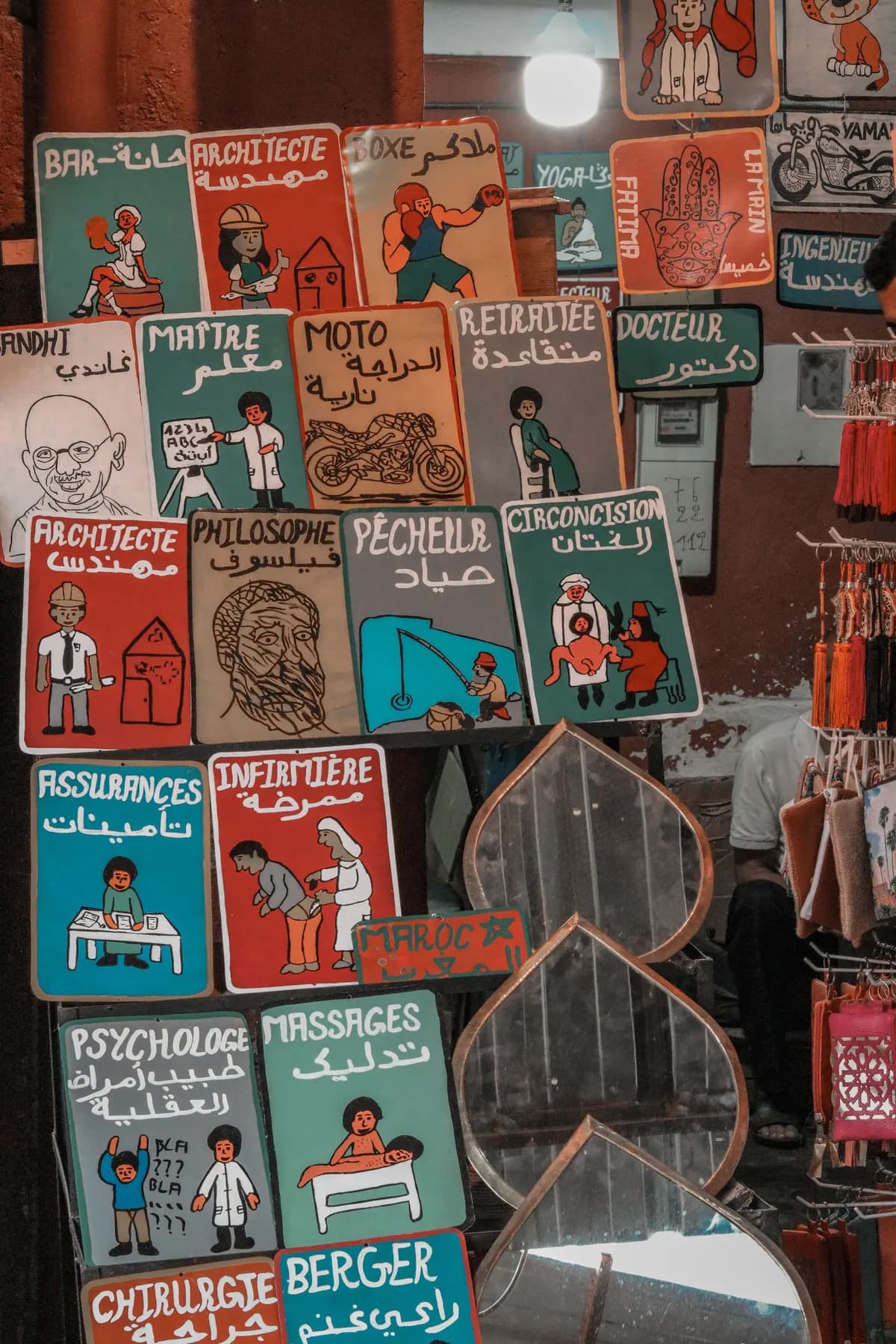
Salam means hello — the universal opener, safe with anyone, any time. Shukran means thank you; say it constantly, because it costs nothing and changes every interaction. Bslama is the warm standard goodbye, go in peace.
Inshallah, God willing, punctuates plans, promises and maybe-laters — you will hear it ten times a day. And Safi, okay or enough or that's it, is the most versatile word in Darija: it closes a negotiation, ends a conversation, accepts a proposal.
03. Greetings and small talk
Salam alaikum is peace be upon you, the fuller greeting; reply with wa alaikum salam. Labas literally means no harm and asks how you are; answer Labas, l'hamdulah — fine, thank God.
Smitti, followed by pointing at yourself, means my name is, with no grammar needed. Bssahhtek, said to someone eating, wishes them enjoy your meal. Lila sa'ida is good night.
04. In the souk: where Darija earns its keep
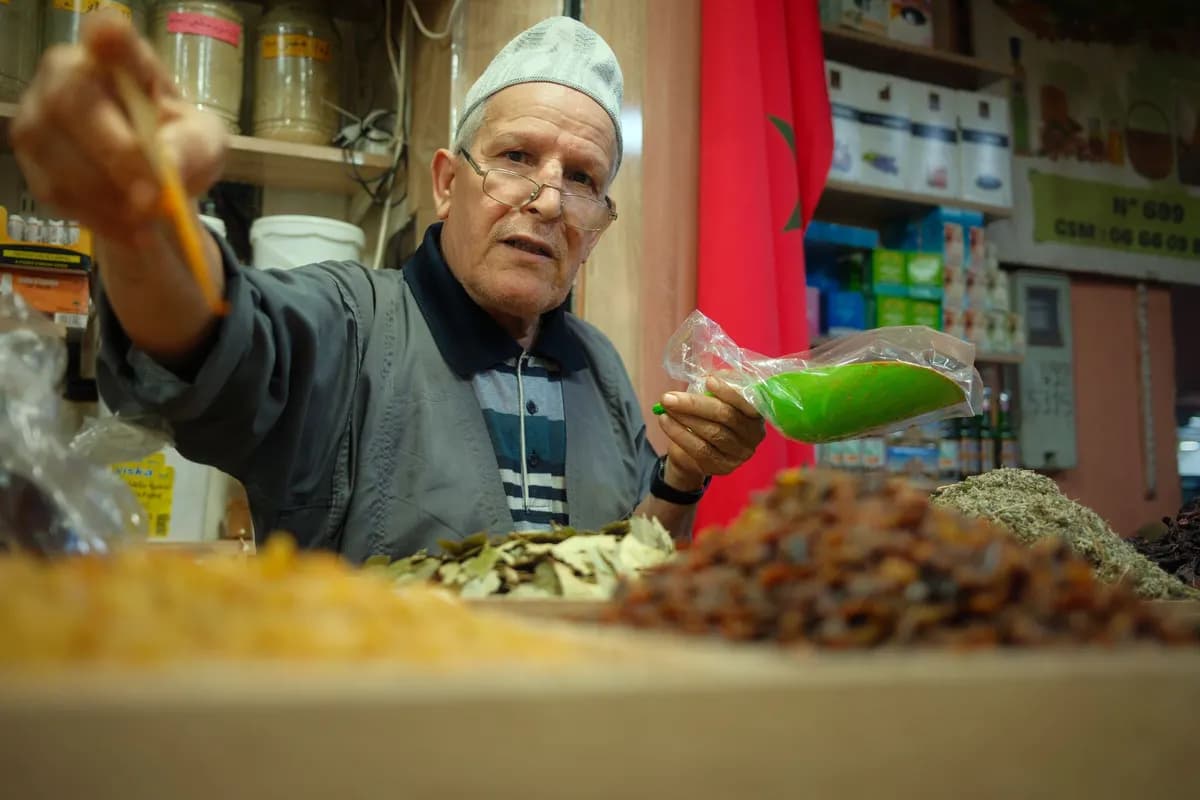
Shopping is where the fewest words matter most, because every one of them moves the price. Bshhal means how much — the essential question; point at the item, ask, wait. Ghali bzzaf means too expensive, said with a shake of the head as an opening move. Rkhis means cheap, the mood of your counter-offer.
Shwiya means a little; shwiya, shwiya asks for a bit less. Ma'lish means no problem or never mind — the social grease that declines a tout gently, absorbs a small mistake, closes a deal. Bla malek is the polite-but-final refusal to a guiding offer in the medina: say it once, keep walking.
Aandi means I have and ma'andish means I don't have, useful against the your-hotel-is-closed patter. Haggling as a whole ritual is covered in the bargaining guide; this phrase layer is what makes it run.
05. Eating, tea and the table
Bismillah is said before eating, often with the right hand. Bslah means delicious — the highest compliment a guest can pay the cook; say it to the host, loudly, meaning it.
And the phrase travelers actually need: Bslah, walakin shwiya sarron — delicious, but a bit salty. Learn shwiya plus the adjective and you can give real feedback without English.
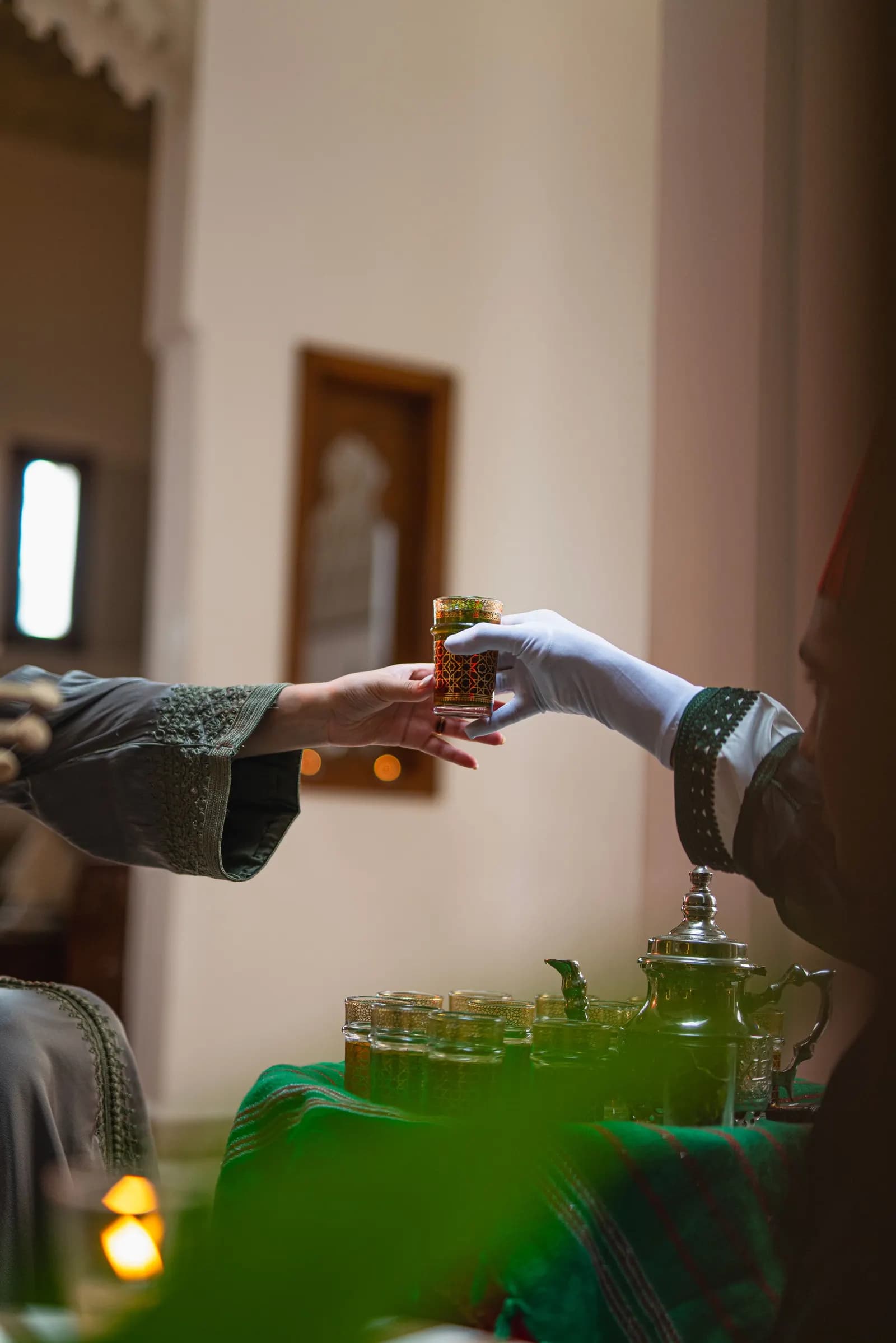
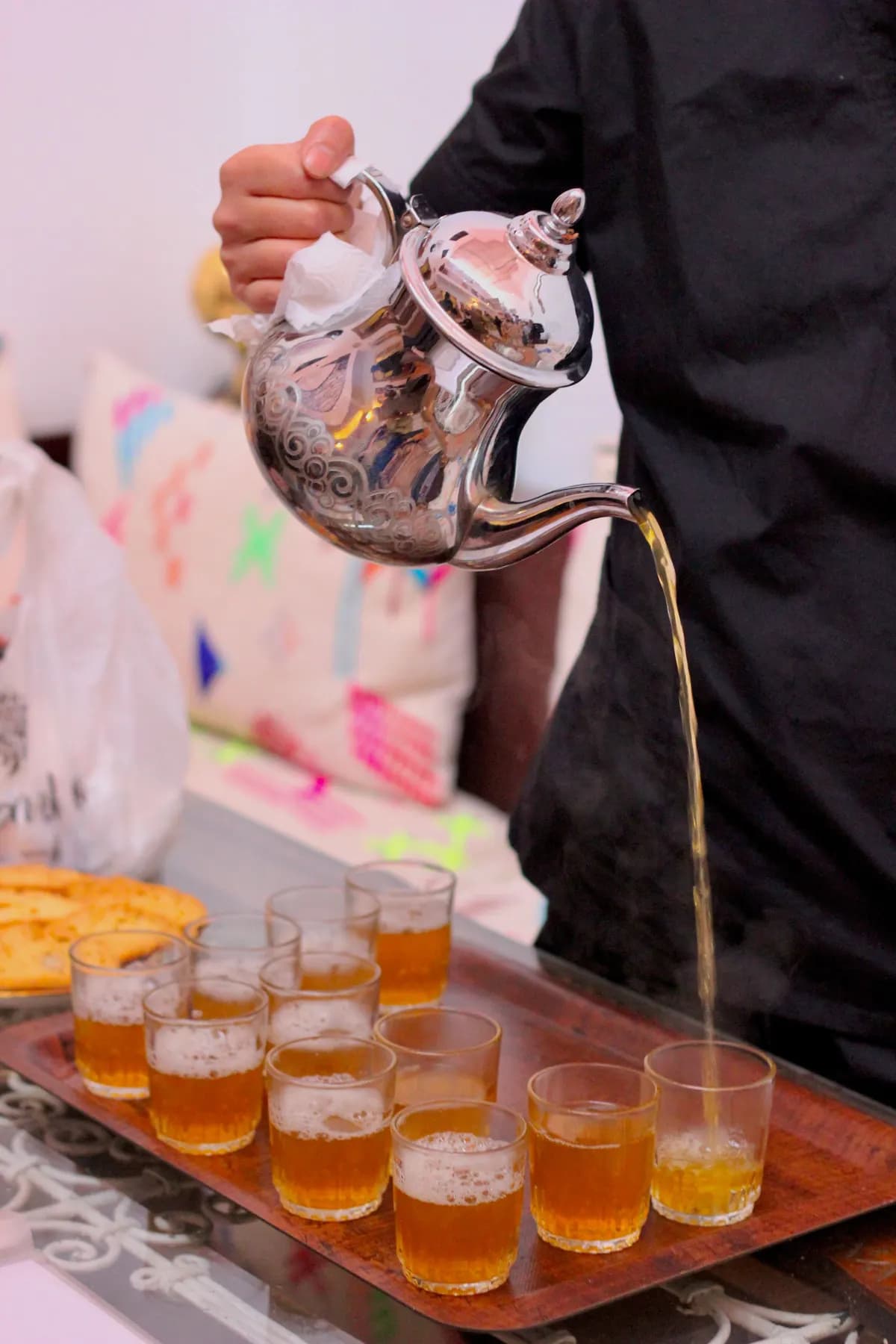
Atay is tea, and mint tea is the social currency: refusing the first glass is mildly rude, accepting the second is optional, and shukran, safi politely caps the refill cycle. Maaya shwiya d'lma asks for a little water; d'lma alone with a gesture works.
06. Taxis and the road
Bshhal l'kasba asks how much to the kasbah; learn your destination's name pronounced by your riad host and repeat it back until it sticks. Waqef hna means stop here, and zid shwiya asks for a bit further.
For the address, showing your phone works better than any pronunciation: the riad's address in Arabic script on the driver's screen beats anything you can manage. And on petit taxi meters, compteur, afak means meter, please — a French loanword doing honest work.
07. Numbers for shopping
The numbers in Darija are Berber-rooted, unlike Modern Standard Arabic, and unlike anything you can guess: wa7ed, jouj, tlata, arba, khamsa, sett, sba, tmnya, tes3a, ashra, for one through ten.
For haggling you mostly need the hundreds: 100 dirhams is miya, 200 is jouj miya, 500 is khams miya. Sellers will write numbers on paper — accept the pen, check the digits, and use your calculator app as the universal referee, because it ends most wait-I-said-200 confusion instantly.
08. The sounds, briefly
Darija has sounds English lacks: the rolled r, the emphatic kh like the ch in loch, and the 3 and 6 characters in transliteration that represent guttural and emphatic consonants.
Do not try to master them. Approximate, smile, point, and let the calculator and the pen handle money. Being understood is the goal; being correct is not required, and no Moroccan will judge a visitor's accent — they spend their days being guessed at by French, Spanish and English speakers themselves.
09. When Darija will not be enough
French works in cities, hotels and among the educated; English works in tourist-facing businesses increasingly well. Darija is the equalizer in the small encounters — the taxi driver, the workshop owner, the woman selling bread, the gardener at the monument — where no shared foreign language exists. That is exactly where twenty words and a smile carry a trip.
For anything medical, legal or logistics-critical, switch to your riad host or a guide: a shared phrase is not a shared negotiation for high-stakes situations.
Frequently Asked Questions
Is Moroccan Arabic the same as Arabic?
No. Darija is a distinct dialect family with a heavy Berber, Amazigh substrate and centuries of French and Spanish loanwords — largely unintelligible to speakers of Middle Eastern Arabic dialects without adaptation. Morocco's second official language is Tamazight, and French is widely used in business. Written Arabic is used for religious and formal text; the street speaks Darija.
Do I need to speak Arabic in Morocco?
Not strictly — French works in cities, English in tourist businesses — but a small set of Darija phrases opens doors that stay closed otherwise, especially in the medina, taxis and villages. Twenty words, said with effort and a smile, change the tone of nearly every small transaction.
How do you say thank you in Moroccan Arabic?
Shukran. It is the single most valuable word for visitors: pair it with salam for hello and bslama for goodbye and you have the emotional core of basic politeness covered. Allah y3afek, may God reward you, is the deeper version you will hear back.
Will people understand me if my Darija is bad?
Yes — the effort is understood even when the word is not. Moroccan service workers switch between Darija, French, Spanish and English all day; a visitor attempting bshhal with an accent gets an amused correction and a number, every time. The fear of speaking badly costs more than speaking badly does.
What language should I use if I only have one, Arabic or French?
French, if you have to choose — it is understood across the country and in every hotel, restaurant and office. But sprinkle the Darija greetings and shukran on top; the mix is what actually happens in Moroccan conversation, and it reads as effort rather than entitlement.
More Morocco tours
14 Days
14-Day Morocco Itinerary for First-Time Visitors
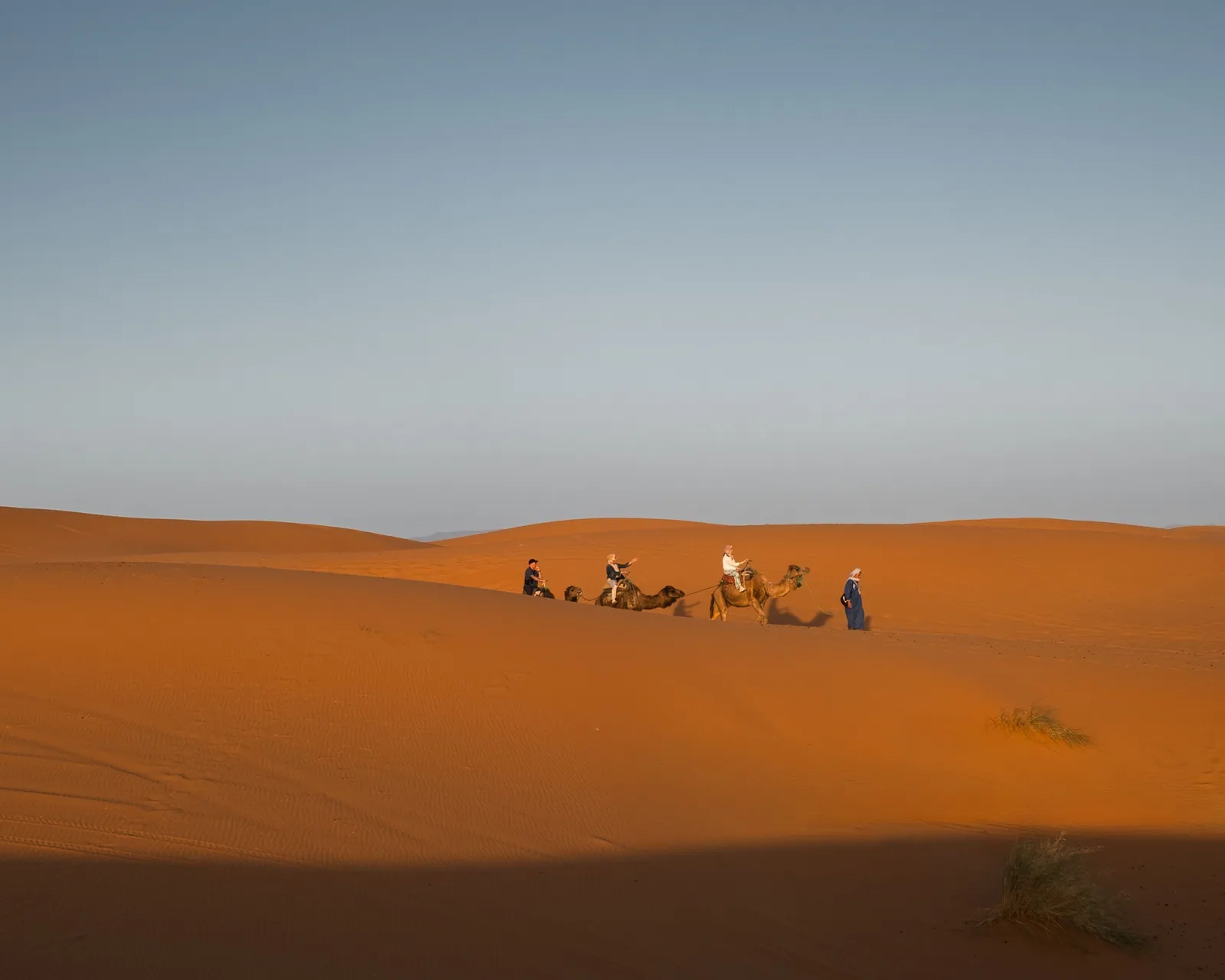
Two weeks for a first visit: imperial cities, mountains and sand, with enough days between them that nothing is hurried. Fourteen is the length at which Morocco stops feeling like a tour and starts feeling like a trip.
Coastal Escape
Essaouira Getaway
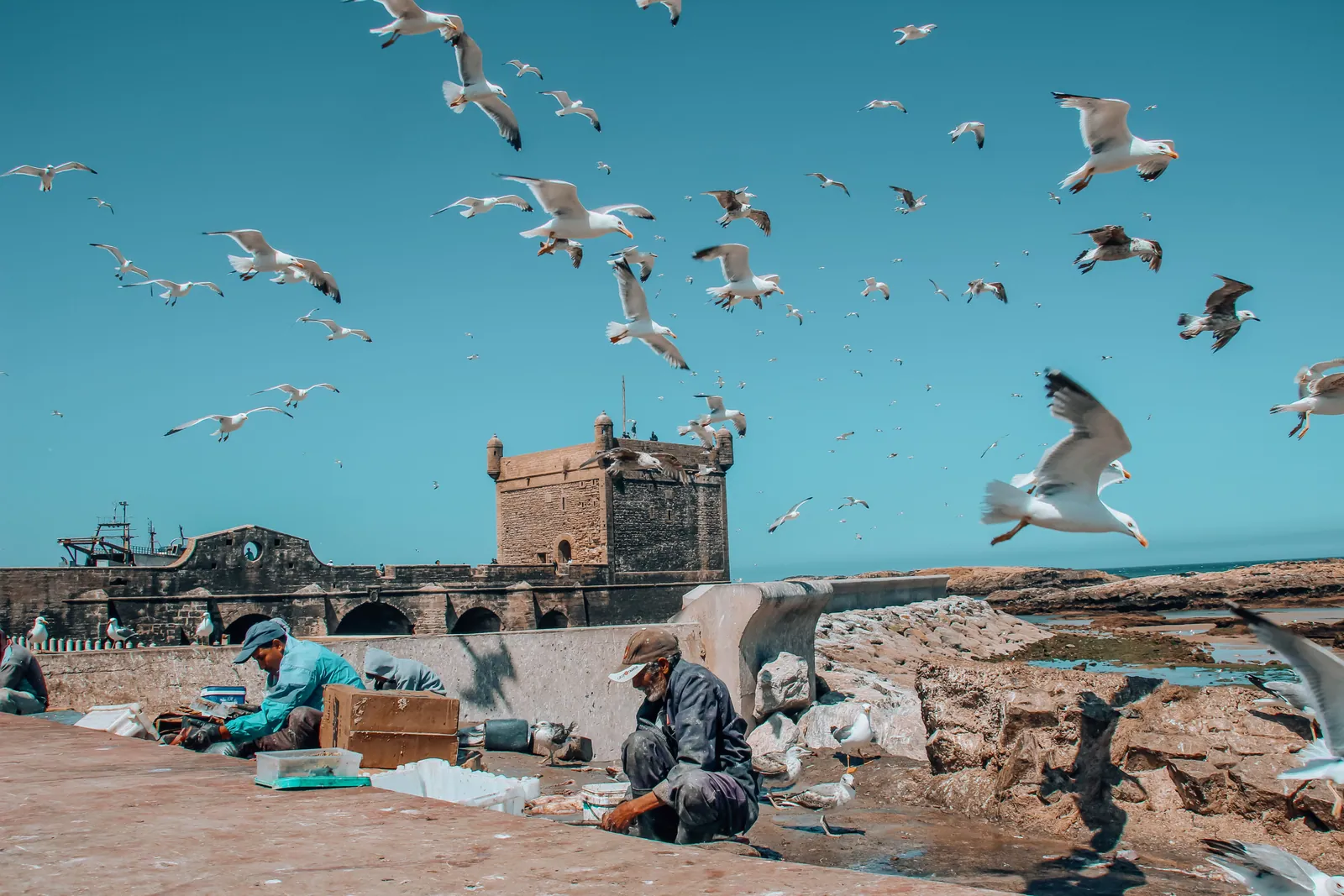
West to the Atlantic for the day: a walled blue-and-white port, the fishing harbour working below the ramparts, workshops behind them and a long beach to finish on.
12 Days
12-Day Cultural Tour of Morocco
Twelve days from the Sahara to the Atlantic and up into the Rif — the widest spread on this list. Take it if this is your only trip: you see it once, not half of it twice.
Related Guides
Sahara Desert Camps: Erg Chebbi, Erg Chigaga and What a Night Costs
How Sahara desert camps actually work — Erg Chebbi vs Erg Chigaga, luxury vs standard tents, camel transfers, what is included, and the questions to ask before booking a night under the dunes.
Morocco in 3 Days: A Realistic Itinerary and What to Sacrifice
How to spend three days in Morocco without wasting them — which bases work, which transfers do not, what a 3-day itinerary can genuinely include and what to leave for the next trip.
Common Morocco Scams and How to Avoid Them
Learn about the most common scams in Morocco — taxis, fake guides, pickpockets, henna artists and souk pricing — and how to avoid them without missing out.
Liked this guide?
Give it a like on Instagram and tag us from your Moroccan adventure.
Send us your route — we will tell you which phrases each stop will actually use
Our Marrakech-based team of local experts designs tailor-made Morocco trips around your dates, budget and travel style.
Request a Quote