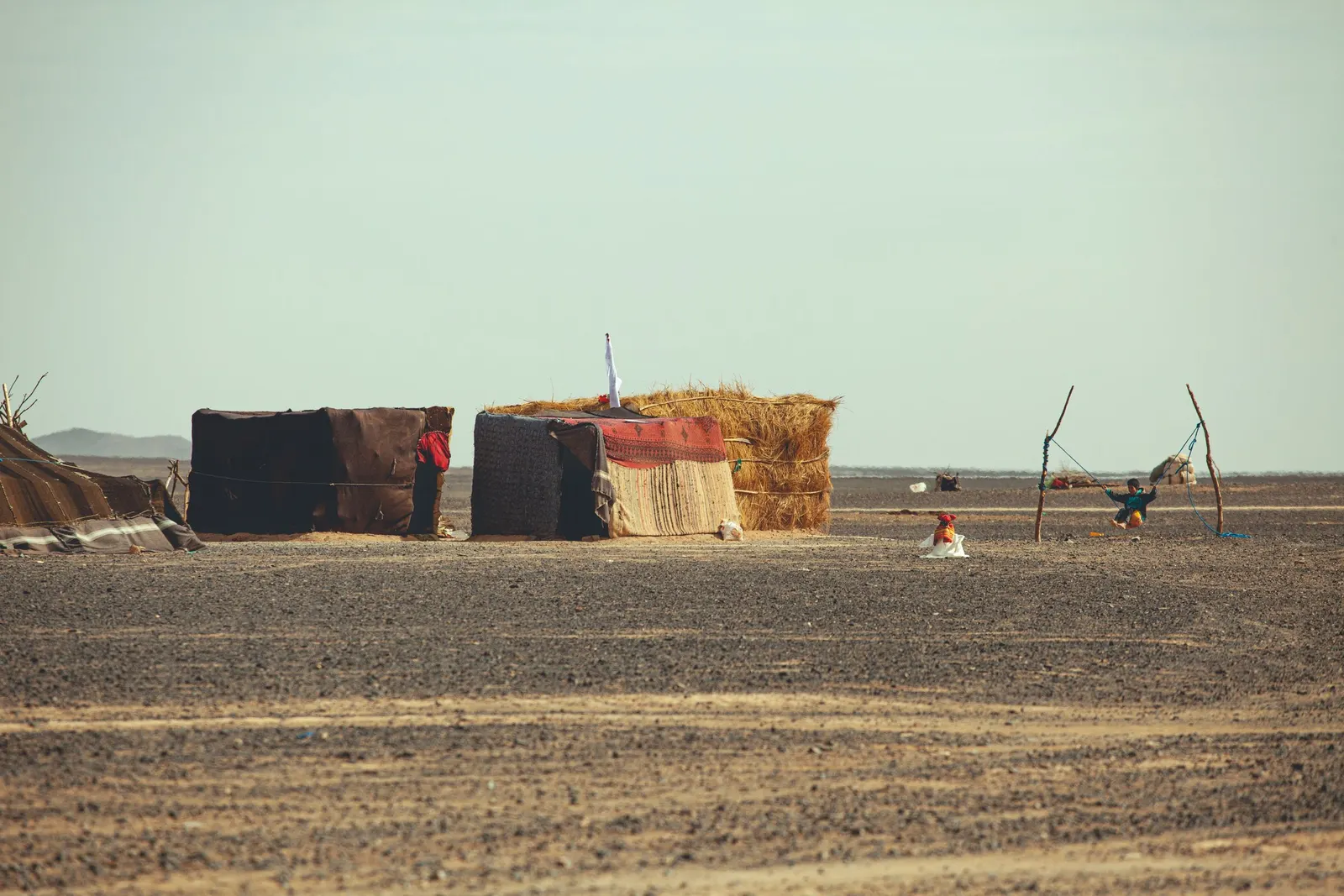
"Sahara camp" covers a vast range, from a shared tent with a generator to a suite between the dunes — and brochures use the same photograph for all of it. Choose with both eyes open.
01. What "Sahara camp" actually covers
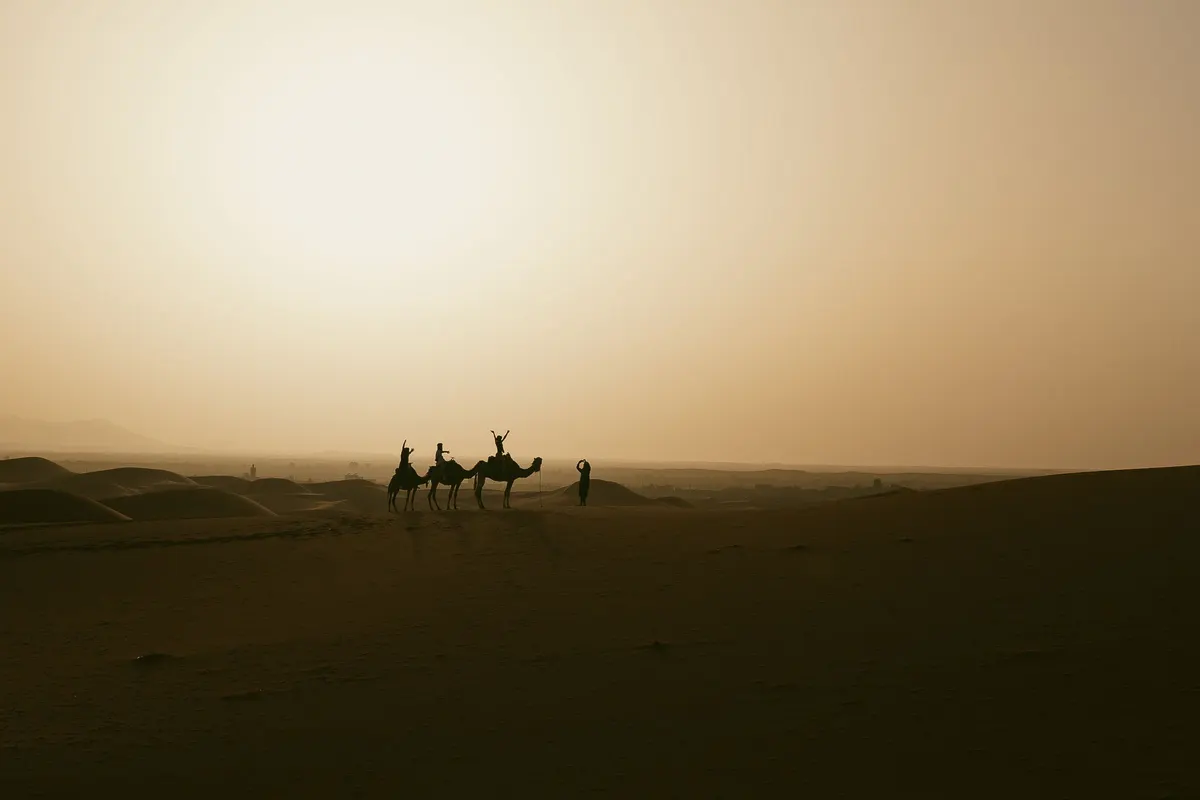
The Sahara night is the image every Morocco trip sells: dunes at sunset, a camp lantern glowing, stars with no light pollution underneath. What the brochures leave out is that the term covers a vast range — from a shared tent with a generator to a suite with en-suite bathroom and a plunge pool between the dunes.
The choice has two axes: where, meaning which desert area, which determines the dunes and the journey; and which camp, meaning what comfort level, which determines the price and the experience. Get both right and the night is the highlight of the trip. Get one wrong and it is a cold night in a noisy tent with a bill that surprises you.
02. Where: Erg Chebbi vs Erg Chigaga vs the Agafay
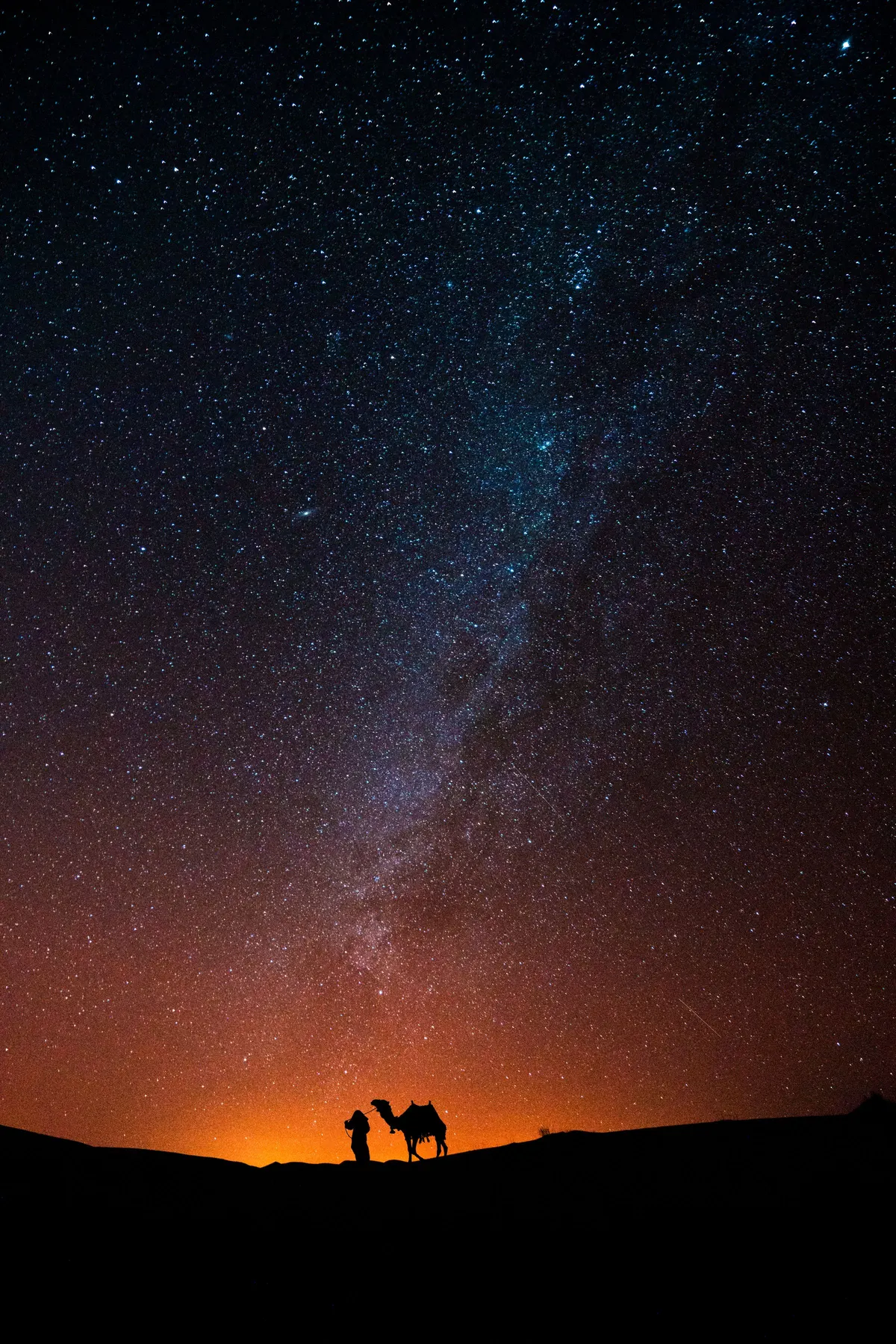
Erg Chebbi, near Merzouga, is the classic. The dunes rise up to about 150 metres, the camp villages sit at their edge near Merzouga, and the infrastructure is the most developed: the widest range of camps, the most reliable access, and the sunset camel trek that most people picture. It is far from everything — roughly 9 to 10 hours from Marrakech by road — which is exactly why most visitors reach it as the payoff of a multi-day drive through the Dades and Todra valleys.
Erg Chigaga, near M'Hamid, is the wilder option, close to the Algerian border. The dune field is larger but the access is rougher: the camps at the edge require 4x4 transfers from the road, the nearest village is M'Hamid at the end of the Drâa valley, and tourist infrastructure is thinner. Fewer camps, fewer visitors, a more genuine sense of remoteness. The trade-off is journey time, and the fact that rougher also means fewer backup plans if a camp underdelivers.
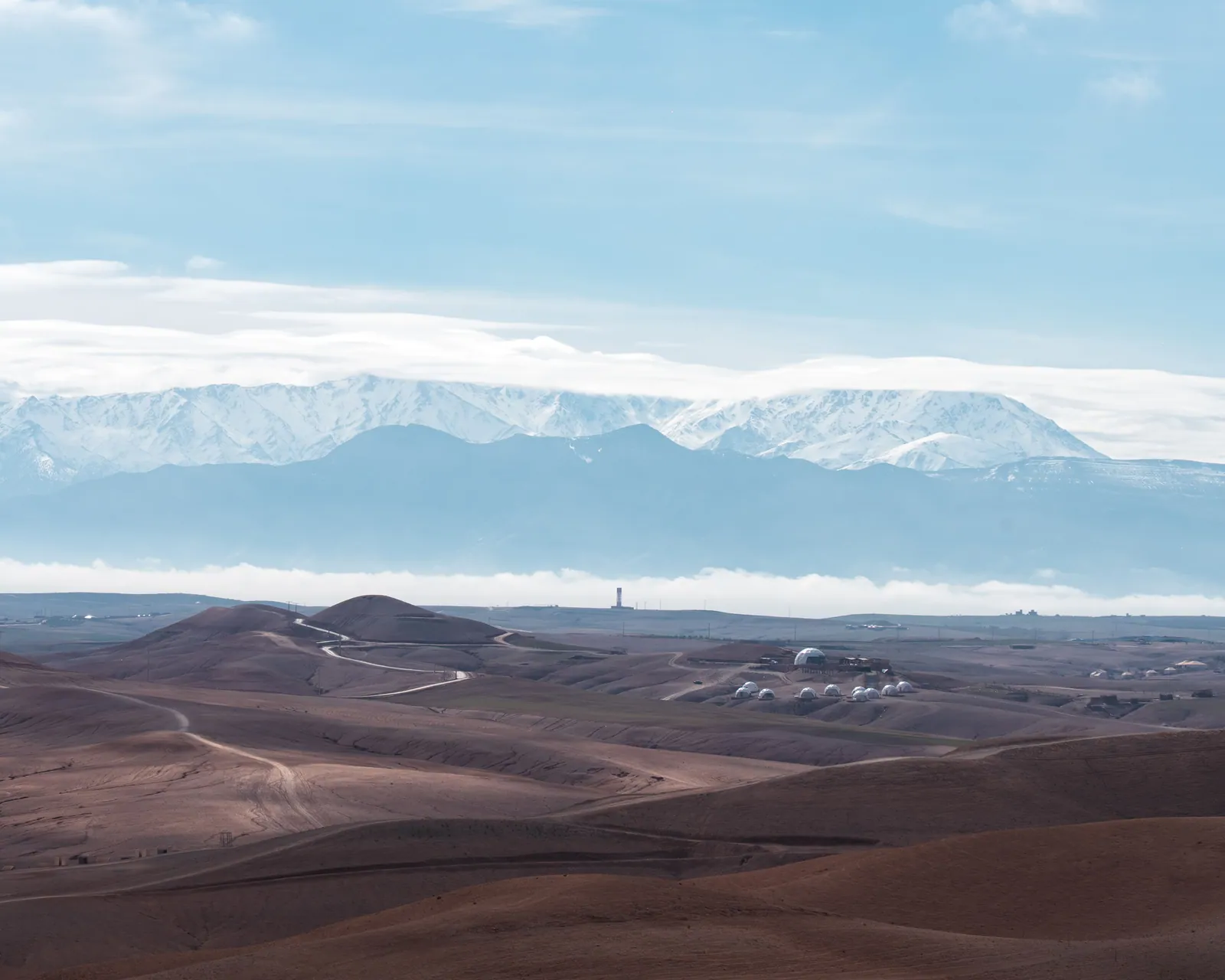
The Agafay is not an erg at all — it is the stony desert hills within an hour of Marrakech, where camps offer the desert evening without the desert journey. The dunes are absent; the silence, the stars and the sunset are real. It is the honest answer for short itineraries.
03. Which camp level: what the money actually buys
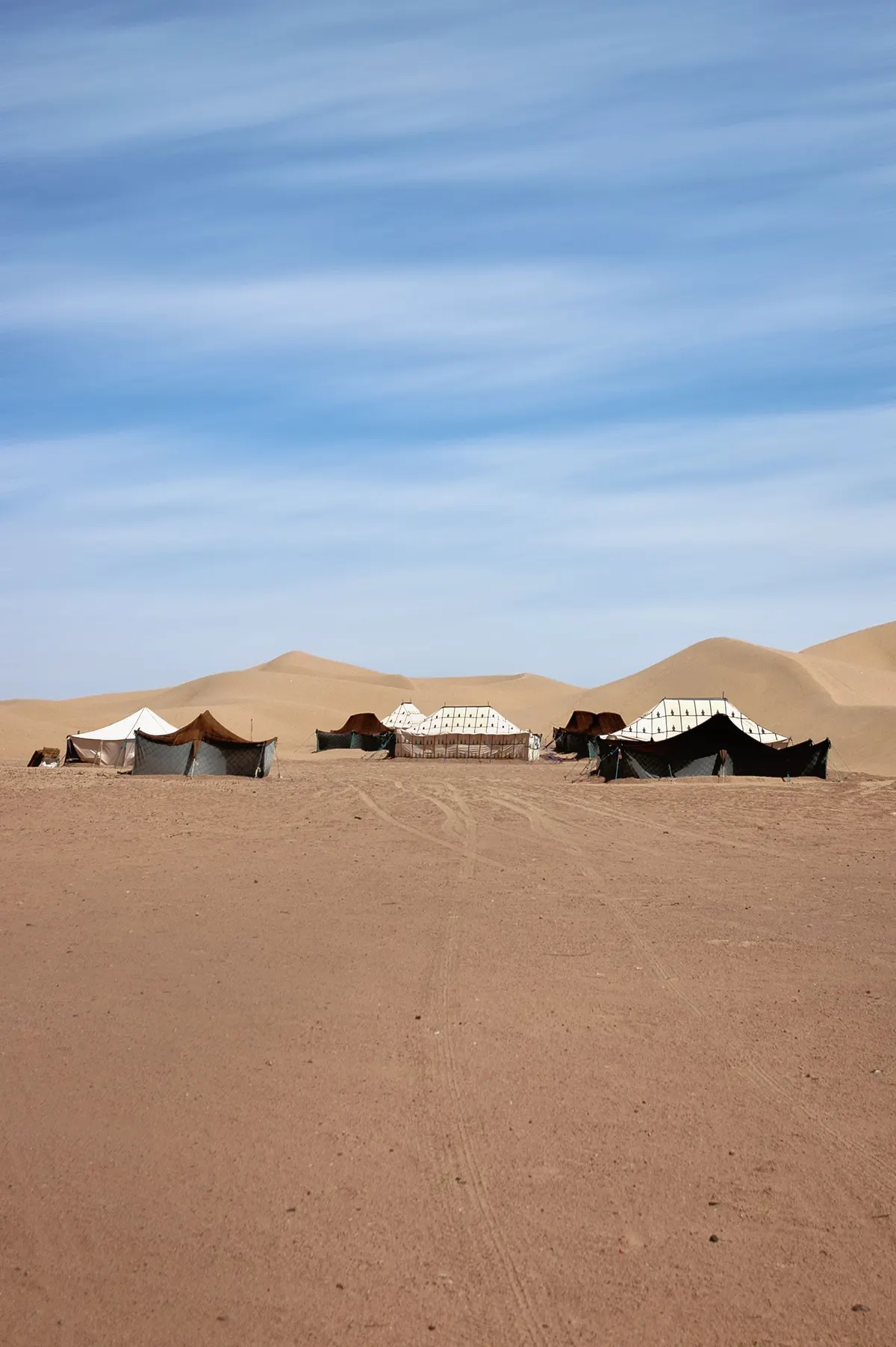
Camps market themselves in three rough tiers, and the vocabulary is deliberately vague — luxury can mean anything. Standard camps give you shared or twin tents, a communal bathroom block, generator at limited hours, a shared dining tent, mattresses that are firm, blankets that are thin in winter. The experience is genuine — the dunes do not care about thread count — and the price reflects it.
Premium camps, the ones sold as luxury, give you private tents with proper beds, en-suite bathrooms with running water — often cold in the deep desert, because the water supply is trucked or well-fed — solar or generator power for lights and phone charging, a restaurant tent, and a camp positioned deeper in the dunes for the sunset view. This is where most mid-range tours land, and where the gap between marketing photos and reality is widest: check what en-suite means before paying.
The small number of extreme-luxury properties genuinely deliver the brochure — suites, plunge pools, multi-course dinners, butler service — at prices that start where a standard camp's whole 3-day trip ends. They exist mostly at Erg Chebbi. If the budget is there and the night matters this much, book directly and ask for the exact tent number from a recent photo set.
04. The camel question, honestly
The camel trek to camp is the ritual image, and it is worth doing once: an hour or so of walking dromedaries in the golden hour, the guide leading, the camp appearing over a ridge. It also deserves plain talk.
Camels kneel dramatically and the mount is awkward; let the handler take your weight and do not fight the geometry. Saddles are hard and hips ache by the end; the thick rugs help, and it is over quickly.
Ask your operator whether the camels are rested in peak season — working animals on back-to-back treks in summer heat is a welfare line worth checking, and operators who answer the question directly are the ones worth booking.
The 4x4 transfer to camp is the alternative, and it is not a lesser experience: the sunset from the dune behind camp is the same sunset. Families with small children and anyone with back problems should take the truck without hesitation.
05. What is included: the questions that matter
Ask these before booking, in writing. Transfer method and timing — camel trek or 4x4, and what time the transfer leaves, because late arrival means missing the sunset, which is the entire point. Dinner and breakfast — what is actually served, whether dietary accommodation is possible; most camps serve a set tagine menu, vegetarian is usually fine with notice, allergies need direct confirmation.
What luxury includes — en-suite bathroom with hot water, or not; power by generator hours or solar only; Wi-Fi, where you should expect satellite at best, and ask yourself why you want it.
Winter heating — desert nights drop near or below zero from November to March, so ask about heaters and extra blankets; a camp that mentions heating unprompted is a camp that has had complaints.
Single occupancy and group size — small camps sell private tents that sit in a village of forty tents, so ask for the camp's tent count and its distance from the nearest other camp. And cancellation and weather — sandstorms and flash-flood closures of the access roads happen, so know the rebooking terms.
06. The night itself: a realistic sequence
Arrival by camel or truck in late afternoon; the climb up the dune behind camp for the sunset — do this, it is the shot everyone comes for, and it cools off fast after. Mint tea and snacks on the terrace. Dinner, usually communal, tagine and bread, sometimes with drumming and a Berber music session — the good camps keep this short and genuine; the padded ones drag it for tips.
Then the lights go down and the sky does the thing nobody is ready for: the Milky Way at a density no developed country can show. Most guests are asleep by 22:00 — the day's driving and the walking catch up.
Morning brings an optional early rise for sunrise over the dunes, which is worth it, breakfast on the terrace, and the return transfer. Check-out is typically mid-morning, and the onward drive usually resumes by 9:30 to 10:00.
07. What to bring, what to leave
Bring a warm layer, because even in summer the desert night surprises; a scarf against sand; a headlamp; a power bank, because charging points are limited; closed shoes for the dune walk; and small cash for tips.
Leave the drones, because of regulations and camp peace; glass; any expectation of hot showers; and any expectation of silence from generator camps. Ask about generator hours if you are a light sleeper, and request a tent at the camp's far edge.
08. Booking: operator, camp direct, or on arrival
Booking through the tour operator handling your transfer is usually simplest — the camp is part of the itinerary, and the operator carries the accountability. Booking direct suits independent travelers who have made their own way to Merzouga or M'Hamid and want to choose the exact property; camp websites are often thin, and recent reviews with photographs are the better source.
Booking on arrival in Merzouga village works in the low season and is a gamble in high — the good small camps sell out and the leftovers are exactly the camps with the worst review histories.
Whatever the route, one rule: never pay the full price for an unknown camp on someone else's photo. A camp worth its rate will send current pictures of the actual tents.
Frequently Asked Questions
How much does a Sahara desert camp cost?
A standard camp night runs roughly 400 to 900 MAD per person with dinner and breakfast, luxury camps 1,500 to 4,000 MAD, and the extreme-luxury properties well above that. Prices rise in high season, October to April, and around holidays. Most multi-day tours bundle the camp night into the trip price — ask which camp tier the tour uses, because the same tour photo may represent a standard tent.
Are Sahara desert camps safe?
Reputable camps at Erg Chebbi and Erg Chigaga are well-established businesses with long track records and are generally very safe — the regions depend on tourism. Choose camps with recent reviews, confirm the transfer arrangements in writing, and go through your tour operator's selection rather than an unknown walk-up offer in Merzouga village. The main real risks are cold in winter tents and the dune walks in the dark, and both are managed by asking the right questions before booking.
Do Sahara camps have Wi-Fi and hot showers?
Most do not, or only partially. Wi-Fi, where it exists, is slow satellite; hot water varies from bucket showers at standard camps to unreliable en-suite plumbing at some luxury ones — ask directly before booking. Plan for a night offline, charge phones at the limited power points, and treat the disconnection as part of the experience rather than a fault.
What is the difference between Erg Chebbi and Erg Chigaga?
Erg Chebbi, near Merzouga, has the tallest, most famous dunes and the most camp infrastructure — easier access, the widest choice, and the classic camel-trek sunset. Erg Chigaga, near M'Hamid, is larger, wilder and reached only by 4x4, with fewer camps and a stronger sense of remoteness. Chebbi suits first-time and comfort-leaning visitors; Chigaga suits travelers who prioritize isolation over facilities.
Can I do a Sahara camp in one day from Marrakech?
No — Erg Chebbi is roughly 9 to 10 hours of driving from Marrakech each way, around 560 km, and Erg Chigaga is comparable. A real desert-camp experience from the city requires a multi-day loop with overnights in the valleys en route. For a single night within a short itinerary, the Agafay desert camps near Marrakech are the workable alternative — stone desert rather than dunes, but the same evening under the same sky.
More Morocco tours
8 Days
8-Day Yoga & Desert Journey in Erg Chigaga
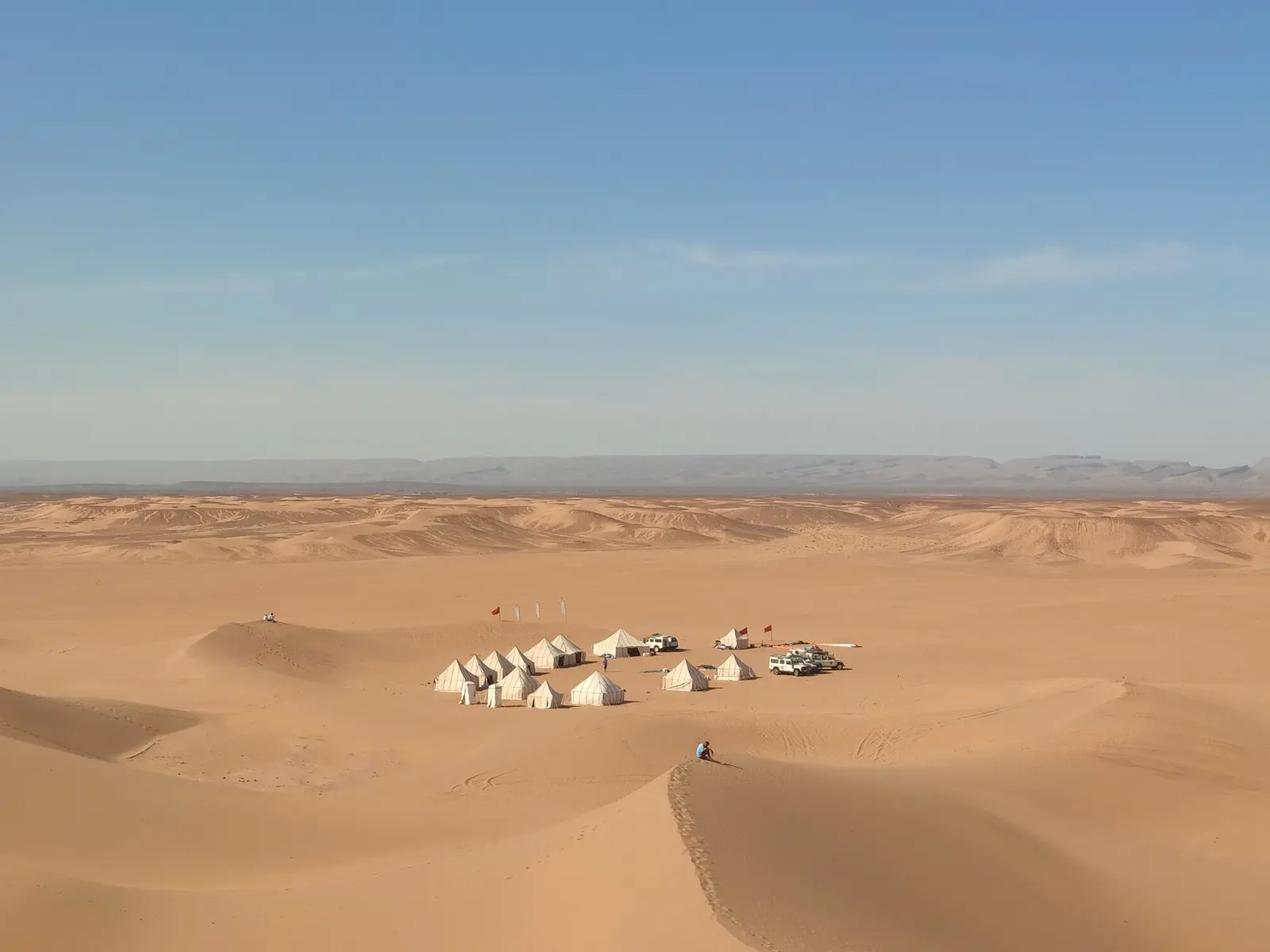
Eight days from Marrakech to a fixed nomadic camp in the dunes of Erg Chigaga: gentle treks with a support 4x4, daily yoga in the open, and five nights at the rhythm of the Sahara without moving camp.
3 Days
3-Day Luxury Marrakech to Fes Desert Tour via Merzouga
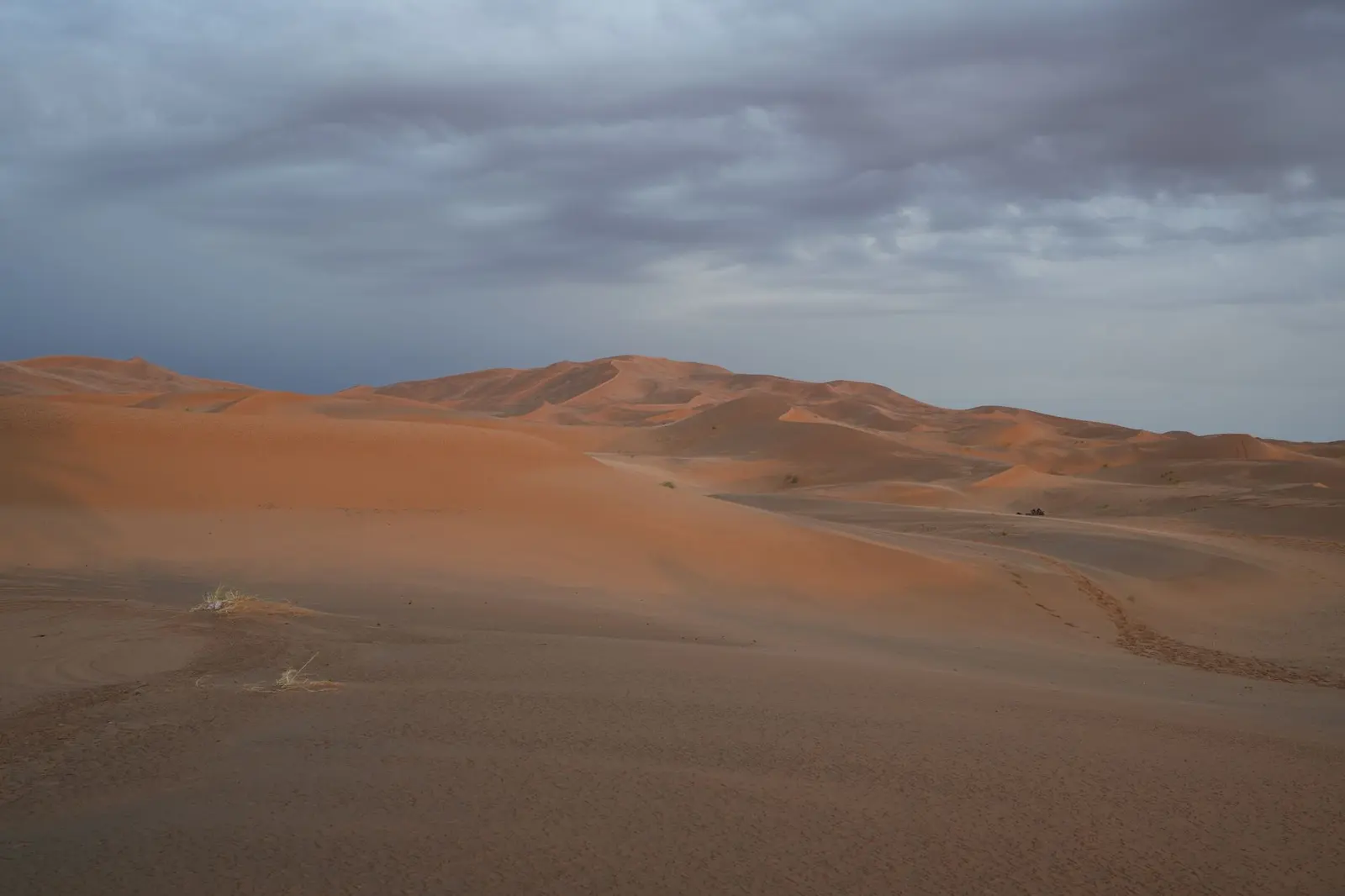
Three private days from Marrakech over the High Atlas to Aït Ben Haddou, then east through Skoura, the Valley of Roses and Todra Gorges to a luxury camp on the Erg Chebbi dunes — finishing north through the Ziz Valley and the Middle Atlas at your accommodation in Fes.
Near Marrakech
Agafay Desert
A dry, rocky desert close to Marrakech, with no dunes — bare hills, open horizons and camps laid out for dinner after dark. The short transfer is the point: one night either side of a city week.
Related Guides
Sahara Desert Travel Guide 2026
The complete Sahara desert travel guide: Erg Chebbi vs Erg Chigaga, camel treks, luxury desert camps, the classic 3-day Merzouga tour, and what to pack.
Marrakech to Sahara Desert Itinerary: A Practical 3, 4 and 5-Day Route
A focused Marrakech to Sahara desert itinerary with clear 3, 4 and 5-day variants. Covers Ait Ben Haddou, Dades Gorge, Todra Gorge, Erg Chebbi, camel trek and realistic driving times.
What Is Included in a Morocco Tour? A Buyer's Guide
What a well-run private or small-group Morocco tour normally includes, what it almost never includes, how private and group pricing differ, single supplements, deposits and the questions to ask before you pay.
Liked this guide?
Give it a like on Instagram and tag us from your Moroccan adventure.
Tell us your dates and comfort level — we will match the camp, not the brochure photo
Our Marrakech-based team of local experts designs tailor-made Morocco trips around your dates, budget and travel style.
Request a Quote