The hammam is a bathhouse, not a spa treatment — and it has been part of daily life here for roughly a thousand years. Here is what actually happens inside.
01. What a hammam actually is
Every neighborhood in every Moroccan city has a hammam, and for most Moroccans it is a weekly ritual rather than an indulgence. For visitors, the confusion is usually basic: what actually happens in there, what do you wear, and can a tourist just walk in?
The short answers: you get steamed, scrubbed with black olive soap and rasped with a coarse mitt until dead skin comes off in rolls, then rinsed and optionally clay-masked. You wear swimwear or underwear. Tourists are better off starting at a private hammam, one aimed at visitors, rather than a neighborhood one — and this guide explains exactly why, plus what changes when you upgrade.
02. A working bathhouse, not a Turkish bath
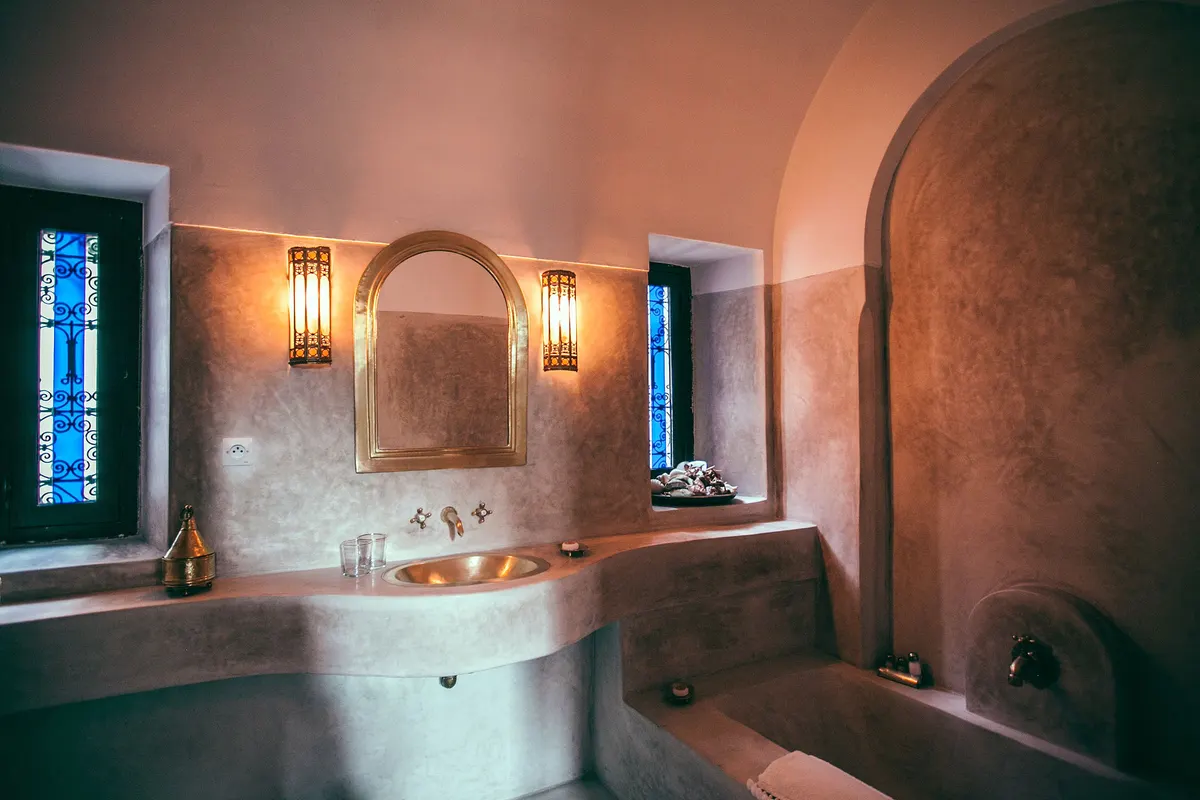
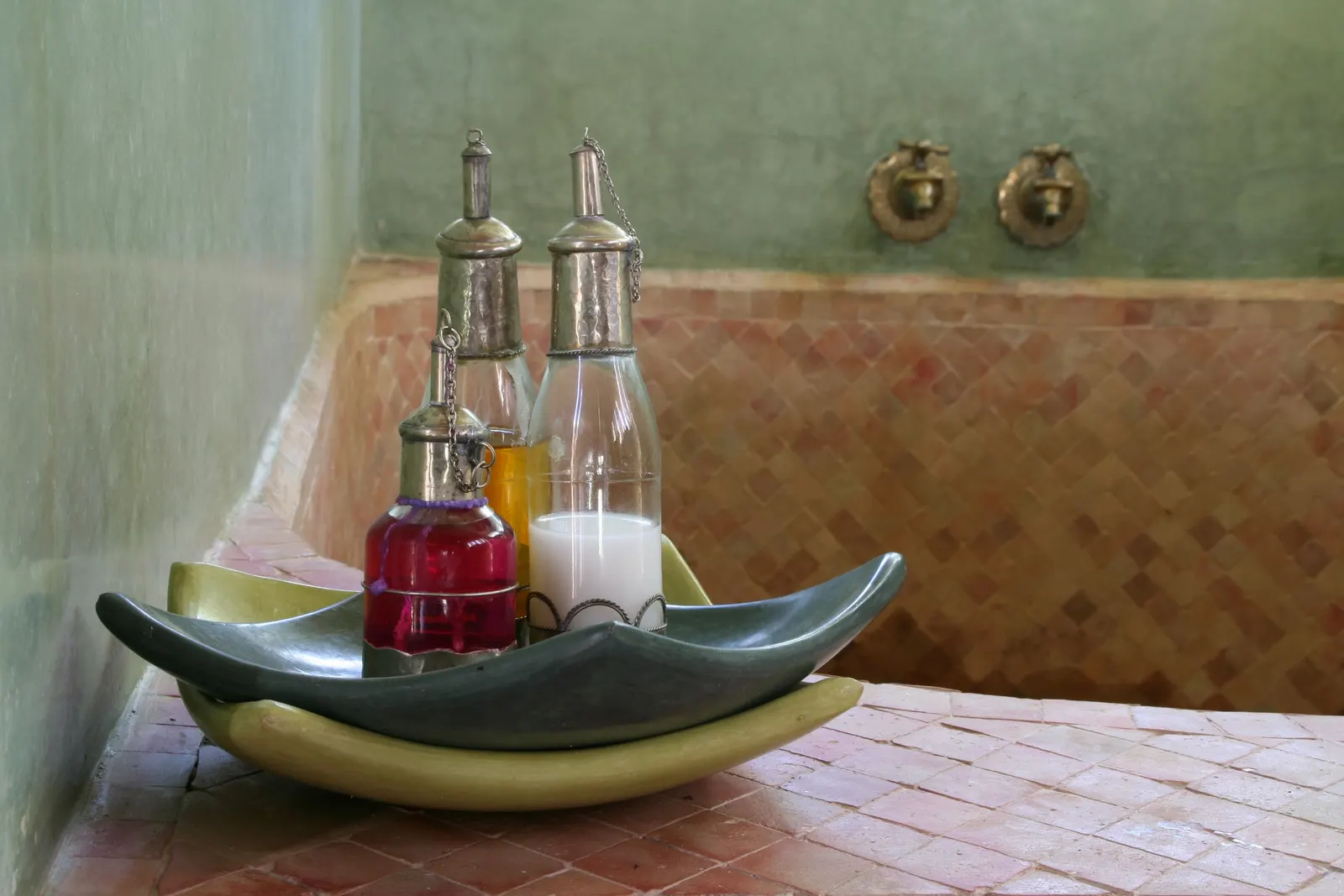
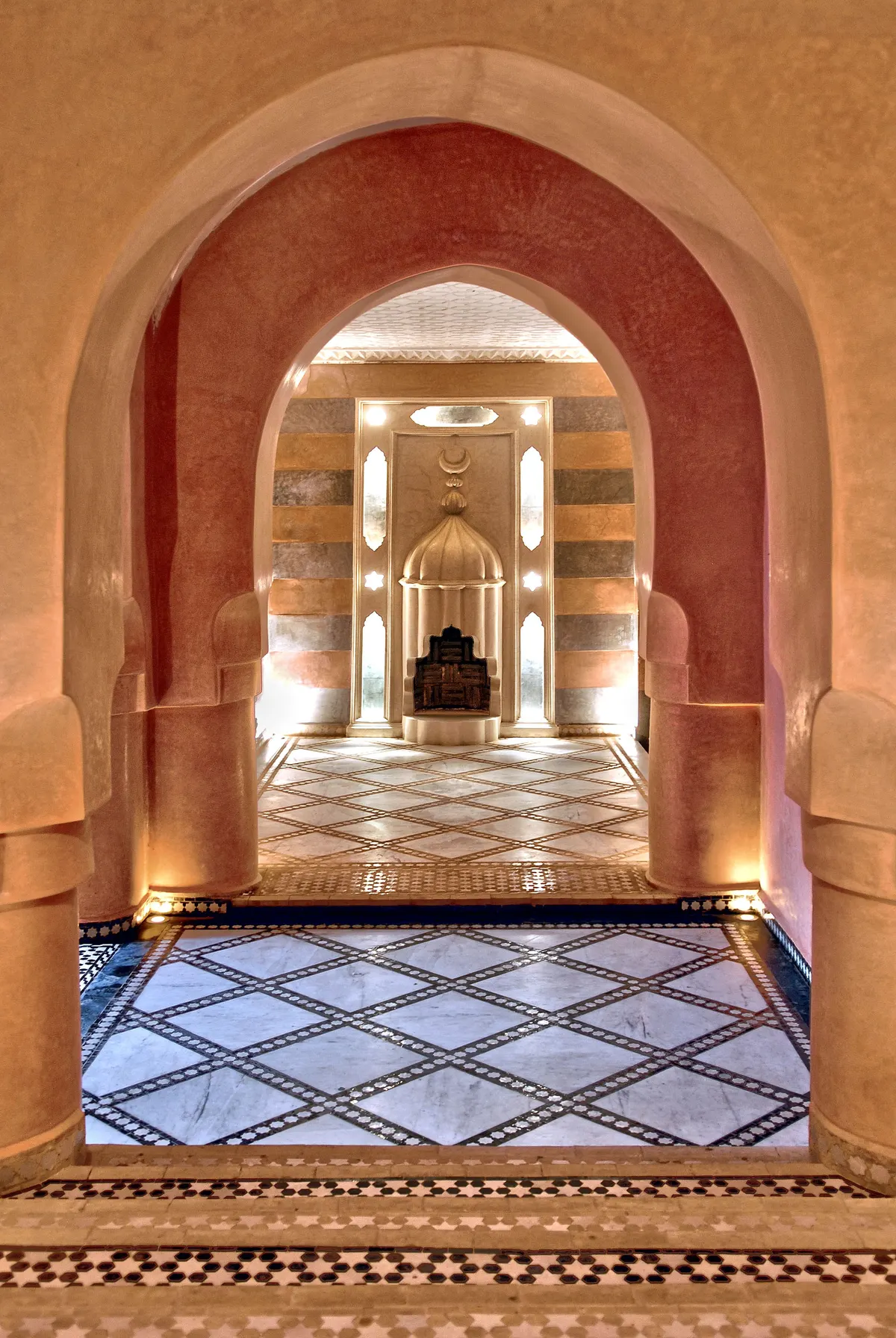
Moroccan hammams share ancestry with the Roman bath, but the practice differs from the Turkish hamam: no ice room, no belly-slapping, no ritual sequence with a copper bowl. The structure is simple — a series of heated rooms, hot marble slabs, running water and benches.
The building was historically tied to the mosque, because public bathhouses were part of the religious infrastructure of purification, which is why they sit at the heart of every medina. The neighborhood hammam is cheap, single-sex by session times or permanent separation, loud with family conversation, and run on a rhythm that has not changed in generations.
03. What actually happens in a session
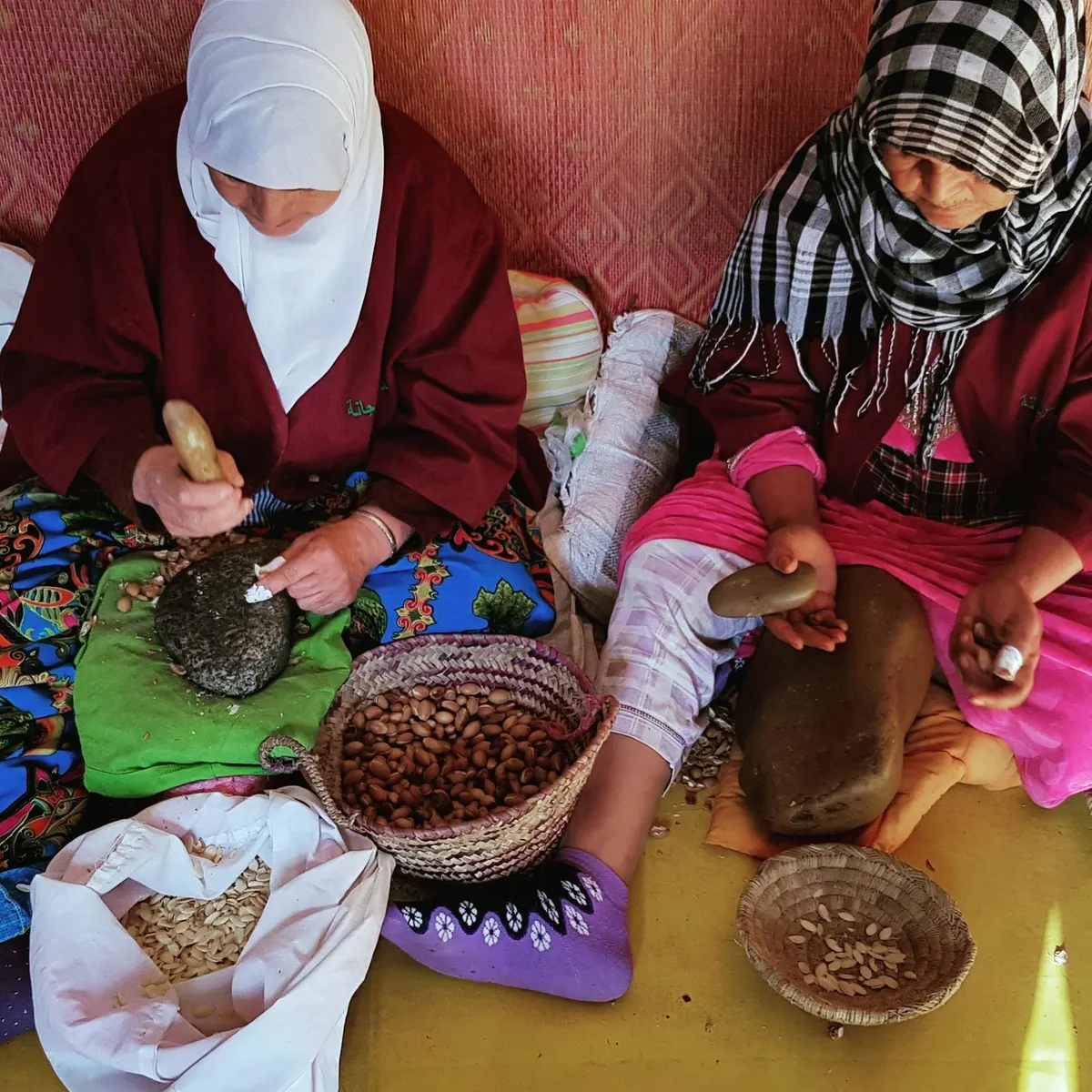
The standard treatment — the one every Moroccan gets weekly — has three stages. First, steam: you sit or lie in the hot room until your skin softens and you sweat properly. There is no timer; ten to twenty minutes is typical, longer if you can take the heat.
Second, black soap (savon beldi): a dark olive-oil soap is spread over the body and left to work for a few minutes. It smells like olives and iodine, softens the top layer of skin, and makes you very slippery.
Third, the scrub (kessa) — the part first-timers remember. With you on a hot marble slab, an attendant called a ghammali takes a kessa, a coarse woven mitt, and works over every part of your body with real pressure. Dead skin peels off in grey rolls. It does not exactly feel gentle, and it is not supposed to. After the rinse, your skin feels like new leather.
Optional extras, mostly in tourist hammams: a rhassoul clay mask with rosewater for hair and skin, and a rub-down or massage with argan oil afterward.
04. Neighborhood hammam vs private hammam
The neighborhood hammam costs a few dirhams — typically 10 to 40 MAD for entry, with the attendant scrub adding roughly 30 to 100 MAD on top. It has no fixed reception desk, no lockers worth the name, and you bring everything: soap, towel, flip-flops, a bucket if you want one. Women's and men's times are fixed and posted; in some hammams women get mornings and certain days, men the evenings, in others there are separate permanent rooms.
It is an intimate local space: women undress in front of each other without self-consciousness, families wash children, and a tourist in a bikini will draw looks and possibly comments. Going alone without a word of Darija is a bold first move; going with a local guide or a riad host who explains the drill is a memorable experience.
The private hammam is built for visitors: 200 to 600 MAD for scrub plus ghassoul, sometimes more at hotel spas. You get a treatment room, sometimes shared and sometimes private for couples, an English-speaking attendant, fresh towels and slippers, and a mint tea afterward. The scrub may be slightly less aggressive, and everything is explained in advance. There are no surprises and no logistics.
Our advice for a first visit: do a private hammam first so you know what the treatment feels like, then, if you are curious, go to a neighborhood one with your riad host or a guide. Doing it the other way round puts you in the deep end — steam, soap, a stranger's mitt and a language barrier, all at once.
05. What to bring and wear
For any hammam, public or private: swimwear or underwear, because locals in neighborhood hammams often wash naked in the single-sex rooms — that is their norm, but visitors should cover. Private hammams usually provide disposable underwear; ask when booking. Bring flip-flops, because floors are hot, wet and slippery.
Bring a towel for public hammams — private ones provide theirs — plus a change of underwear and, if you like, a change of clothes, because you will be squeaky clean and slightly pruned. Bring small cash for the public hammam; private hammams bill at reception.
And nothing valuable. Lockers in public hammams are minimal. Leave phones, jewelry and wallets at your riad — you cannot use a phone with wet hands anyway.
06. Etiquette and the unspoken rules
Use the right hand only for washing, greeting and handling anything, as throughout Morocco. Keep eyes to yourself in the single-sex rooms — nobody stares, and neither should you. Ask before photographing anyone; in practice, never photograph in a public hammam, because most people are undressed.
Do not refuse the scrub. If you book a hammam and then ask the attendant to be gentle, you are asking her to skip the entire point. If the pressure is genuinely painful, say shwiya, shwiya — slowly, gently — but expect firm.
On shaving, waxing and open wounds: skip the scrub over fresh cuts, shaving nicks or sunburn, and say so before you start. The mitt is not merciful.
07. Is a hammam hygienic?
The legitimate question. Private hammams used by tourists generally maintain clean water and fresh towels, and the heat plus aggressive scrubbing is, ironically, a strong cleansing process. Public hammams vary — water is running and heated, but the marble is shared.
Avoid the public hammam with open wounds, and pick a well-reviewed place. Riads and hotels keep lists of their preferred hammams; use their recommendation rather than walking into the nearest door.
08. Who should skip it — or check first
The hot rooms are genuinely hot. If you are pregnant, have high blood pressure, heart conditions, or are recovering from surgery or illness, ask a doctor before steaming. Small children handle the heat poorly.
Elderly travelers should take the private option, where someone watches them the whole time.
09. How to book and what it should cost
For a public hammam, walk in during women's or men's hours — no booking — and bring cash in small notes. Some hammams offer the attendant scrub as an add-on, around 30 to 100 MAD on top of entry, arranged on the spot.
For a private tourist hammam, book through your riad the day before: 200 to 600 MAD for the classic scrub plus ghassoul, while hotel spas charge more for the same sequence in nicer surroundings. Tipping the attendant, 20 to 50 MAD in a public hammam and often included or expected in private ones, is normal.
Frequently Asked Questions
How much does a hammam cost in Morocco?
Entry to a neighborhood hammam runs about 10 to 40 MAD, with an attendant scrub adding roughly 30 to 100 MAD. A private tourist hammam with scrub and ghassoul clay costs 200 to 600 MAD; hotel spa versions cost considerably more.
What do you wear in a Moroccan hammam?
Swimwear or underwear as a visitor. Locals in single-sex neighborhood hammams often wash without clothing, which is normal there; tourists should cover up. Private hammams often provide disposable underwear — confirm when booking.
Do they scrub you in a Moroccan hammam?
Yes — that is the core of the treatment. An attendant rubs your steamed skin with a coarse kessa mitt, and dead skin comes off in rolls. It can feel abrasive and is not meant to be gentle. Say shwiya if you need it lighter.
Is a public or private hammam better for tourists?
Private, for a first visit — fixed price, clean facilities, towels and explanations included. A neighborhood public hammam is the more authentic experience but comes with logistics: session times by sex, no lockers, everything bring-your-own, and a language barrier. Try the private one first, then the public one with a local guide.
Can I go to a hammam while pregnant, or with a heart condition?
Ask your doctor first. The steam rooms get very hot, which is not appropriate for everyone. If cleared, choose a private hammam where someone monitors you and skip the deep scrub over the abdomen.
More Morocco tours
8 Days
8-Day Yoga & Desert Journey in Erg Chigaga
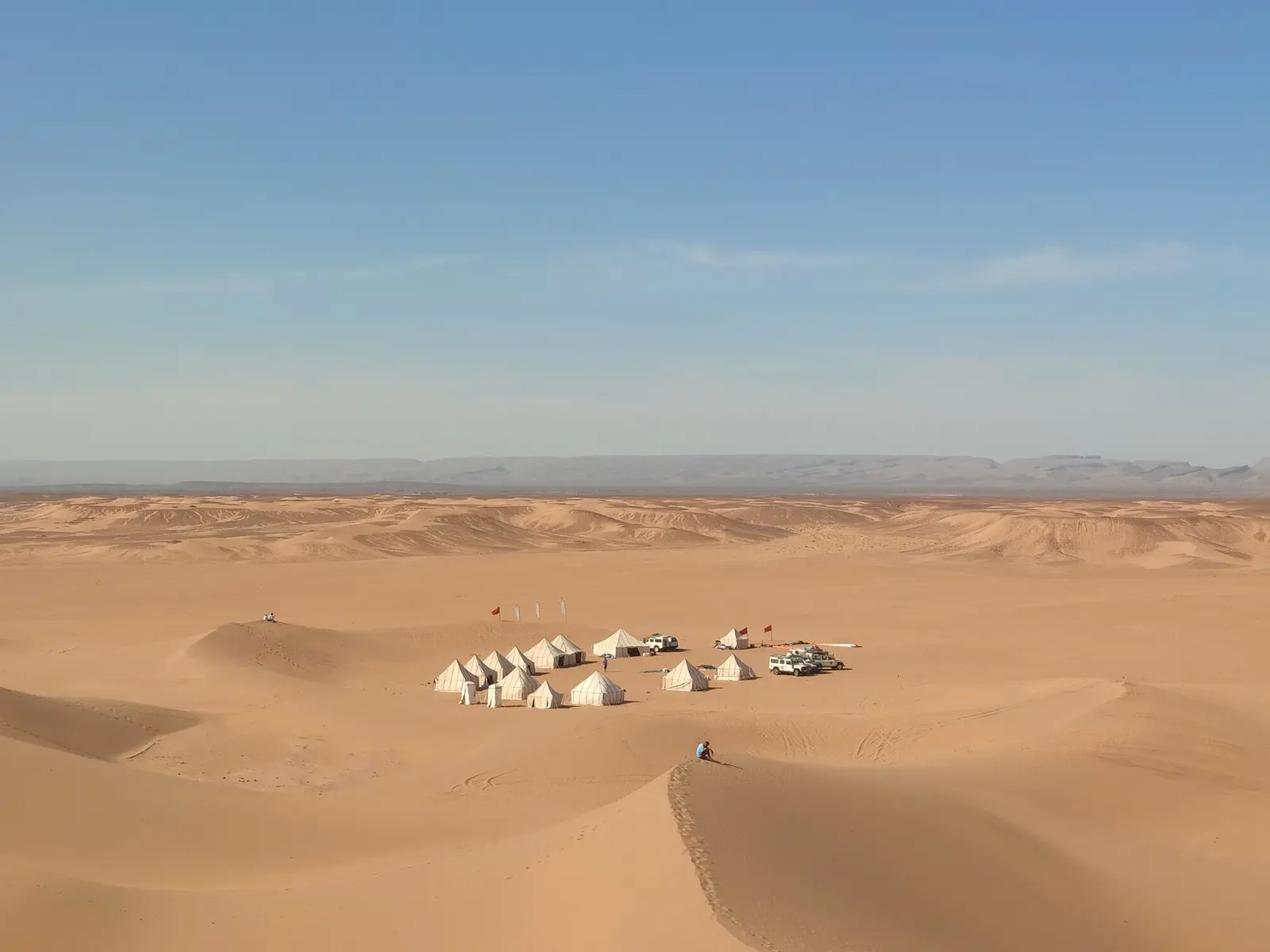
Eight days from Marrakech to a fixed nomadic camp in the dunes of Erg Chigaga: gentle treks with a support 4x4, daily yoga in the open, and five nights at the rhythm of the Sahara without moving camp.
Wild & Remote
Erg Chigaga
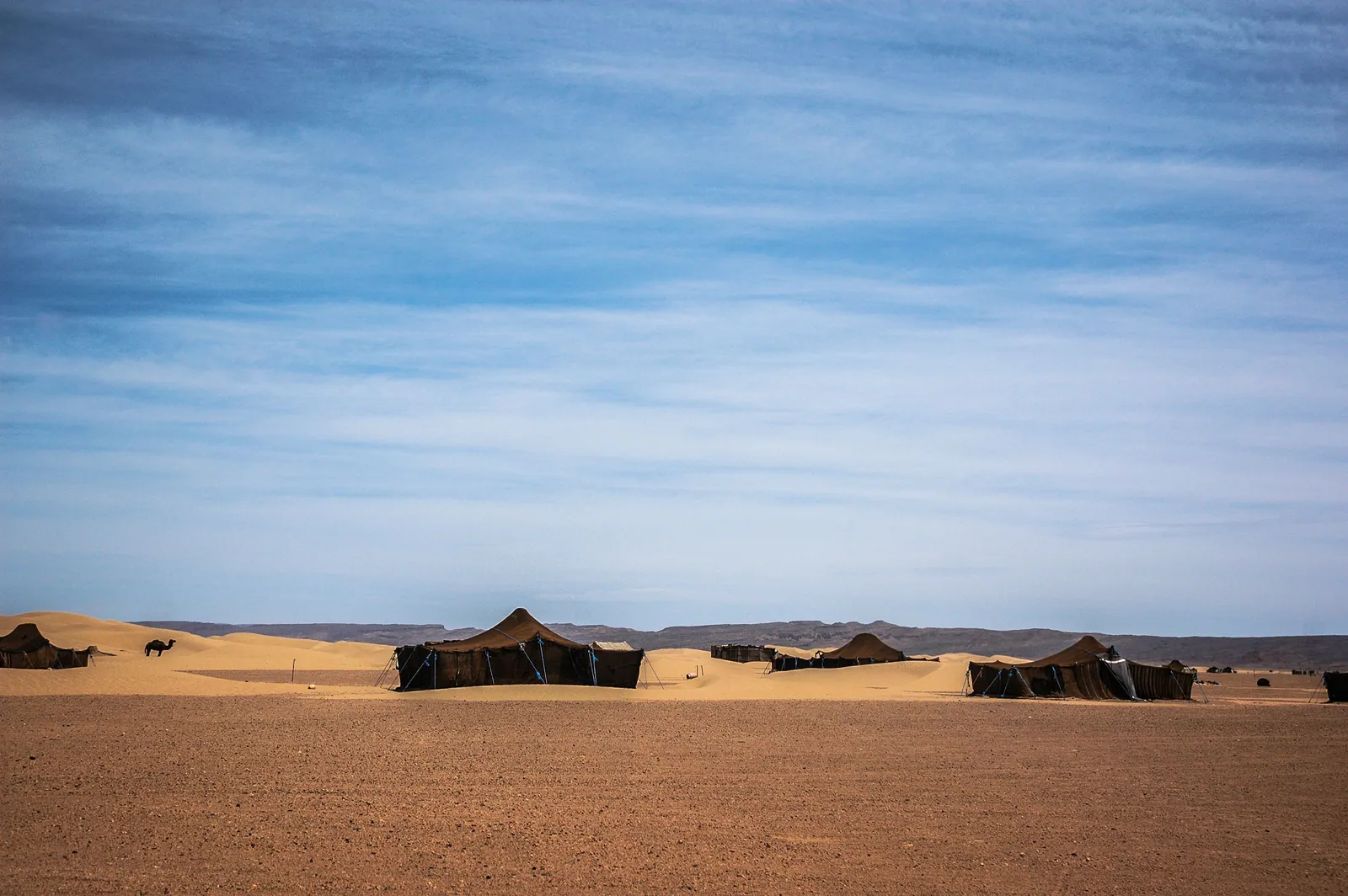
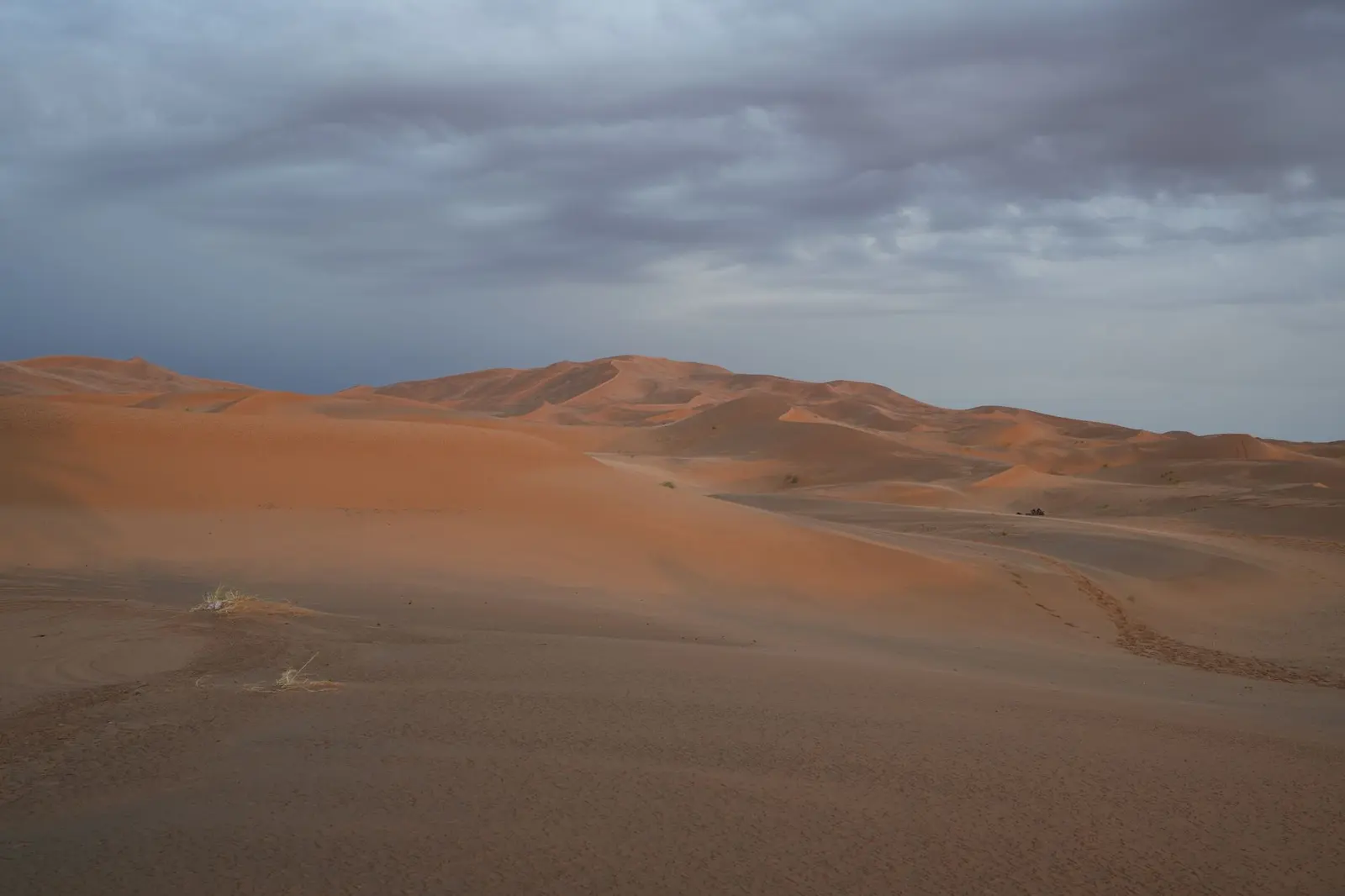
Chigaga is the one you take for distance rather than scenery. The dunes run wide, the camps sit far apart and the track in is quiet. It needs a proper day of driving, so it belongs inside a longer route.
3 Days
3-Day Luxury Marrakech to Fes Desert Tour via Merzouga
Three private days from Marrakech over the High Atlas to Aït Ben Haddou, then east through Skoura, the Valley of Roses and Todra Gorges to a luxury camp on the Erg Chebbi dunes — finishing north through the Ziz Valley and the Middle Atlas at your accommodation in Fes.
Related Guides
Bargaining in Morocco: How to Haggle in the Souks, With Fair Prices
A practical guide to haggling in Moroccan souks — the rules, the opening-offer maths, fair price ranges for common goods, when not to bargain, and how to walk away without guilt or a fight.
Morocco SIM Cards and Mobile Data: IAM, Orange and inwi Compared
Everything about getting mobile data in Morocco — which operator covers the desert and mountains, SIM registration rules, realistic prices, eSIM options, Wi-Fi reality and how to avoid tourist data traps.
Where to Stay in Marrakech: Medina, Gueliz, Hivernage or Palmeraie?
A practical guide to Marrakech's four main areas — the medina, Gueliz, Hivernage and the Palmeraie — with honest trade-offs on noise, access, riads vs hotels and which neighborhood fits your trip.
Liked this guide?
Give it a like on Instagram and tag us from your Moroccan adventure.
We book hammams worth the sweat — tell us your city and we will arrange the first visit
Our Marrakech-based team of local experts designs tailor-made Morocco trips around your dates, budget and travel style.
Request a Quote