

Mobile data in Morocco is cheap, legal and quick — with one catch: you cannot buy a SIM anonymously. Here is what to buy, where, and for how much.
01. What to know before landing
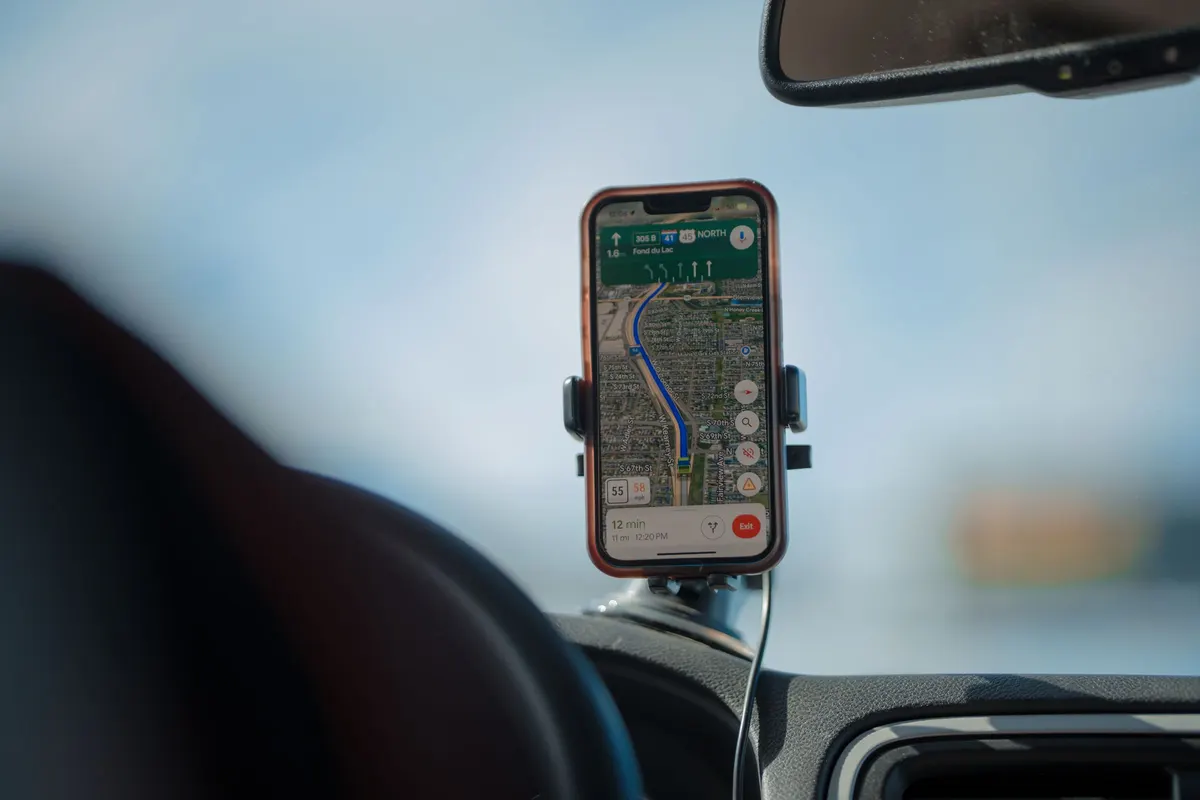
The first thing most visitors want after landing is data — for maps, translations and letting family know they arrived. Morocco makes this easy, cheap and legal, with one catch that surprises people used to European travel: you cannot buy a SIM anonymously. Registration with your passport is mandatory, at every operator, for every SIM.
Get a local SIM and you will pay somewhere around 20 to 50 MAD for the SIM itself and another 50 to 100 MAD for a data package that lasts a month — less than a single day of most European roaming plans. Coverage on the main roads, in the cities and in the desert is genuinely good.
02. The three operators
IAM, also called Maroc Telecom or Al Amin, is the former state monopoly and still the biggest network. It has the best coverage outside the cities — the Atlas villages, the road to Merzouga, the valleys — which is why drivers and guides carry IAM SIMs. If your trip is mostly Marrakech, Fes and the desert, this is the safe choice.
Orange Morocco is strong in the cities and on the main highways, with competitive data bundles, and it is the operator most tourists end up with because airport and medina shops push it. Fine for city-centered trips; coverage thins faster on rural mountain roads.
inwi is the challenger: often the cheapest bundles, weakest rural coverage. Reasonable for a city break, risky as a sole SIM for a desert itinerary. A single IAM SIM covers 95% of what a normal trip needs.
03. Registration: your passport is required
By Moroccan law, every SIM is registered to a buyer's identity — passport for foreigners, national ID for residents. The shop scans your passport or writes down the number. Expect a two-minute formality at any operator store or authorized reseller. It is not a formality you can skip, and a SIM bought in your name is traceable to you, which is normal here.
Bring your passport to buy the SIM — not a photocopy, not a driving license. Tourist SIM deals exist at the airport, pre-registered welcome packs from IAM and Orange with a data bundle, but they are priced for convenience; buying in town costs a fraction of the airport price with ten minutes of effort.
And registration is per person: you cannot buy one SIM and share it across the family, because each adult needs their own.
04. Where to buy, and what it should cost
At the airport, both Mohammed V in Casablanca and Marrakech Menara have operator stores and reseller counters in arrivals. Prices are slightly higher than in town, but you walk out of the terminal with working data, and for most visitors the small premium is worth it.
In the cities, use any official operator store — look for IAM, Orange or inwi branding — or a phone-accessory shop displaying the operator logos. In the Marrakech medina and Fes many small shops sell SIMs: go where the branding is official, and avoid the touts who approach tourists with very-good-price, my-cousin pitches. That route ends in a SIM registered to someone else, deactivated within days.
Realistic prices: the SIM card is free to about 50 MAD, often given away with a recharge; a starter data bundle is around 50 to 100 MAD for several gigabytes valid a month; top-ups are sold everywhere as scratch cards from 20 MAD upward, including village shops and petrol stations on the desert road. Pay in cash, in dirhams — card payment for a 30-MAD scratch card at a medina stall is not a thing.
05. eSIMs: the modern alternative
All three operators now offer tourist eSIMs, and the big international providers — Airalo, Holafly, Nomad and similar — sell Morocco eSIMs that activate before you fly. The pros: no shop visit, instant activation, your home number stays active on a second line, no passport queue at the airport.
The cons: eSIM plans cost noticeably more dirhams per gigabyte than a physical local SIM; some cheaper bundles throttle heavily after the data cap; and the tourist eSIMs from international providers often route or expire in ways the local operators' own eSIMs do not.
The practical rule: if you want zero logistics, buy a tourist eSIM the day before flying. If you want the best price and do not mind a ten-minute stop, buy a physical IAM SIM at the airport or in town. Travelers staying under two weeks with light data needs often find the eSIM premium acceptable; a month-long trip or a work-from-the-road setup should buy local.
06. Wi-Fi in Morocco: the honest picture
Hotel and riad Wi-Fi exists everywhere and is free, but quality follows the same rule as everything else: fine in the cities, variable in the mountains, unreliable in desert camps. Desert camp Wi-Fi is often satellite-based, slow, and switched off after dark.
Cafes offer Wi-Fi across the cities — ask for the password, which is usually written on the receipt or chalked by the till. Speeds are adequate for messages and maps, unreliable for video calls.
The practical takeaway: rely on mobile data, not Wi-Fi. Maps work on mobile data, which you will have in every town from your SIM, so download offline maps before you fly regardless of which option you choose.
07. Using your data: what actually works
Maps with offline downloads are the killer app, and you should download the Morocco regions before you fly no matter what. WhatsApp is the local messaging platform — everyone uses it, from drivers to hotels to guides to restaurants. Install it and expect your driver to send a WhatsApp message rather than call.
Confirm in advance that your trip's drivers send live location shares; it transforms pickup logistics in the medina. For ride-hailing, Careem and inDrive are the apps Moroccans actually use — Careem across several cities, inDrive everywhere — and expect the car to be a private vehicle rather than a marked taxi. Uber relaunched in Casablanca and Marrakech in late 2025. Metered petit taxis remain the standard fallback in Marrakech and Fes.
Voice calls on a Moroccan number work normally, but there is no EU-style free-roaming deal for Morocco from European numbers, so do not plan on receiving calls on your home SIM without a roaming package.
08. Roaming from home, and the tourist traps
Some home carriers include Morocco in roaming bundles — certain UK, French and Gulf plans do, many do not. If your plan includes decent Moroccan roaming, an eSIM or local SIM may be unnecessary for a short trip. Check before flying, because roaming in Morocco is typically charged at 2 to 10 EUR per MB without a bundle, which turns a map-heavy day into a surprise bill.
Then the traps, bluntly. Do not buy from unlicensed street sellers, because a SIM registered to a stranger is a deactivated SIM. Confirm the bundle in writing: ask the shop to show the activated data package and validity on the screen before you leave, because unlimited tourist bundles that throttle after 1 to 2 GB are common at airport counters.
Keep the scratch card code — top-ups need it, so photograph the back of the card before you hand it over. And watch the auto-renew: some bundles auto-renew from credit balance, so if you do not want that, ask for a one-time bundle.
Frequently Asked Questions
Which SIM card is best for tourists in Morocco?
IAM, Maroc Telecom — it has the strongest coverage on the Atlas roads and desert routes, which is where Orange and inwi thin out. City-only trips can use any of the three; IAM is the safe default for itineraries that reach Merzouga, the mountains or the valleys.
How much is a SIM card and data in Morocco?
The SIM itself runs 0 to 50 MAD, usually free with a recharge. A month-long data bundle with several gigabytes costs 50 to 100 MAD. Top-up scratch cards are sold from 20 MAD upward, including in villages. Tourist SIMs at the airport cost more for the same data.
Do I need my passport to buy a SIM in Morocco?
Yes. Moroccan law requires every SIM to be registered to the buyer's identity document, which for foreigners is the passport. The shop records the passport number, and it takes a couple of minutes. Buying from an official store or authorized reseller also means a SIM that stays active for the length of your trip.
Do eSIMs work in Morocco?
Yes — all three operators offer tourist eSIMs, and international providers like Airalo, Holafly and Nomad sell Morocco eSIMs that work from landing. They cost more per gigabyte than a physical local SIM but skip the shop visit. Light users on short trips often find the premium worth it.
Is Wi-Fi good in Morocco?
Adequate in cities, unreliable in the mountains and desert camps. Hotel and riad Wi-Fi is free but variable; desert camps often run slow satellite links. Plan on mobile data as your primary connection and treat Wi-Fi as a bonus — and download offline maps before you fly either way.
More Morocco tours
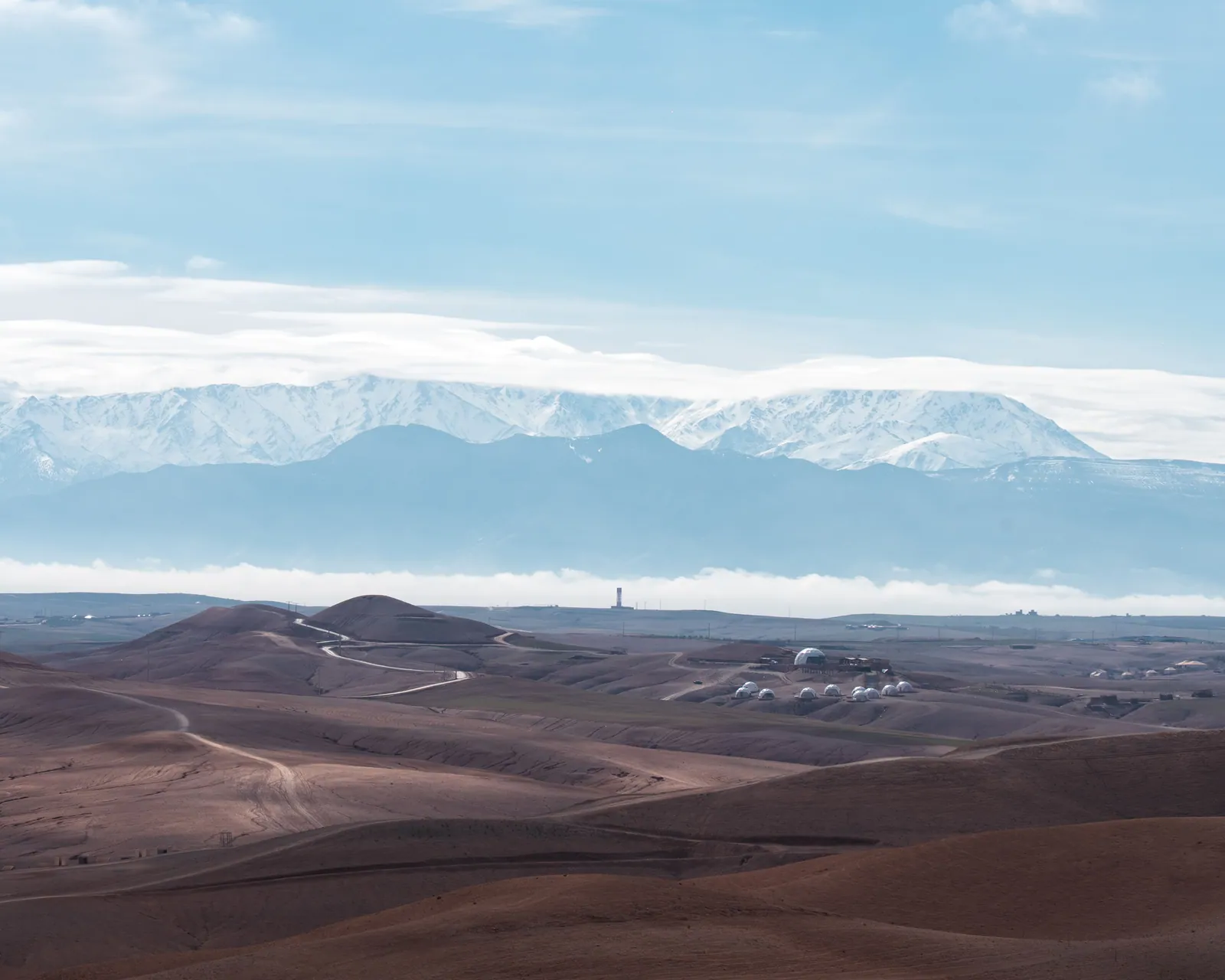
Near Marrakech
Agafay Desert
A dry, rocky desert close to Marrakech, with no dunes — bare hills, open horizons and camps laid out for dinner after dark. The short transfer is the point: one night either side of a city week.
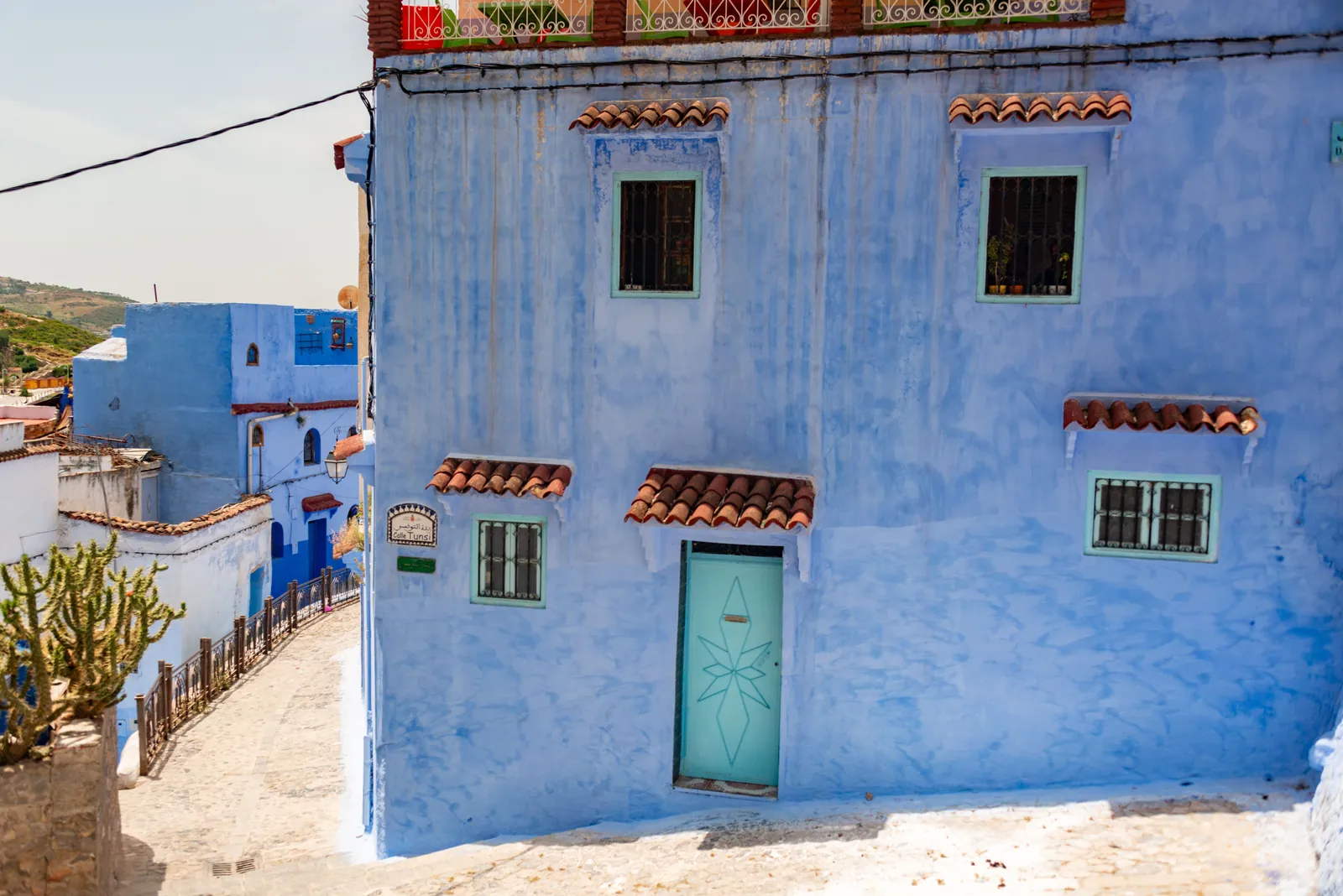
Blue City
Chefchaouen Day Trip
Chefchaouen is up in the Rif, north of Fes, and almost all of it is blue — walls, steps, doorways. A long drive to a town you walk slowly in, for one good afternoon.

10 Days
10-Day Erg Chigaga Desert Trekking Tour from Marrakech
Explore Morocco on a 10-day Erg Chigaga desert trekking tour from Marrakech via Tagounite, Casa Juan, the Draa Valley and Irocha Guest House in Tisselday.
Related Guides
Marrakech to Sahara Desert Itinerary: A Practical 3, 4 and 5-Day Route
A focused Marrakech to Sahara desert itinerary with clear 3, 4 and 5-day variants. Covers Ait Ben Haddou, Dades Gorge, Todra Gorge, Erg Chebbi, camel trek and realistic driving times.
Bargaining in Morocco: How to Haggle in the Souks, With Fair Prices
A practical guide to haggling in Moroccan souks — the rules, the opening-offer maths, fair price ranges for common goods, when not to bargain, and how to walk away without guilt or a fight.
The Moroccan Hammam: Public Baths, Private Spas and What to Expect
A practical first-timer's guide to the Moroccan hammam — how public bathhouses work, what the scrub involves, what to bring, prices, etiquette and how a tourist hammam differs from a neighborhood one.
Liked this guide?
Give it a like on Instagram and tag us from your Moroccan adventure.
Send us your route — we will tell you which SIM lasts from the medina to the dunes
Our Marrakech-based team of local experts designs tailor-made Morocco trips around your dates, budget and travel style.
Request a Quote