

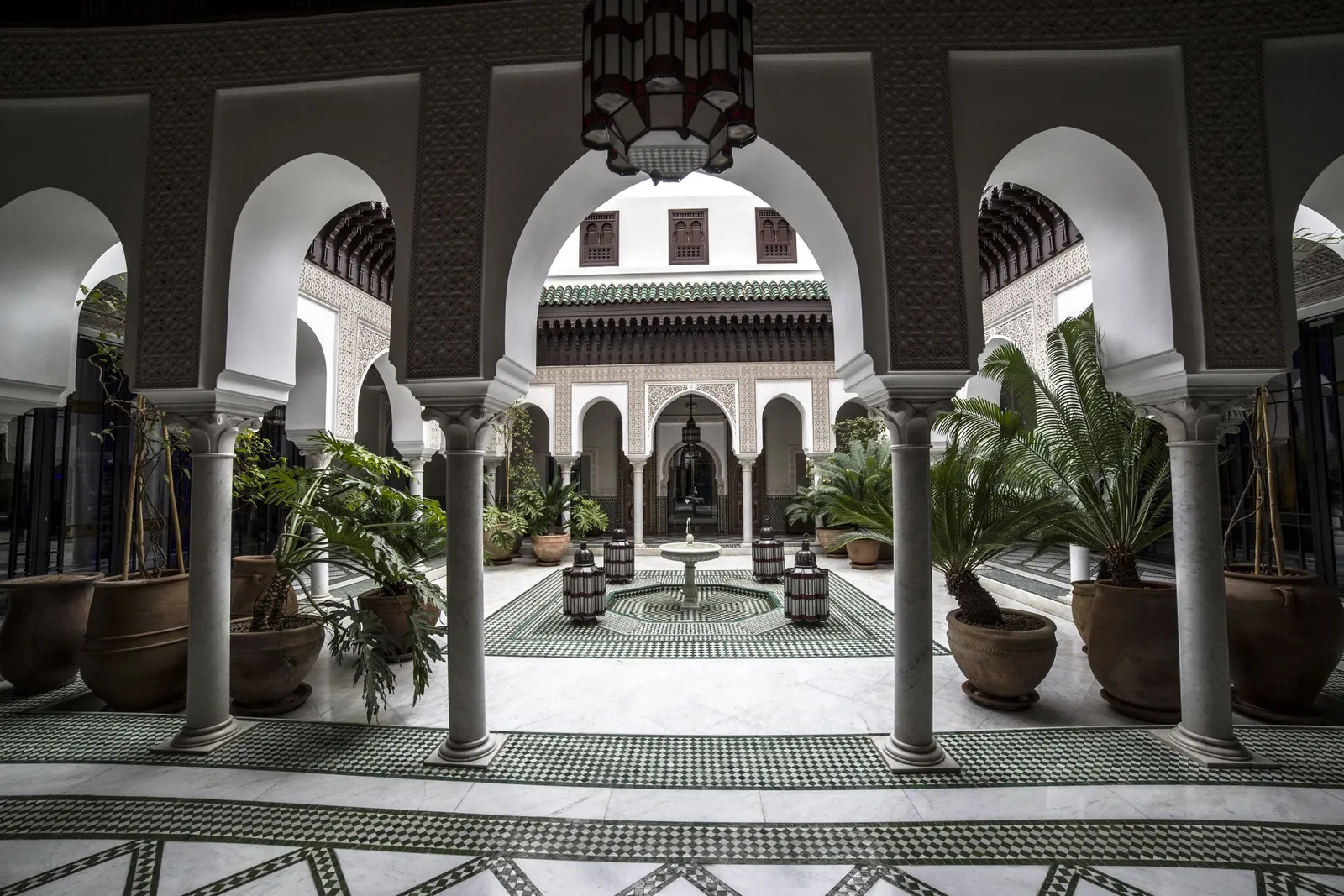
Four parts of Marrakech, four different trips. Choose the base before you choose the riad — noise, walkability and luggage access decide more than any photo.
01. Four areas, four different trips
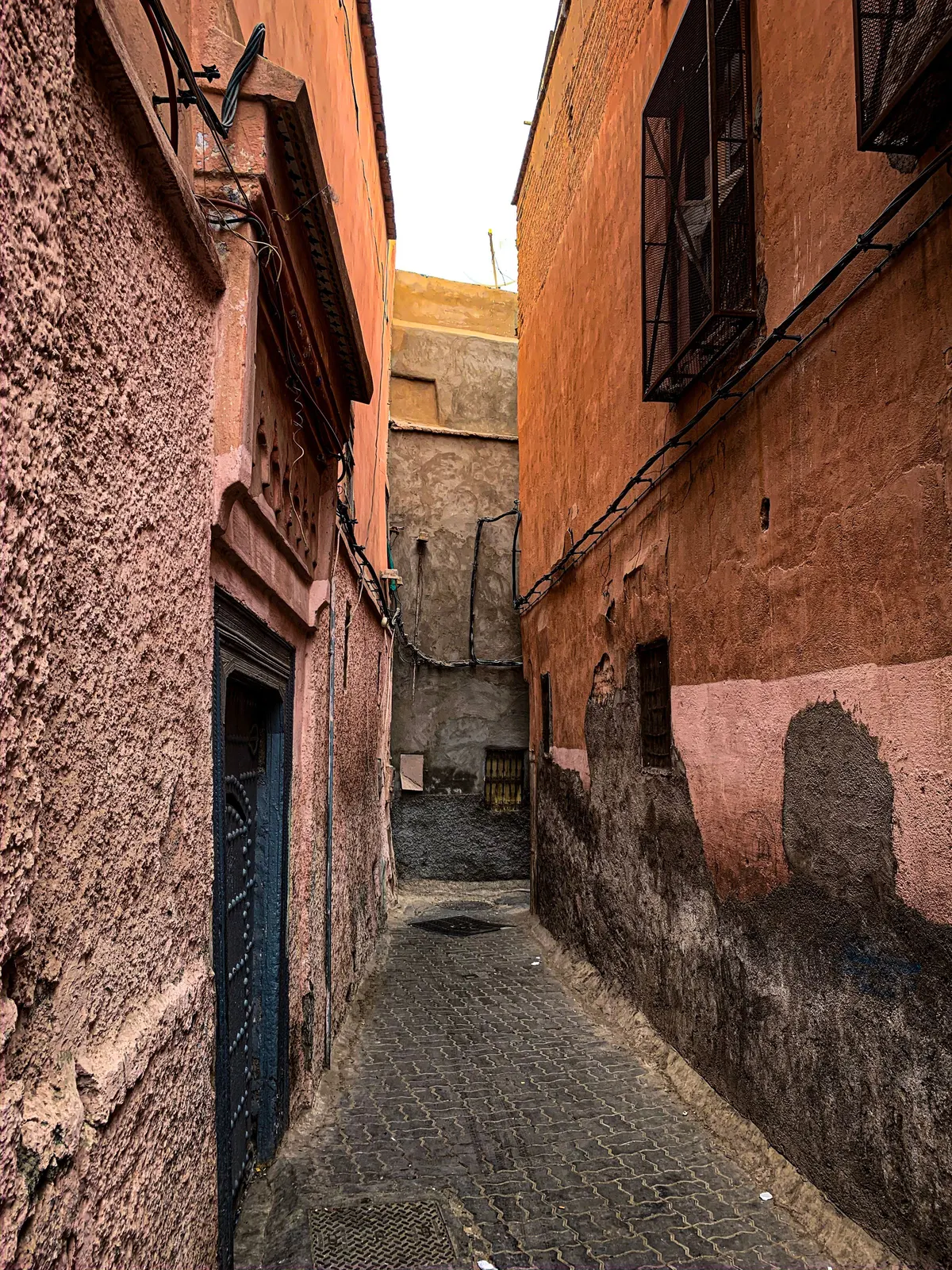
Accommodation decisions in Marrakech usually go wrong in one of two ways. The cheapest riad deep in the medina turns out to be unreachable with luggage, with bags dragged through alleyways. Or the five-star hotel in the Palmeraie turns every dinner into a 25-minute taxi ride.
The city has four main areas, and they are genuinely different experiences, not just different prices. The medina is the old walled city. Gueliz is the French-built downtown from the Protectorate era. Hivernage is the hotel strip between the two. The Palmeraie is the palm grove north of the city. Where you stay shapes what your Marrakech actually is.
02. The medina: the reason most people come
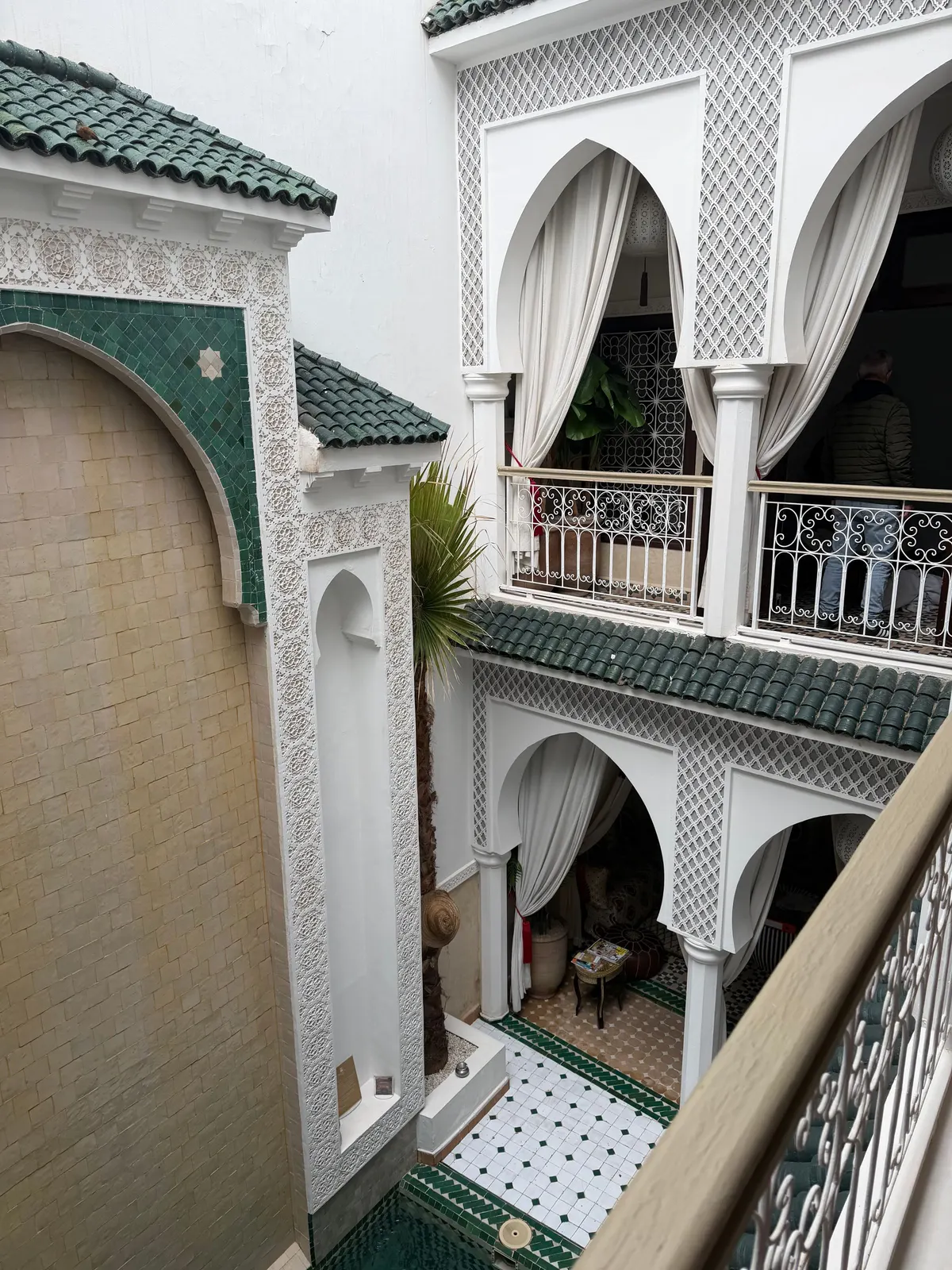
The medina is the UNESCO-listed old city: a dense maze of souks, riads and residential lanes inside the 12th-century walls, almost nothing taller than three floors, no cars — only donkeys, handcarts and the occasional moped. Every building turns inward around a courtyard.
Everything worth seeing is walkable. Jemaa el-Fna, the souks, the Bahia Palace, the Saadian Tombs and the Ben Youssef area all sit inside the walls, and most guests never need a taxi after check-in. Riads are the local architecture: rooms face inward around a quiet courtyard, with rooftop terraces over the medina.
The trade-offs are real. You are inside the noise — the souks run loud until about 20:00, and riads near Jemaa el-Fna hear music, generators and the square's night food stalls past midnight, so ask how far a riad sits from the square before booking. And no vehicle reaches the riad door: expect a walk through alleys, sometimes steep or uneven, with luggage moved by handcart or porter. Good riads send someone to meet you at the nearest accessible point — confirm this when you book, especially for evening arrivals when lanes are dark.
03. The Mellah and Kasbah: the medina's calmer edge
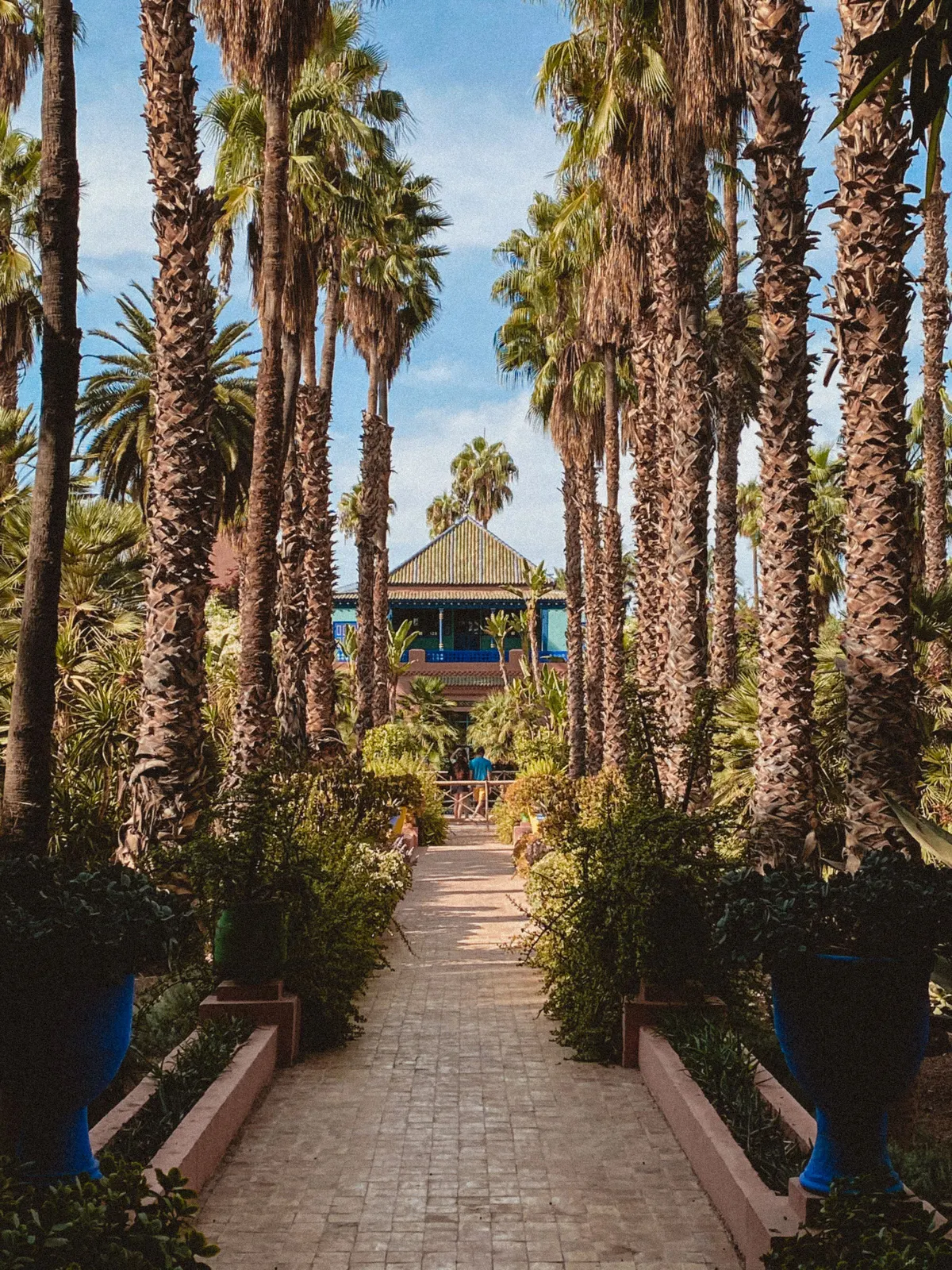
Two medina quarters deserve separate mention. The Mellah, the old Jewish quarter southeast of the centre, is now a busy market district near the spice market and the Saadian Tombs — atmospheric but not quiet.
The Kasbah, south of the Mellah, was the royal quarter: wider lanes, more government buildings and a calmer residential character than the Jemaa el-Fna side. Riads here still count as medina for walking purposes, but they sit at the edge of the noise.
04. Gueliz: modern Marrakech
Gueliz was planned and built under the French Protectorate from 1913 onward: wide boulevards, art-deco facades, tram lines, cafes and shops. It is where Marrakech lives its modern life, and it suits travelers who want hotels with driveways and parking, the city's densest cafe scene and most of its late-night bars.
After a long flight, a normal hotel check-in with a car at the door is a real benefit. The trade-off is character: Gueliz has almost no riads, no souks outside a couple of shopping arcades and none of the medina's atmosphere. Every trip to the old city means a petit taxi — roughly 20 to 40 MAD depending on the meter discussion. Gueliz suits business stays, longer visits and travelers who want a hotel, not a courtyard.
05. Hivernage: the hotel strip
Hivernage is the green, low-rise hotel district wedged between the medina walls and Gueliz, home to La Mamounia and the city's other grand hotels. It is a genuine compromise: 10 to 15 minutes on foot to the Koutoubia area, landscaped avenues, pools, spas and quiet at night.
It is mostly international-style hotels rather than riads, and prices track the big-name properties. Families and travelers who want medina access without medina logistics often do well here.
06. The Palmeraie: calm at a distance
The Palmeraie is the palm grove stretching north of the city, roughly 6 to 15 minutes from the medina by car depending on how deep the resort sits: large properties, pools, gardens, golf courses and a handful of riad-style palaces.
What you get is space, quiet and sunset light over the palms. What you give up is spontaneity — every outing is a pre-planned taxi ride, and after dinner you will likely pay more than the metered fare to get back, since few taxis wait up there. Some Palmeraie roads are unpaved and rough in rain.
The Palmeraie suits honeymooners, resort-style stays and anyone who planned Marrakech as a relaxation trip with a couple of medina excursions. It is a poor base for a short city break.
07. How many nights where?
For a first visit, three nights in the medina covers the main sights with one spare morning. Add a night in Hivernage if you want a spa day and a soft landing.
Travelers continuing to the Atlas, Agafay or the desert usually base in the medina and leave by road. If you are combining Marrakech with the coast, one full medina day plus an Essaouira day trip is the usual pattern.
08. Booking a riad: five questions that matter more than photos
Riad photography is a competitive sport, and the best-looking courtyard can sit above a noisy tannery or a mosque with a 05:00 call to prayer. Ask before you book: how you reach the riad with luggage and whether someone meets you — get it in writing, because some riads charge for porterage.
Also ask how far the nearest vehicle access is, since anything over 400 metres is a real walk with bags or children, and what the noise situation is — proximity to souks, mosques and Jemaa el-Fna matters more than star rating.
Two questions decide comfort: is there heating and hot water pressure, because older riads often have weak showers and cold rooms in winter (December and January nights in Marrakech drop near 5°C), and does the rooftop have shade, because summer rooftops are unusable without canopies while spring and autumn make the rooftop the whole point.
09. Practical notes for all areas
Menara airport is 15 to 20 minutes from all four areas in normal traffic. Arrange pickup in advance for medina stays: the driver gets you to the access point and the riad handles the rest.
Petit taxis are metered in theory; agree on the meter or a fixed price before getting in, and expect Gueliz-medina runs to cost more at night. During Ramadan, Gueliz restaurants and hotel dining rooms stay open, but medina cafes and many local restaurants close in daylight.
And in summer Marrakech regularly passes 40°C, which is exactly why many travelers shift to Hivernage or the Palmeraie in July and August.
Frequently Asked Questions
Is it better to stay in the medina or Gueliz in Marrakech?
Stay in the medina if you want the historic atmosphere, souks and sights on your doorstep, and you can handle walking in alleys. Choose Gueliz if you prefer a modern hotel with a car at the door, restaurants nearby and easier logistics. Hivernage sits between the two.
Are Marrakech riads worth it?
Yes, if you pick carefully. Riads are the signature Marrakech experience — courtyards, rooftops, personal service — but location, noise and luggage access vary enormously. Ask the five questions above and read recent reviews about arrival and noise, not just the photos.
Is the Palmeraie too far from the medina?
It is 6 to 15 minutes by car, but every outing needs a taxi and fares rise after dinner. Fine for a resort stay with planned excursions; frustrating as a base for exploring the old city on foot.
Where should I stay in Marrakech on my first visit?
First-timers almost always do best in the medina, near but not directly on Jemaa el-Fna, within about a 15-minute walk of the Koutoubia. It puts the classic experience outside your door and saves hours of commuting.
Is it safe to walk in the Marrakech medina at night?
Main lanes near the souks and restaurants stay busy into the evening. Side alleys get dark and quiet — women travelling alone may want to avoid short cuts after dark, and some riads offer an escort back after dinner. Ask your host which routes to take at night.
More Morocco tours
10 Days
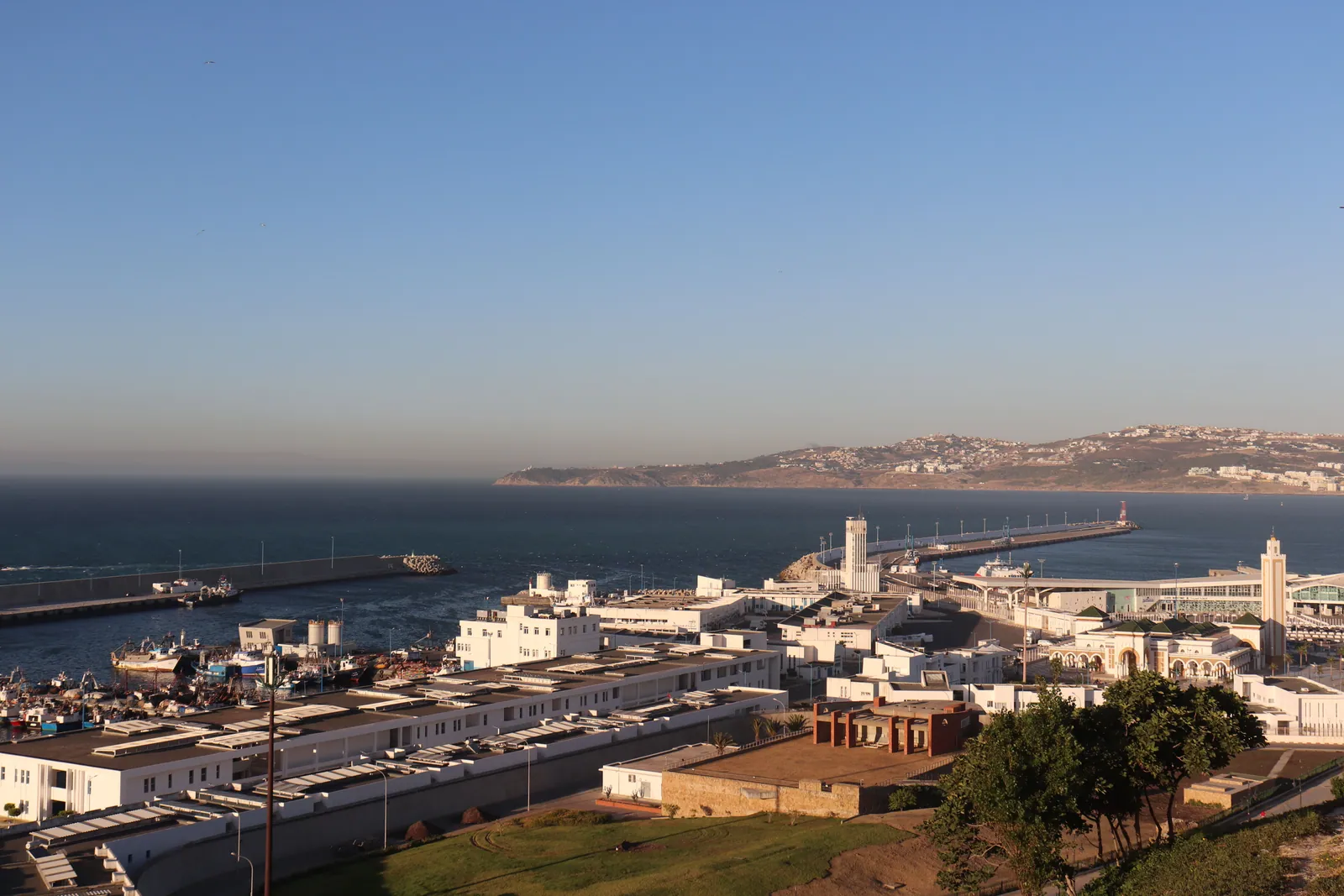
10-Day Private Luxury Morocco Tour: Marrakech to Tangier
Private, ten days, Marrakech to Tangier: riads, the Atlantic coast and the main cultural stops, arranged for one party rather than a fixed departure. You fly out of Tangier and never retrace the route.
10 Days
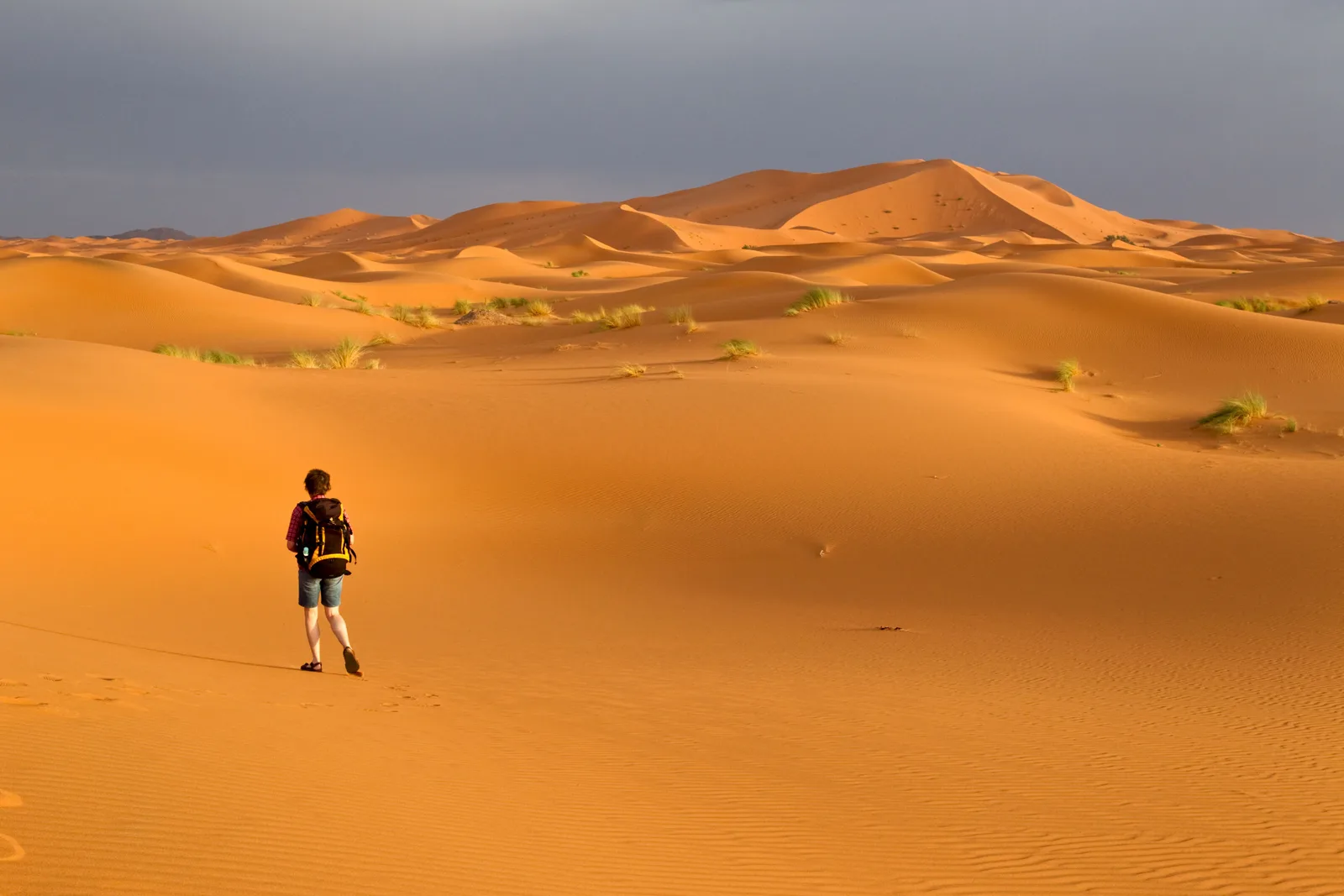
10-Day Erg Chigaga Desert Trekking Tour from Marrakech
Explore Morocco on a 10-day Erg Chigaga desert trekking tour from Marrakech via Tagounite, Casa Juan, the Draa Valley and Irocha Guest House in Tisselday.
10 Days
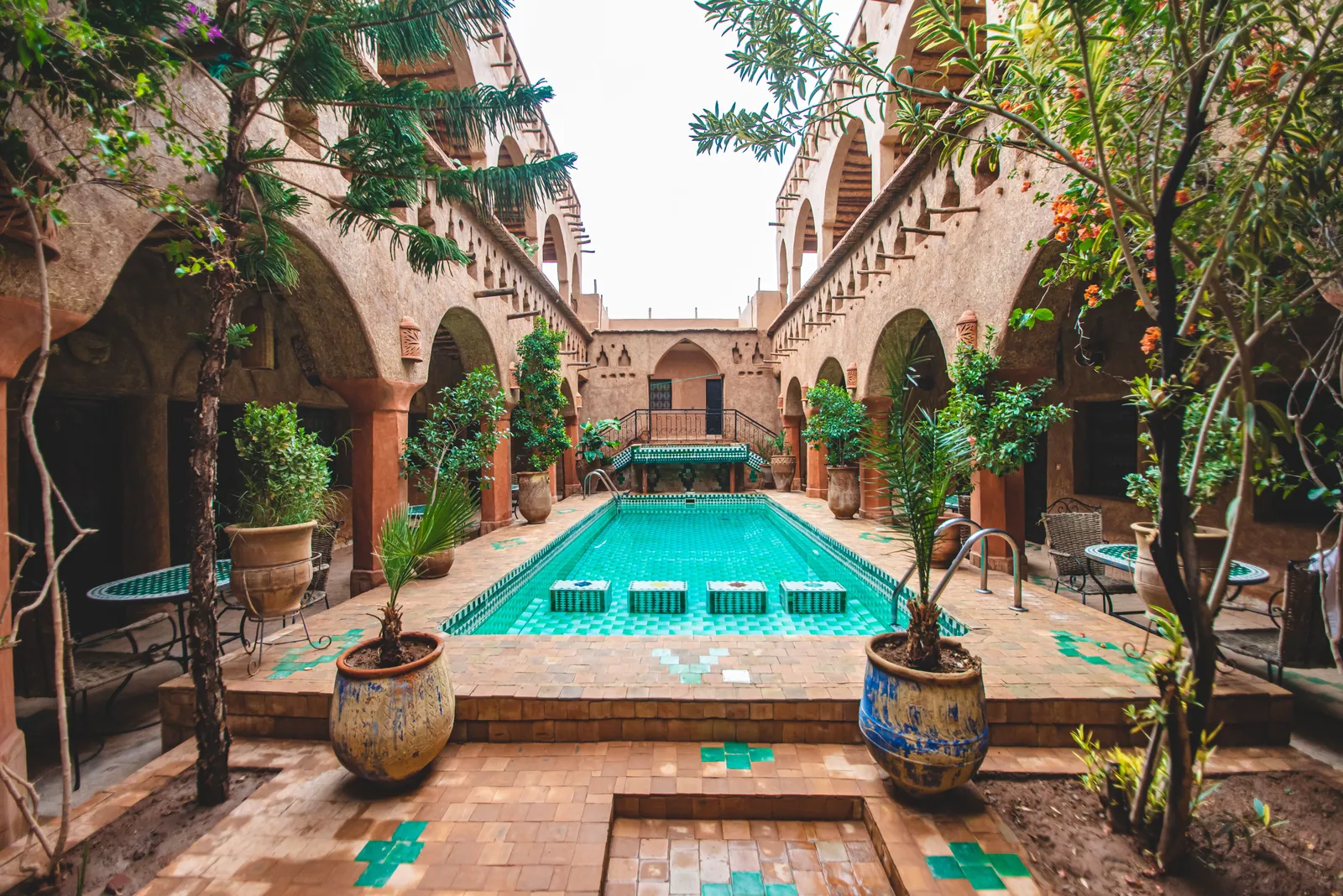
10-Day Private Morocco Itinerary
Ten days, private, paced from the riad rather than a coach timetable. For travellers who already know which parts of Morocco matter to them and would rather see those properly than see more of them badly.
Related Guides
Marrakech Travel Guide 2026
The complete Marrakech travel guide: what to see and do, where to stay in the medina or garden city, when to visit, the souks, day trips and honest practical tips.
Fes vs Marrakech: Two Medinas, Two Very Different Cities
Fes and Marrakech are both imperial cities with UNESCO medinas, but they deliver different trips. An honest comparison of atmosphere, sights, food, logistics and which city suits first-time visitors.
Imperial Cities Itinerary: Marrakech, Fes, Meknes and Rabat
A practical 7 to 8 day itinerary through Morocco's four imperial cities — Marrakech, Fes, Meknes and Rabat — plus the Roman site of Volubilis, with train and private-car logistics.
Liked this guide?
Give it a like on Instagram and tag us from your Moroccan adventure.
Tell us how you travel and we will match the Marrakech neighborhood to the trip
Our Marrakech-based team of local experts designs tailor-made Morocco trips around your dates, budget and travel style.
Request a Quote