
Two weeks is enough to travel right around Morocco without rushing: Marrakech, the crossing of the High Atlas, the dunes at Merzouga, Fes, the Rif mountains and the return down the Atlantic coast. Here is how to put the loop together, leg by leg, with the long driving days planned rather than left to chance.
01. Arrival and the Marrakech days
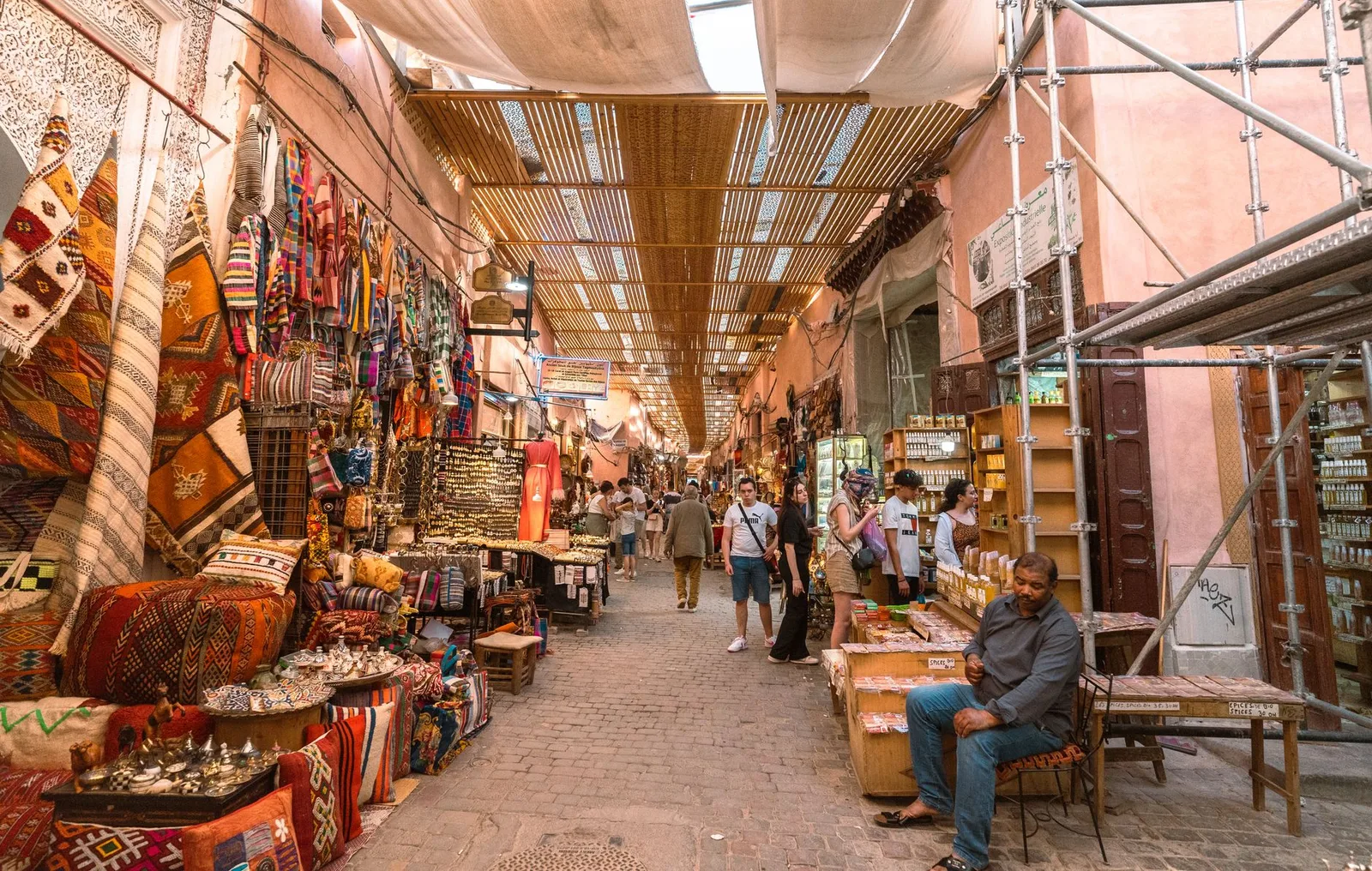
Fly into Marrakech Menara and give the first day over to arrival rather than sightseeing. A private transfer meets you at the airport and takes you to your riad inside the medina or to a hotel in Gueliz, and the rest of the day is yours. A short walk to Jemaa el-Fnaa in the early evening is usually enough: the square fills after sunset with food stalls, musicians and storytellers.
Keep the second day in Marrakech equally unhurried. The Bahia Palace, the Saadian Tombs and the Koutoubia minaret sit within a manageable walk of one another, and the souks around them reward a slow morning more than a rushed one. If you would rather see the city at a distance, the Majorelle Garden and a rooftop lunch give you a quieter half-day. Two nights here lets you adjust to the time zone before the road south.
This is also the point to firm up the practical details of the loop. Your driver confirms the departure time, the route over the mountains and the first overnight stop, so nothing is left to sort out on a travel morning. Marrakech sets the pace for the whole fortnight, so starting slowly is deliberate rather than a waste.
02. Over the High Atlas to the south
The route leaves Marrakech early and climbs towards the Tizi n'Tichka pass at 2,260 metres, the main road link between the city and the south. The road is winding and busy with lorries, so the drive takes three to four hours without stops. Argan cooperatives and viewpoints line the lower slopes, and the landscape turns from olive groves to bare rock as you climb.
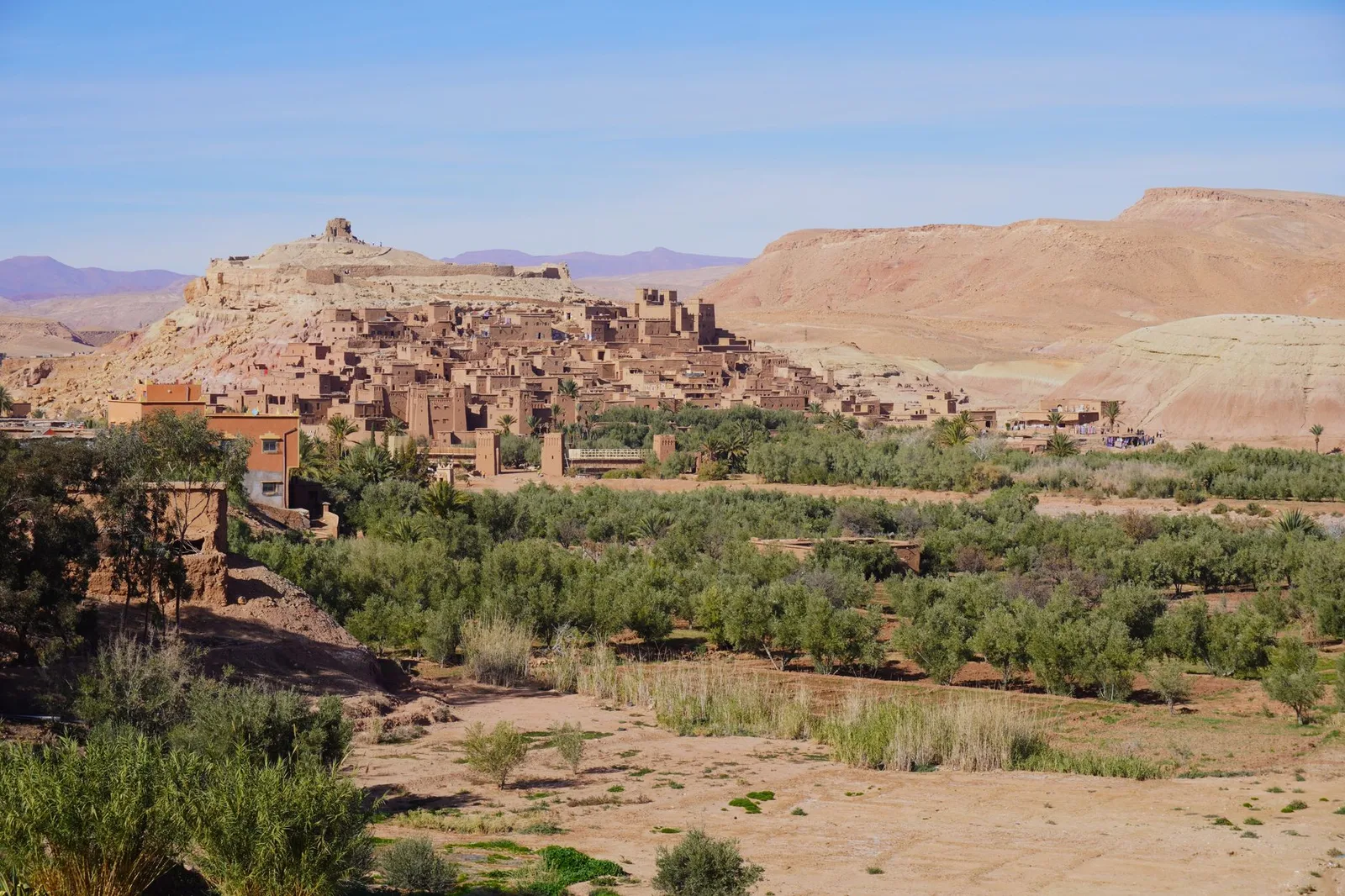
Beyond the pass the temperature and the scenery change quickly. Ait Ben Haddou, a fortified earthen village and a UNESCO World Heritage Site, is the natural first stop, worth two hours on foot rather than a quick photograph. From there the road drops to Ouarzazate, the small city that grew around its film studios. Most travellers spend the first night here or a little further east.
The southern side is drier and offers long, straight views that feel like a different country. For a fourteen-day loop this leg is a transfer day rather than a sightseeing day, and treating it that way keeps the rest of the itinerary comfortable. We usually build in a stop at the Atlas Studios or a kasbah on the way, so the drive is broken up without adding a full extra day.
03. The Dades, the gorges and the dunes at Merzouga
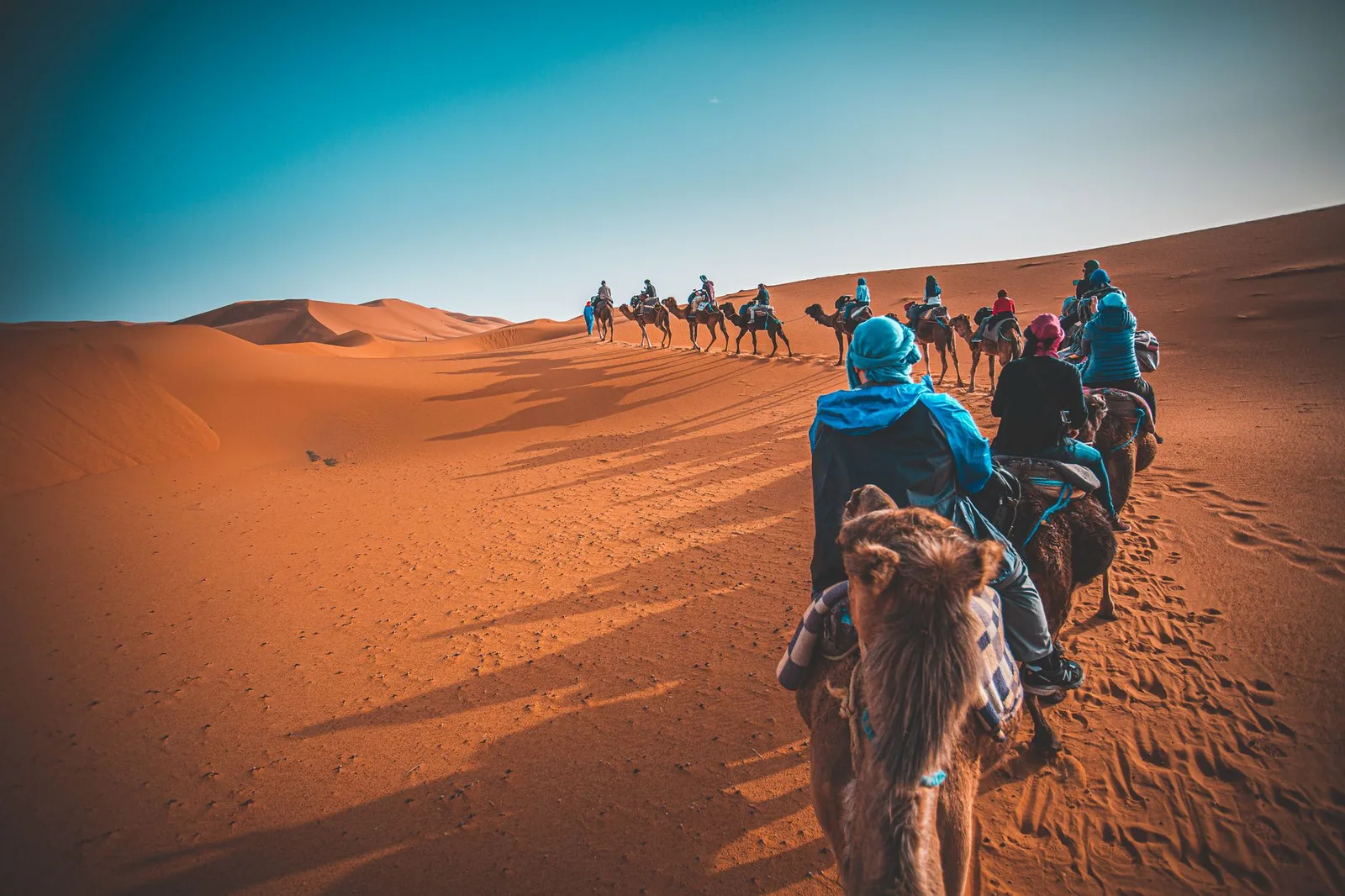
From Ouarzazate the road runs east through the Valley of Roses and the Dades Valley towards Tinghir and the Todra Gorge. The Dades is the more dramatic, with hairpin bends cut into red rock and kasbahs above the fields, while the Todra is a narrow canyon you can walk into at the bottom. Either makes a good overnight stop.
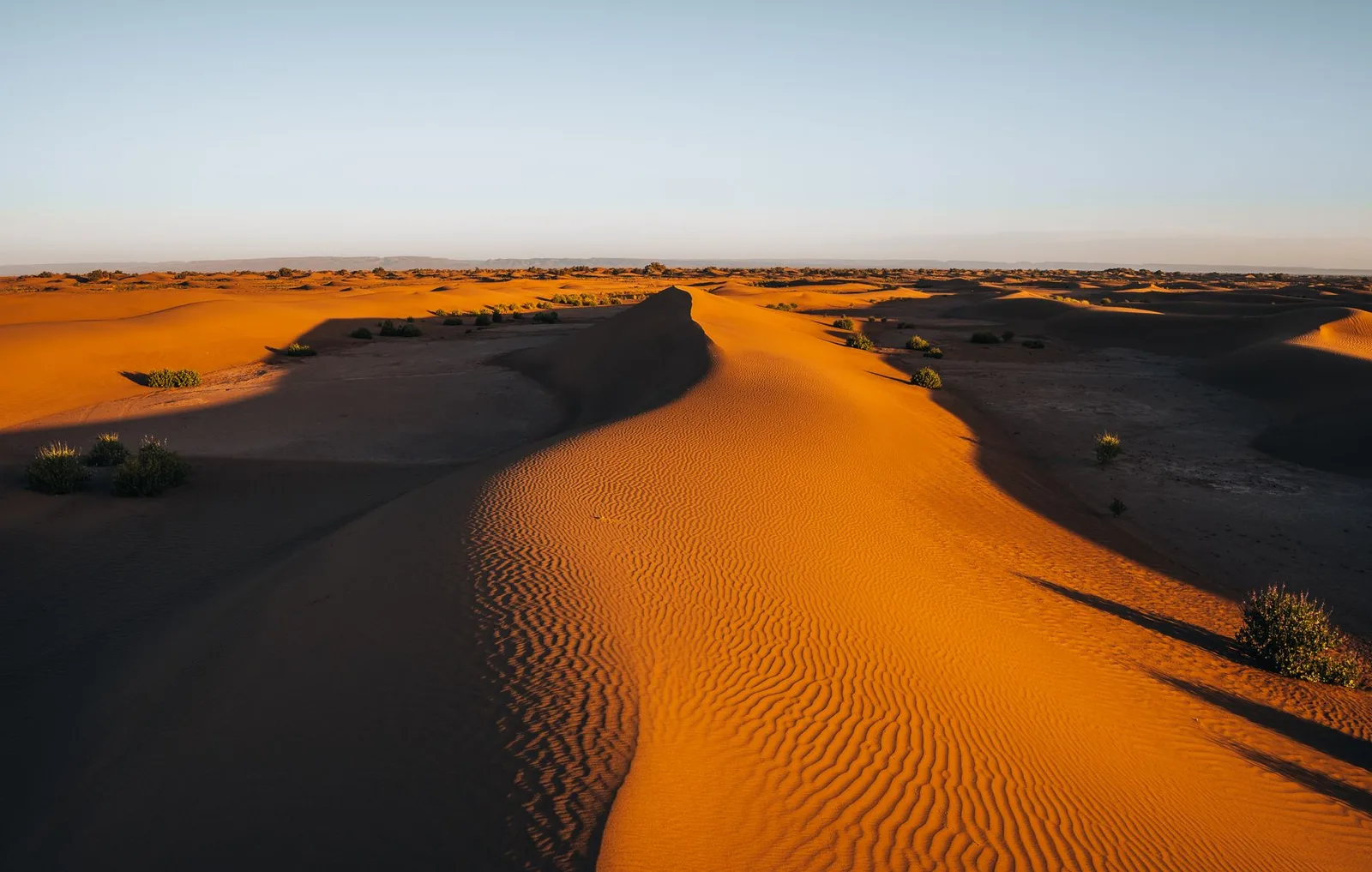
The second day of this leg finishes at Merzouga, on the edge of the Erg Chebbi dunes. You leave the vehicle, meet your camel guide and ride an hour or so into the sand to reach the camp. Sunset over the dunes, a tagine dinner and Berber drumming around a fire are the usual evening; a clear night offers some of the darkest sky in Morocco.
Desert nights are colder than most people expect, especially from November to February, when temperatures can fall close to freezing before dawn. A warm layer, a scarf and a head torch make the difference. Camel treks are short and gentle, and anyone who would rather not ride can be driven to the camp.
04. The long transfer north and the Fes medina
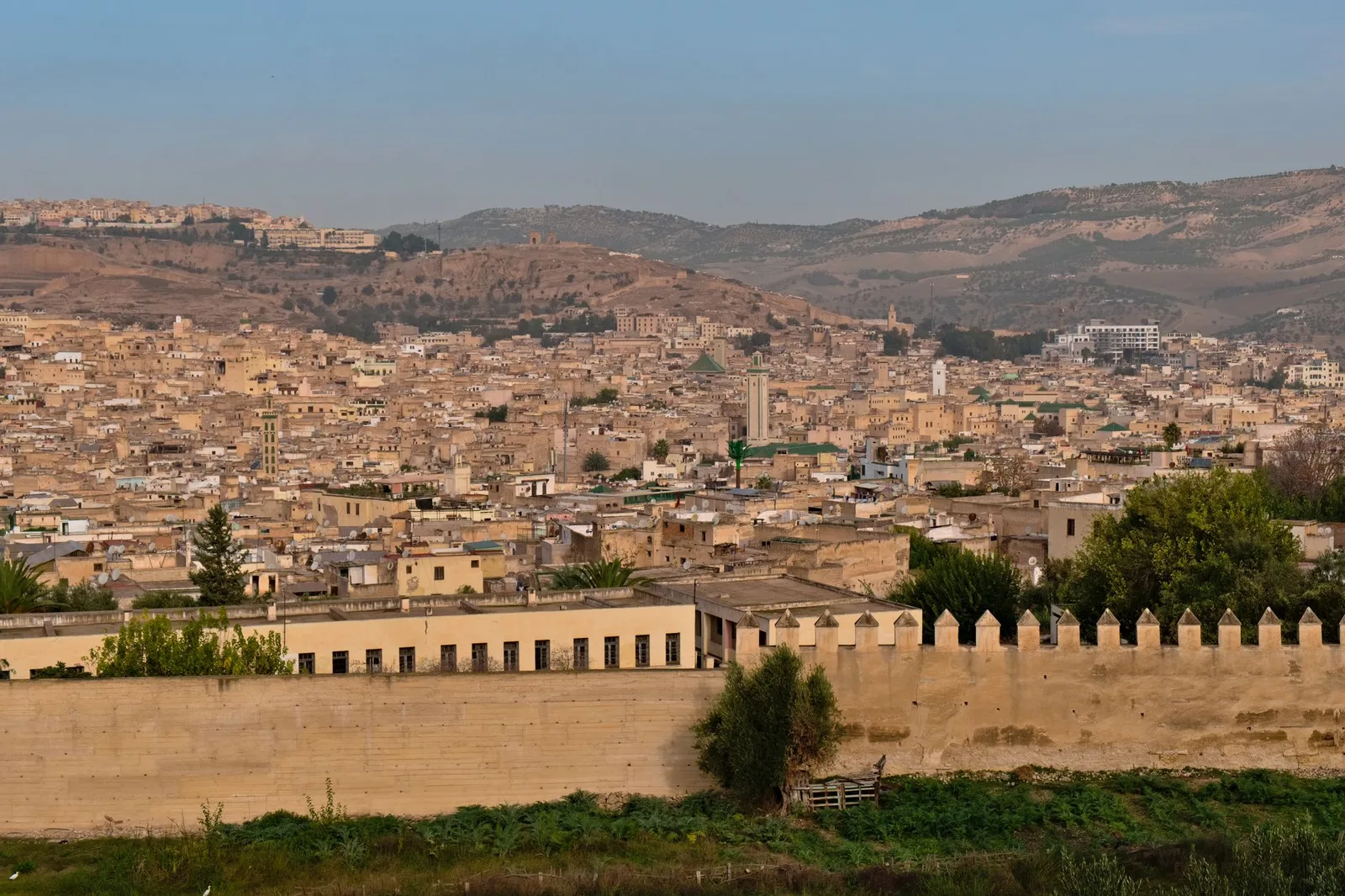
Merzouga to Fes is around 470 kilometres and seven to eight hours on the N13, a genuinely long driving day. The reward is the variety: the Ziz Valley with its palm oases, the high plains around Midelt, and the cedar forests near Ifrane, where Barbary macaques often appear by the roadside. It is worth leaving early to arrive in Fes before dark.
Fes is the oldest of the imperial cities and its medina, Fes el-Bali, is the largest car-free urban area in the world. Two nights here are enough to visit the Chouara tanneries, the Bou Inania and al-Attarine madrasas and the crafts workshops without rushing. The lanes are genuinely confusing, so a licensed local guide for half a day is money well spent.
This is the natural rest point in the middle of the loop. After several travel days, a morning with no early start matters, and Fes rewards it with leather, brass and ceramics that are better made and cheaper than in the tourist markets further south. If your energy is holding up, a day trip to Meknes or the Roman ruins at Volubilis sits an hour away.
05. The Rif road to Chefchaouen
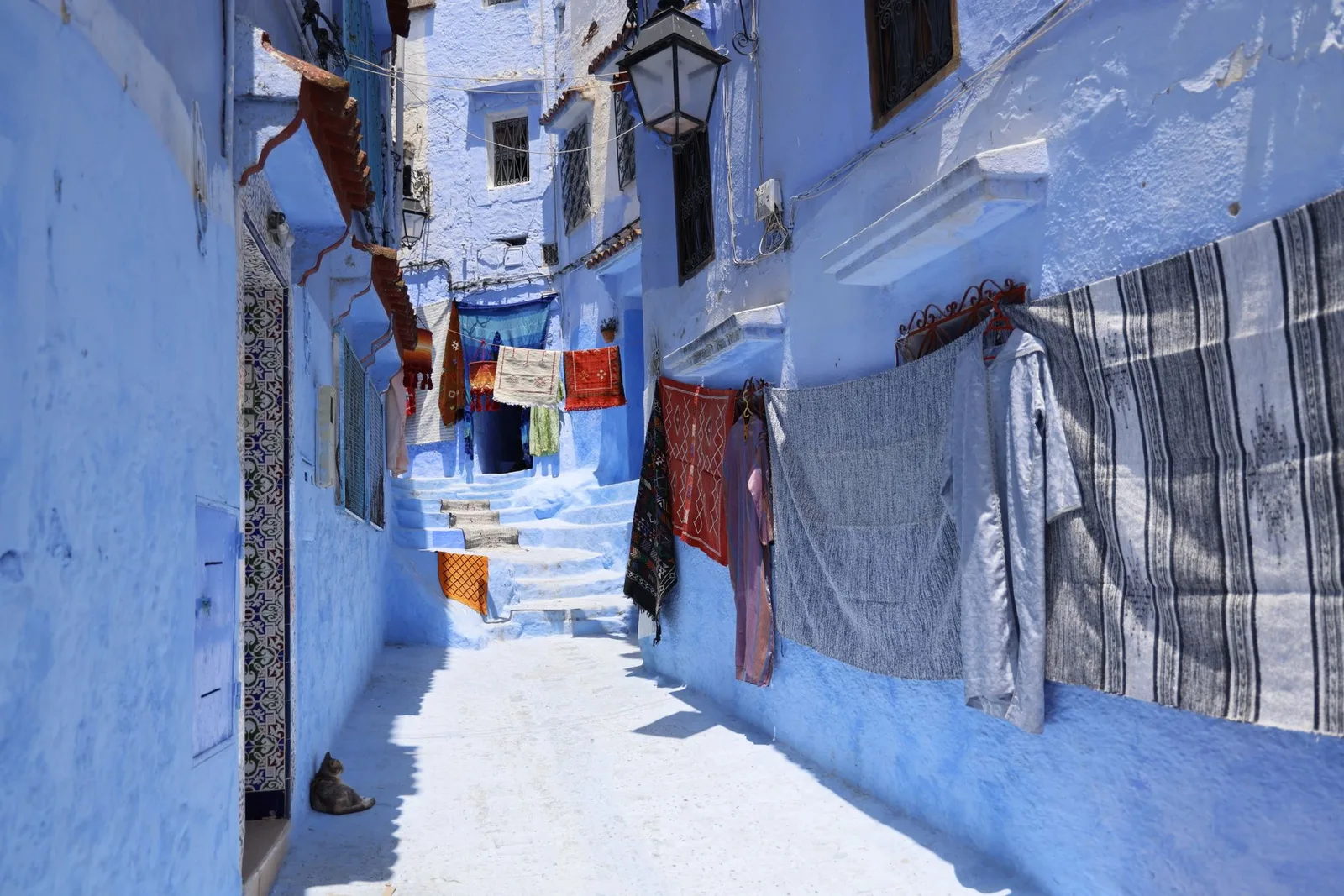
From Fes the road turns north into the Rif mountains and reaches Chefchaouen in about four hours by car. There is no train here, so the drive or a CTM bus is the realistic choice. The town climbs a hillside beneath two peaks, and almost every wall in the old quarter is washed in blue.
Chefchaouen is small, quiet and easy to walk in a day. The Kasbah, the Spanish Mosque on the ridge above town and the little square of Uta el-Hammam are the fixed points, and the rest of the time is best spent simply wandering the lanes as the light changes. It is a good place to slow down after the long drive north.
One night is enough for many travellers, two if you want a half-day walk in the surrounding hills or a visit to the waterfalls at Akchour. With no station or airport, Chefchaouen usually sits between Fes and Tangier rather than at the end of a trip. We normally pair it with the northern coast, which is an hour or two away by road.
06. The imperial north: Rabat and the Atlantic coast
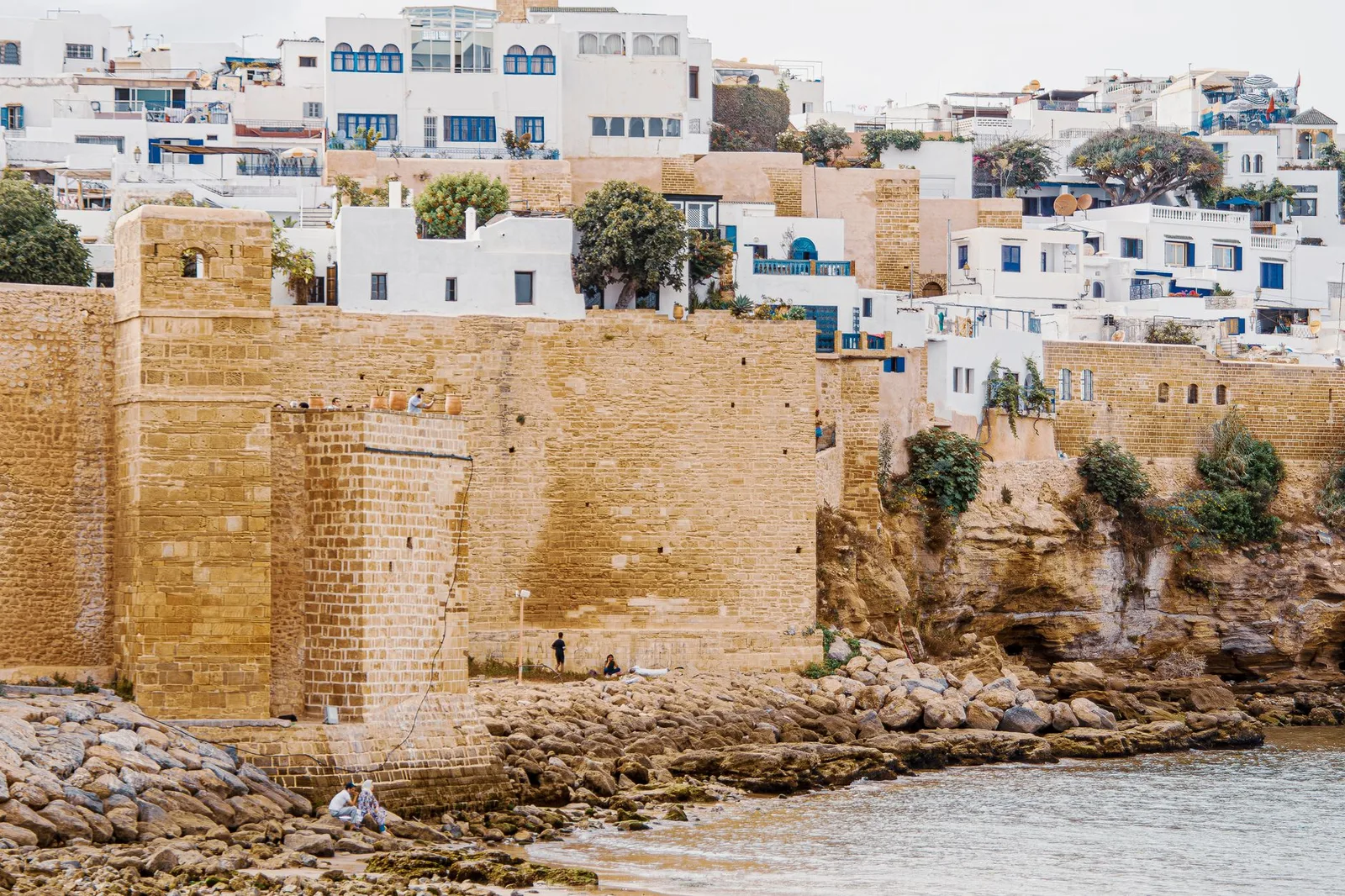
The final stage runs down the Atlantic side, where the climate is milder and the distances feel shorter. Tangier, Asilah and Rabat are all linked by the Al Boraq high-speed line, which covers Tangier to Casablanca in about two hours ten minutes, so from here you can travel by train rather than by car.
Rabat, the current capital, is often skipped by visitors and is all the more relaxed for it. The Kasbah of the Udayas, the Hassan Tower and the Chellah necropolis sit within a short distance of one another, and the Atlantic is never far away. One full day covers the essentials without hurrying.
If you continue by car, the coastal road also passes Asilah, a whitewashed town with a fine beach and a good fish market, and El Jadida further south. Either way, this leg brings the loop back towards the airport, which makes the last night easy to place.
07. Open-jaw departures and how we help
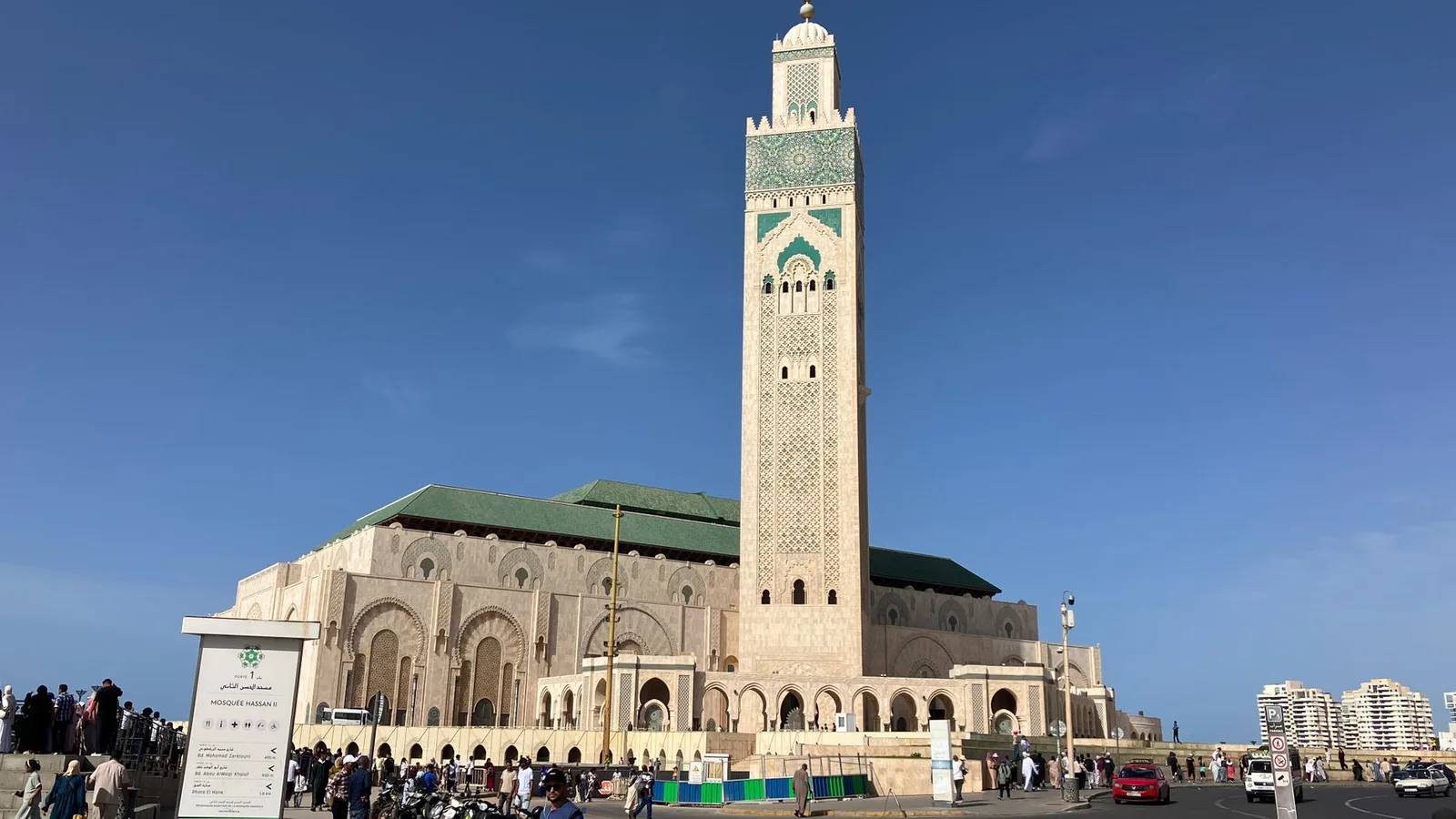
The cleanest way to finish a loop like this is an open-jaw flight: arrive in Marrakech and leave from Casablanca or Fes, so you never repeat a road. Marrakech to Casablanca Airport by train takes about four hours with a change at Gare Oasis, while Fes has its own airport with flights to several European cities.
If you would rather not plan the timing yourself, our team in Marrakech arranges the whole route as a private tour: the vehicle and driver, the riads and desert camp, the guides in Fes and the transfers on the day you fly. Because we live here, a change of plan or a late flight is dealt with locally rather than by email from another time zone.
A fourteen-day loop is long enough to see the imperial cities, the mountains and the desert without spending every day in the car. If you want to trim a day, the usual candidates are Chefchaouen or the northern coast; if you want a rest day, Fes or Marrakech absorbs it best. Tell us what matters most and we will shape the route around it.
Frequently Asked Questions
Is fourteen days enough for Morocco?
Yes for a full loop taking in Marrakech, the Atlas, the desert, Fes, Chefchaouen and the coast. It does not leave room to add Essaouira or the deep south without cutting something else.
Where should I put a rest day in a fourteen-day itinerary?
Fes or Marrakech absorb it best, with a free morning and a proper evening. Avoid placing it on one of the long driving days between Merzouga and Fes, or between Marrakech and the Atlas.
Should I book an open-jaw flight, into Marrakech and out of Casablanca?
It is the simplest shape for a loop: it avoids repeating road and ends the route near a departure airport. Just check that the dates of the two flights fit your plan.
Train or private car for the northern half?
The train is ideal between Tangier, Rabat and Casablanca. A car is still needed for Chefchaouen, the mountains and the desert, where the rail network does not reach.
What is a night in a Sahara camp actually like?
An hour or so by camel to the camp, a tagine dinner, Berber drumming and a very dark sky. Pack warm clothes: from November to February the night can drop close to freezing.
What is the best time of year for this route?
Spring from March to May and autumn from September to November give the mildest temperatures across the whole loop. Winter is cold in the desert and mountains, and summer is too hot inland.
More Morocco tours
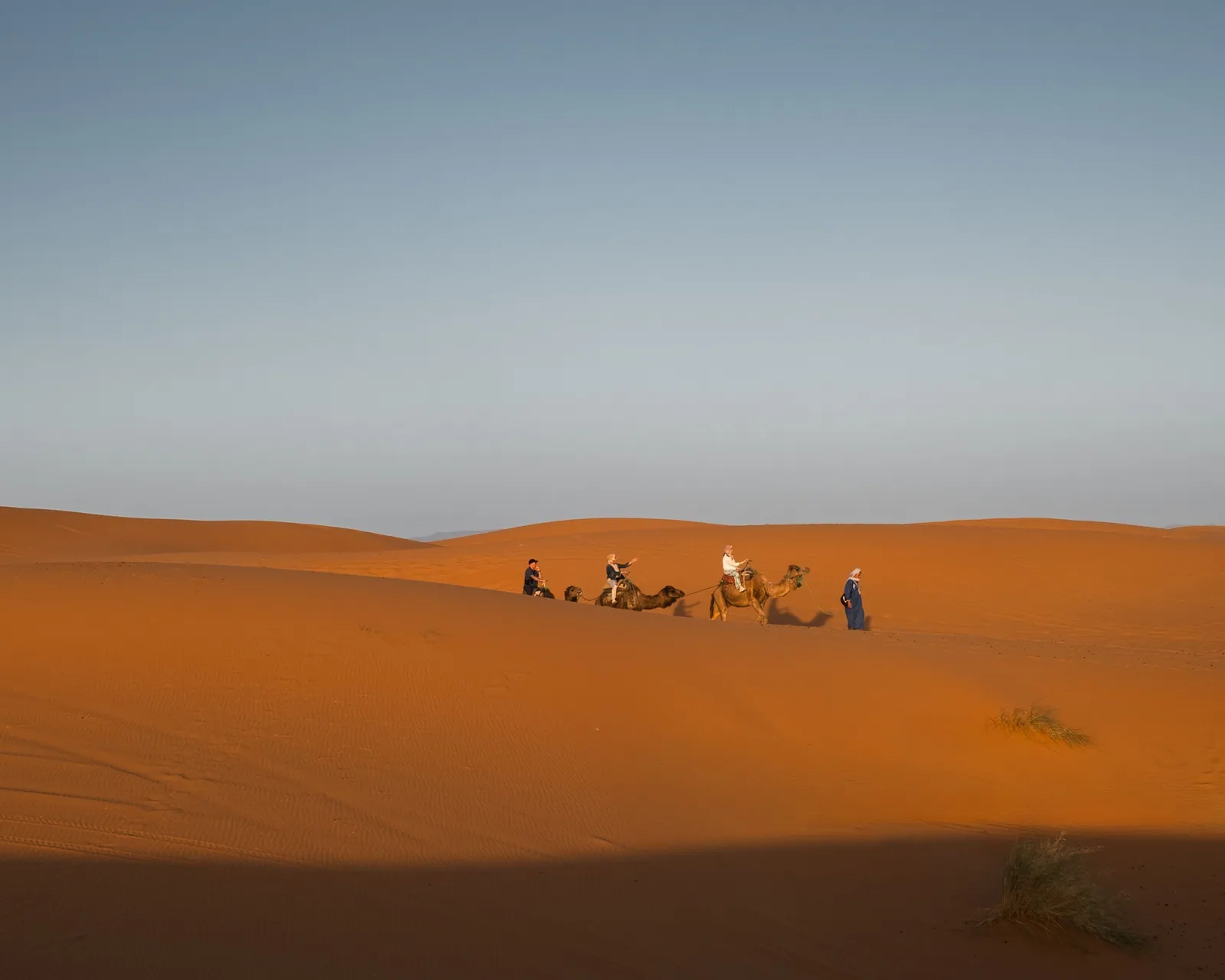
14 Days
14-Day Morocco Itinerary for First-Time Visitors
Two weeks for a first visit: imperial cities, mountains and sand, with enough days between them that nothing is hurried. Fourteen is the length at which Morocco stops feeling like a tour and starts feeling like a trip.
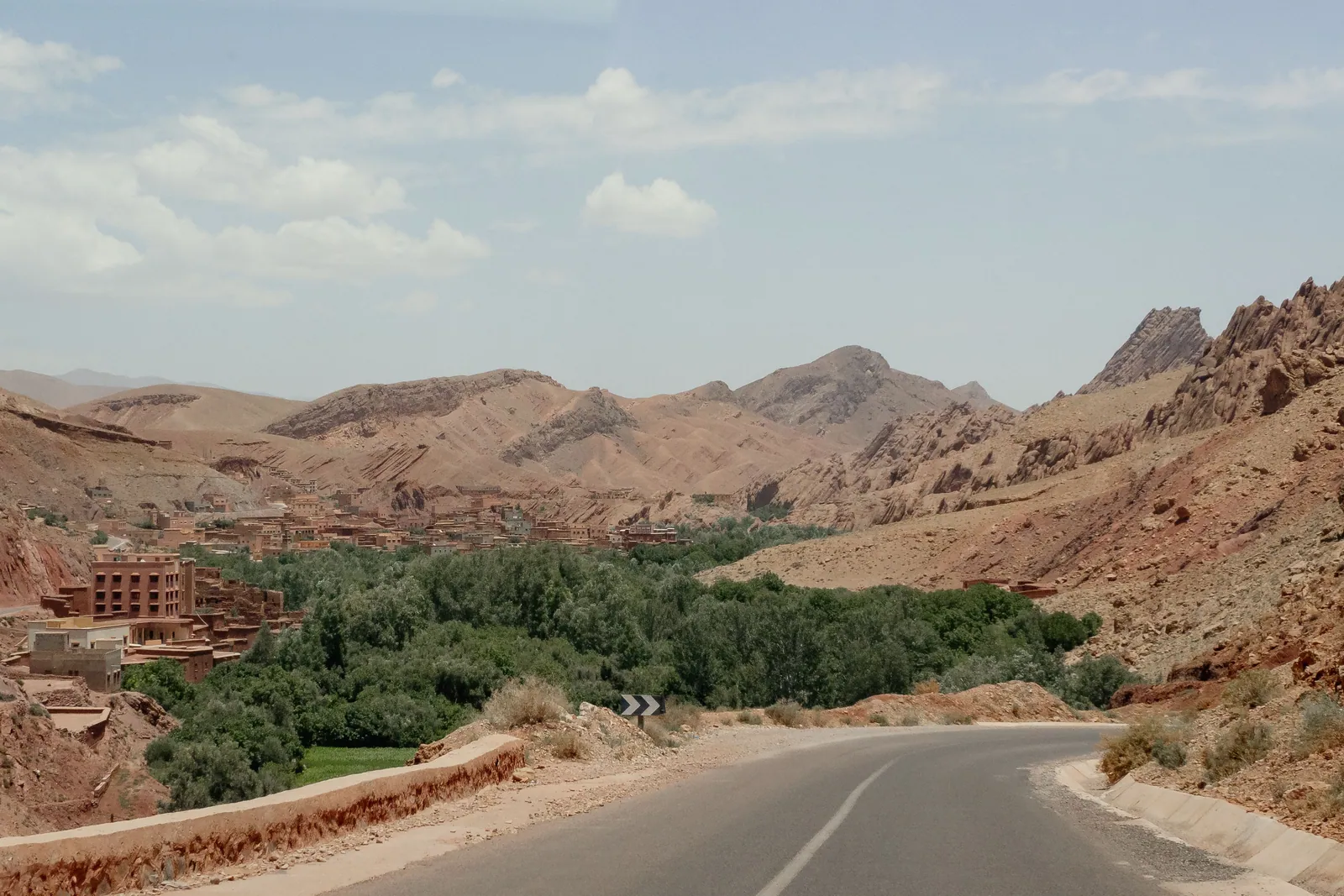
12 Days
12-Day Cultural Tour of Morocco
Twelve days from the Sahara to the Atlantic and up into the Rif — the widest spread on this list. Take it if this is your only trip: you see it once, not half of it twice.
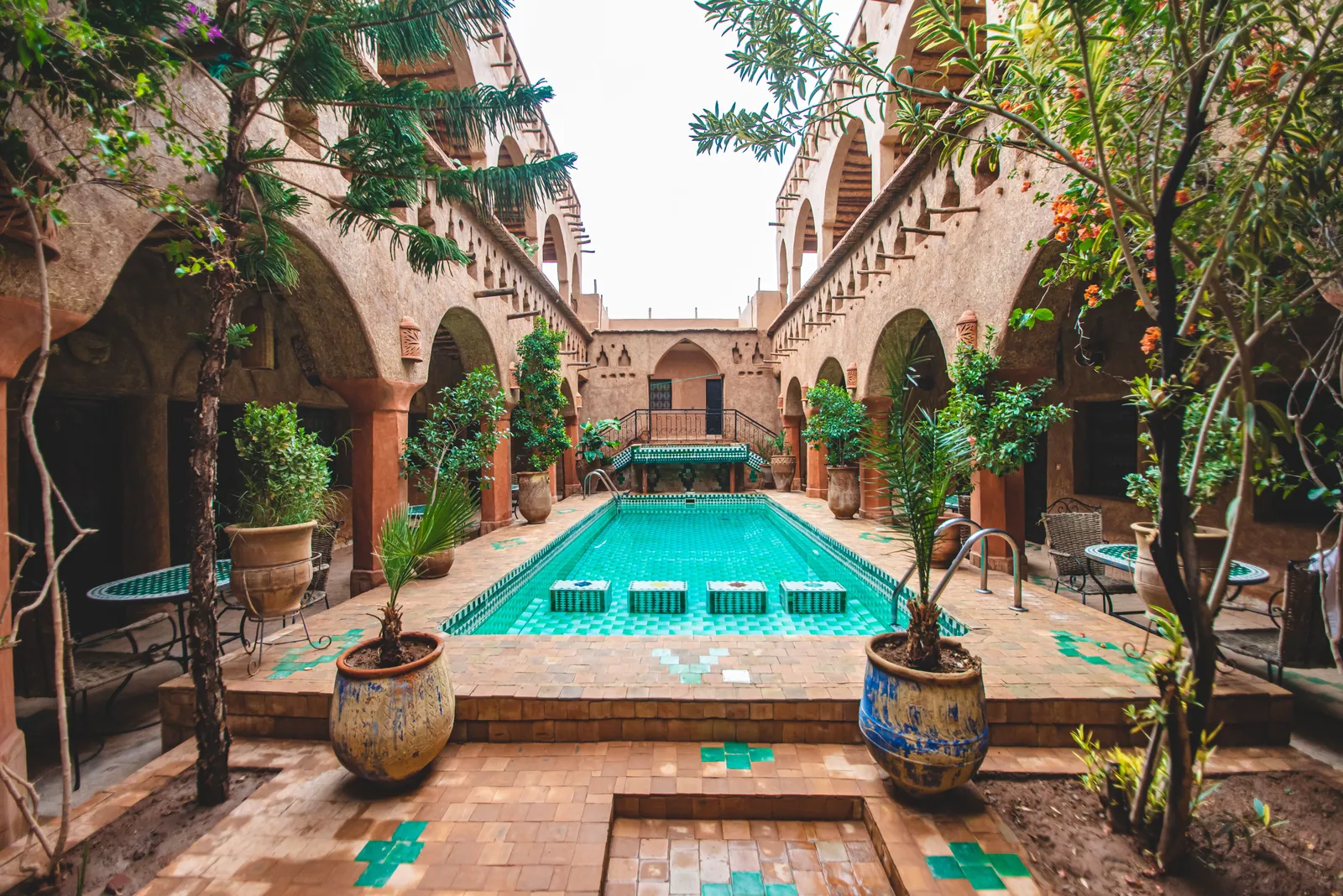
10 Days
10-Day Private Morocco Itinerary
Ten days, private, paced from the riad rather than a coach timetable. For travellers who already know which parts of Morocco matter to them and would rather see those properly than see more of them badly.
Related Guides
Marrakech to Sahara Desert Itinerary: A Practical 3, 4 and 5-Day Route
A focused Marrakech to Sahara desert itinerary with clear 3, 4 and 5-day variants. Covers Ait Ben Haddou, Dades Gorge, Todra Gorge, Erg Chebbi, camel trek and realistic driving times.
Imperial Cities Itinerary: Marrakech, Fes, Meknes and Rabat
A practical 7 to 8 day itinerary through Morocco's four imperial cities — Marrakech, Fes, Meknes and Rabat — plus the Roman site of Volubilis, with train and private-car logistics.
What to Pack for Morocco: A Practical Seasonal Checklist
Find out what to pack for Morocco by season and destination, including Marrakech, the Atlas Mountains, the Sahara, the coast, medinas and respectful clothing.
Liked this guide?
Give it a like on Instagram and tag us from your Moroccan adventure.
Plan your private fourteen-day loop through Morocco
Our Marrakech-based team of local experts designs tailor-made Morocco trips around your dates, budget and travel style.
Request a Quote