

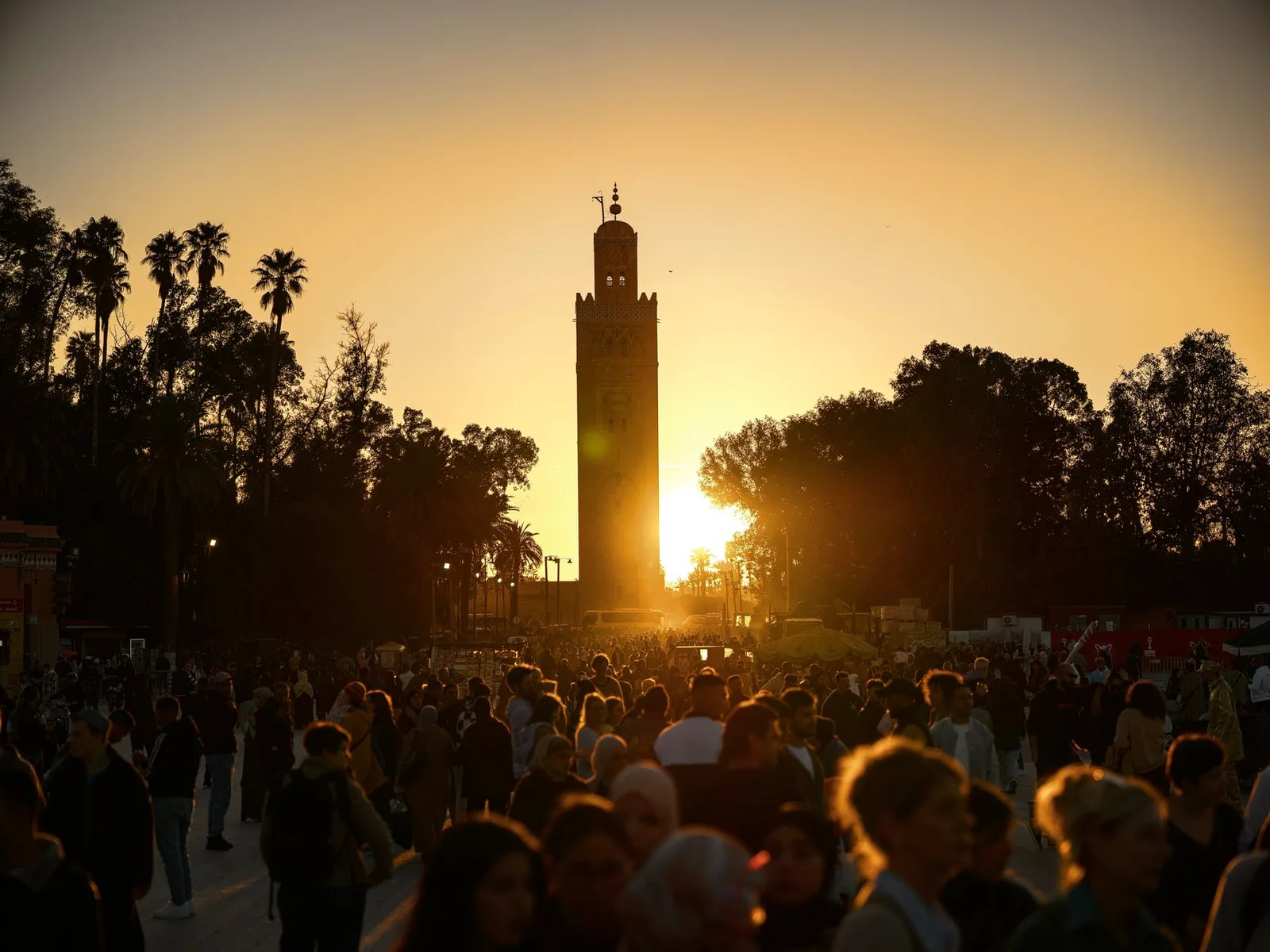
Morocco's four imperial cities were each a capital at a different moment, and one week is enough to see them together without rushing. This itinerary runs from Marrakech through Meknes and Fes to Rabat, with a single detour to the Roman ruins of Volubilis. It is built around how the cities connect by train and by car, where to base yourself, and why Rabat deserves more than a transit night.
01. Four capitals, four centuries
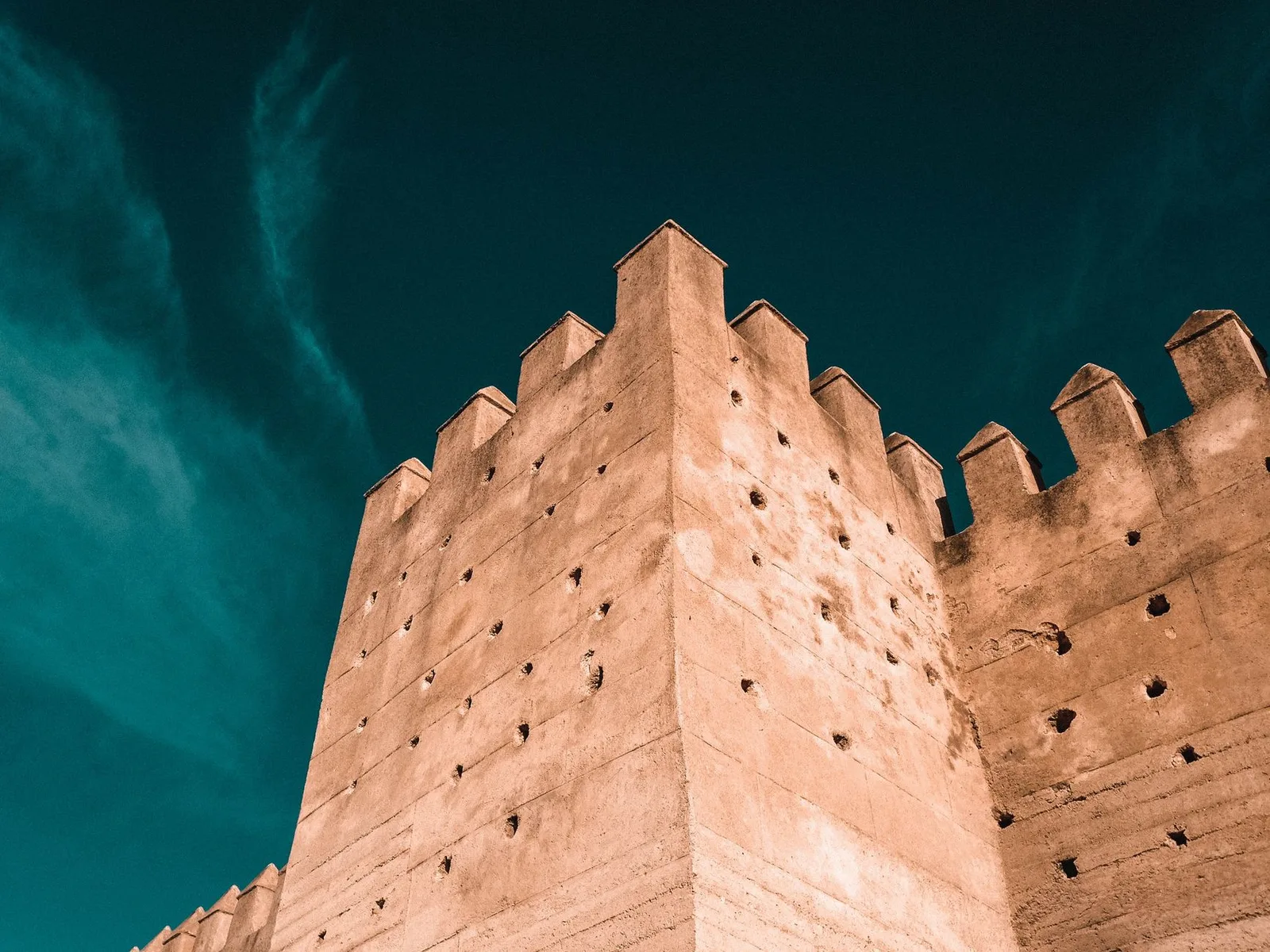
The four imperial cities were each a seat of power at a different point in Moroccan history, and the buildings still carry that ambition. Marrakech was the Almoravid and Almohad capital in the south. Fes served the Marinids and became the country's intellectual centre. Meknes was remade almost single-handedly by Sultan Moulay Ismail, who built on a scale meant to rival Versailles. Rabat is the working capital today, with an Almohad tower and a kasbah above the Atlantic.
Seen within a week, they read as four answers to the same question. Doing them together is the point: the contrast is sharper when the days sit close to one another. The route below fits seven or eight days, uses the rail spine where it works, and keeps one away-day for Volubilis. There is no desert in it, because the desert is a different journey and needs its own nights.
02. Marrakech: the theatrical south
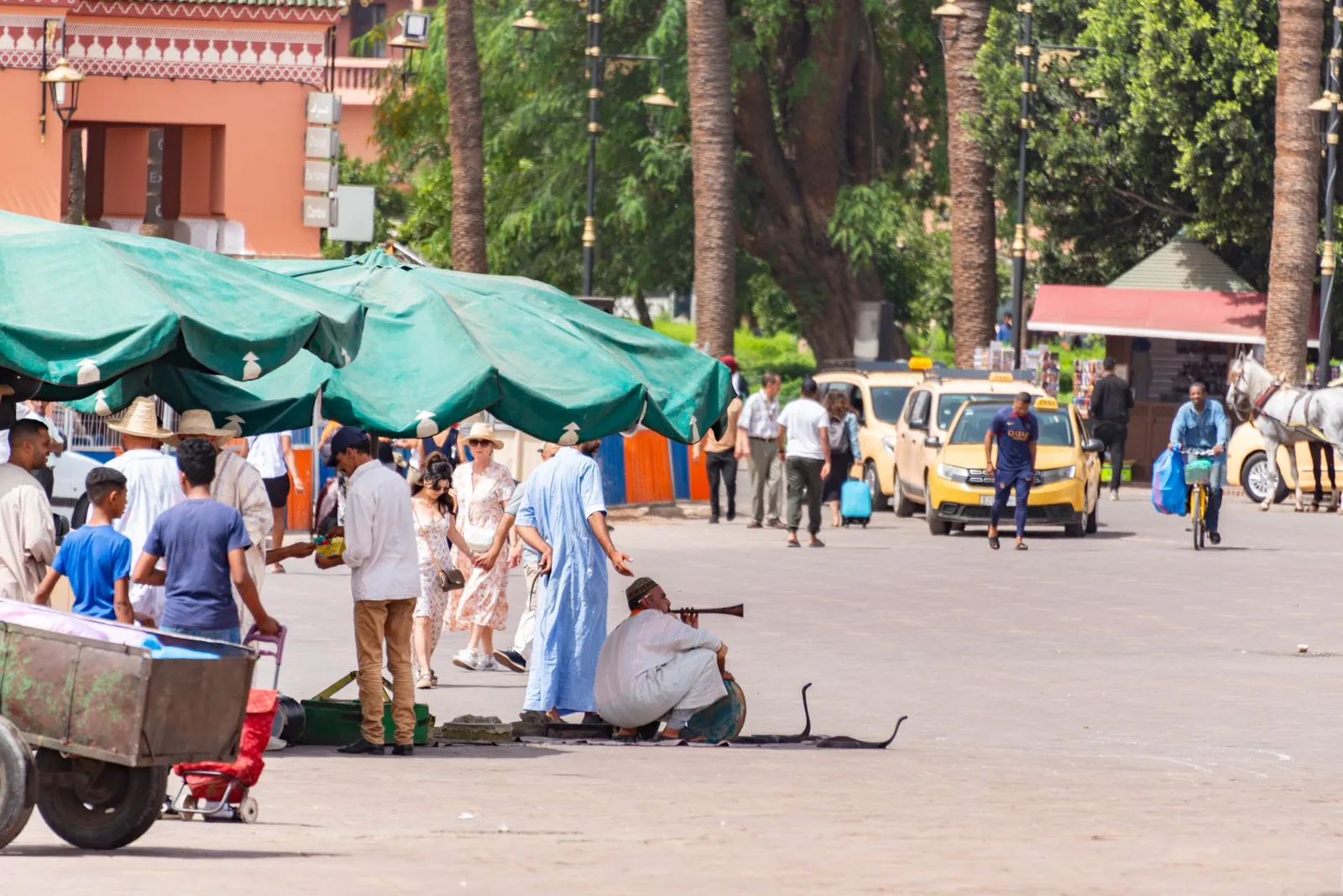
Marrakech is the easy place to start. Flights are plentiful, the airport is close to the centre, and the first impression lands quickly: the Koutoubia minaret, the long ochre walls of the medina, and Jemaa el-Fnaa filling up at dusk.
Two nights is the sensible minimum. One day belongs to the medina: the Bahia Palace, the Saadian Tombs, a garden such as the Majorelle or the Menara, and enough unplanned time to wander the souks without panic. The second day is for slowing down, which sounds like advice and is really logistics. Marrakech is the most intense of the four, and arriving already rested helps.
If you want the mountains, a day in the Ourika valley or a night in the Atlas is simple to add. For this itinerary, keep it short. Marrakech opens the trip rather than filling it.
03. Fes: the medieval maze
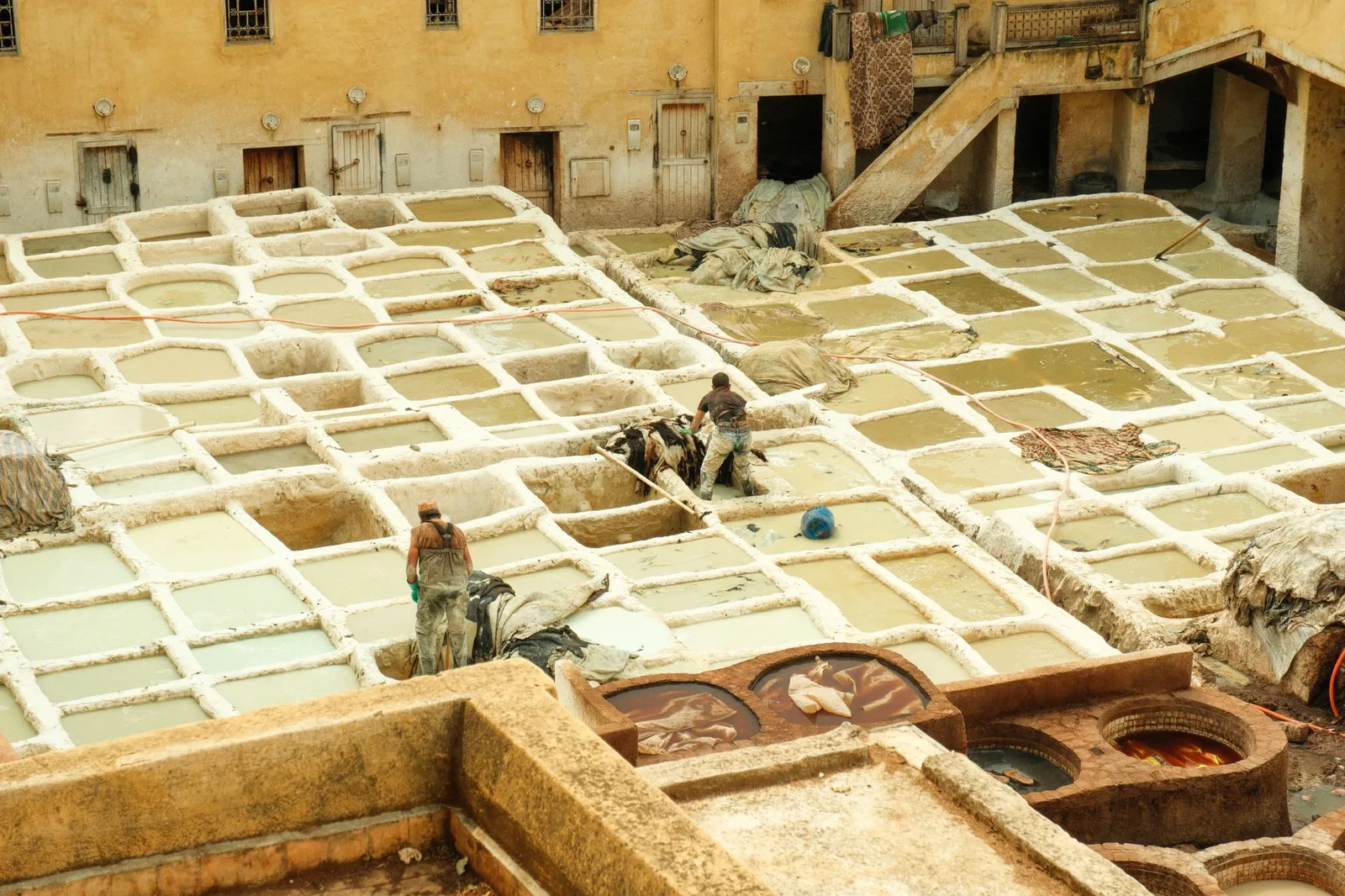
Fes el-Bali is the largest car-free urban area in the world, and it behaves like it. The lanes are a working city rather than a stage, and the sooner you stop trying to hold a mental map, the better the day goes.
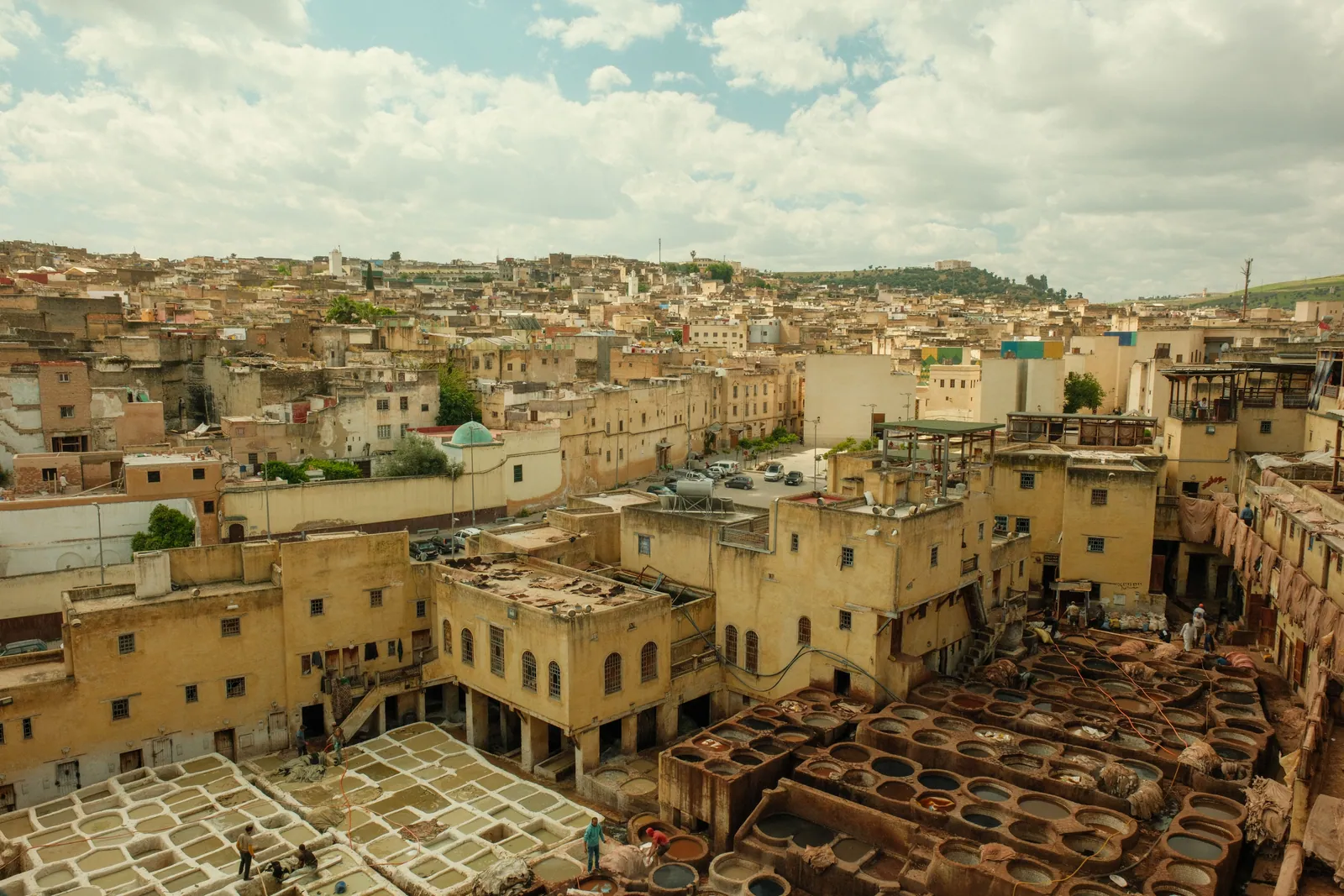
Give Fes two or three nights. The first full day is best with a licensed guide, who turns the tangle into a route: the Bou Inania and al-Attarine madrasas, the Nejjarine fountain, the Chouara tanneries from the terrace, and the souks along the way. The second day can be your own, and it is often the better one, spent revisiting a quarter or sitting in a courtyard with mint tea.
Two practical notes. Fes is the coldest of the four in winter and one of the hottest in summer, so pack for the season rather than the postcard. The medina is also closed to cars: you are dropped at a gate and walk the last few hundred metres, which is normal and worth knowing before you arrive with luggage.
04. Meknes and Volubilis: the quiet capital and Rome in Africa
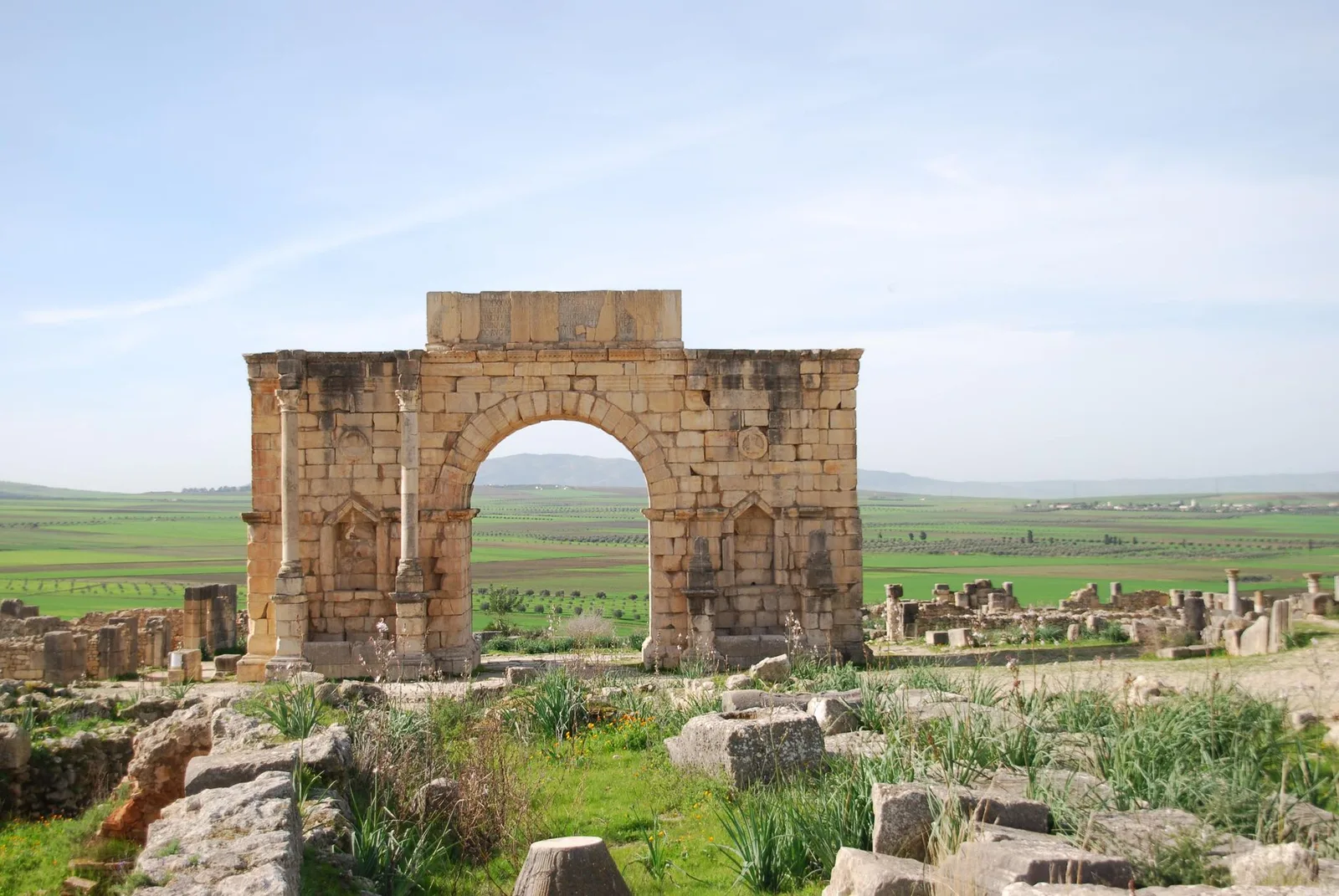
Meknes is the quietest imperial city and the most underrated by visitors, which makes it a pleasant half of the trip. Bab Mansour is the monumental gate most people photograph, and behind it the medina, the Heri es-Souani granaries and the mausoleum of Moulay Ismail fill a comfortable half-day. Our Meknes guide covers the details if you want to go deeper.
The reason to give Meknes a night rather than a rushed stop is Volubilis. The Roman city sits about 33 km north of Meknes, roughly forty minutes by road, and the whitewashed pilgrimage town of Moulay Idriss is a few kilometres further. Meknes is by far the closest base for the ruins: from Fes the same visit means two hours or more in the car, while from Meknes you can be at the gate for opening, walk the mosaics and the triumphal arch at a slow pace, and be back for a late lunch.
Volubilis is exposed and largely unshaded, so go early, carry water, and allow two hours. Our Volubilis guide explains what to look for among the mosaics and how to combine the site with Moulay Idriss.
05. Rabat: the capital most people skip
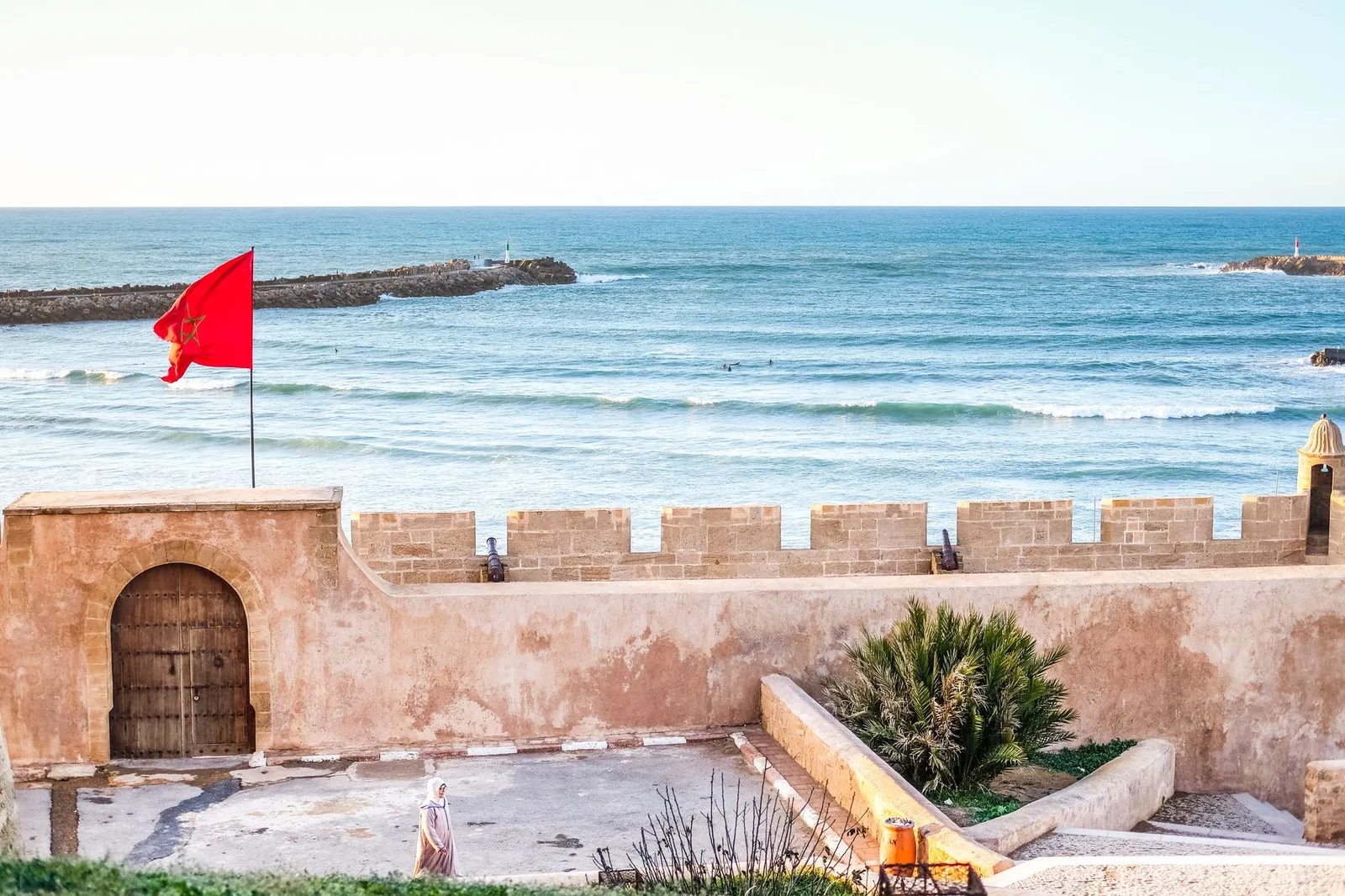
Rabat is the one most travellers skip, and that is the argument for including it. It is the capital, so it takes less of the tourist pressure that gathers in Marrakech and Fes, and its sights sit in a compact, walkable strip along the Bou Regreg.
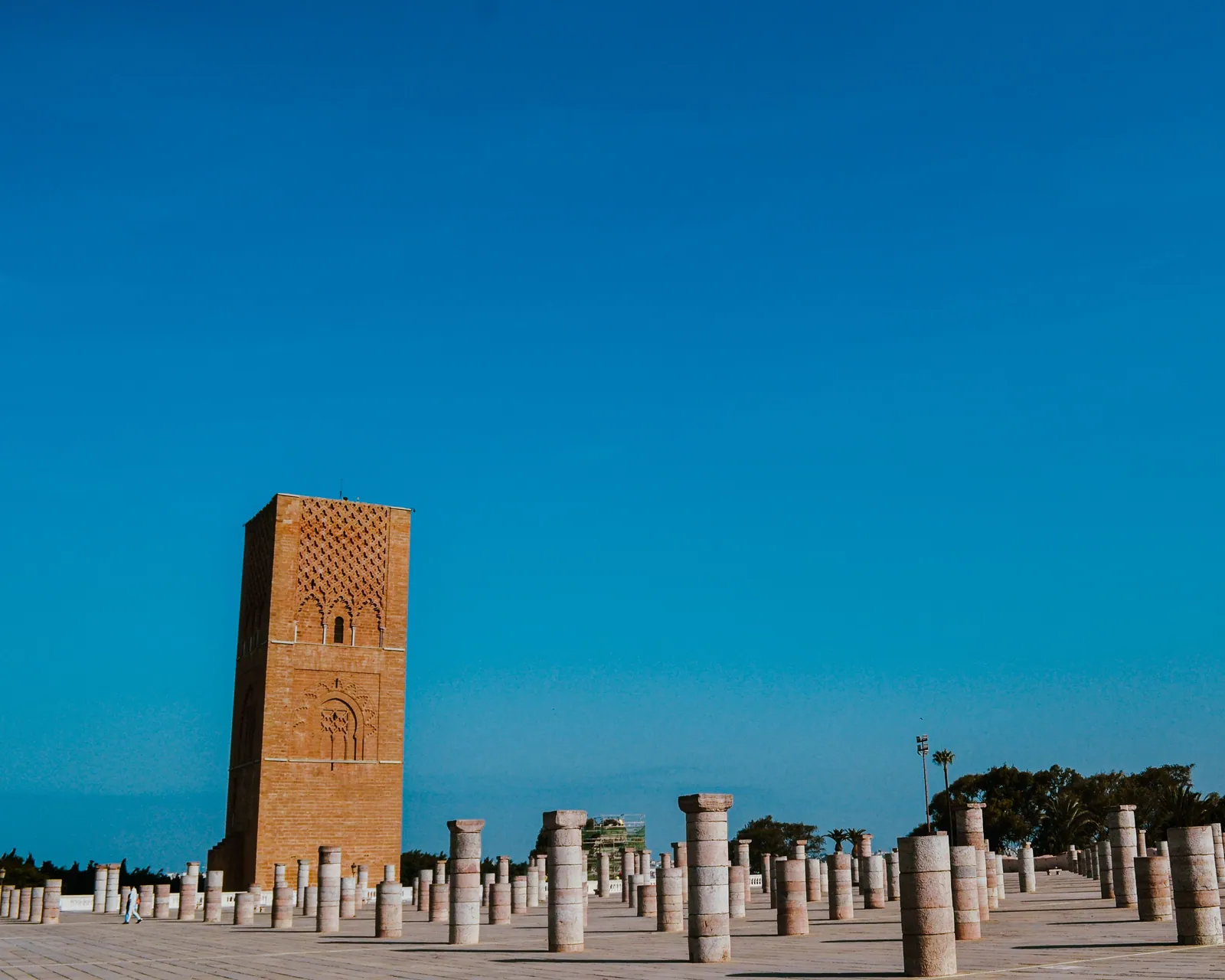
The Kasbah of the Udayas is the highlight: blue-and-white lanes on the bluff above the river, ending at a terrace over the Atlantic. Hassan Tower and the Mausoleum of Mohammed V are a short walk away, and the medina is small enough to cross in an afternoon without a guide.
Rabat also has the mildest climate of the four, thanks to the ocean, so it works well as a gentle final stop before flying home from Casablanca. One night is enough, two if you want museums and time by the water. Our Rabat guide has more on how to spend a day there.
Many people treat Rabat as a transit city. Slowing down for a night is the cheapest upgrade in this itinerary.
06. Sequencing the route: train or private car
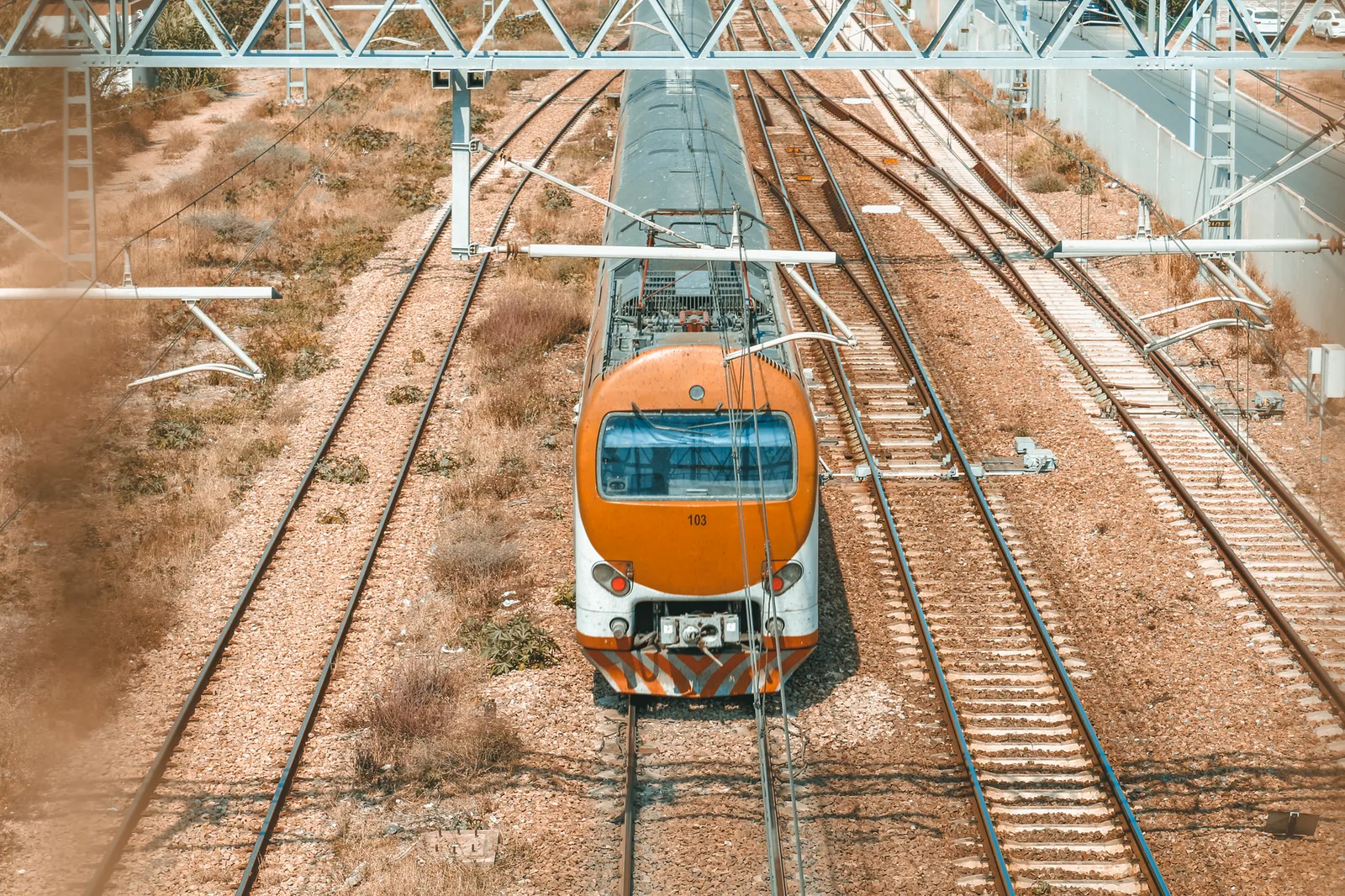
All four cities sit on the rail network, and for the central legs the train is the sensible choice. ONCF trains are comfortable, and the eastern line runs Rabat, Meknes and Fes, with Meknes about 40 to 50 minutes from Fes. Marrakech connects to the north through Casablanca, where the high-speed Al Boraq line also reaches Rabat and Tangier.
The catch is Marrakech. It is not on the high-speed line, so the Marrakech to Casablanca leg is a classic service of about three hours, and Marrakech to Fes by train is a long day of six hours or more with a change at Casablanca. If you are doing the route in one direction, build that day around travel and schedule nothing else.
A private car solves the awkward parts. On the motorway, Marrakech to Casablanca is about two and a half hours, Rabat to Fes around two hours, and Marrakech to Fes roughly five and a half. A driver also reaches Volubilis, which has no rail service, and handles the door-to-door drop-offs that medina hotels need.
A common and practical mix is to take the train for Rabat, Meknes and Fes, and a private car for the Marrakech leg and the Volubilis day. If you drive yourself, the roads are good, but city driving and medina parking are not worth the stress on a short trip.
07. Where to base yourself, and the shape of the week
The cleanest shape for eight days is Marrakech for two nights, then Meknes for one night with Volubilis, Fes for three nights, and Rabat for one night before Casablanca for the flight home. Seven days works if Fes takes two nights and you accept fewer slack afternoons. Fly into Marrakech and out of Casablanca, or the reverse, so you never double back.
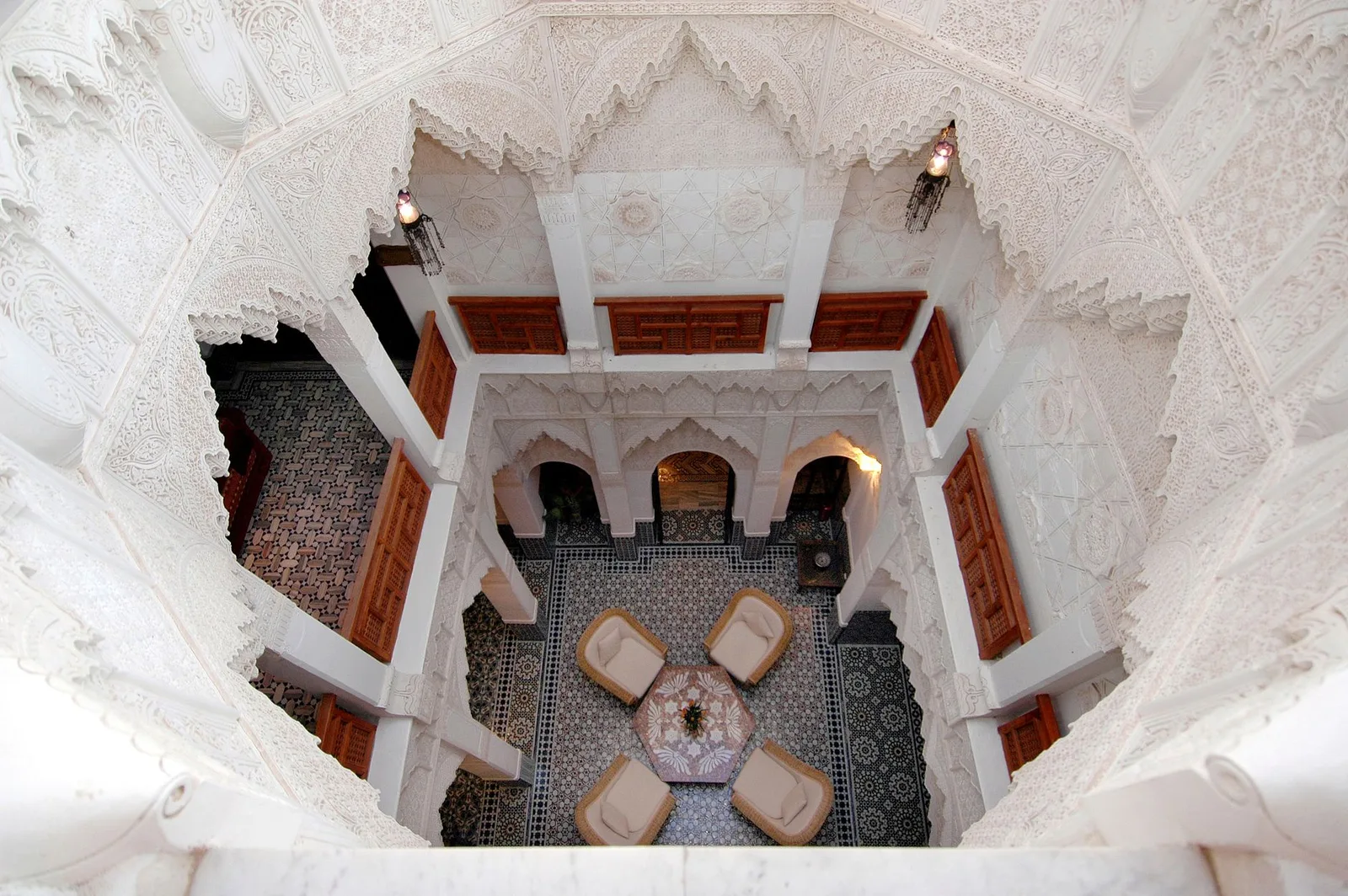
Base yourself inside the medinas in Fes and Marrakech, where the atmosphere is, and near the centre in Meknes and Rabat. In Fes, choose a riad close to a gate you can reach on foot with a bag. Keep the final night near the airport you are leaving from, which for this route usually means Casablanca or Rabat.
We run this as our Imperial Cities tour, and our team in Marrakech handles the parts that are easy to get wrong: the Marrakech to Fes travel day, a licensed guide in Fes, the Volubilis transfer, and riads that suit the route rather than a point on a map. If your dates are fixed by flights, tell us and we will build the order around them.
Frequently Asked Questions
How many days do the four imperial cities need?
Seven to eight days covers all four at a comfortable pace, with a night in Meknes to make Volubilis easy. Five days is possible if you drop a city or accept a rushed Fes or Marrakech.
Is Volubilis a day trip from Meknes or from Fes?
From Meknes, clearly. Volubilis is about 33 km and forty minutes from Meknes, against roughly 90 km and over an hour from Fes. A night in Meknes lets you reach the ruins for opening and still keep the afternoon free.
Can I do this route entirely by train?
Mostly. Rabat, Meknes and Fes are well linked by rail, with Meknes about 40 to 50 minutes from Fes. Marrakech is off the high-speed line, and Marrakech to Fes by train is six hours or more with a change at Casablanca. A private car covers the Marrakech leg and Volubilis.
Which imperial city should I skip if I have less time?
Rabat is the easiest to cut and the easiest to add back, because it is a calm single-night stop. If you cut anything, cut a city rather than the Volubilis day, which is hard to repeat elsewhere in Morocco.
What is the best season for the imperial cities?
Spring, from March to May, and autumn, from September to November. Summer pushes Marrakech and Fes past 38°C inside the medinas, and winter is mild in the south but genuinely cold in Fes and Meknes at night.
Do I need a guide in Fes?
A licensed guide is worth it for the first day in Fes el-Bali, which is genuinely confusing and has no cars. After that, the second day is often better explored alone.
More Morocco tours
8 Days
8-Day Imperial Cities Tour of Morocco
All four imperial cities in eight days — Marrakech, Fes, Meknes and Rabat. Pick this when the history is the point rather than the landscape: walls, palaces and medinas almost the whole week.
8 Days
8-Day Cultural Tour of Morocco
Eight days between Chefchaouen, Fes and Marrakech: blue lanes in the Rif, a medieval medina built for getting lost in, and the busiest square in the south. Mostly walking, with two longer drives mid-week.
9 Days
9-Day Morocco Tour from Casablanca
From Casablanca over nine days through royal cities, ancient medinas and a stretch of desert. Long enough for the three settings to breathe, short enough that the trip never becomes a transfer schedule.
Related Guides
Fes vs Marrakech: Two Medinas, Two Very Different Cities
Fes and Marrakech are both imperial cities with UNESCO medinas, but they deliver different trips. An honest comparison of atmosphere, sights, food, logistics and which city suits first-time visitors.
14-Day Morocco Itinerary: Cities, Atlas and Sahara
A practical 14-day Morocco itinerary linking Marrakech, the High Atlas, the Merzouga dunes, Fes, Chefchaouen and the Atlantic coast, with realistic driving times.
Morocco by Train: Al Boraq and the Classic Lines
A practical guide to travelling Morocco by train — the Al Boraq high-speed line, the classic routes to Marrakech and Fes, classes, booking, luggage and when a car is the better choice.
Liked this guide?
Give it a like on Instagram and tag us from your Moroccan adventure.
Plan an Imperial Cities itinerary with our team in Marrakech
Our Marrakech-based team of local experts designs tailor-made Morocco trips around your dates, budget and travel style.
Request a Quote