A tour quote can look complete and still leave you paying for half the trip once you are on the ground. This guide sets out what a well-run private or small-group Morocco tour normally covers, what it almost never covers, and how to read the line items so the final bill matches the figure you agreed. It is a general buyer's explainer, not a price list for any one company.
01. What a well-run tour normally includes
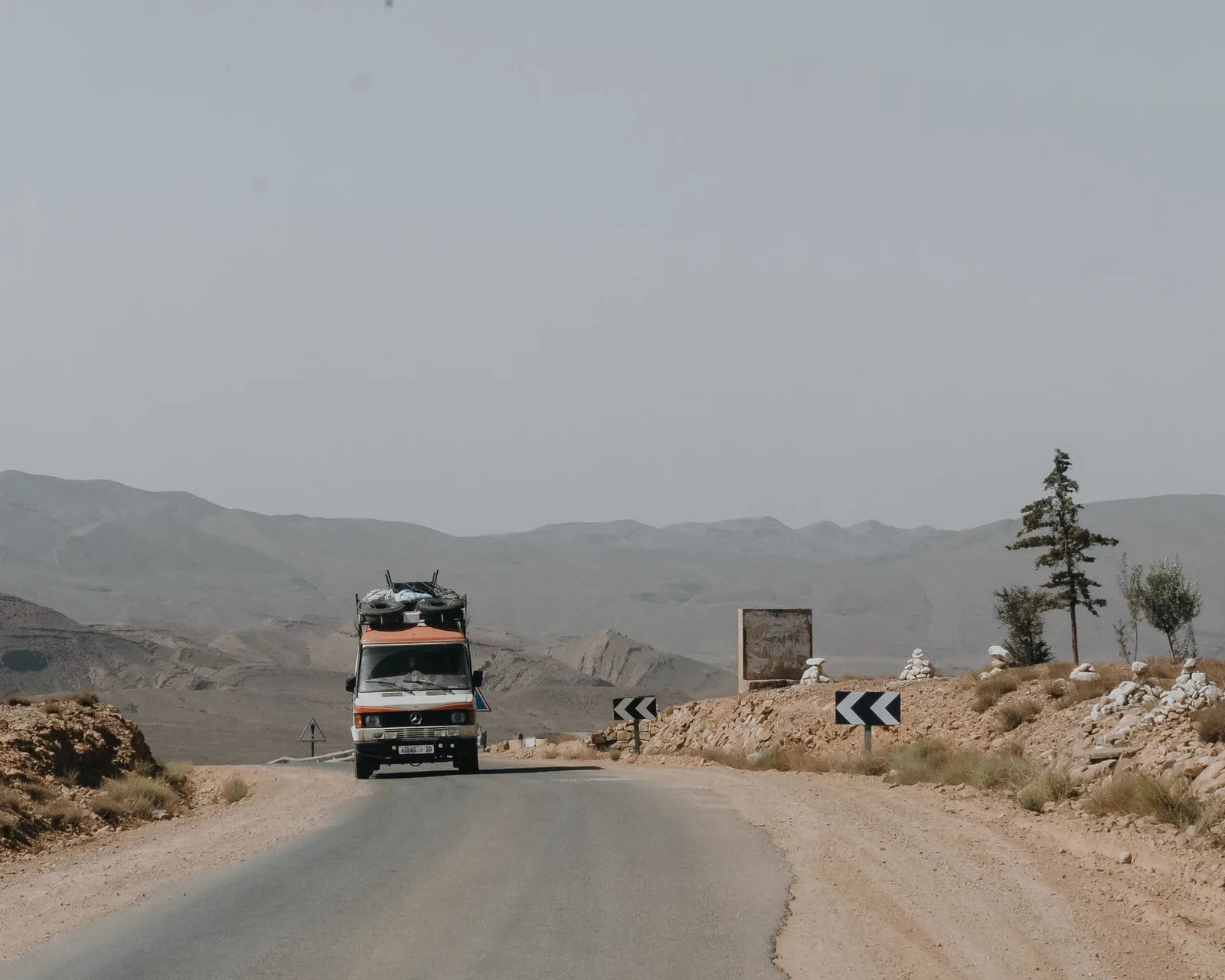
Across the Moroccan market, a dependable private or small-group tour rests on the same handful of blocks. A private air-conditioned vehicle and a driver for the whole route, with fuel, road tolls and the driver's own costs already paid. Accommodation for each night of the itinerary, usually with breakfast. Airport transfers at the start and end. A licensed local guide for the city visits where a guide genuinely helps. And, on any route that reaches the Sahara, a night at a desert camp with dinner, breakfast and a camel trek.
That is the standard shape, not a promise that every quote contains all of it. The useful test is whether the written itinerary names each night's property, states the board basis and lists each guided visit. Spelled out, those three mark a serious document.
Water in the vehicle, and a driver who speaks your language, are common courtesies rather than luxuries, and it is fair to confirm both before booking.
02. What it rarely includes
A short list of exclusions turns up on almost every Moroccan itinerary, and it is worth reading as carefully as the inclusions. International flights are never part of the price. Travel insurance is yours to arrange. Lunches, drinks and any meal not named as included are usually on you, and monument or museum entrance fees are frequently excluded too.
Tips are the line most often missed. They are discretionary and never built into a quote, but drivers and guides rely on them, so budgeting a modest daily amount for each keeps that side of the trip predictable.
Personal spending, from souvenirs and a hammam to an extra night or a balloon flight, sits outside the quote, as does any activity marked optional. A quote silent on all of this is not necessarily dishonest, but the gap between the tour price and the money you actually spend is usually explained here.
03. A driver and a licensed guide are different jobs
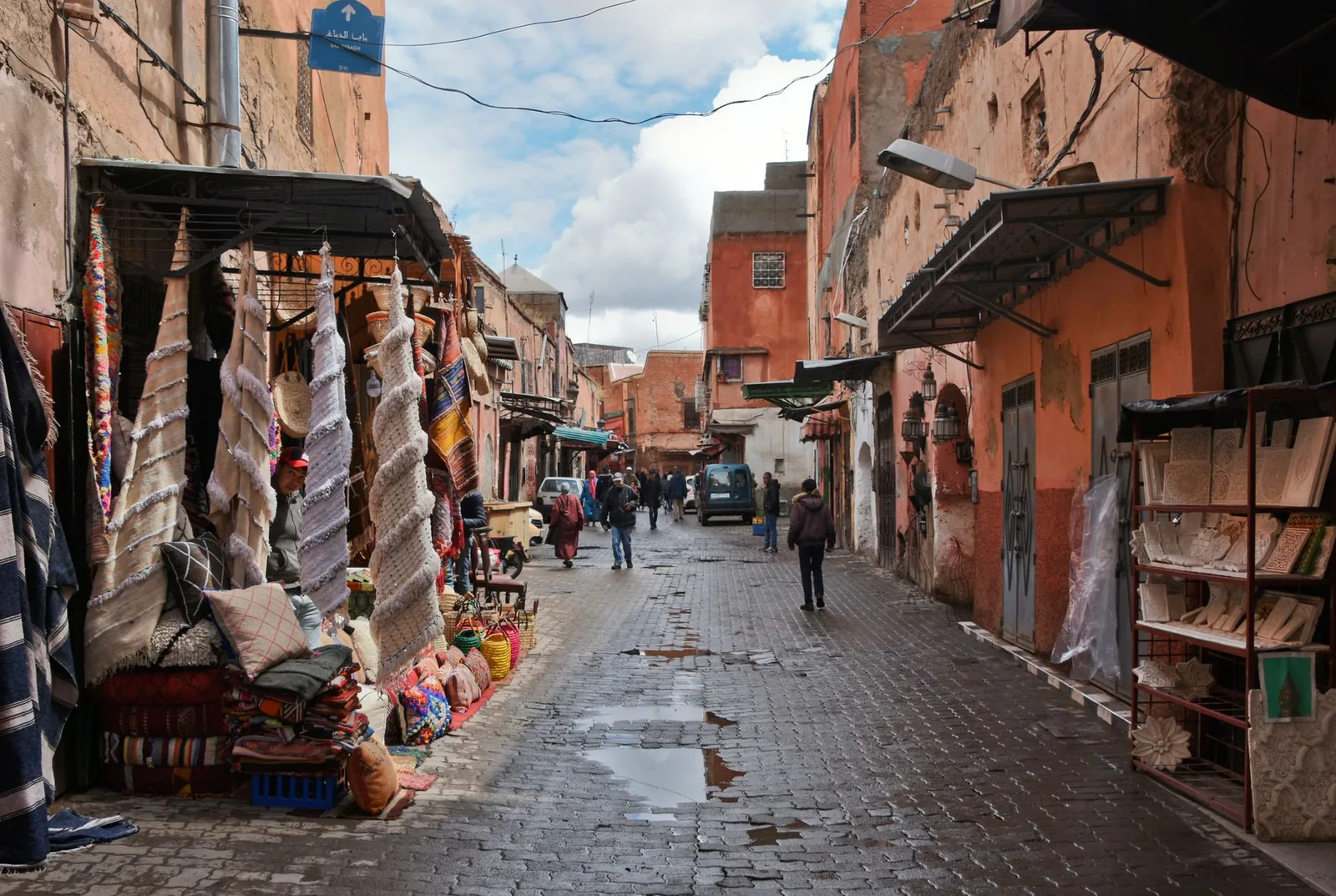
This is the distinction that catches most first-time visitors. Your driver is responsible for the vehicle and the road. A licensed guide is responsible for interpretation: the history, the lanes, the workshops and courtyards you would otherwise walk straight past. A driver-guide narrates from the front seat as you travel; a licensed city guide walks with you through the medina.
Morocco regulates guiding as its own profession. Under Law 30-96, tour and mountain guides must hold an official accreditation, and only Moroccan nationals may serve as licensed guides. Tourist vehicles carry separate transport authorisation and insurance. A friendly stranger who offers to show you around Fes is not the same thing as an accredited guide.
Well-built tours use both roles where they earn their place: a licensed guide in Fes and Marrakech, sometimes Volubilis or Meknes, then leave the rest of the day unguided. Asking which visits are guided, and by whom, tells you a good deal about how a trip was assembled.
04. How private and small-group pricing works
A group tour lowers the per-person price by sharing one vehicle and one guide across a dozen or more travellers. The trade is flexibility: the dates, the hotels and the pace are fixed, and you travel with strangers. A private tour puts the same vehicle and guide at your party's disposal, and the itinerary bends around you.
Private pricing is easiest to read when you remember what is fixed. The vehicle, the driver and the guiding day cost roughly the same whether two or four people fill the seats, so two travellers in a private 4x4 pay noticeably more per head than four in the same vehicle.
Check whether a quote is per person or per vehicle, in which currency, and whether the rate is held in high season. Prices span a wide range for honest reasons: accommodation tier, season and whether licensed city guides are included all move the number, while the route itself is often nearly identical at every price point.
05. Accommodation, breakfast and half-board
Where you sleep is where a Morocco trip opens up most, and it is the single biggest lever on price. Morocco classifies hotels by stars, but a riad, the traditional courtyard house most visitors want, is often unclassified, so stars alone say little. Location and room type matter more: a plain room inside the medina usually beats a grand room an hour outside it.
The board basis is worth decoding. Breakfast is standard on almost every tour. Half-board means breakfast plus dinner, and it is common in the desert, the deep valleys and remote stretches where there is nowhere else convenient to eat. Full board adds lunch as well. Most city stays run on breakfast alone, because part of the pleasure is choosing where to eat.
Ask for the named property for each night rather than a category. Four-star or similar can mean almost anything, whereas a named riad can be checked.
06. Desert camps, camel treks and the upgrade line
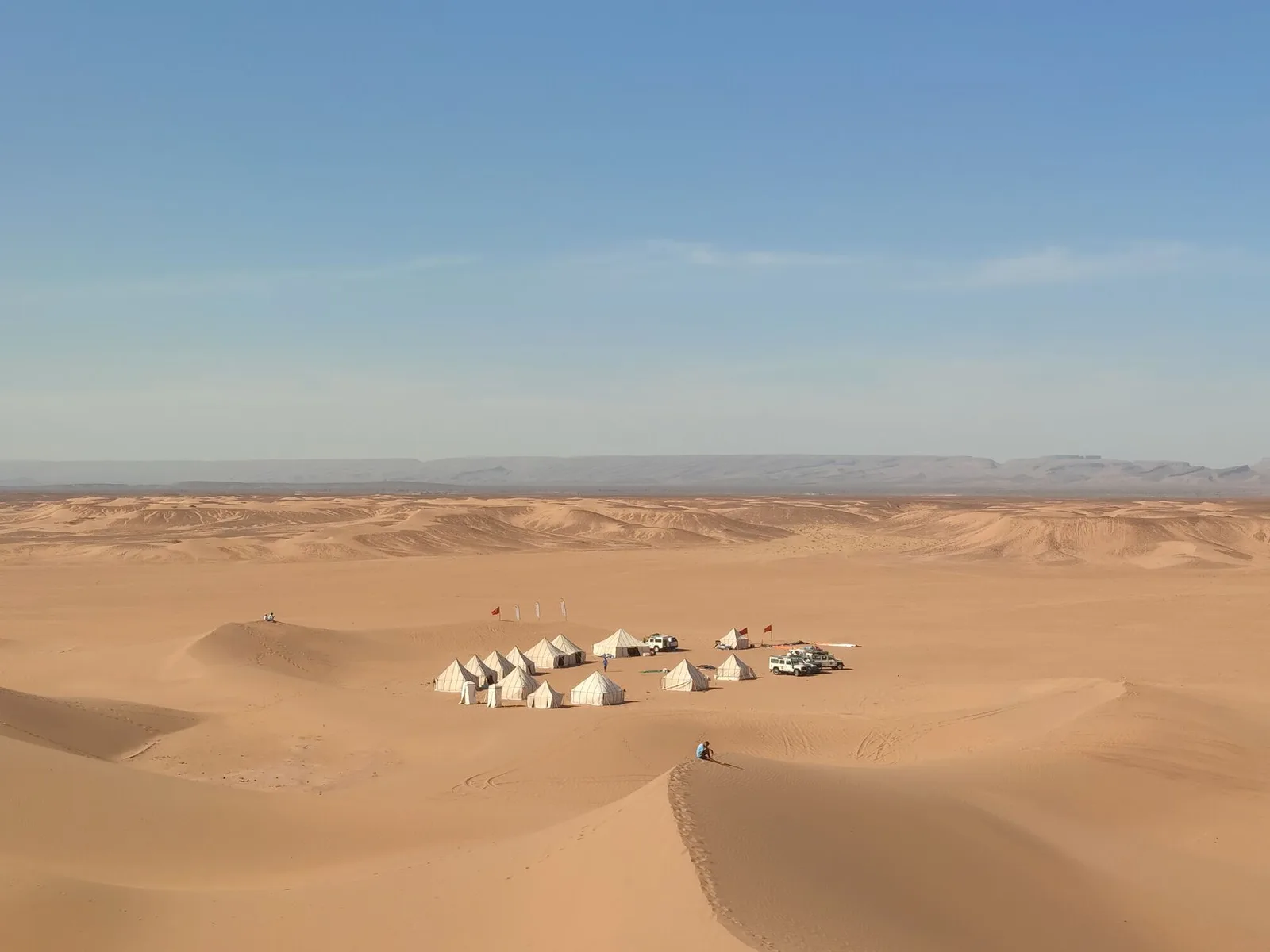
The desert night is the part of the itinerary most likely to be quietly downgraded, so it deserves a direct question. Camps come in tiers. At the basic end, a shared tent with a mattress and shared washroom facilities. At the top, a private en-suite tent with a real bed, hot water and proper plumbing. The two look similar in a brochure and can differ enormously in price.
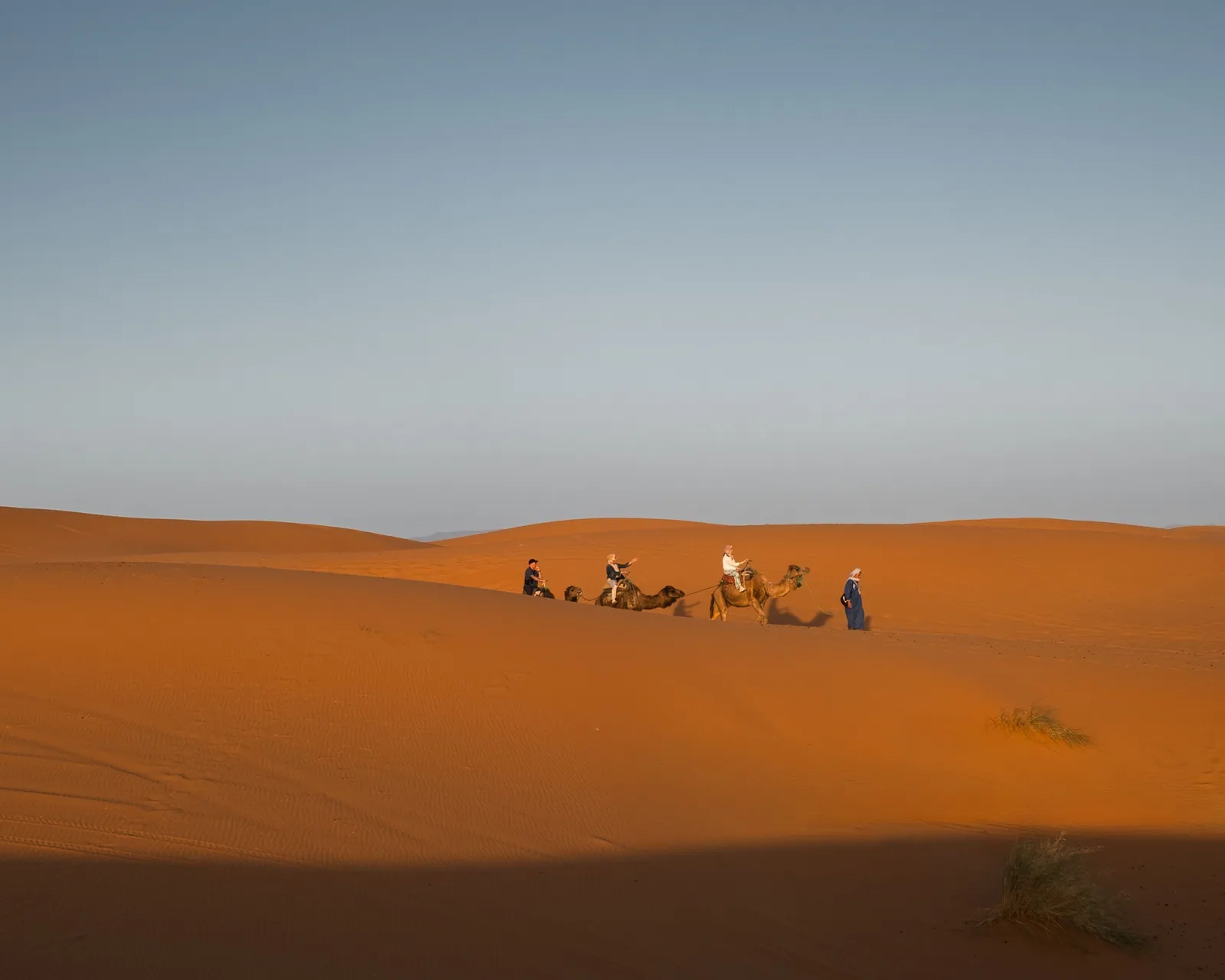
The camel trek has its own fine print. Ask how long the ride lasts and whether it ends at a genuine camp among the dunes or loops back towards the road for photographs. If the camp is reached by 4x4 rather than camel, that is fine, but it should be stated clearly.
Dinner, breakfast and usually water at the camp are normally included, while drinks may not be. Winter nights in the dunes are cold, so a camp with blankets and ideally heating is worth confirming for travel between November and February.
07. Single supplements, deposits and the questions to ask
A solo traveller is usually asked for a single supplement to have a room alone; on a group tour, the alternative is to be paired with another traveller of the same gender at no extra cost. Supplements vary and often do not apply to the desert camp night, where tents are shared or priced separately. Ask for the figure in writing before you commit.
Payment terms are fairly consistent across the market. A deposit of roughly twenty to thirty per cent confirms the booking, with the balance due shortly before arrival, paid by a traceable method rather than untraceable cash. Cancellation terms should be in writing too, because they decide what you lose if plans change.
Before paying, a short set of questions settles most of the uncertainty. Is the vehicle authorised and insured for tourist transport? Are the guides licensed? What exactly is included and excluded, per person or per vehicle, and on which nights and board basis? Are entrance fees and tips covered? What is the single supplement, the deposit and the cancellation policy?
EDDYAFA MOROCCO TRAVEL is a licensed operator based in Marrakech, and we put every inclusion and exclusion in writing before a deposit is taken, from a single airport transfer to a multi-day circuit of the imperial cities and the Sahara. You can read how we work on our About page, and the transport side in more detail in our private-driver guide.
Frequently Asked Questions
Is transport always included in a Morocco tour?
On organised private and small-group tours, yes: a vehicle, a driver and fuel for the route are standard, and airport transfers usually are too. Independent travel is different, and a driver hired by the day is a separate service.
Is the driver also a tour guide?
Usually not in the licensed sense. Your driver handles transport; a licensed national guide handles guiding inside cities and monuments. Some operators use a driver-guide who narrates from the vehicle, but accredited city guiding is a distinct, regulated profession.
Why are some Morocco tours so much cheaper than others?
The route is often identical, so the difference sits in the details: a shared rather than private vehicle, lower-category or out-of-town accommodation, breakfast only instead of half-board, fewer or no licensed city guides, and a basic rather than en-suite desert camp. Compare the line items, not only the total.
What is a single supplement?
An extra charge a solo traveller pays to have a room to themselves. Group tours otherwise pair same-gender travellers in a twin. The amount varies, and it frequently does not apply to the desert camp night or is quoted separately for it, so ask before booking.
Are entrance fees and tips included?
Rarely. Monument and museum entrance fees are usually excluded, including well-known sites such as the Hassan II Mosque in Casablanca, and tips are never built into a quote. Both are small per day but add up, so budget for them separately.
What deposit is normal before a Morocco tour?
Around twenty to thirty per cent to confirm, with the balance shortly before arrival, paid by card, PayPal or bank transfer rather than untraceable cash. Get the deposit and cancellation terms in writing before you pay anything.
More Morocco tours
10 Days
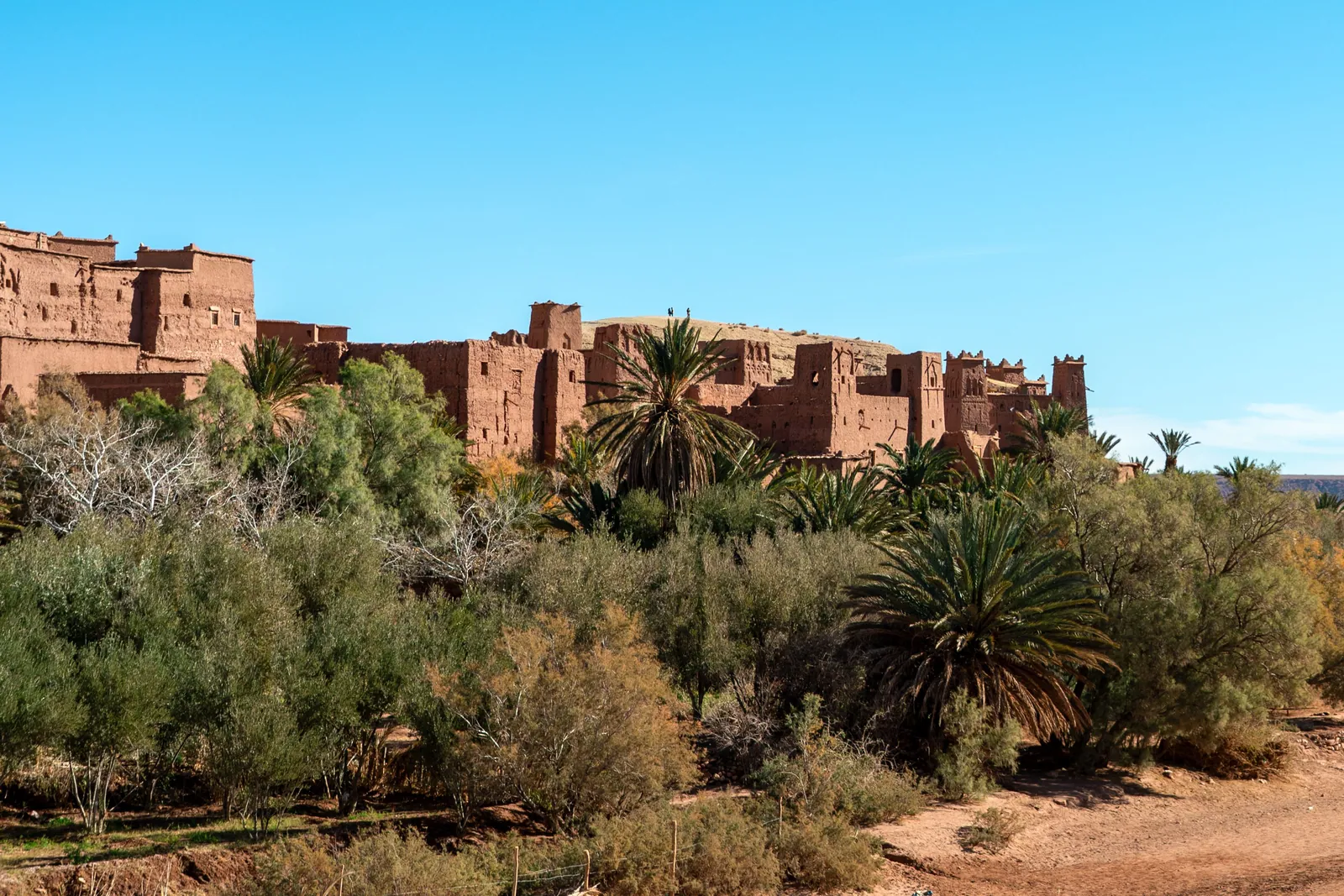
10-Day Morocco Tour from Casablanca
Ten days from Casablanca through imperial cities, mountain villages and desert. Built for range rather than one region, with three different settings spaced out so no two days look alike.
8 Days
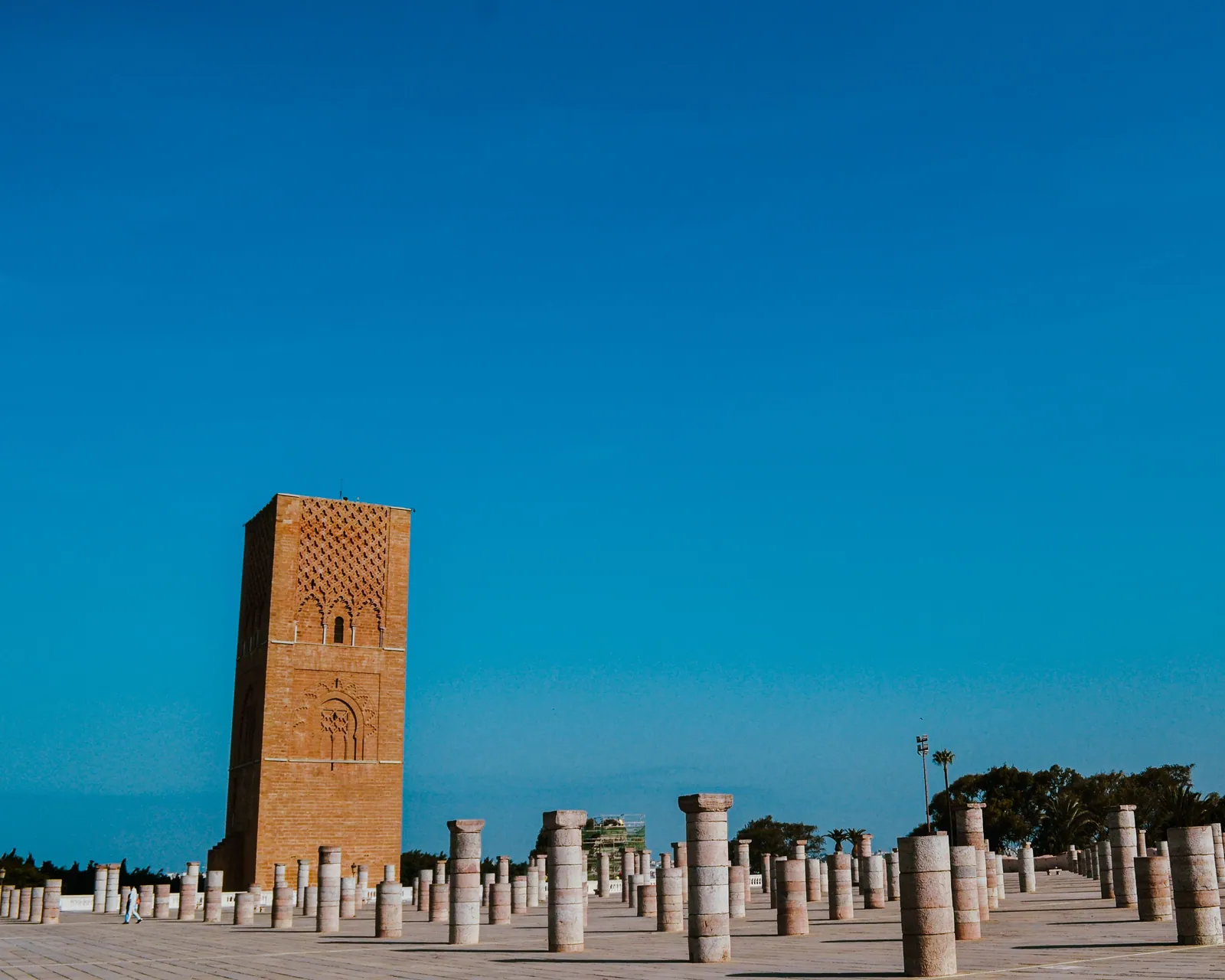
8-Day Imperial Cities Tour of Morocco
All four imperial cities in eight days — Marrakech, Fes, Meknes and Rabat. Pick this when the history is the point rather than the landscape: walls, palaces and medinas almost the whole week.
14 Days
14-Day Morocco Itinerary for First-Time Visitors
Two weeks for a first visit: imperial cities, mountains and sand, with enough days between them that nothing is hurried. Fourteen is the length at which Morocco stops feeling like a tour and starts feeling like a trip.
Related Guides
Sahara Desert Camps: Erg Chebbi, Erg Chigaga and What a Night Costs
How Sahara desert camps actually work — Erg Chebbi vs Erg Chigaga, luxury vs standard tents, camel transfers, what is included, and the questions to ask before booking a night under the dunes.
How to Choose a Morocco Tour Company: A Buyer's Guide
How to tell a licensed Moroccan operator from a reseller or freelancer, compare quotes like for like, read reviews honestly, and spot the red flags before you pay.
How to Choose the Best Riads in Morocco
An honest buyer's guide to choosing a Moroccan riad: what makes a riad different, location, price tiers, questions to ask, accessibility and city notes.
Liked this guide?
Give it a like on Instagram and tag us from your Moroccan adventure.
Ask for a written quote with every inclusion spelled out
Our Marrakech-based team of local experts designs tailor-made Morocco trips around your dates, budget and travel style.
Request a Quote