
A riad can be one of the best ways to experience Morocco, but its appeal is not its star rating. It is the calm behind a plain door in a medina, the courtyard for breakfast, and the host who can point you down an easy route home. This guide is about how to choose one well, rather than picking a ranked list of specific properties.
01. What a riad is and why it feels different
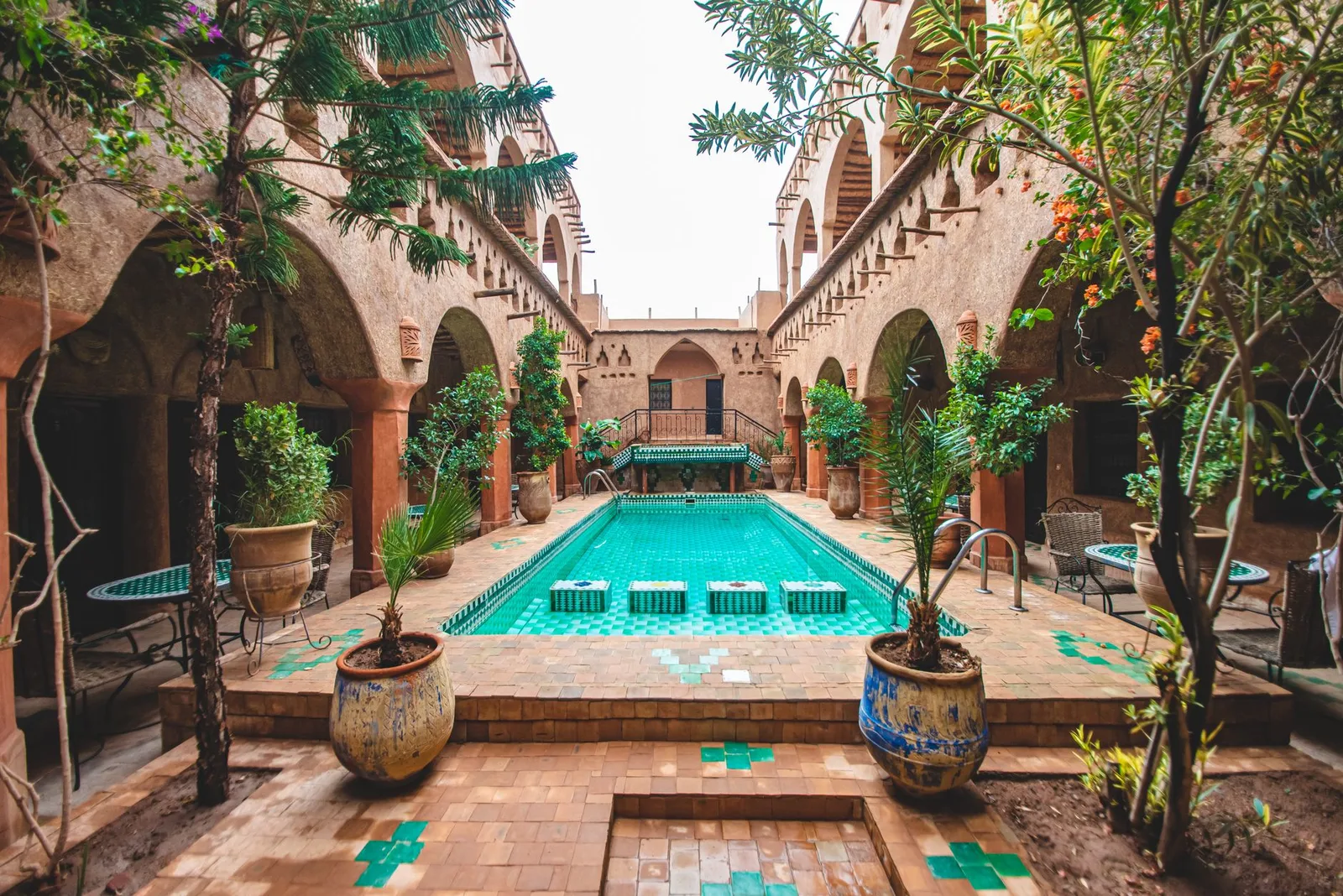
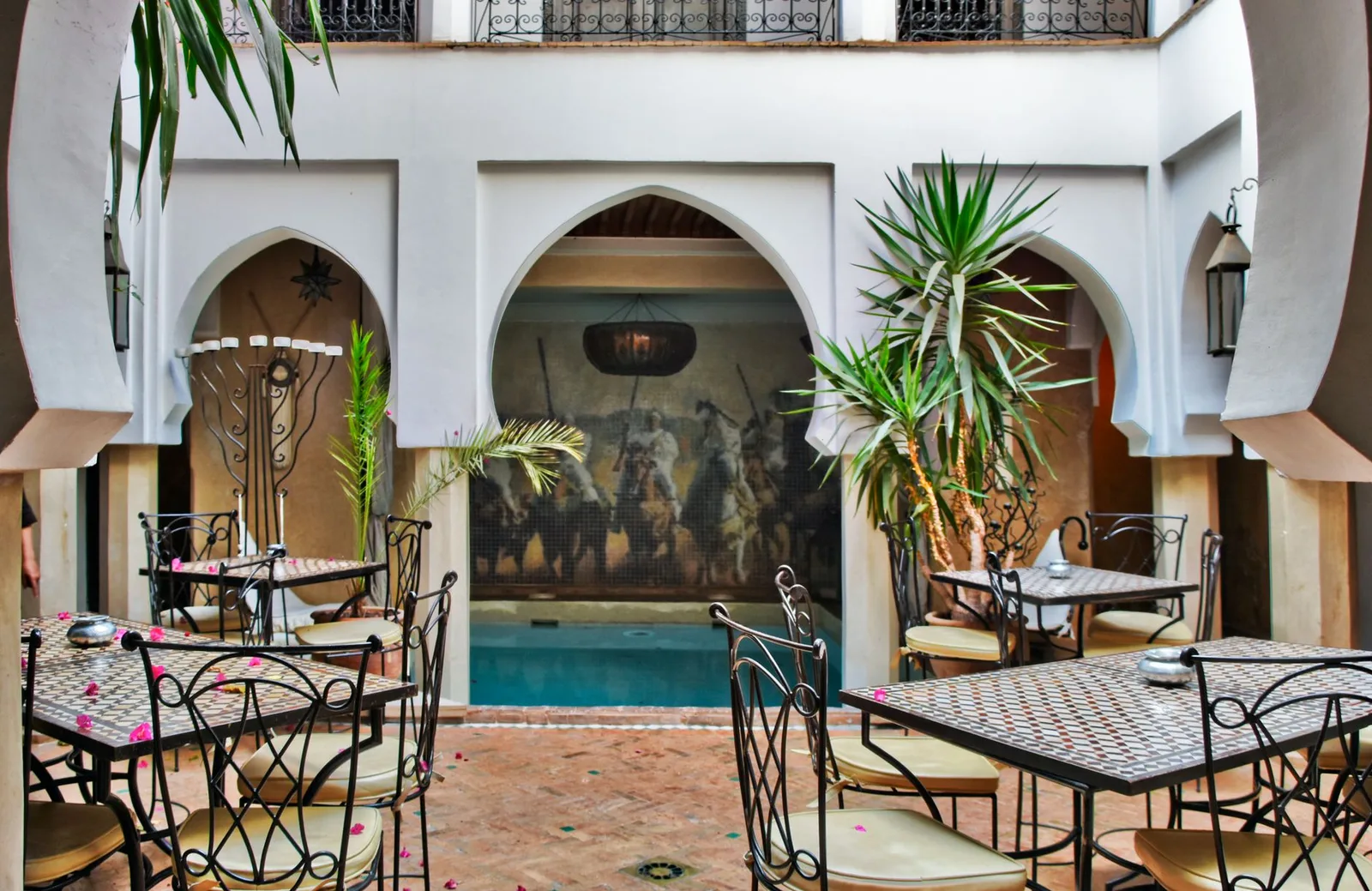
The word riad comes from the Arabic word for garden, and traditionally it refers to a house built around an interior courtyard with plants or a central fountain. A dar is a similar courtyard house, but the courtyard is more often a paved patio without a full garden. In tourism, the terms are used loosely, so the name matters less than the actual courtyard and the experience it offers.
Riads are typically small, with only a handful of rooms, all facing inward towards the courtyard. The street facade is usually unadorned for privacy, which means the change from the bustle of the medina to quiet as you step through the door is part of the appeal. Most have rooftop terraces, and breakfast is often served in the courtyard or on the roof.
That intimacy comes with trade-offs: rooms vary in size because they were converted from old houses, lifts are rare, and access often involves a few steps or a narrow alley. For many travellers, those are acceptable compromises for a more personal stay.
02. Where to stay: medina vs the new town
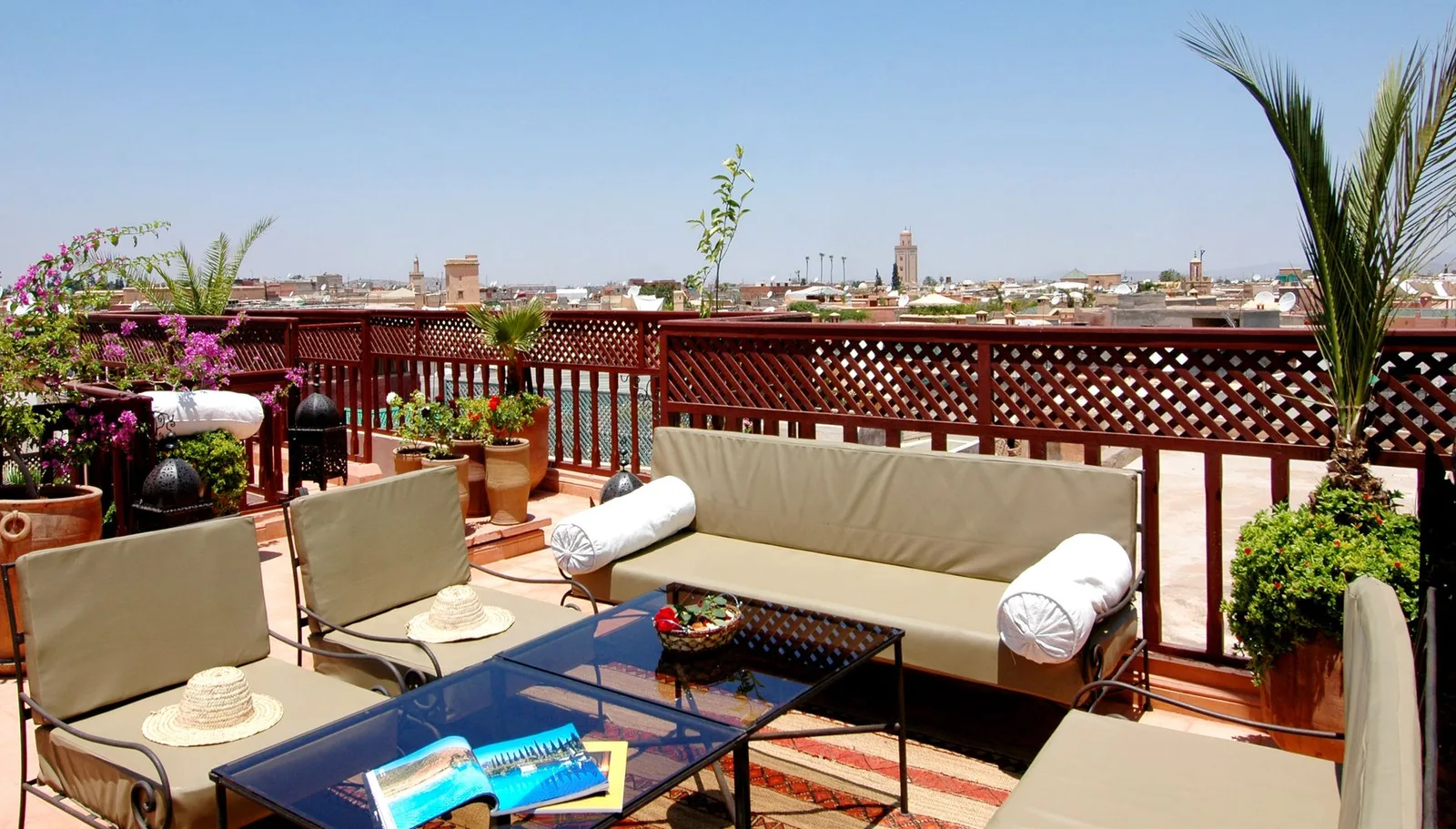
Most riads are in the medinas of imperial cities such as Marrakech and Fes. Staying there means you can walk to souks, historic sites and food in the evening, but it also means you will arrive on foot from your drop-off point and navigate pedestrian lanes. Nouvelle ville districts are easier for parking and luggage, but you will lose the immediate proximity to the medina's character after dark.
For a first visit to Marrakech, Fes or Essaouira, a well-located riad near a known gate makes moving around much easier. Our guides to Marrakech and Fes can help you narrow down an area that feels right for your pace. For Essaouira, the compact medina is easy to cross on foot, so location is less critical.
Smaller destinations such as Chefchaouen tend to have simpler courtyard guesthouses. The painted lanes are mostly pedestrian and very compact, but steep sections and steps are common, so the drop-off and access matter more than distance.
03. Price tiers and what to expect
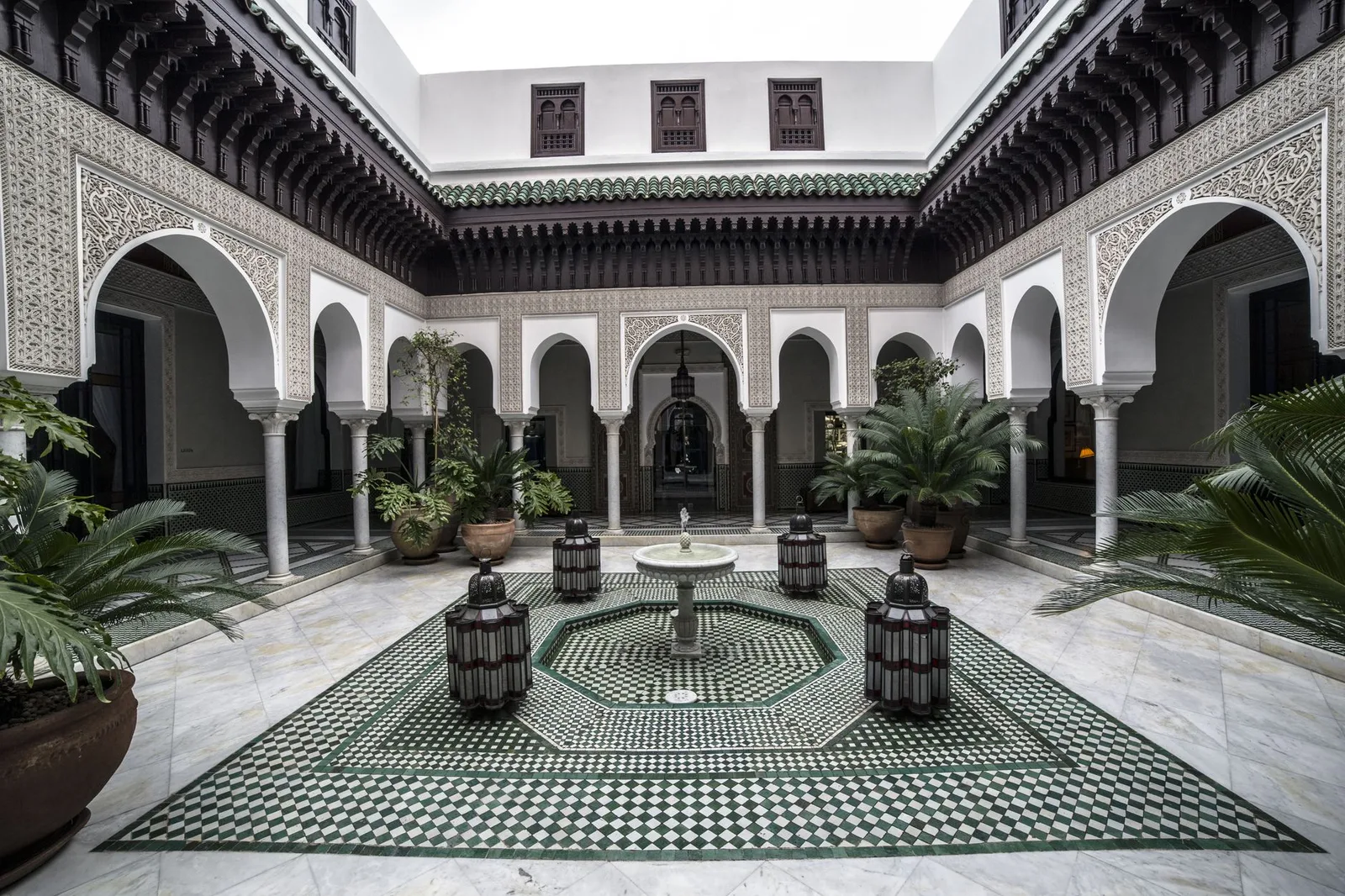
As a rough guide, budget riads tend to fall around €40-80 per night, mid-range around €100-200 per night, and luxury around €300 per night or more. These are approximate and can rise in peak season. Room count is small, so prices reflect character, location, service and upkeep rather than floor space alone.
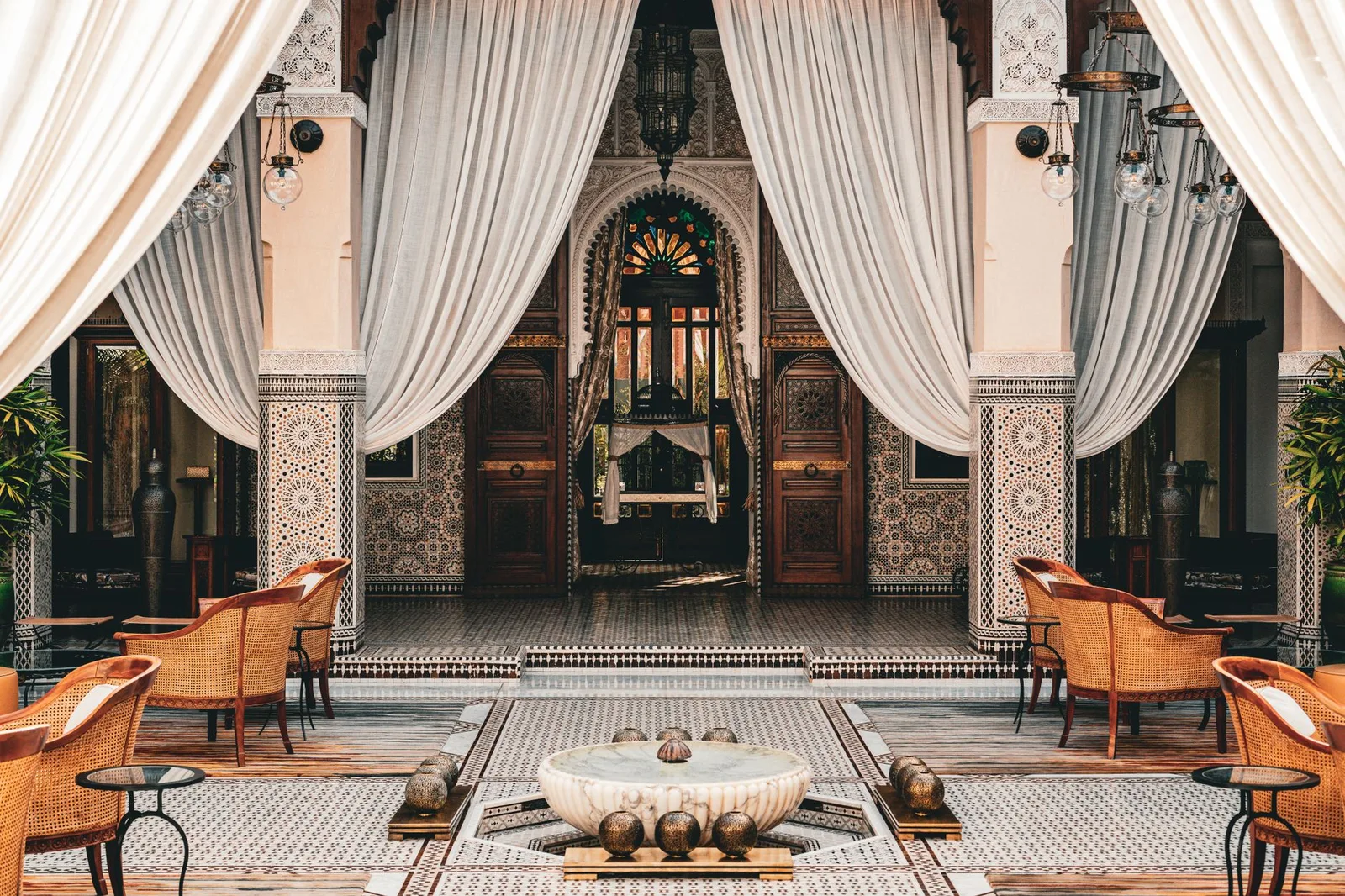
Lower-priced properties are often well-run family homes with basic en-suites. Mid-range riads may have more restored features, a proper courtyard garden or a plunge pool, and more consistent hot water and soundproofing. At the higher end, you can expect larger rooms, more privacy and attentive hosts, though the luxury label does not remove the reality of stairs or an alley entrance.
Do not expect all rooms to be identical. Some will be smaller or on upper floors, and some may face into the courtyard with limited street views. A clear description and recent photos are more reliable than the price alone.
04. The questions to ask before booking
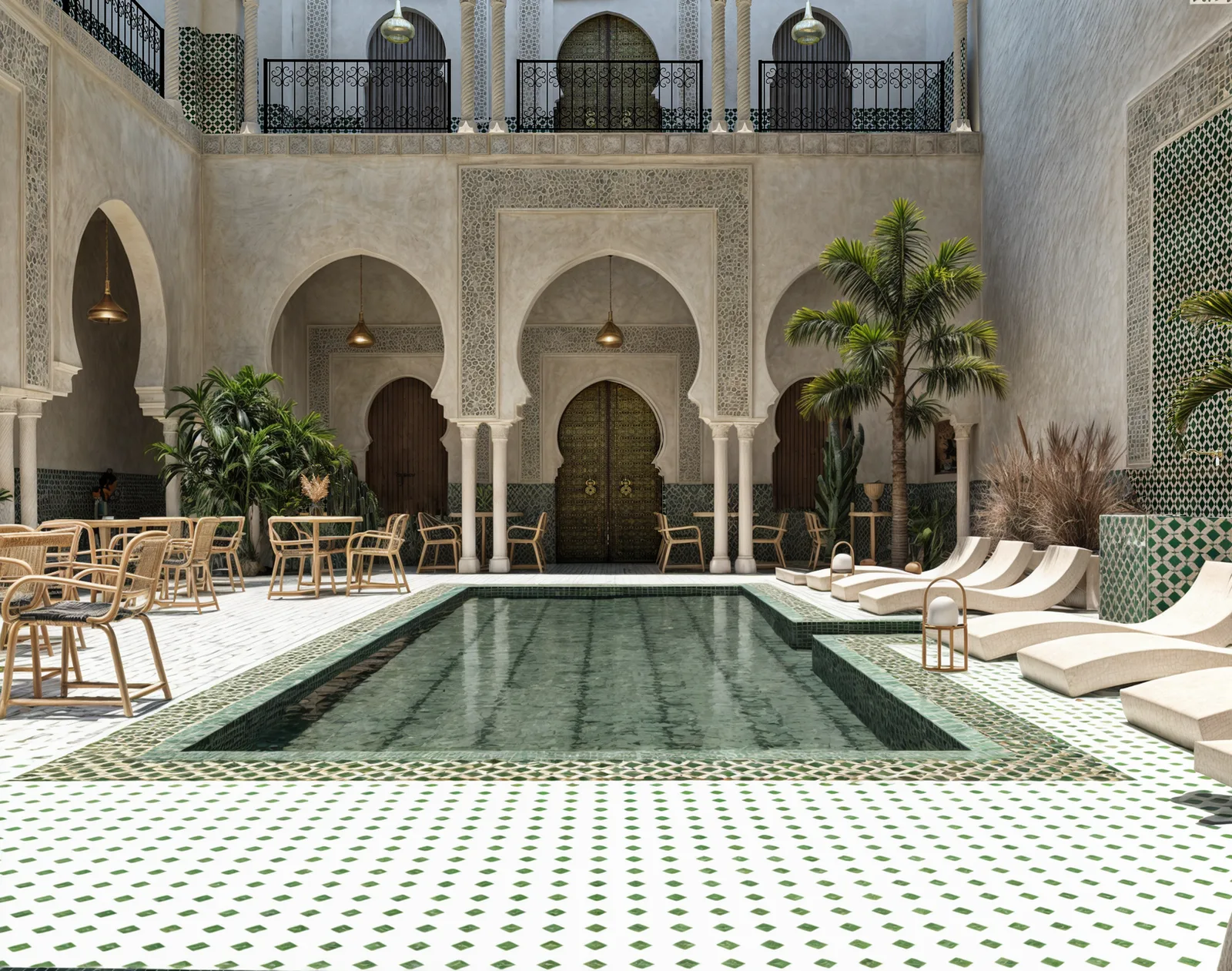
Before paying, confirm a few practical points that matter more than decorative details. Ask for the exact drop-off point, the walking route to the riad with bags, and whether someone will meet you there if you arrive after dark. Also ask about desk hours, as not all small riads have 24-hour reception.
Check for accessibility basics if you have limited mobility: how many steps from the street, whether there is a lift, and the width of the lane. If stairs will be an issue, say so upfront, as most riads were not built with lifts. Noise is another factor to clarify, particularly if your room faces a nearby cafe or the street entrance.
Ask about the courtyard itself: is it open to guests all day, does breakfast run at a set time, is there a plunge pool (and when it is open), and is parking available nearby for a transfer? For direct bookings, ask about cancellation terms and whether payment is secure. These are standard questions and reputable hosts will answer them plainly.
05. Comfort, noise, location and access
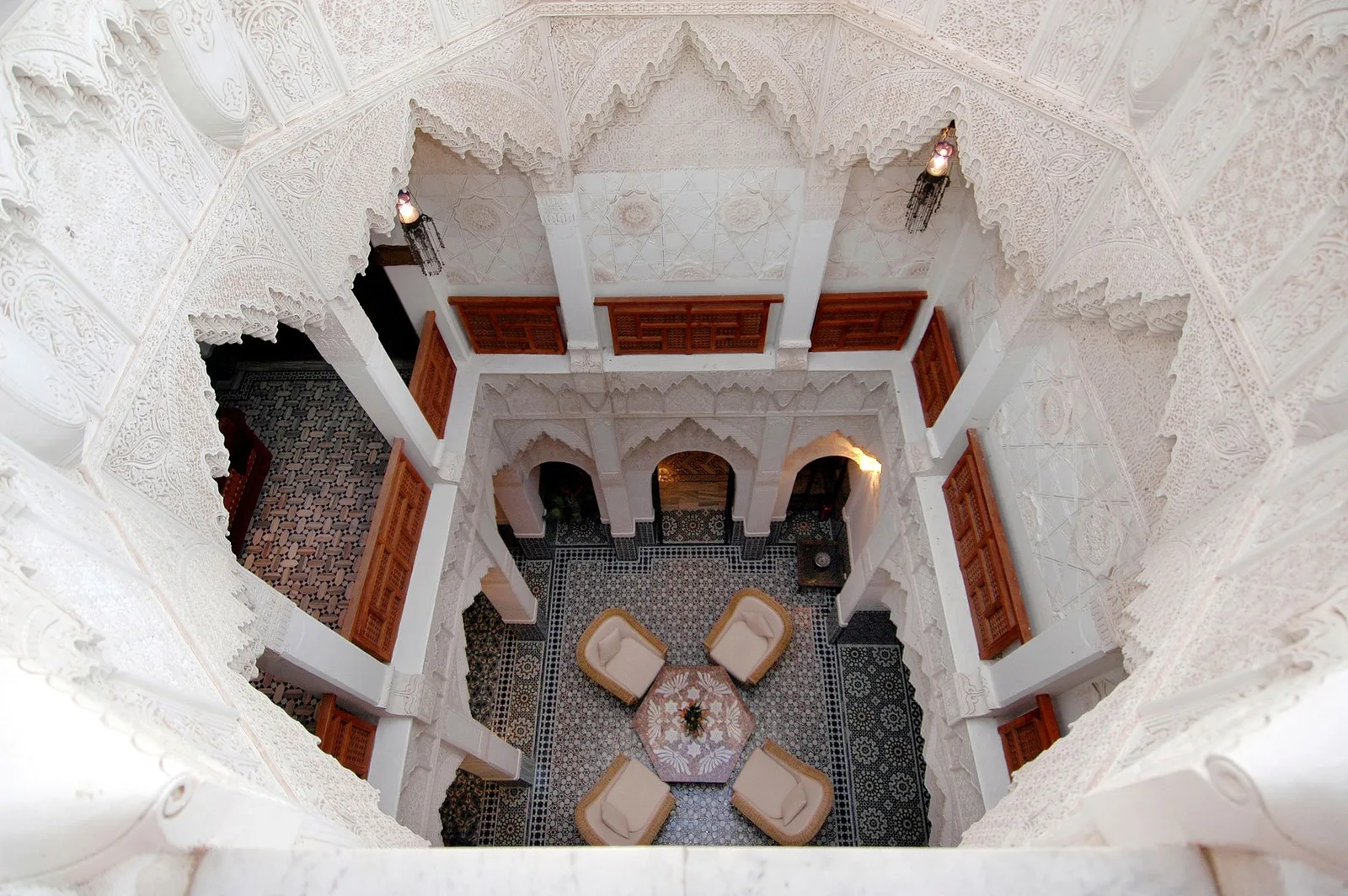
The medina can be lively late into the evening, but a well-sited riad with inward-facing rooms is usually quiet at night. Sound travels more in older buildings, so light sleepers may prefer a room higher up or away from the common area. Earplugs are a cheap insurance policy if you are sensitive to early morning activity.
Accessibility is the most frequent mismatch between expectation and reality. Many riads have no lift, so ground-floor rooms are limited. The approach can be along a narrow, uneven lane, and taxis cannot always stop at the door. If mobility is a priority, look for a property with a clear ground-floor room or consider the nouvelle ville instead.
For direct booking versus platforms, the two can complement each other. Platforms give broad choice and refund clarity, while direct booking can mean better flexibility, a specific room assignment or help with airport or station transfers. Either way, the meeting point and arrival plan are worth fixing in writing.
06. City-specific notes to keep in mind
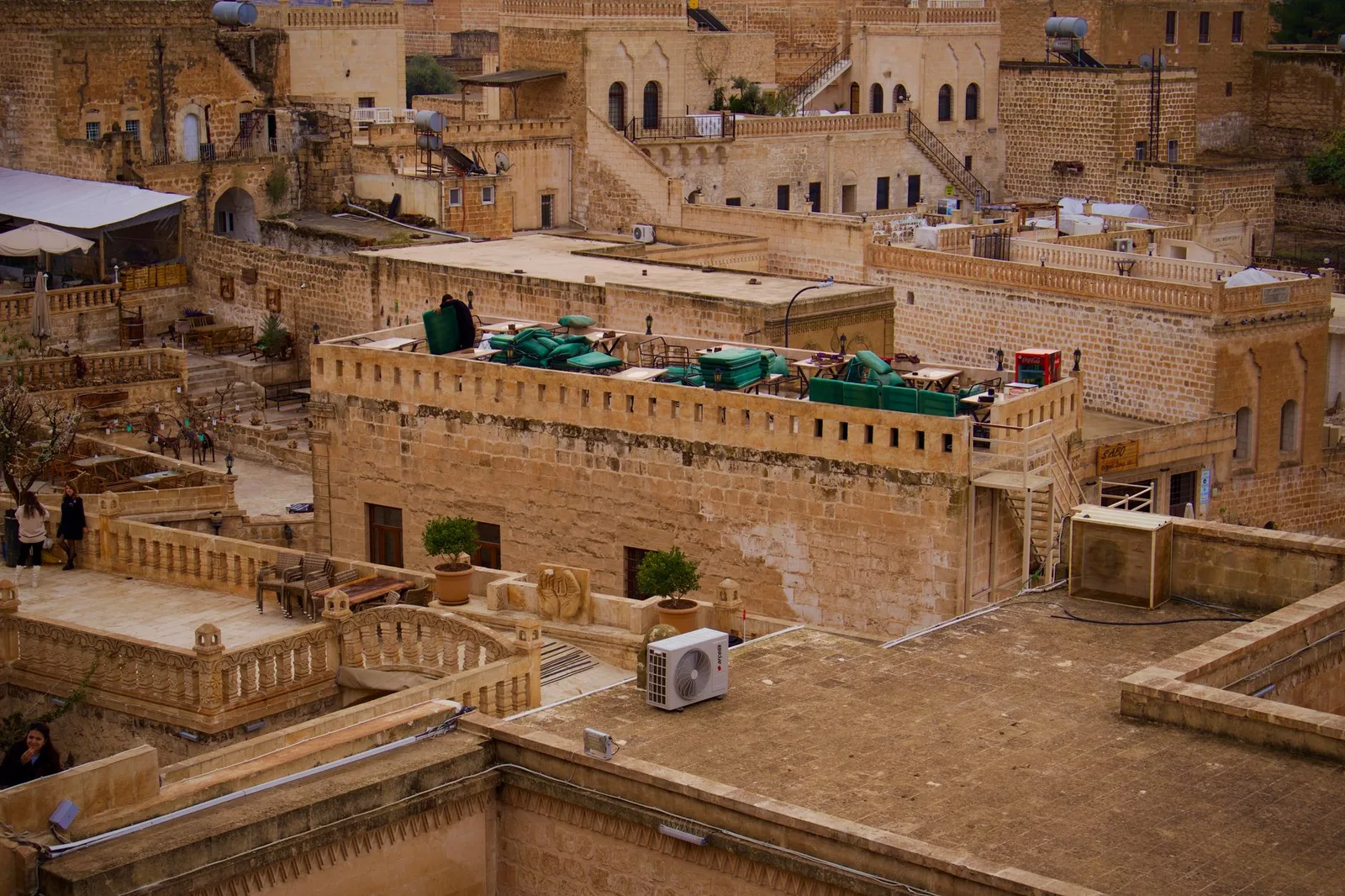
Marrakech's medina is large and can be disorienting at first. Choosing a riad near a well-known gate reduces frustration, especially on arrival. There are many converted dars here, so do not be swayed by the 'riad' label alone; focus on location and recent reviews.
Fes el-Bali is one of the world's largest car-free medinas and its lanes are famously twisty. A local meeting point is essential, and a host who meets you there is invaluable. For this reason, pre-arranged transfers are particularly useful, as covered in our Marrakech and Fes travel guides.
Essaouira is far easier to navigate: the medina is compact, car-free in the central area and flatter than Marrakech or Fes. Chefchaouen is small but hilly and steep in parts, with limited drop-off space. For either, the trade-offs are milder, but stairs and access still apply.
07. Final tips for a good stay
Look for recent, specific reviews that mention the arrival experience, not just the decor. A riad that consistently helps with luggage, directions or late check-ins is worth a small premium. Pay attention to noise, water pressure, heating or cooling if visiting outside the shoulder season.
Be realistic about what a riad can and cannot be. It will not feel like a modern chain hotel: service is more personal, spaces are irregular, and the setting is deliberately inward-looking. Those are its strengths when matched to what you want. For a tailored itinerary or a private transfer to your riad, EDDYAFA MOROCCO TRAVEL can help make the first step the easiest part of your stay.
Above all, choose the property that fits your priorities: location and access for your arrival time, comfort for your sleep, and a host you can reach easily. If those line up, you are far more likely to enjoy the sense of calm that makes a riad special in the first place.
Frequently Asked Questions
What is the difference between a riad and a dar?
Traditionally, a riad has an interior courtyard with plants or a garden, while a dar has a simpler, paved courtyard. In tourism the terms are used loosely, so the actual courtyard and property matter more than the label.
Is staying in a riad better than a hotel?
It depends on what you want. Riads offer intimacy, character and a medina location. Hotels are usually easier for parking, lifts, larger rooms and late, standardised service.
How much should I pay for a riad in Morocco?
Roughly €40-80 per night for a budget riad, €100-200 for mid-range, and €300 or more for luxury. Prices vary by city and season, and small room counts mean upkeep costs are spread over few rooms.
Are riads accessible for people with limited mobility?
Many are not. Lifts are rare, stairs are common, and access is often via narrow, uneven medina lanes that taxis cannot enter. Always confirm before booking.
Should I book direct or through a platform?
Platforms offer protection and comparison, while direct booking can give more flexibility, room choice and help with transfers. Fix your meeting point in writing.
Which cities are best for a first riad stay?
Marrakech, Fes and Essaouira are the most popular. Essaouira is easiest to navigate; Fes rewards good arrival planning.
More Morocco tours
10 Days
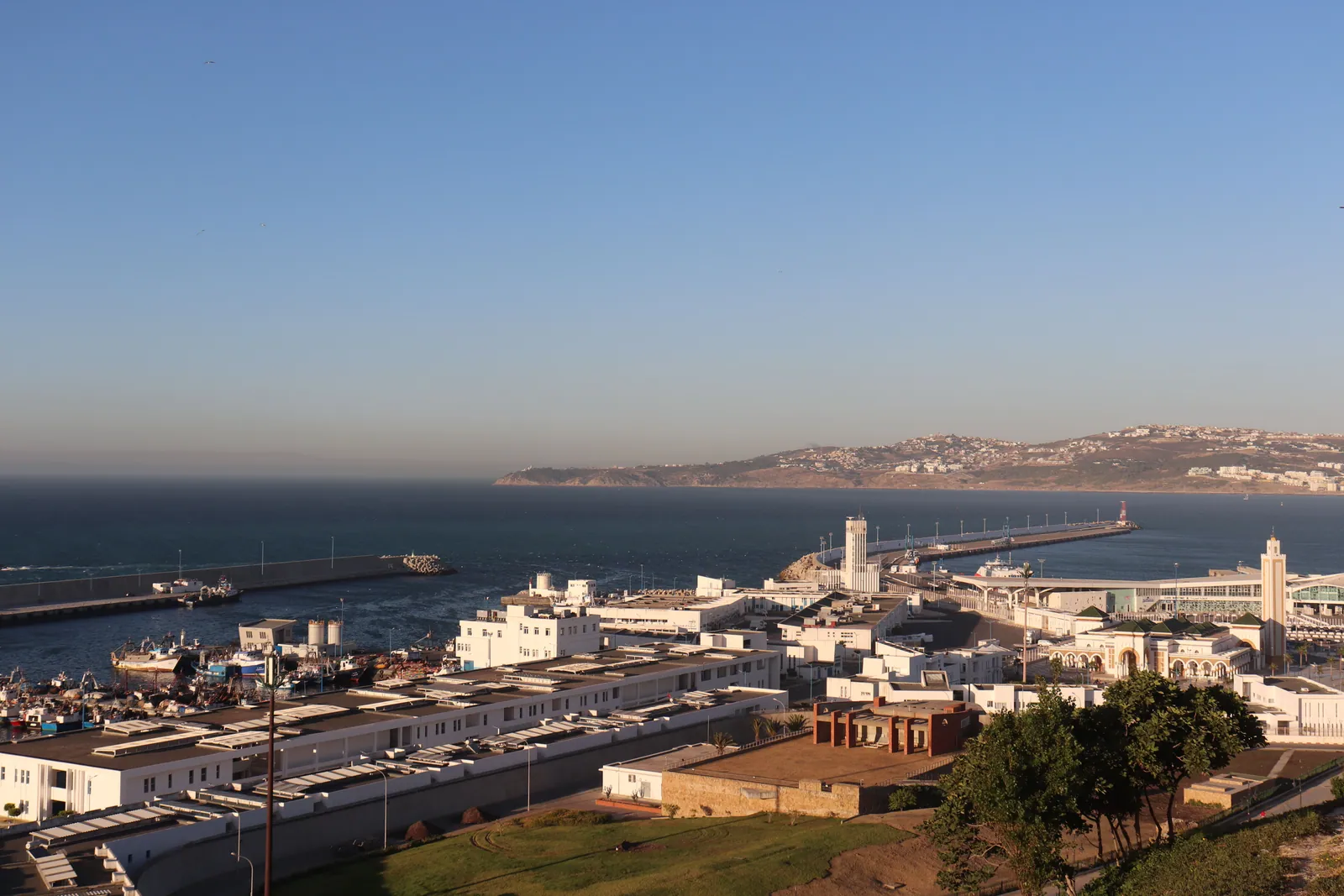
10-Day Private Luxury Morocco Tour: Marrakech to Tangier
Private, ten days, Marrakech to Tangier: riads, the Atlantic coast and the main cultural stops, arranged for one party rather than a fixed departure. You fly out of Tangier and never retrace the route.
10 Days
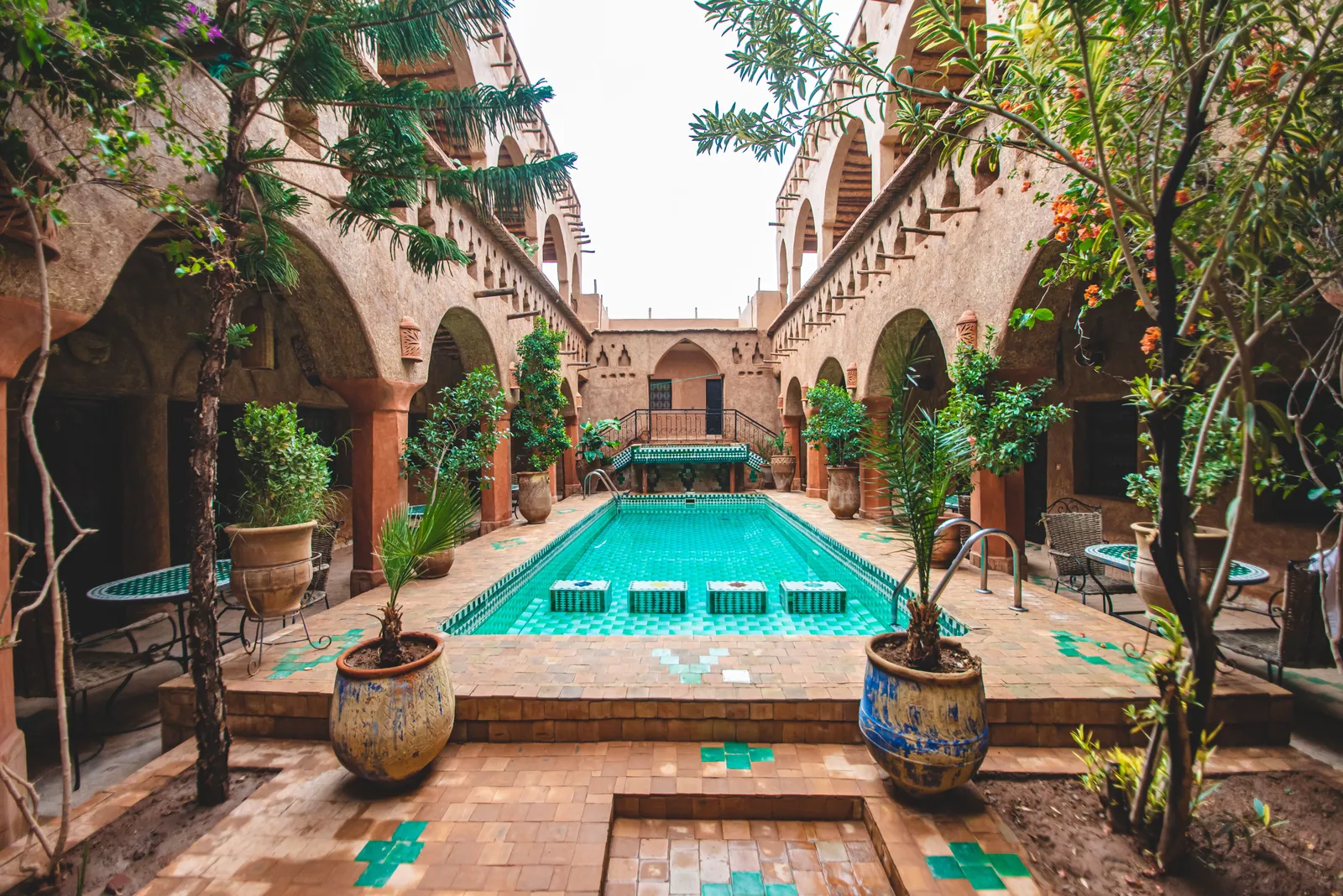
10-Day Private Morocco Itinerary
Ten days, private, paced from the riad rather than a coach timetable. For travellers who already know which parts of Morocco matter to them and would rather see those properly than see more of them badly.
Near Marrakech
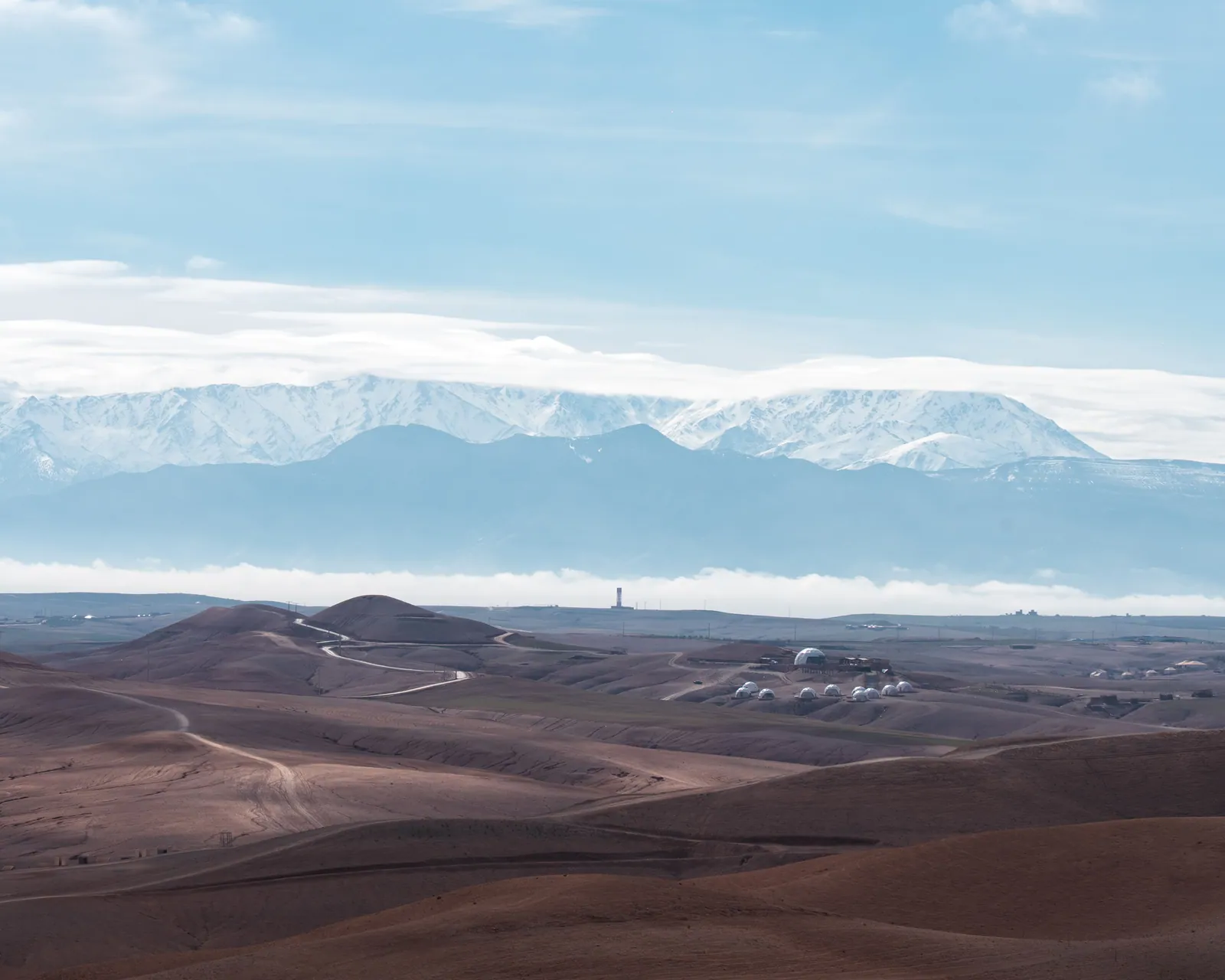
Agafay Desert
A dry, rocky desert close to Marrakech, with no dunes — bare hills, open horizons and camps laid out for dinner after dark. The short transfer is the point: one night either side of a city week.
Related Guides
Fes vs Marrakech: Two Medinas, Two Very Different Cities
Fes and Marrakech are both imperial cities with UNESCO medinas, but they deliver different trips. An honest comparison of atmosphere, sights, food, logistics and which city suits first-time visitors.
What Is Included in a Morocco Tour? A Buyer's Guide
What a well-run private or small-group Morocco tour normally includes, what it almost never includes, how private and group pricing differ, single supplements, deposits and the questions to ask before you pay.
Sahara Desert Camps: Erg Chebbi, Erg Chigaga and What a Night Costs
How Sahara desert camps actually work — Erg Chebbi vs Erg Chigaga, luxury vs standard tents, camel transfers, what is included, and the questions to ask before booking a night under the dunes.
Liked this guide?
Give it a like on Instagram and tag us from your Moroccan adventure.
Plan your stay with confidence and let us help with transfers and tailored routes
Our Marrakech-based team of local experts designs tailor-made Morocco trips around your dates, budget and travel style.
Request a Quote