The same square is a quiet orange market at nine in the morning and a packed open-air restaurant by eight at night. Knowing which version you are walking into is most of knowing how to visit it.
01. What the square is
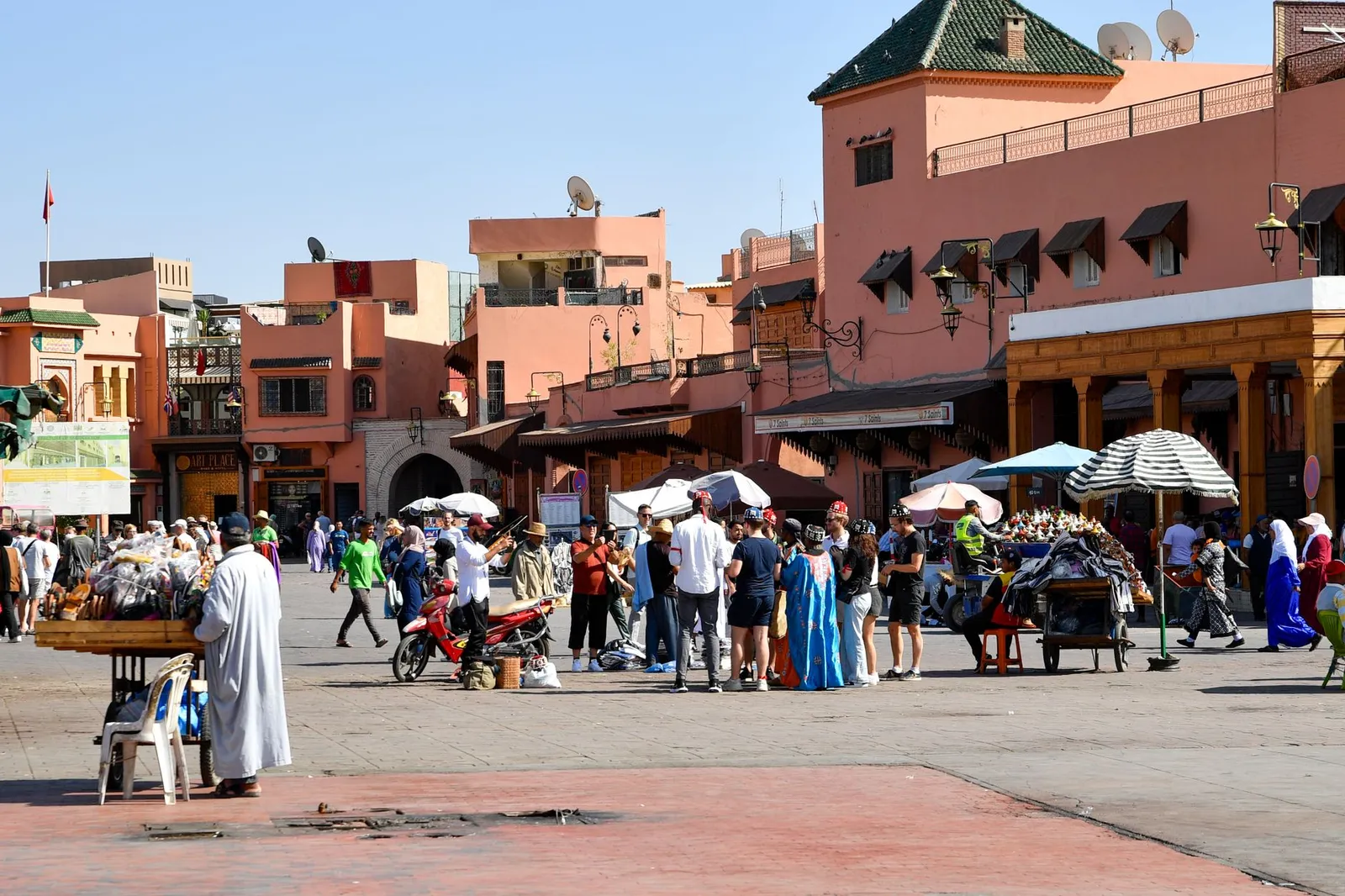
Jemaa el-Fna is the open square at the entrance to the Marrakech medina, and it has been the city's main public space for nearly a thousand years. The name probably means something like mosque of nothing or empty of mosques — the etymology is genuinely disputed — and today it functions as market, stage, restaurant and meeting point in one.
It is also protected heritage in an unusual way. UNESCO proclaimed it a Masterpiece of the Oral and Intangible Heritage of Humanity in 2001, and listed it again in 2008 — not for the buildings around it, which are ordinary, but for what happens in it: the storytelling, music, medicine shows and food culture that a square like this sustains.
02. The day version
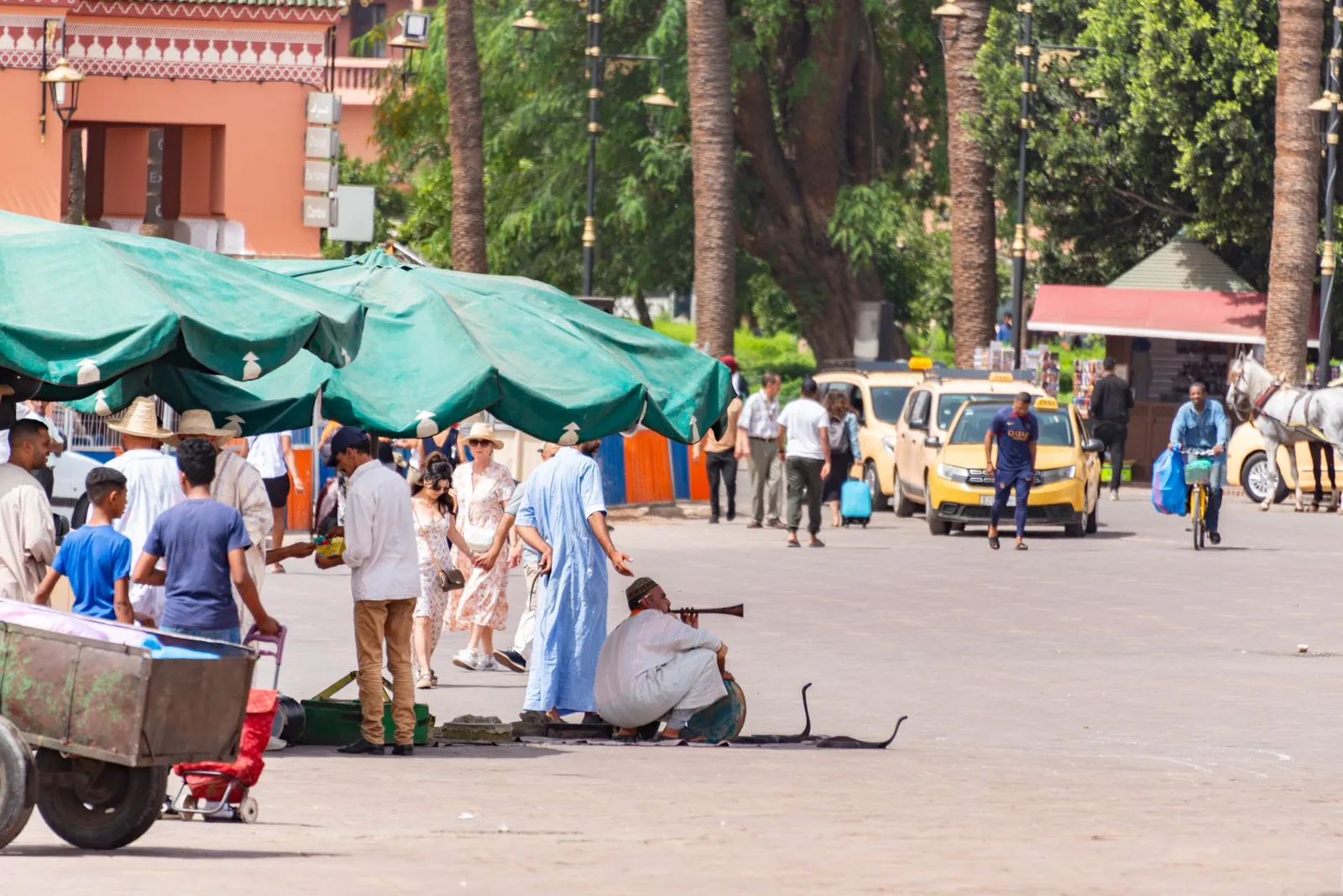
In the morning the square is calm and local. Orange-juice carts line the edges with fresh juice for a few dirhams, women sell dates and msemen flatbread, and the cafés fill with Moroccans drinking coffee. Henna artists and the occasional snake charmer set up, but the day crowd walks through rather than lingers.
This is when the square is easiest to cross and cheapest to use, and also when the UNESCO-listed bustle most people imagine simply is not there. If you only come at midday and leave, you have seen the quiet version and missed the point.
03. The evening version
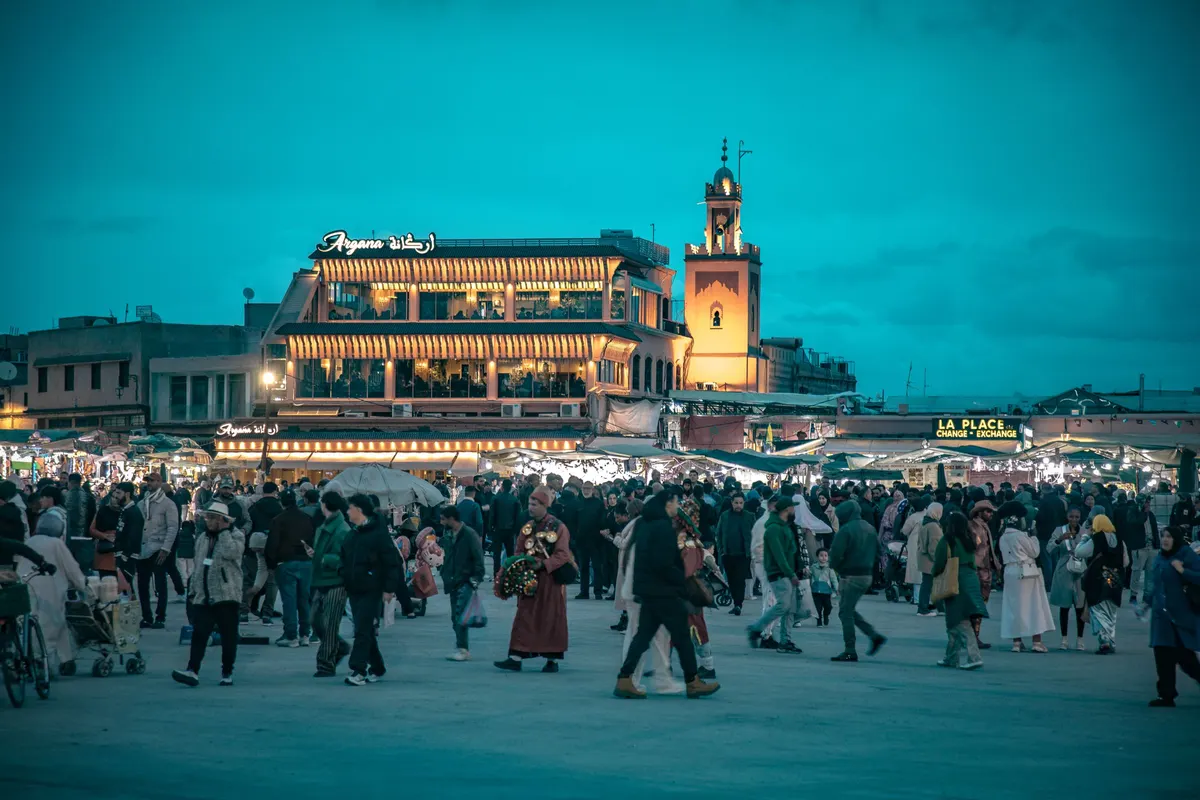
From late afternoon, around four or five, numbered food stalls roll into place along the square's far side. By six the fires are lit, by seven the tajines are going and the musicians start their circles, and from eight until well past midnight the square is one of the busiest public spaces in the country.
The transformation is daily, not occasional — the stalls are licensed by the city, with numbers on their canopies, and they show up every evening of the year. There is no ticket and no gate: the evening square is simply open, and the cost of entry is whatever you decide to eat.
04. How the food stalls work
Each stall carries a numbered canopy and a menu board, and you pick a stall, sit at its counter and order. Typical prices at the time of writing: brochettes around 30 to 45 MAD, harira soup about 20 to 30 MAD, a full plate of lamb or chicken with bread at the higher end. Menus are numbered and most stalls have no written prices — ask the total before you order, not after.
The famous stalls are the ones in the middle of the row, always the busiest, with queues at nine at night. The food is broadly comparable across them; the difference is how long you want to wait. If a stall touts hard for your custom, that is a signal to keep walking — the good ones are full without needing to pull you in.
05. The performers
The evening circles are the actual UNESCO heritage: storytellers holding a crowd in Darija for an hour, Gnaoua musicians with guembri and qraqeb, Berber singers, and the medicine shows with their drums and their speeches. Watching is free — the performers work the crowd for coins at the end, and a few dirhams is the right contribution.
Snake charmers, monkey handlers and henna artists work the edges of the square. Our honest advice: they charge for anything that looks like a performance or a photo, the rates are rarely posted, and the animals are not treated well. Skipping them costs nothing and changes nothing for the square's heritage.
06. Eating well in the square
For a first visit, the soup-and-bread route is the best one: harira soup, a couple of brochettes, and mint tea at a stall counter, which costs very little and puts you in the middle of the evening rather than watching it from a café.
For a sit-down meal with a view instead, the cafés on the square's edge — Le Grand Balcon and Café du France are the two famous ones — charge several times the street price for the same tagine and the same square from above. That is a fair trade for the view; just make it a deliberate one.
07. Hustles and how to avoid them
The square has a well-earned reputation for small hustles, and they are worth knowing before you walk in. The common ones: someone insists a restaurant you are heading to is closed; a helper starts walking you somewhere you did not ask to go; a photo is taken and payment demanded; a henna design is started on your hand uninvited and a large sum claimed.
All of them end with the same two sentences, and they work in every language the square speaks: no, thank you, and walk on. Do not engage with the argument about whether the price was mentioned — in the square, the first number you hear is a proposal, not a price.
08. Around the square
The souk alleys begin at the square's northern edge, so a morning in the market and an evening at the square is the natural Marrakech pairing. The Koutoubia mosque and its gardens are five minutes west, and the light on the minaret from the square at sunset is the standard photograph.
For the full sequence, do it in one walk: souks in the late afternoon, back to the square as the stalls fire up, dinner at a stall counter, and the long way home past the Koutoubia gardens while the call to prayer echoes off the tower.
Frequently Asked Questions
Is Jemaa el-Fna free to visit?
Yes — it is a public square with no entrance fee. You pay only what you eat or drink, and watching the performers is free.
What time do the food stalls open?
They set up from late afternoon, light their fires around six, and are busiest from about eight in the evening until after midnight.
How much does food cost in Jemaa el-Fna?
Brochettes around 30 to 45 MAD, harira soup 20 to 30 MAD, fuller plates more. Always agree the total before ordering — most stalls have no printed prices.
Is Jemaa el-Fna safe at night?
Yes, the square itself is busy and well-patrolled until late. Watch your pockets in crowds, decline uninvited helpers and henna, and agree prices before eating.
When is the best time to go?
Sunset into the evening, for the food stalls and the music circles. Go earlier in the day too if you want to see the quiet morning market version.
More Morocco tours
8 Days
8-Day Yoga & Desert Journey in Erg Chigaga
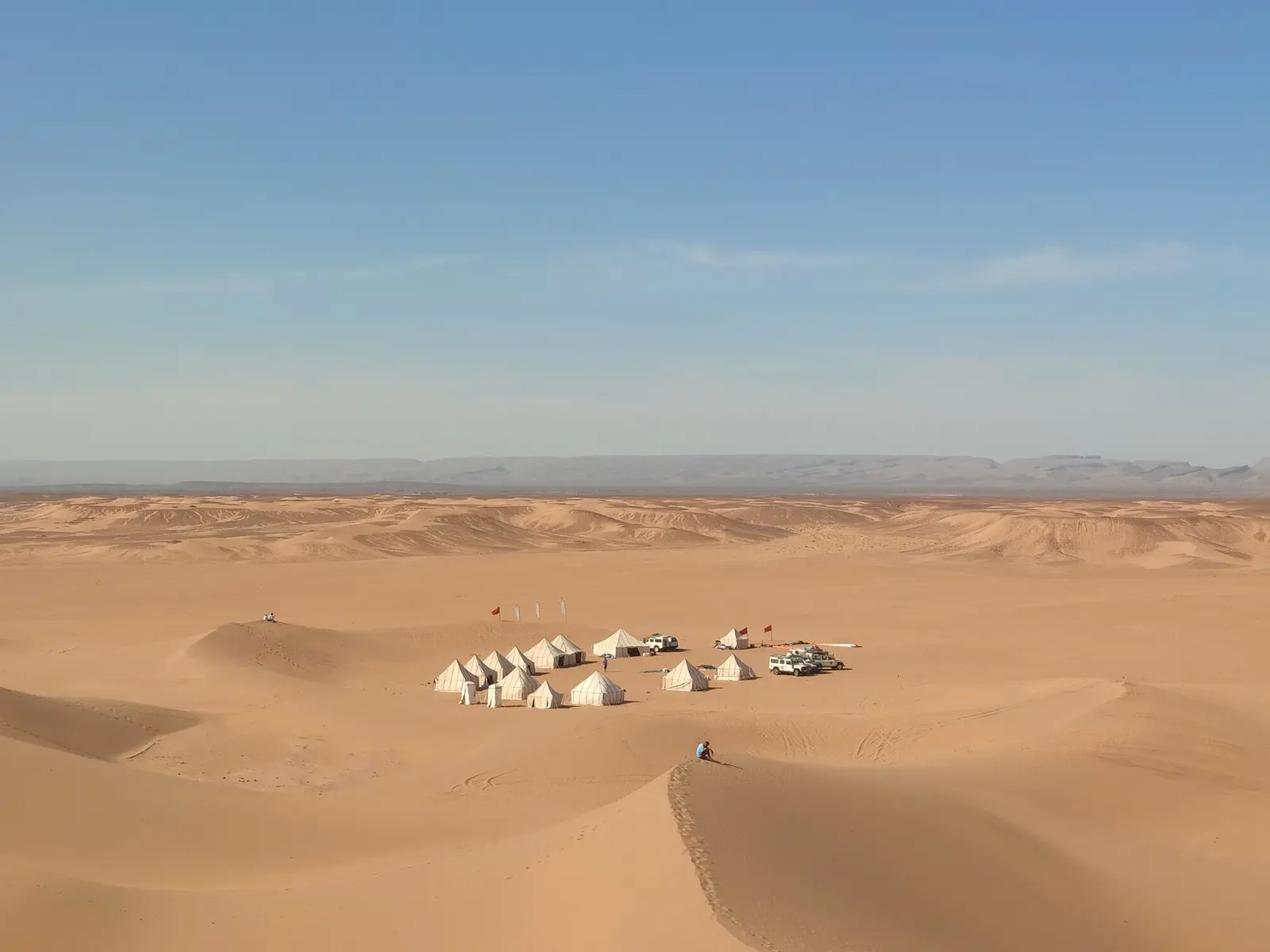
Eight days from Marrakech to a fixed nomadic camp in the dunes of Erg Chigaga: gentle treks with a support 4x4, daily yoga in the open, and five nights at the rhythm of the Sahara without moving camp.
8 Days
8-Day Cultural Tour of Morocco
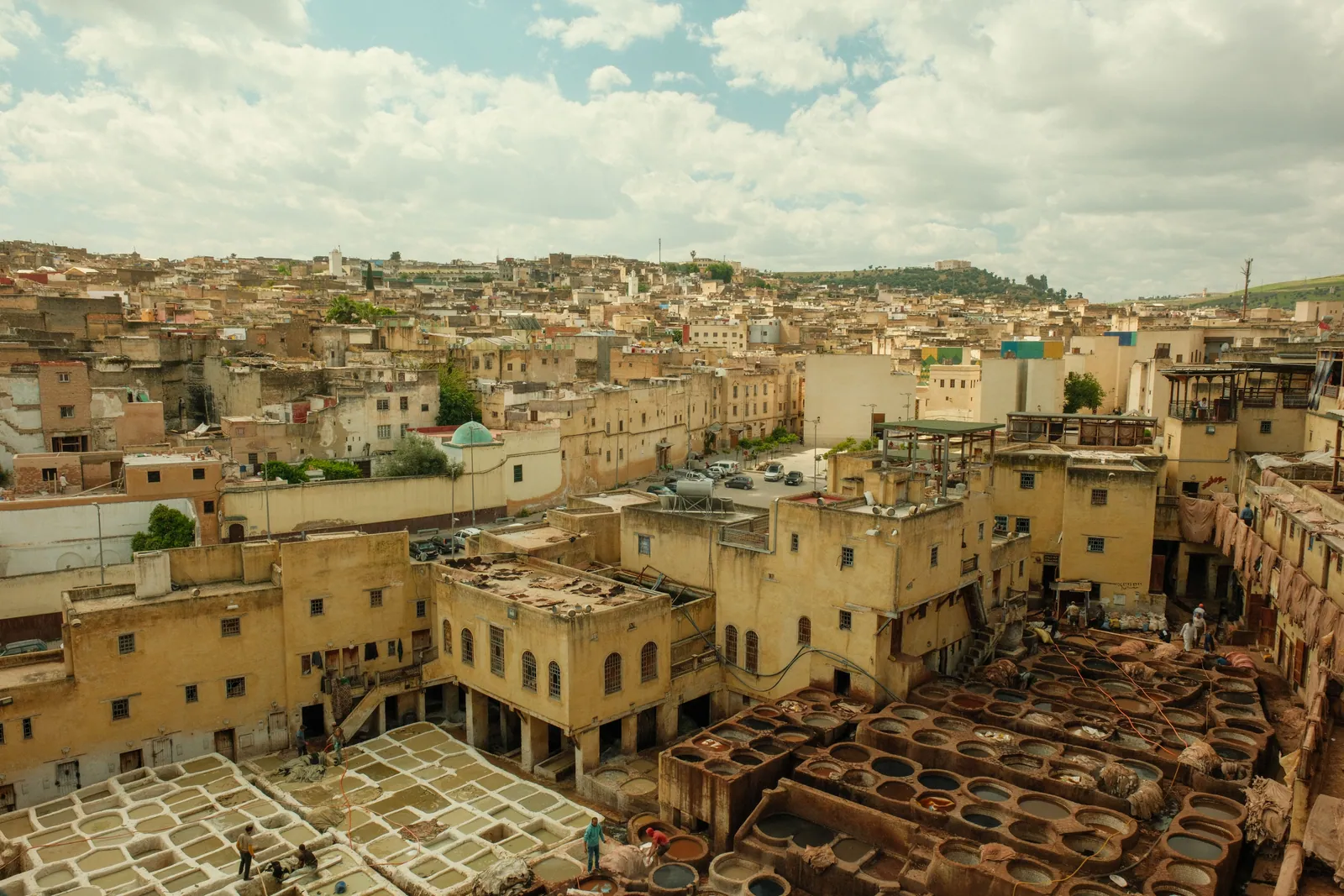
Eight days between Chefchaouen, Fes and Marrakech: blue lanes in the Rif, a medieval medina built for getting lost in, and the busiest square in the south. Mostly walking, with two longer drives mid-week.
Near Marrakech
Agafay Desert
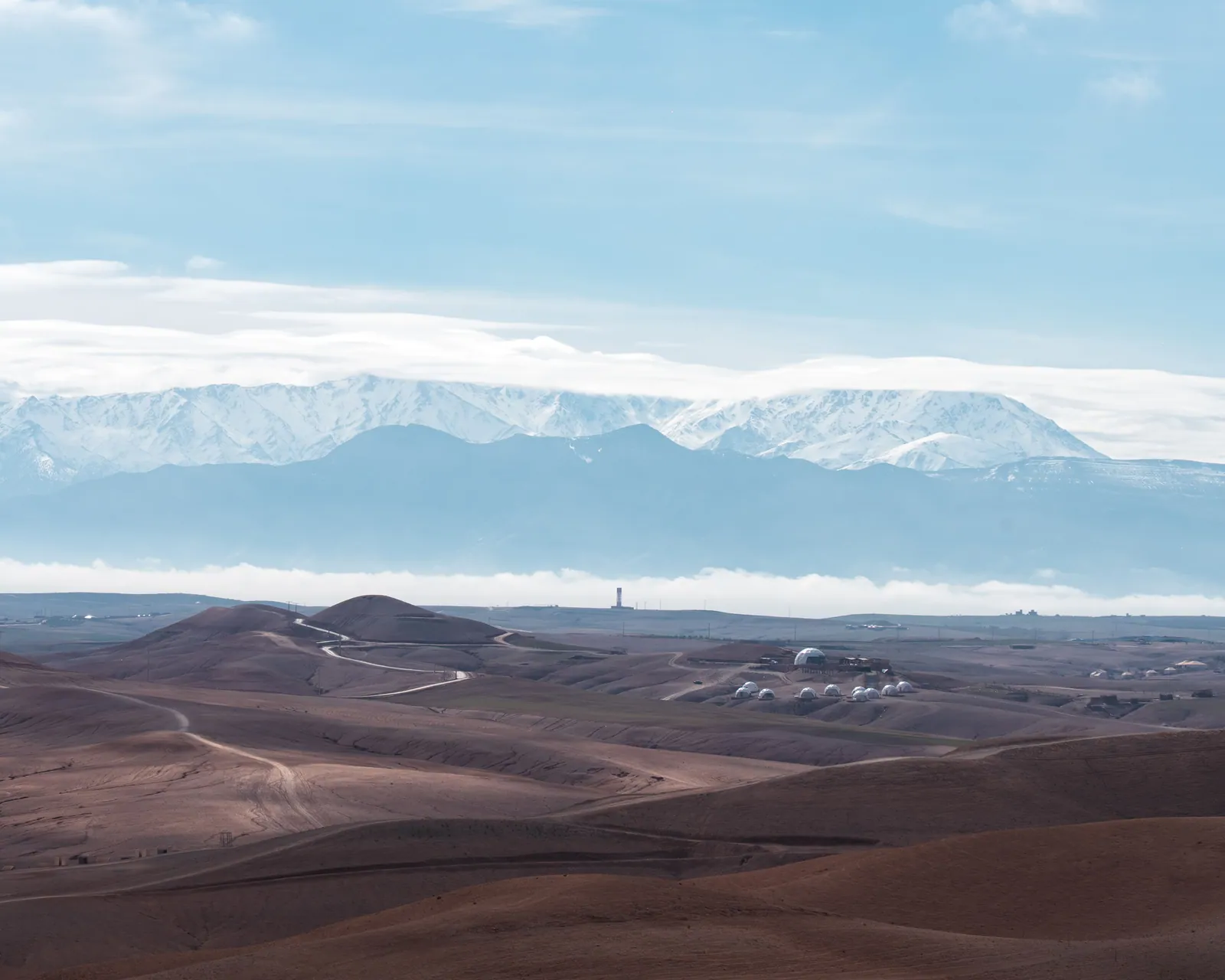
A dry, rocky desert close to Marrakech, with no dunes — bare hills, open horizons and camps laid out for dinner after dark. The short transfer is the point: one night either side of a city week.
Related Guides
Chouara Tannery, Fes: How to Visit Without Getting Pulled In
Chouara is the largest of the three tanneries still working inside the walls of the Fes medina, and the most photographed sight in the city. It is free to visit, has no entrance and no official hours — here is how the terraces work, when the light is best, and how to see it without being hustled.
Sahara Desert Camps: Erg Chebbi, Erg Chigaga and What a Night Costs
How Sahara desert camps actually work — Erg Chebbi vs Erg Chigaga, luxury vs standard tents, camel transfers, what is included, and the questions to ask before booking a night under the dunes.
Fes vs Marrakech: Two Medinas, Two Very Different Cities
Fes and Marrakech are both imperial cities with UNESCO medinas, but they deliver different trips. An honest comparison of atmosphere, sights, food, logistics and which city suits first-time visitors.
Liked this guide?
Give it a like on Instagram and tag us from your Moroccan adventure.
Ask us where Jemaa el-Fna fits into your Marrakech evenings
Our Marrakech-based team of local experts designs tailor-made Morocco trips around your dates, budget and travel style.
Request a Quote