Money in Morocco is straightforward once three things are clear: the dirham is a closed currency, cash still runs most of daily life, and tipping is customary rather than optional. Most travellers work out a comfortable rhythm within a day or two of arriving — the useful part is knowing the amounts in advance so you are not guessing in front of a waiter or a driver.
01. The dirham
The Moroccan dirham is written MAD and abbreviated DH in everyday use. One dirham divides into 100 centimes, though centimes rarely appear in practice and prices are quoted in whole dirhams.
It is a closed currency: you cannot reliably buy dirhams outside Morocco, so plan to withdraw or exchange on arrival. Airport desks are convenient but carry a worse rate than town, so withdraw only what you need for the first hour.
Notes come in 20, 50, 100, 200 and occasionally 500 DH. Large notes are hard to break at small stalls, so keeping a supply of 20s and 50s saves a recurring daily negotiation.
02. Withdrawing cash
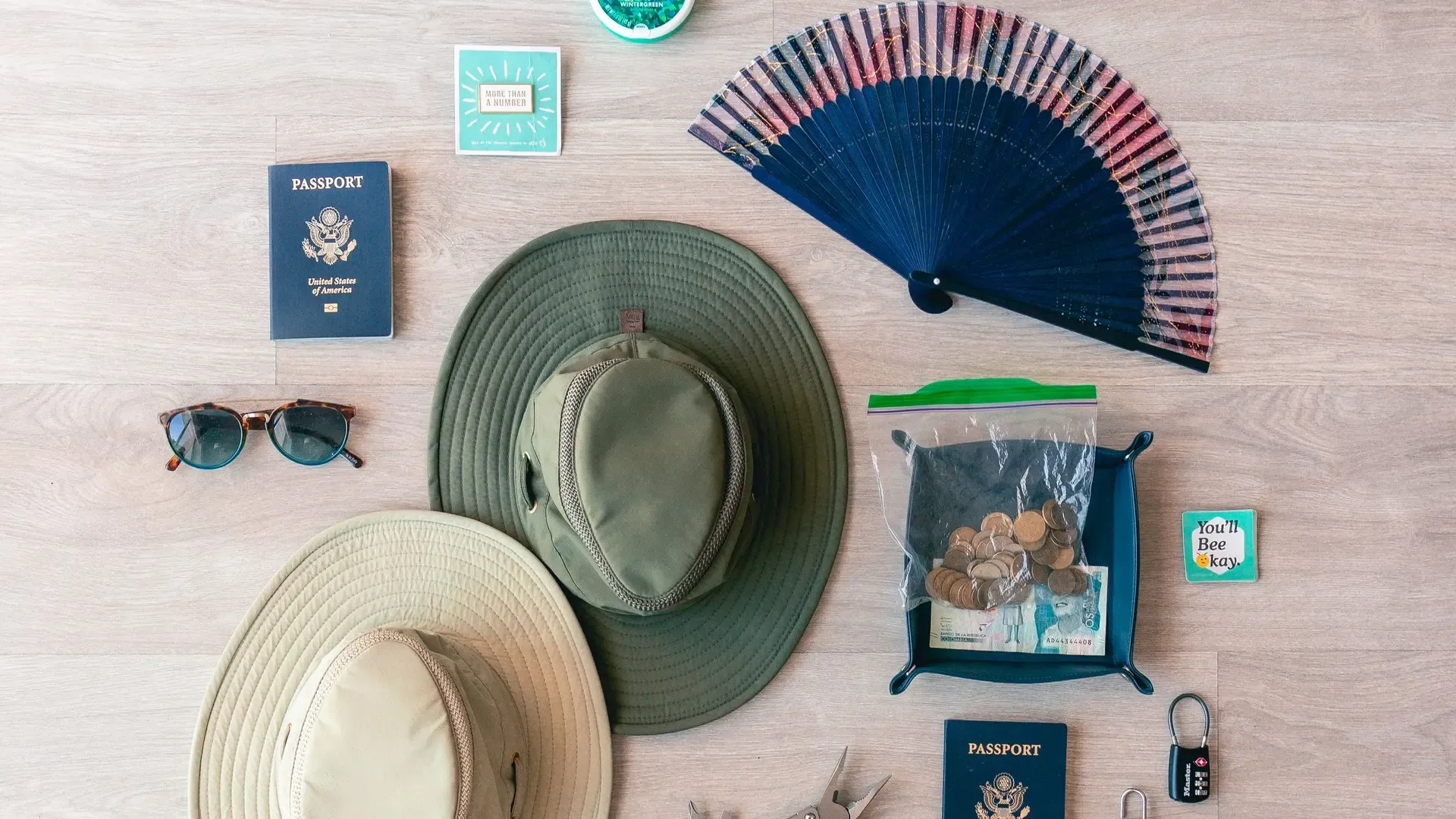
ATMs are widespread in cities and towns and are the simplest way to get dirhams. Machines inside bank branches and airports are the safest and best maintained; those in tourist streets work but are more likely to be out of cash or skimming-adjacent.
Use a machine in daylight, shield the keypad, and decline any offer of help from someone standing behind you. Take your card and receipt before turning away from the machine.
Your home bank will usually charge a foreign withdrawal fee, and the local bank may add a fixed fee per transaction. Several smaller withdrawals are often cheaper than one large one only if your bank charges a percentage — check rather than assume.
03. Cards and contactless
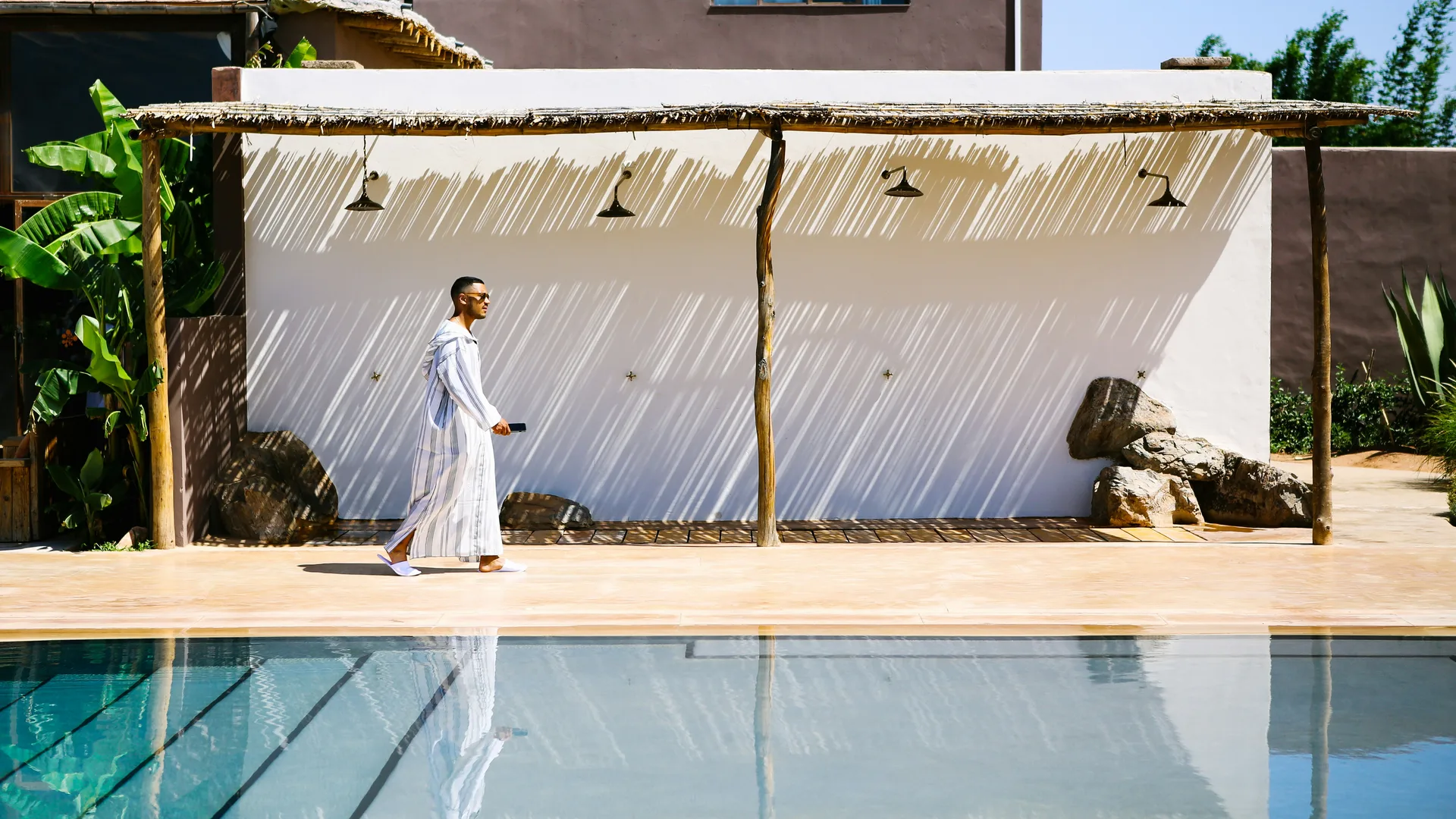
Visa and Mastercard are widely accepted in hotels, larger restaurants, upmarket shops and petrol stations. Amex is accepted far less often. Contactless is common in cities but not universal.
Cash remains essential outside the big cities. Small cafés, market stalls, taxis, rural guesthouses and most bus tickets are cash-only, and card machines in remote areas fail more often than they work.
A practical split is card for accommodation and planned purchases, cash for everything in between. Tell your bank you are travelling so a legitimate transaction abroad is not the one that gets blocked.
04. Currency exchange
Exchange offices in city centres post their rate on a board outside; compare the buy and sell figures rather than just the headline number. Avoid anyone who approaches you outside with a better rate — the usual outcome is short-change or counterfeit notes.
Euros are the easiest foreign currency to change and are accepted at some offices. Bring clean, undamaged notes: creased or torn bills are frequently refused, which causes an argument you would rather avoid.
Count your money at the counter before you leave. Rates at the airport and in hotels are typically worse than in town, and commission-free is not automatically a better deal if the rate itself is poor.
05. How much cash to carry
For a normal day of sightseeing, cafés, a market purchase and a taxi, 300 to 600 DH per person covers most of it comfortably. Leave the rest at the riad rather than carrying your whole trip's cash around.
Bigger-ticket items — a guided site entry, a rug, a leather bag, a private transfer booked locally — are where card or a planned cash withdrawal helps. Agree the price before you decide how you will pay.
Carry a second card stored separately from your wallet. Losing one card should be an inconvenience, not the end of the trip.
06. Tipping in restaurants and cafés
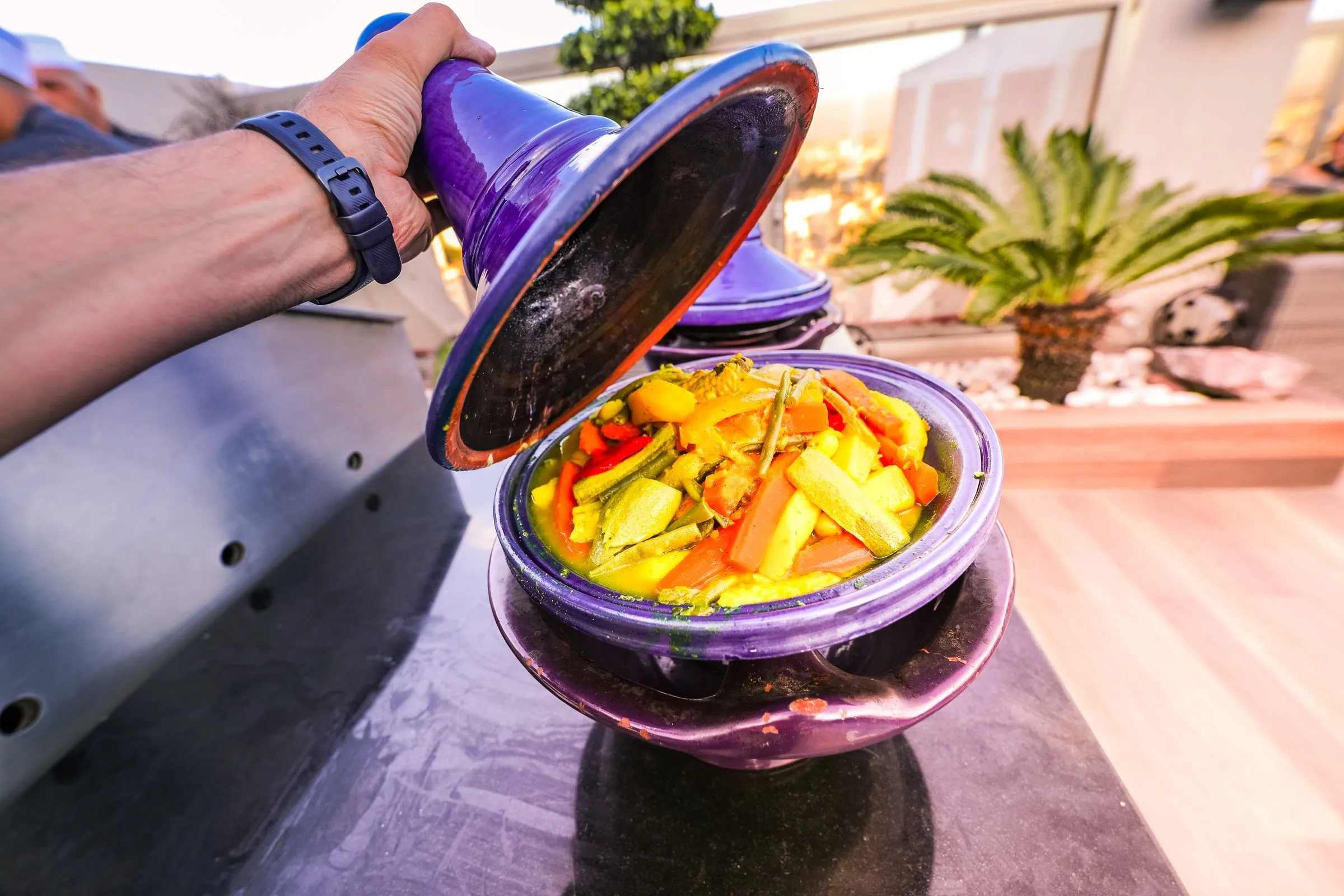
In restaurants, 10% of the bill is the standard for good service, rounded up generously if the service was genuinely warm. Check whether a service charge is already included — many places print it at the bottom of the menu, and leaving a second tip on top is unnecessary.
For a coffee or a glass of juice, rounding up to the next note or leaving 5 to 10 DH is normal. At a juice stall or a street vendor, rounding up is a courtesy rather than an obligation.
Tipping is appreciated, never compulsory, and no one will chase you down the street for it.
07. Tipping your driver and guide
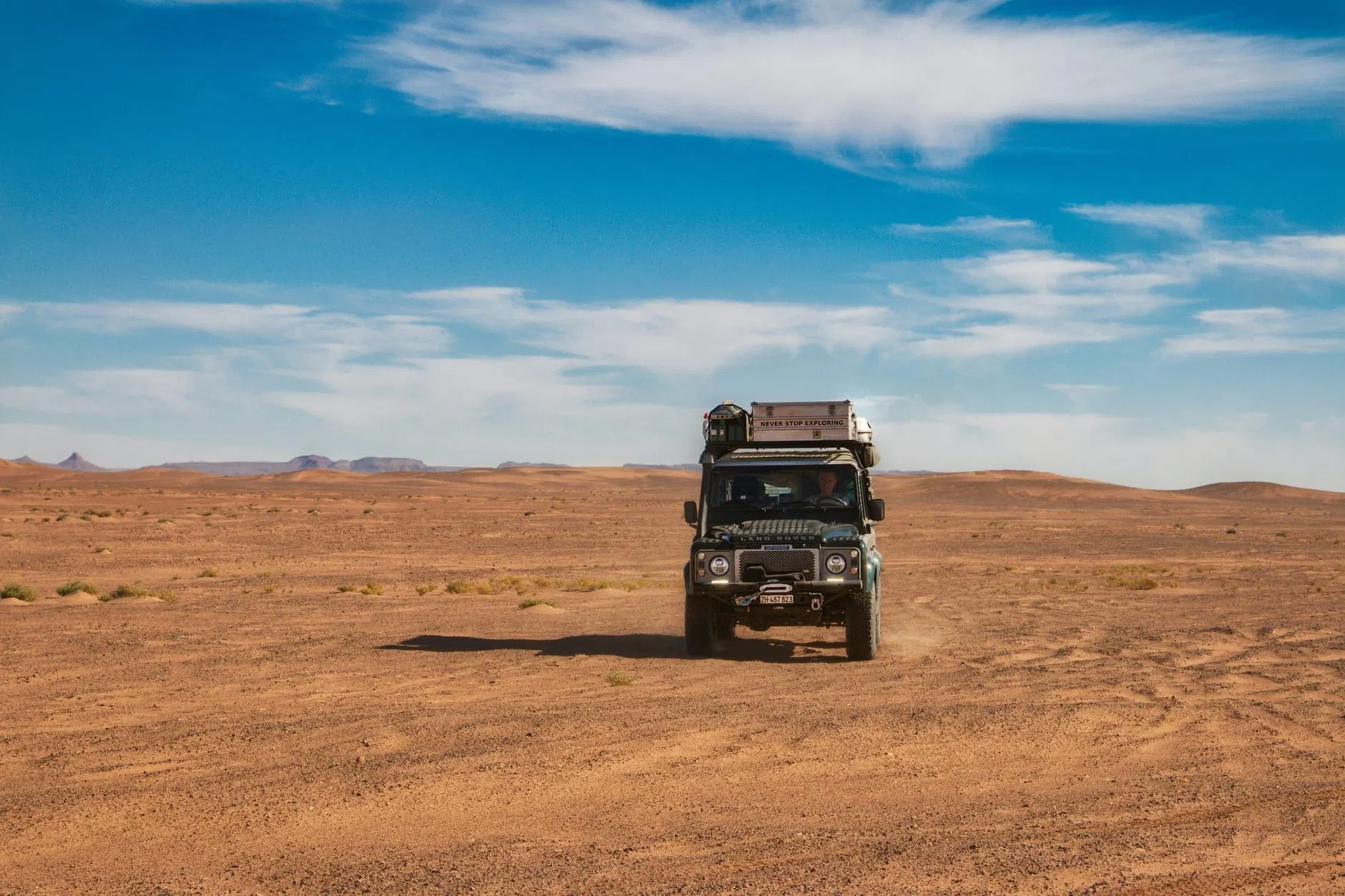
For a private driver over a full day, 100 to 200 DH per day is a fair range for good service; over a multi-day itinerary, many travellers settle on the higher end for a driver who has been patient with detours and luggage.
For a licensed guide on a half-day, 50 to 100 DH per person is typical, and 100 to 200 DH for a full day at a major site. For a driver who also handles the bags and the logistics of a desert transfer, the higher figure is customary.
Tip in cash and in dirhams, at the end rather than at the start, and hand it directly rather than through reception. If a company already adds a gratuity to your invoice, that counts.
08. Tipping at hotels and for small services
For a porter carrying luggage to a riad room, 20 to 50 DH per bag is reasonable. For housekeeping over a longer stay, leaving a small amount every couple of days works better than one larger sum at the end.
A receptionist who arranges an early taxi, holds your bags after checkout or resolves a problem has earned a tip of 50 to 100 DH. It is not expected, and it does get remembered.
In hammams and small spas, 10% is typical if a service charge is not already added.
09. Bargaining without awkwardness
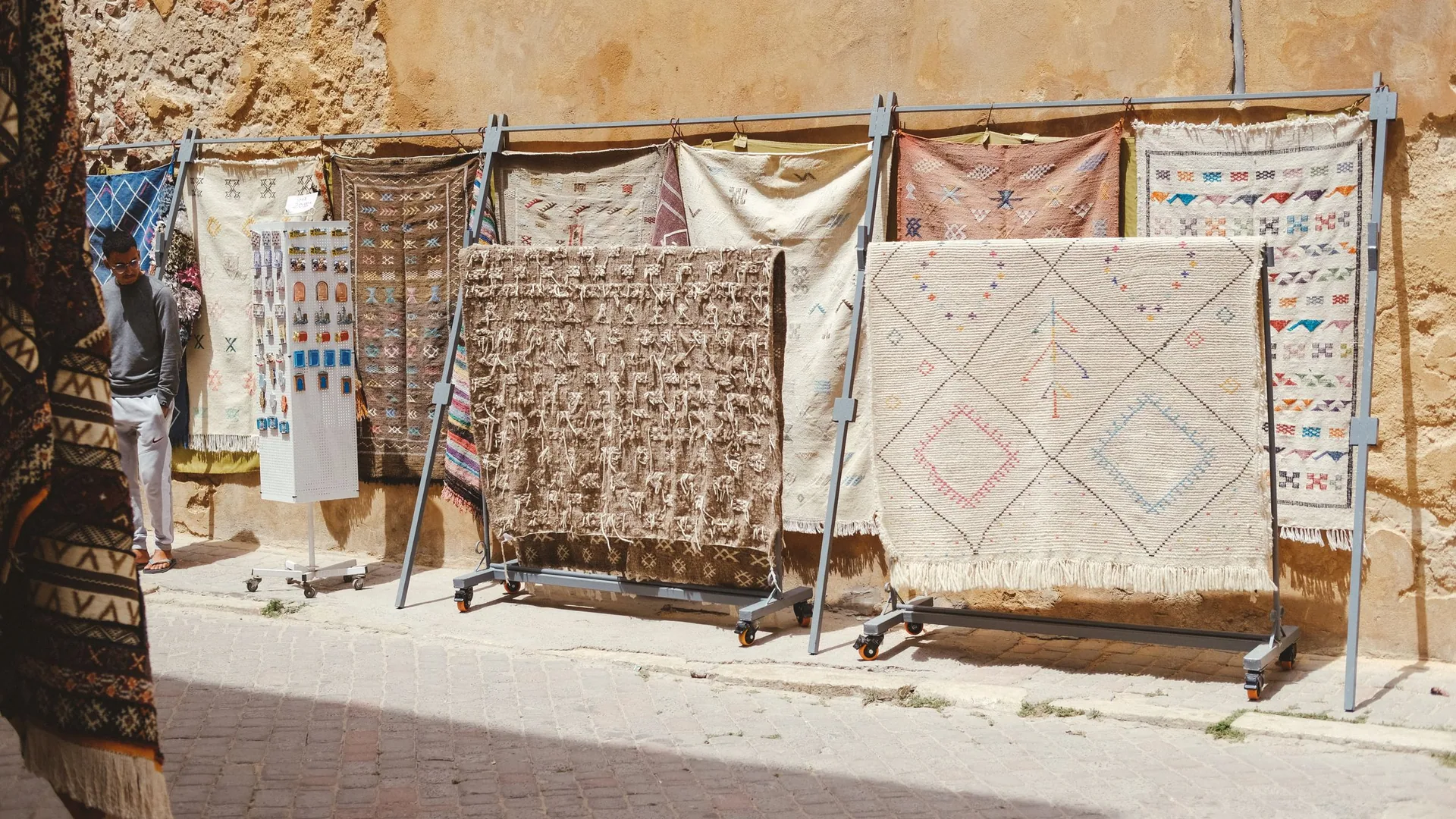
Bargaining is the normal way to buy crafts, rugs, leather and spices. It is not used in supermarkets, fixed-price shops, pharmacies or restaurants, and treating a shop like a souk stall wastes everyone's time.
Start at roughly a third to a half of the opening price, expect a gap, and be prepared to walk away — genuine willingness to leave is the only negotiation that reliably works. If you are not enjoying it, that is a good sign to stop.
Agree the final total before anything is wrapped, confirm the unit if a price is quoted per metre, gram or piece, and never feel obliged to buy because someone spent twenty minutes being friendly.
10. Common money mistakes
The usual ones: agreeing a taxi fare after you are already inside, assuming a card will be accepted in a small town, accepting a menu without prices, and changing money in the first lobby you walk past.
Others include carrying your whole cash reserve in one pocket, not telling your bank you are travelling, and accepting a quoted price per person when you assumed it was per group.
A written quote for anything above a few hundred dirhams removes nearly all of these. Reputable operators give one without being asked.
11. Costs in context
Money questions are easier once you know what a day should cost overall. Our separate Morocco trip cost guide covers daily budgets by travel style, so you can judge whether a quote, a menu or a shop price sits in the normal range.
Treat it as the benchmark: if a price is far outside the published range, ask what it includes before you commit. Most disagreements about money in Morocco are about scope rather than honesty.
Frequently Asked Questions
Should I bring euros or dirhams to Morocco?
Neither is required in advance — dirhams are a closed currency, so withdraw on arrival. Euros are the easiest foreign currency to exchange if you want a backup.
Can I use my card everywhere in Morocco?
In hotels, larger restaurants and city shops, yes. In small cafés, markets, taxis and rural areas, assume cash only until you have seen a card machine.
How much should I tip a private driver?
Around 100 to 200 DH per day for good service, in cash and in dirhams at the end of the day.
Do I have to bargain in the souks?
For crafts, rugs and spices, yes — it is expected. Start around a third to half the opening price, and be willing to walk away if you are not enjoying it.
How much cash should I carry per day?
Around 300 to 600 DH per person covers sightseeing, cafés, a taxi and a market purchase, leaving the rest safely at your riad.
More Morocco tours
Near Marrakech
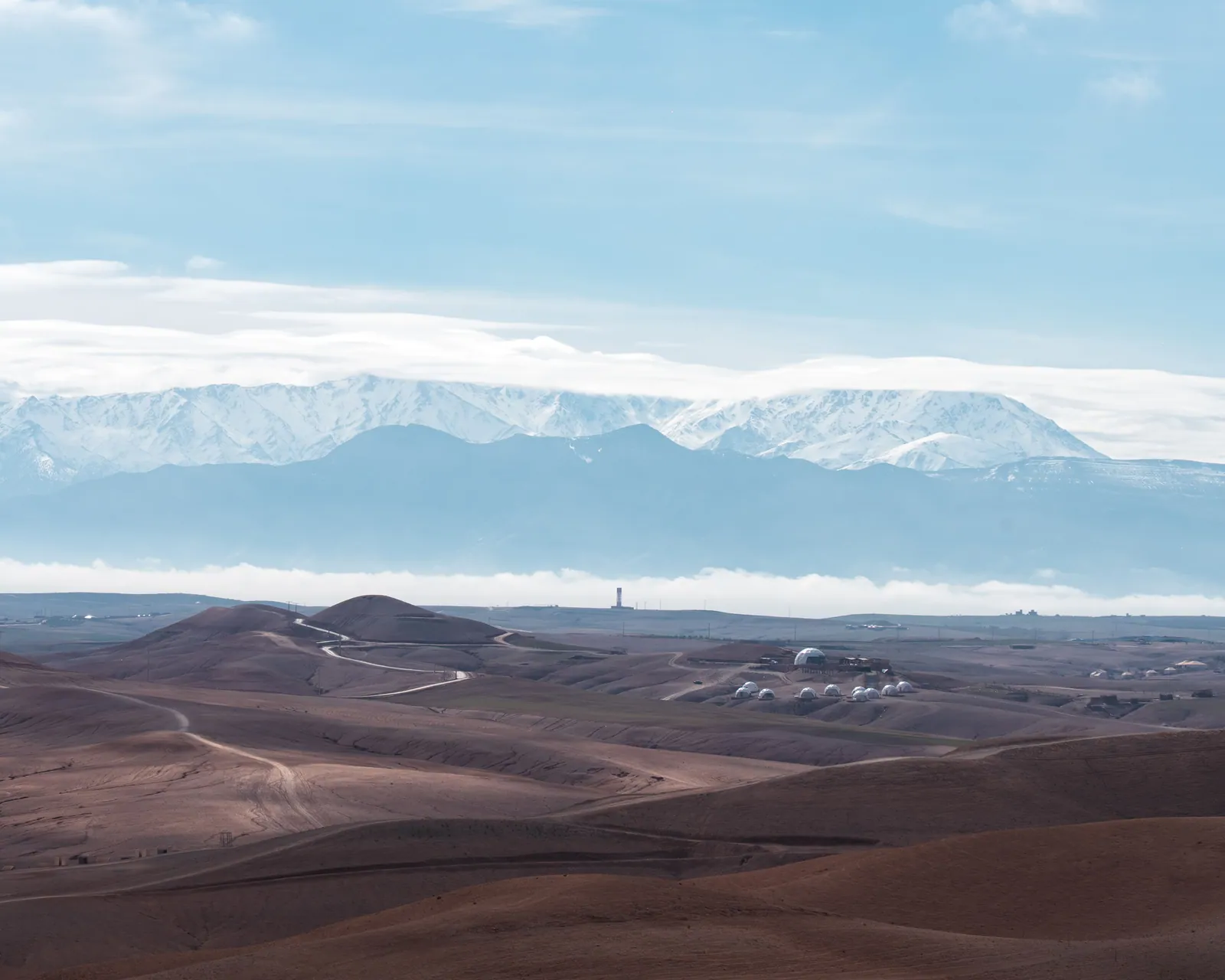
Agafay Desert
A dry, rocky desert close to Marrakech, with no dunes — bare hills, open horizons and camps laid out for dinner after dark. The short transfer is the point: one night either side of a city week.
8 Days
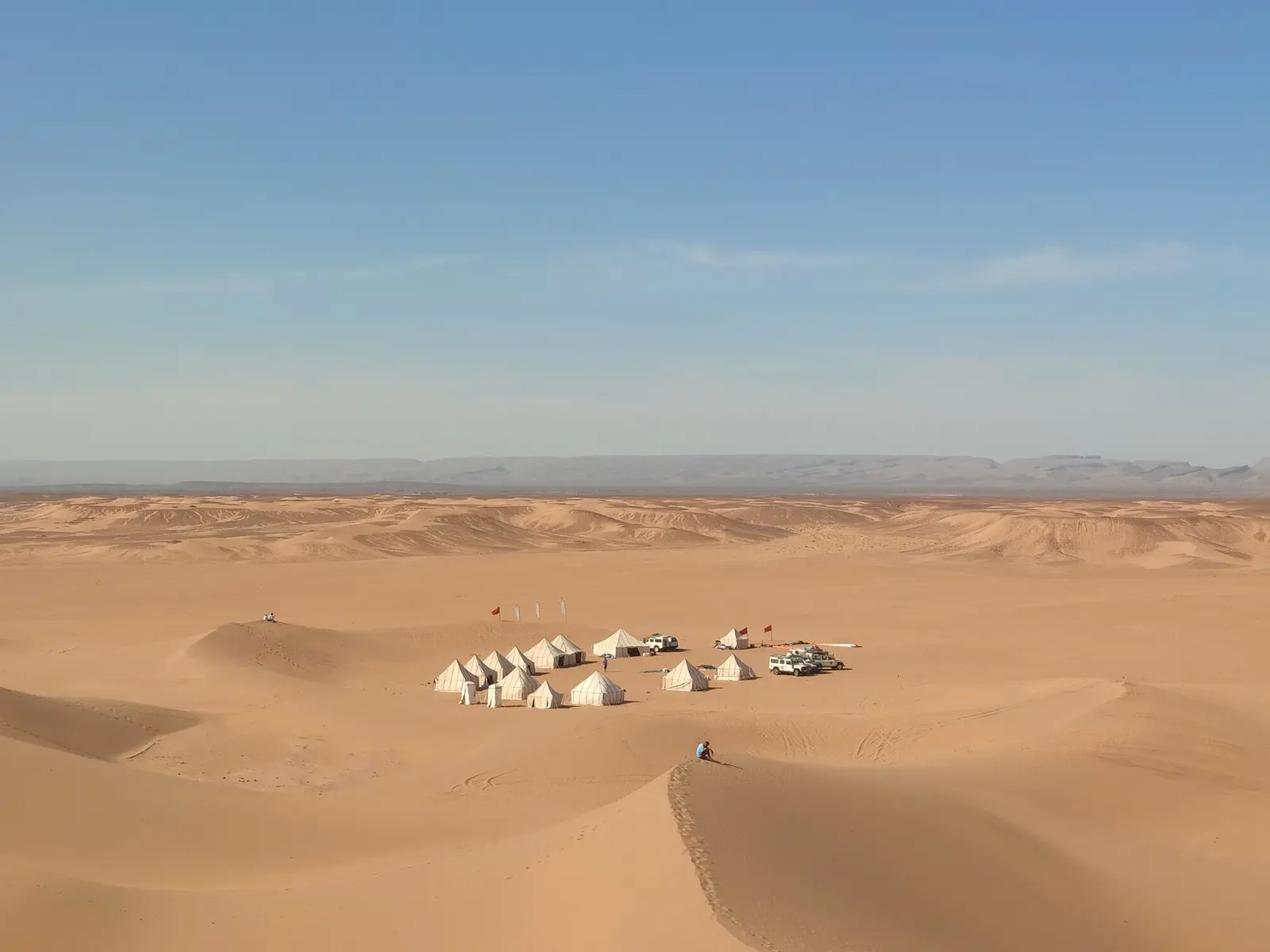
8-Day Yoga & Desert Journey in Erg Chigaga
Eight days from Marrakech to a fixed nomadic camp in the dunes of Erg Chigaga: gentle treks with a support 4x4, daily yoga in the open, and five nights at the rhythm of the Sahara without moving camp.
7 Days
7-Day Morocco Itinerary: Fes, Chefchaouen and the Sahara
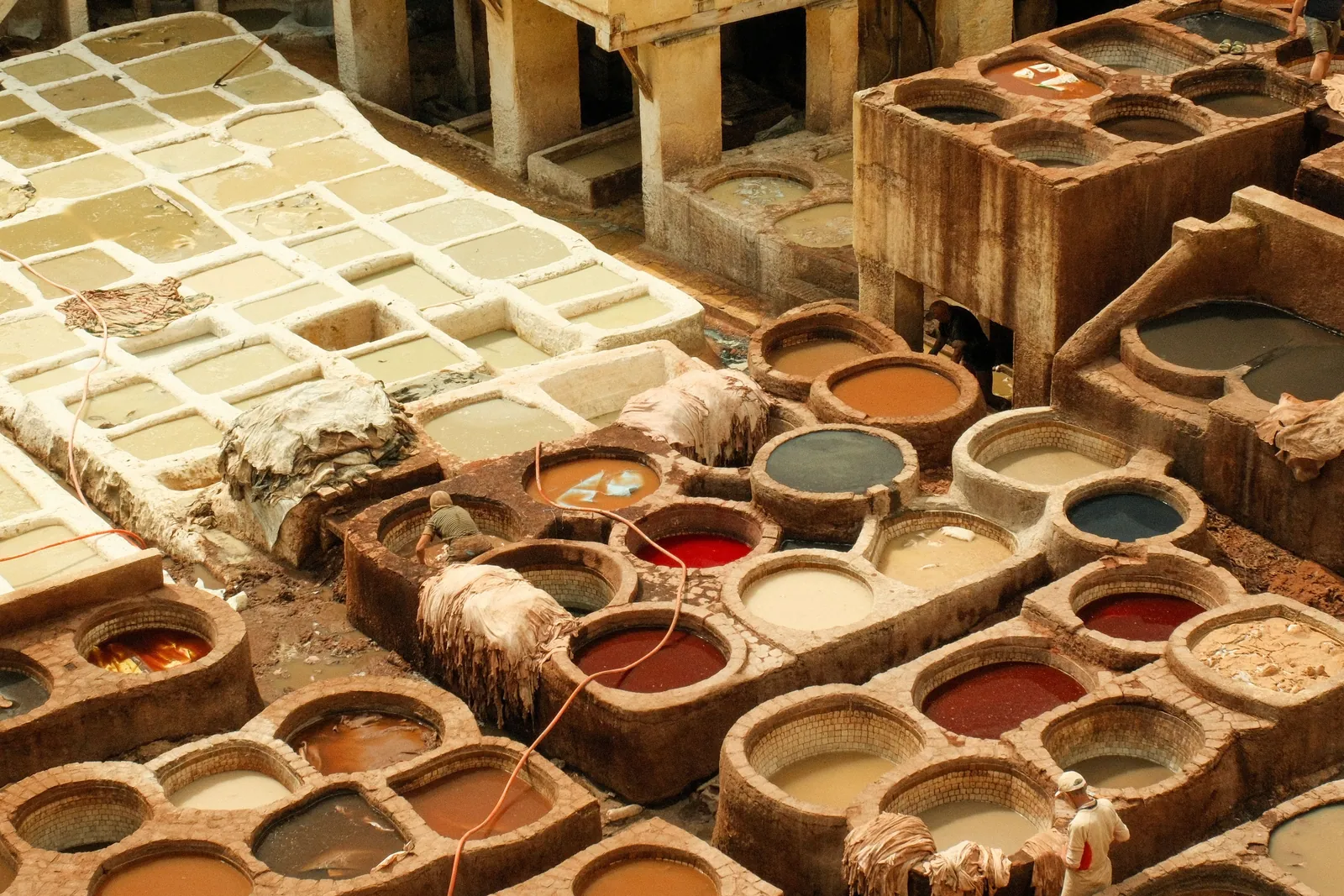
Seven days with the tanneries of Fes, the blue walls of Chefchaouen and a night on the Sahara in the same week. It works because Chefchaouen sits between the two rather than off to one side.
Related Guides
How Much Does a Morocco Trip Cost? (2026 Budget)
Real Morocco trip costs for 2026: daily budgets for budget, mid-range and luxury travellers, tour package prices, and what your money actually buys by region.
Private Driver in Morocco – Cost & Tips
How private driving works in Morocco: what a driver-guide costs, whether to tip, the difference between driver and driver-guide, and why it beats renting a car.
Agadir Travel Guide: Beach, Souss Valley and the Road to Paradise Valley
How to visit Agadir — the six-kilometre beach, the oufella kasbah, Souss-Massa National Park, Paradise Valley, Taghazout surf, the weekly souk and how Agadir works as a Morocco base.
Liked this guide?
Give it a like on Instagram and tag us from your Moroccan adventure.
Get a written quote with every cost included
Our Marrakech-based team of local experts designs tailor-made Morocco trips around your dates, budget and travel style.
Request a Quote