

The finest interior the Portuguese built on this coast: a sixteenth-century water hall under a domed oculus, deep inside the walled city of Mazagan. It has also been shut to visitors since the winter storms of 2021, so plan on the ramparts and the old town instead of the hall itself.
01. Is the cistern open?
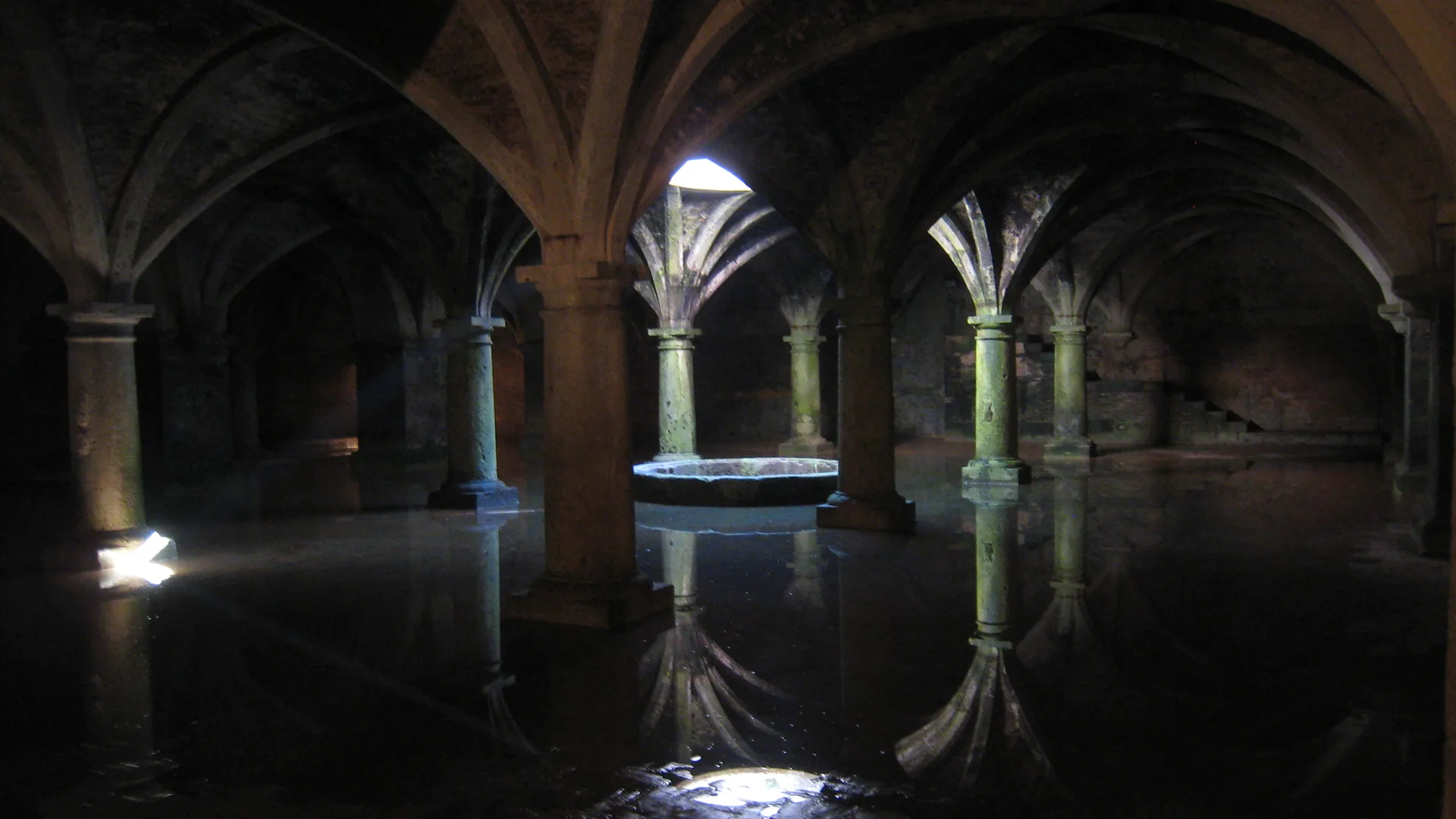
No. The cistern and the citadel above it have been closed to the public since the winter storms of 2021, when water infiltration damaged the vaults and the site was shut on safety grounds.
Restoration restarted in 2026 after several administrative delays. The programme reported in the Moroccan press covers the vaults, the waterproofing, the lighting, the roof terrace, twenty-five pillars and the four corner towers, with about eighteen months of works and a museum space planned for the entrance galleries. No reopening date has been announced, so ask at the gate rather than building a trip around it.
02. What the cistern is
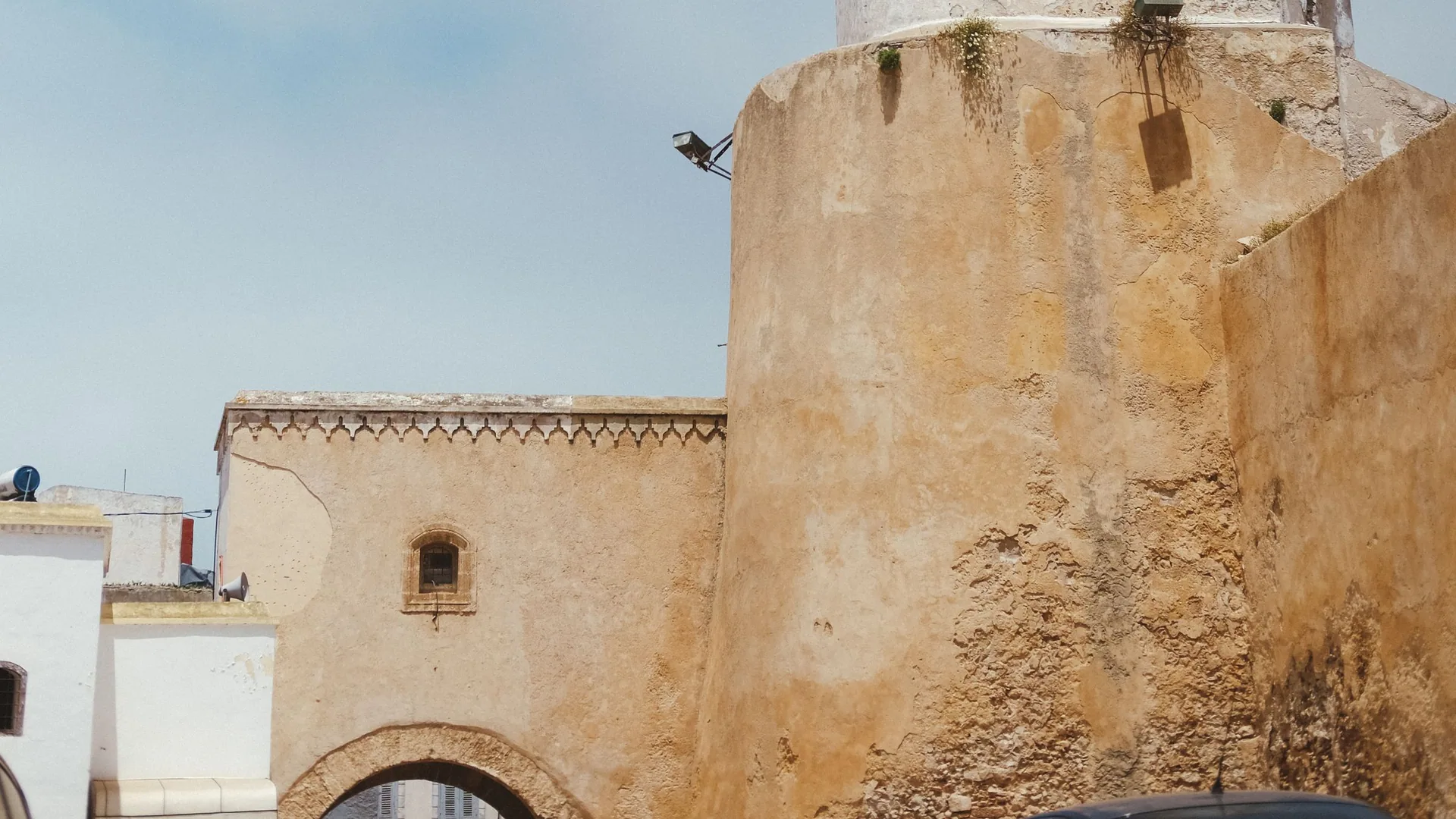
It is the water reservoir of the Portuguese fortress of Mazagan — today's El Jadida — built in the sixteenth century when Portugal held this stretch of the Atlantic coast. A square underground hall carried on squat stone columns, with a domed ceiling pierced at its centre by a single round opening.
The hall had served as an armoury or storehouse before it was turned into a cistern in 1541. It was forgotten, re-excavated, and has been the image of the city ever since. The photographs you have seen of columns doubled in still water are that shallow film of water and the oculus above it.
03. Why it looks the way it does
The style is Manueline, the Portuguese late-Gothic of the age of discoveries, and the hall is unusually bare for it: no ornament, just the columns and the white plaster of the vaults. The whole design is the oculus — one circle of daylight landing on the water and crossing the floor as the sun moves.
People compare it to Istanbul's Basilica Cistern and the comparison holds, with the scale reversed: this one is far smaller and far emptier. That bareness is also why the room photographs better than almost any other interior in Morocco.
04. Film history
Orson Welles filmed Othello here in 1952, using the cistern along with the ramparts and gates of the Portuguese city as sets. The geometry is why filmmakers keep coming back: the interior has appeared in several productions since, and it is among the most photographed rooms in the country.
That reputation is part of the problem for a visitor today. The image of the cistern is everywhere in Moroccan tourism photography, and almost none of it prepares you for a locked gate.
05. What you can still see
The walled city around it is open. Mazagan has been a UNESCO World Heritage Site since 2004 and is one of the best-preserved Portuguese fortified towns anywhere — laid out as a model garrison colony and never rebuilt over.
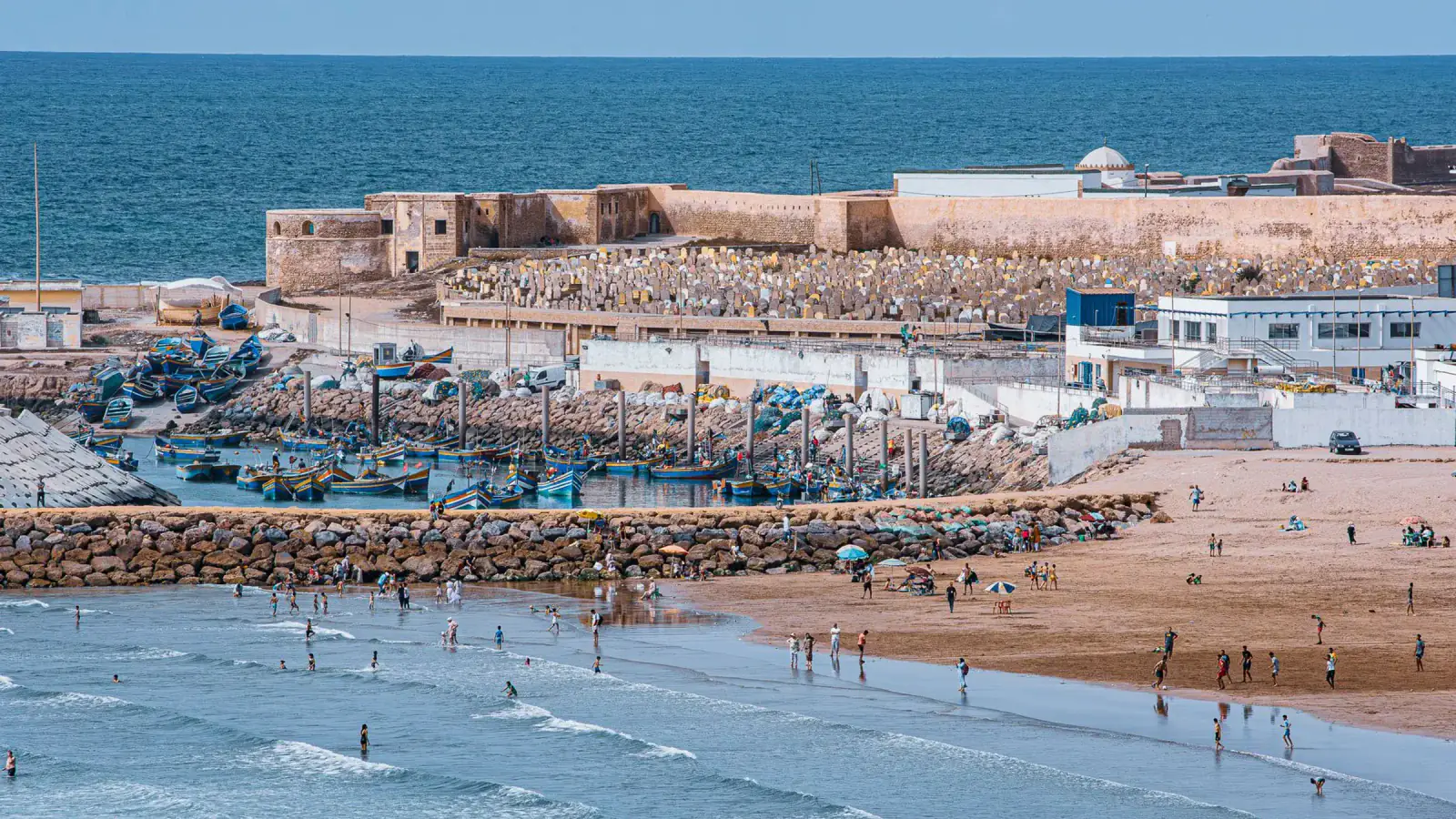
A walkway about two metres wide runs along the top of the seaward ramparts. Travel listings describe the ramparts walk as free, though sections can be closed while the restoration is under way, so follow the signs. Inside the walls there is a Manueline church skeleton, whitewashed Portuguese houses and the fishing harbour below.
06. El Jadida beyond the walls
Outside the ramparts the city is a straightforward Atlantic beach town: a long sandy beach, a corniche of cafés and seafood restaurants, and a Moroccan summer crowd in August. Fresh fish at the port-side restaurants is the standard lunch and costs a fraction of the same plate in Casablanca.
The town sits about 100 kilometres from Casablanca, a little over an hour by road on the motorway — close enough for a half-day, and comfortable as a full one if you add the beach.
07. Getting there
The train is the easy way. Direct ONCF services run from Casablanca to El Jadida about ten times a day, taking roughly 1 h 05 to 1 h 30 depending on the service, with second class from about 40 MAD. The station is about a kilometre from the old walls — a short taxi ride or a fifteen-minute walk.
By road it is about 100 kilometres on the motorway, a little over an hour, and CTM coaches run the route as well. If you are already on this coast, Azemmour is sixteen minutes further south by train, with its own walled medina above the Oum Er-Rbia.
08. If you came for the cistern
Two honest substitutes. Oualidia, an hour further down the coast, has the lagoon and its oyster beds. And if the point was a Portuguese sea fortress at low light, Mazagan's own ramparts are open and free, and they carry much of the same history.
The cistern is worth keeping on a list for whenever it reopens. Until a date is announced, treat any tour that promises the interior as out of date.
Frequently Asked Questions
Is the Portuguese Cistern open?
No. It has been closed to visitors, along with the citadel, since the storms of 2021. Ask at the gate in case that has changed, but do not plan a trip around it.
When will the cistern reopen?
No date has been announced. Restoration restarted in 2026 with roughly eighteen months of works reported, so a reopening in the near term is unlikely.
Is El Jadida still worth visiting?
Yes, for the walled city: the UNESCO-listed Portuguese fortifications, the ramparts walk, the Manueline church and the harbour. Allow half a day, or a full day with the beach.
How do you get to El Jadida from Casablanca?
Direct trains run about ten times a day and take roughly 1 h 05 to 1 h 30; the station is about a kilometre from the walls. By road it is about 100 kilometres on the motorway.
What else is near El Jadida?
Azemmour is sixteen minutes south by train, with its own walled medina above the river. Oualidia and its oyster lagoon are an hour further down the coast.
More Morocco tours
1 Day
Essaouira Day Trip from Marrakech
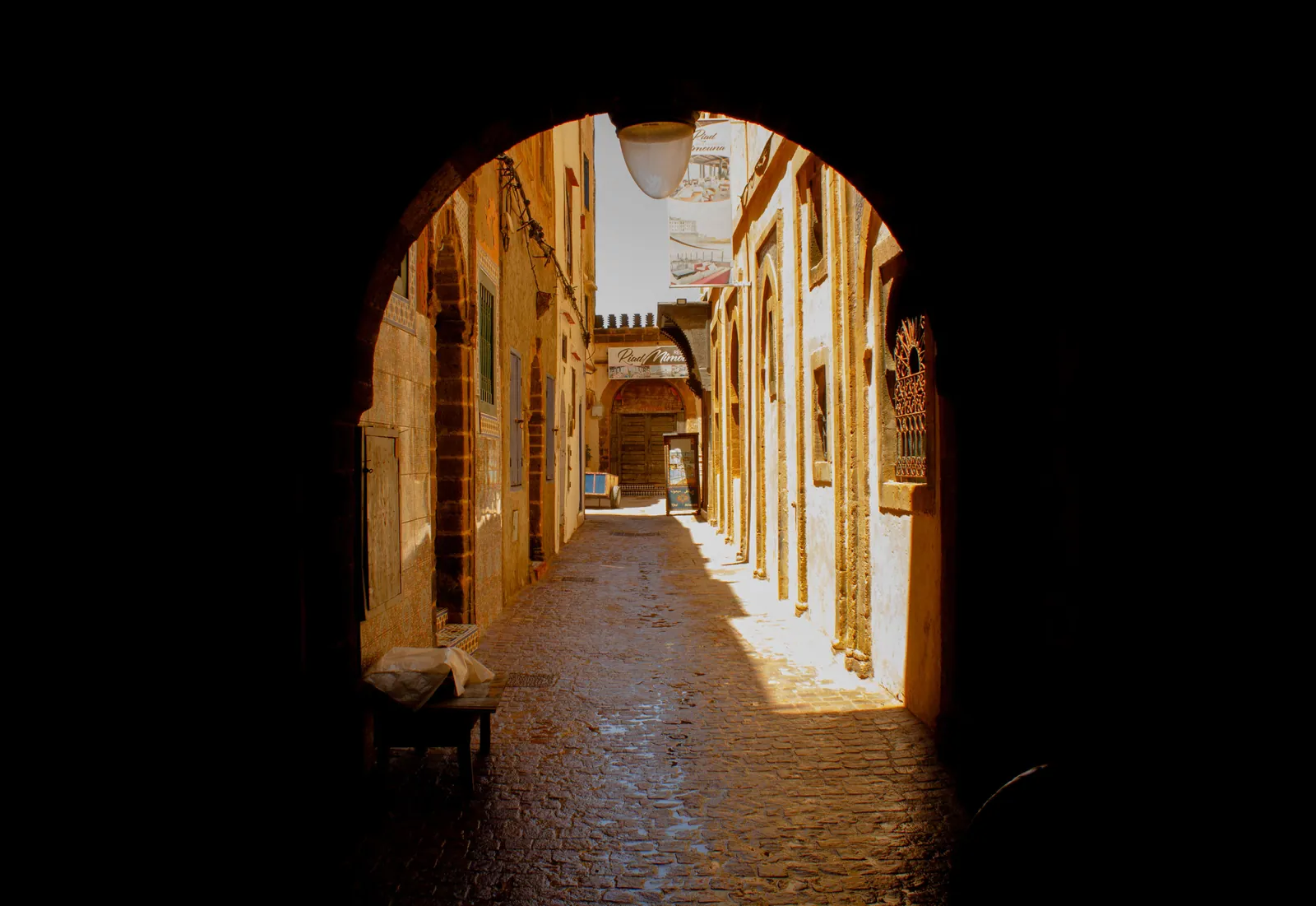
A day on the Atlantic: the blue and white medina, the ramparts above the harbour, the workshops behind them. The drive is flat and the town is walkable, so it works as a coast day from Marrakech.
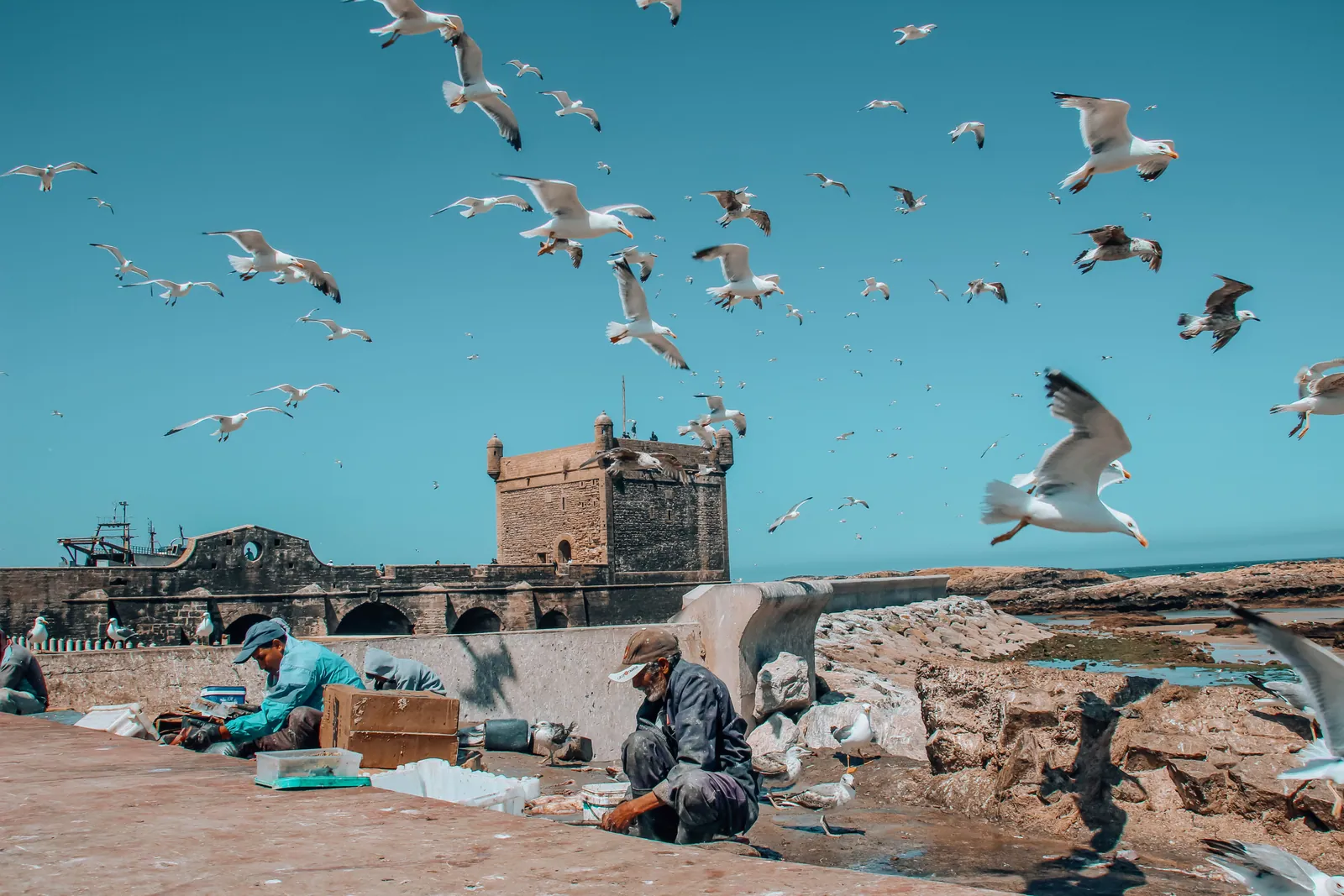
Coastal Escape
Essaouira Getaway
West to the Atlantic for the day: a walled blue-and-white port, the fishing harbour working below the ramparts, workshops behind them and a long beach to finish on.
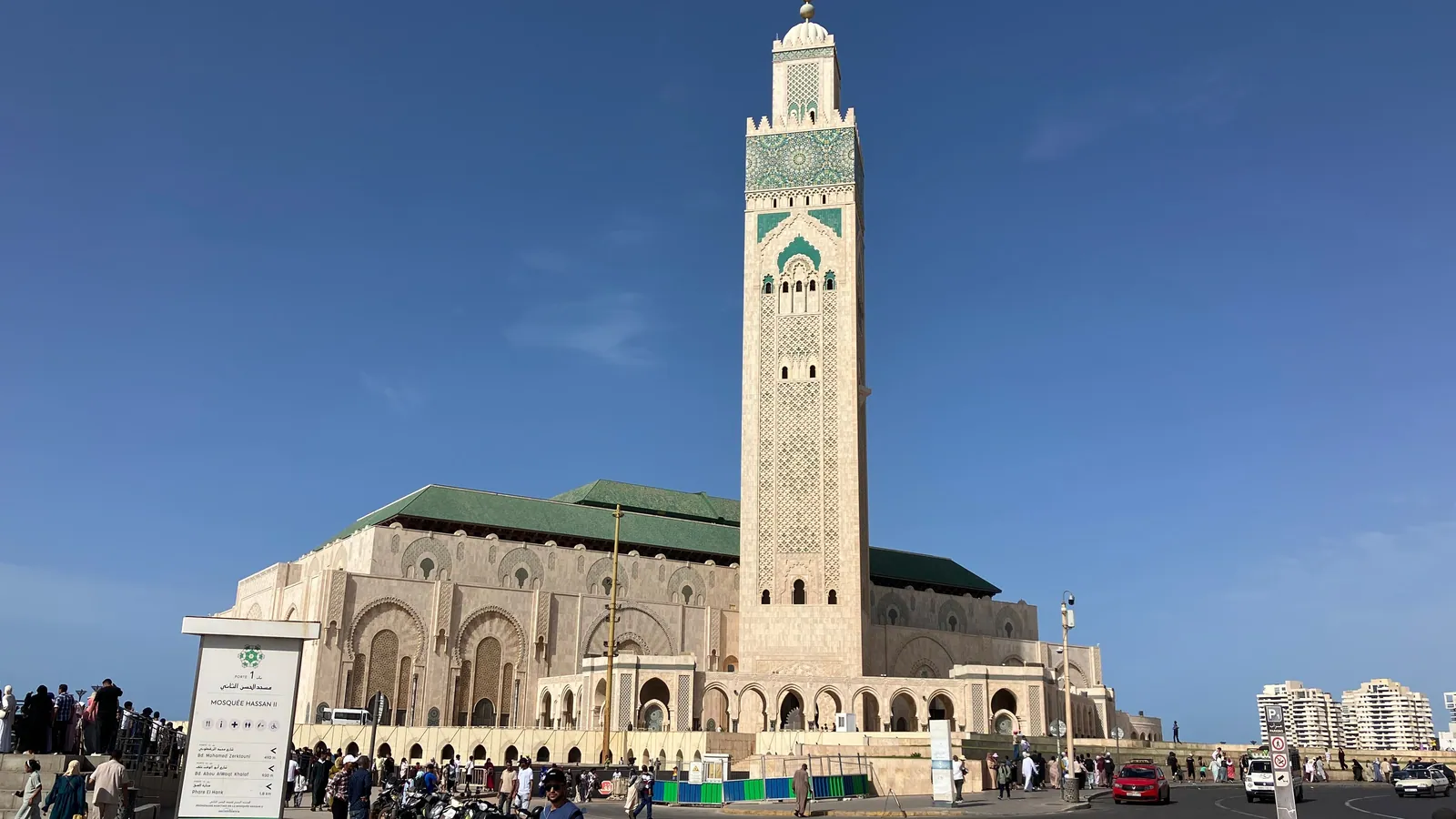
Day Trip
Casablanca City & Hassan II
The Hassan II mosque, the Art Deco quarter and the Corniche, walked with a guide. Half-day or full-day: the mosque anchors it and everything else fits around your schedule.
Related Guides
El Jadida Travel Guide: Portuguese Cistern, Walls and Atlantic Coast
El Jadida and its walled Portuguese city of Mazagan: ramparts, harbour and Atlantic beaches. The cistern has been closed since 2021; what to see instead.
Chouara Tannery, Fes: How to Visit Without Getting Pulled In
Chouara is the largest of the three tanneries still working inside the walls of the Fes medina, and the most photographed sight in the city. It is free to visit, has no entrance and no official hours — here is how the terraces work, when the light is best, and how to see it without being hustled.
Al-Qarawiyyin, Fes: The World's Oldest University, Seen From Outside
Al-Qarawiyyin in Fes was founded in 859 by Fatima al-Fihri and is counted as the oldest continuously operating university in the world. Non-Muslims cannot enter the mosque — what you can see, where to view it, and what to pair it with.
Liked this guide?
Give it a like on Instagram and tag us from your Moroccan adventure.
Ask us how El Jadida fits into your Casablanca days
Our Marrakech-based team of local experts designs tailor-made Morocco trips around your dates, budget and travel style.
Request a Quote