
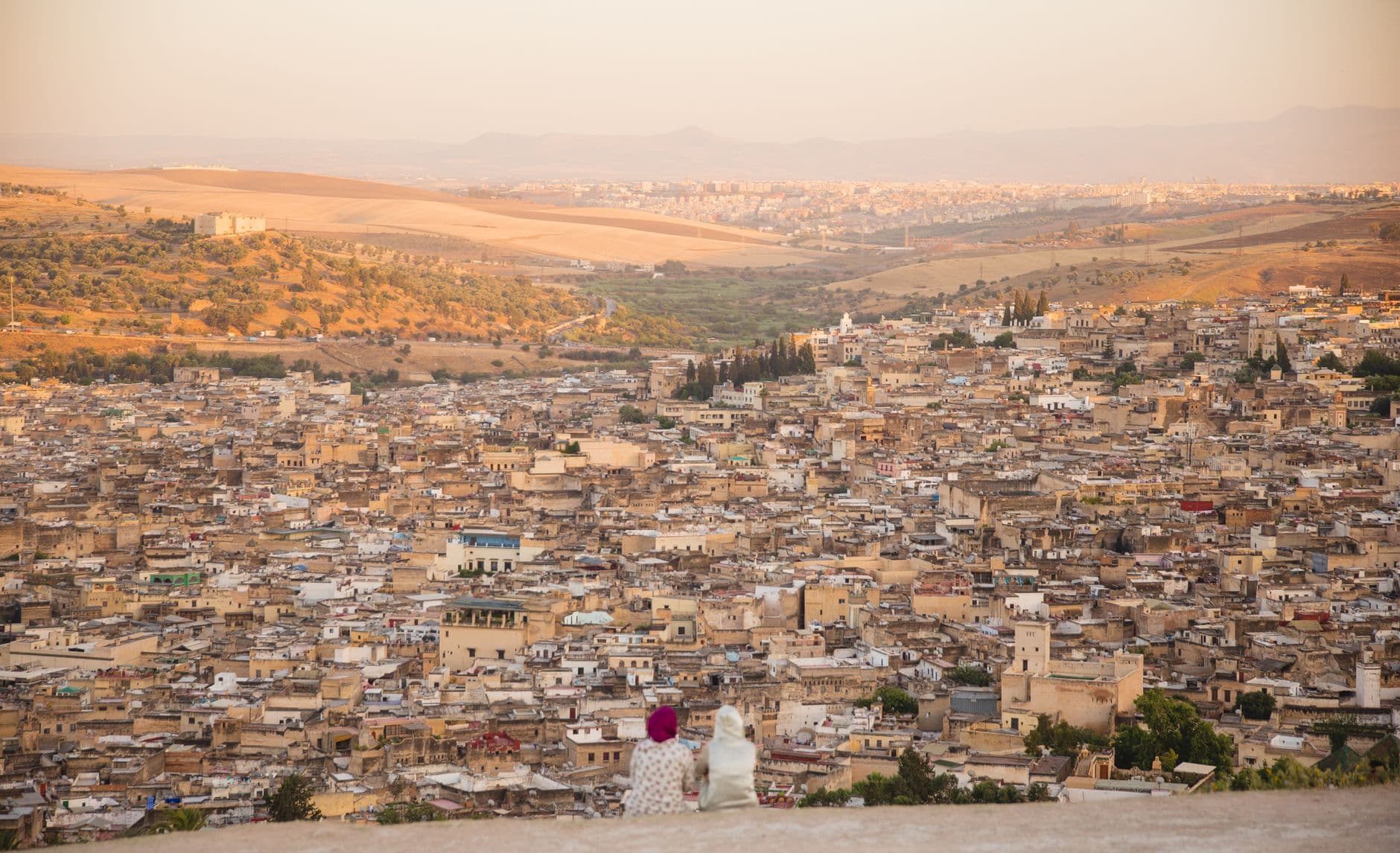
Fes is Morocco's soul — a living medieval city where donkeys outnumber cars and a thousand crafts keep ancient traditions alive. Here is how to make the most of it.
01. Why Fes is different from Marrakech
Fes el Bali, the old medina, is the largest car-free urban zone in the world — a 12th-century maze of 9,000 narrow alleys built long before cars existed. Where Marrakech is polished and theatrical, Fes is raw, authentic and utterly absorbing.
It is Morocco's spiritual and cultural capital, home to the Qarawiyyin, widely considered the oldest continuously operating university in the world.
02. The Chouara tanneries
The tanneries are Fes's most iconic sight — hundreds of stone vessels filled with dye where artisans have cured leather for centuries. The vantage points above the ever-present smell are the classic photo spot. Visit with a local guide who can navigate the rooftops and shops fairly.
The stained-glass stone pits, with their deep reds, yellows and browns, are unforgettable — and the leather goods in the surrounding shops are the real thing.
03. Madrasas and monuments
The Bou Inania Madrasa is considered the finest in Morocco, with its cedar carvings and stucco. The Merenid Tombs on the hill give an unrivalled sunset view over the whole medina, while the Royal Palace gates and the Mellah (Jewish Quarter) add depth to the story.
Medersa al-Attarine, steps from the famous tanneries, is another architectural gem well worth the entrance fee.
04. The crafts of Fes
Fes is the craft capital of Morocco. Fassi pottery with its blue-on-white designs, brassware, leather slippers and intricate woodwork are made in family workshops across the medina. Watching the artisans work is as rewarding as the shopping.
Buying directly from the workshop cuts out the middleman and keeps tradition alive — a fair price for handmade work is part of the deal.
05. Fes to the desert: the classic route
Fes is the perfect start to a Sahara adventure. The standard route heads south through the Middle Atlas — the alpine-style town of Ifrane, the cedar forests of Azrou where wild macaques live, then Midelt and the dramatic Ziz Valley down to the dunes of Merzouga.
This is the drive we run for most of our Fez-based itineraries, and the scenery is the highlight even before the desert arrives.
06. Where to eat and stay
Eat where the locals eat: a pastilla, bissara soup or a slow-cooked tagine in a family-run restaurant inside the medina. Stay in a restored riad — many former merchant houses have been turned into beautiful inns with tiled courtyards and rooftop terraces overlooking the minarets.
Frequently Asked Questions
How many days in Fes?
Two full days is ideal — one for the medina's monuments and tanneries, one for the crafts and a half-day trip to Meknes and Volubilis. One day feels rushed.
Do I need a guide in the Fes medina?
Strongly recommended. The medina is a maze and a licensed guide ensures you see the highlights rather than getting lost — and keeps the unofficial 'guides' away. Any of ours can tailor the walk to you.
Is Fes or Marrakech better?
They are very different. If you want elegance, gardens and nightlife, choose Marrakech. If you want the deepest, most authentic medina experience, choose Fes. Most of our visitors happily do both.
Let us build your Fes and Sahara itinerary
Our Marrakech-based team of local experts designs tailor-made Morocco trips around your dates, budget and travel style.
Request a Quote