

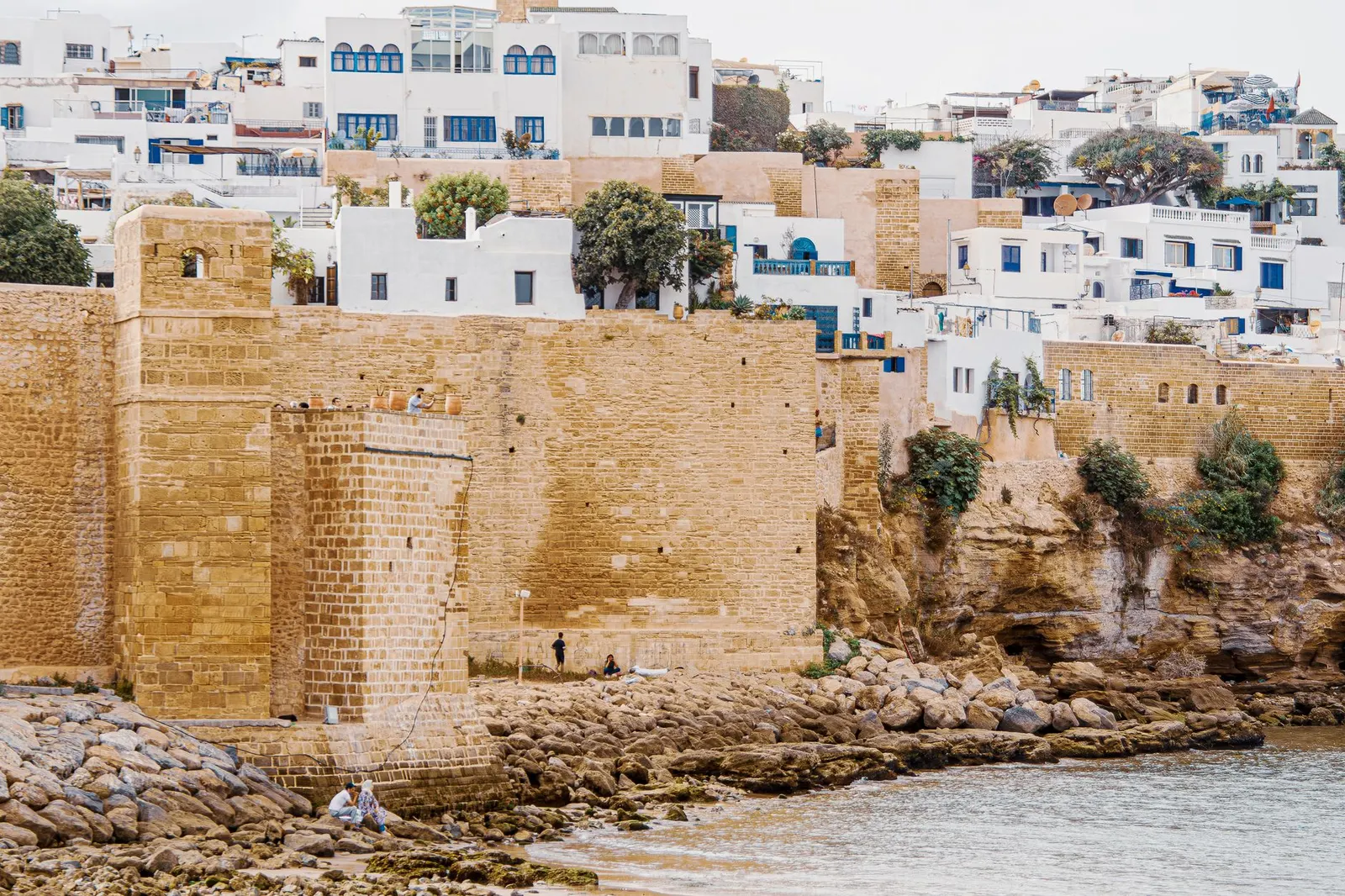
Twelve centuries of Rabat sit inside these walls: an Almohad fortress, an Andalusian quarter behind its lanes, and a café terrace over the river that everyone eventually finds.
01. What the kasbah is
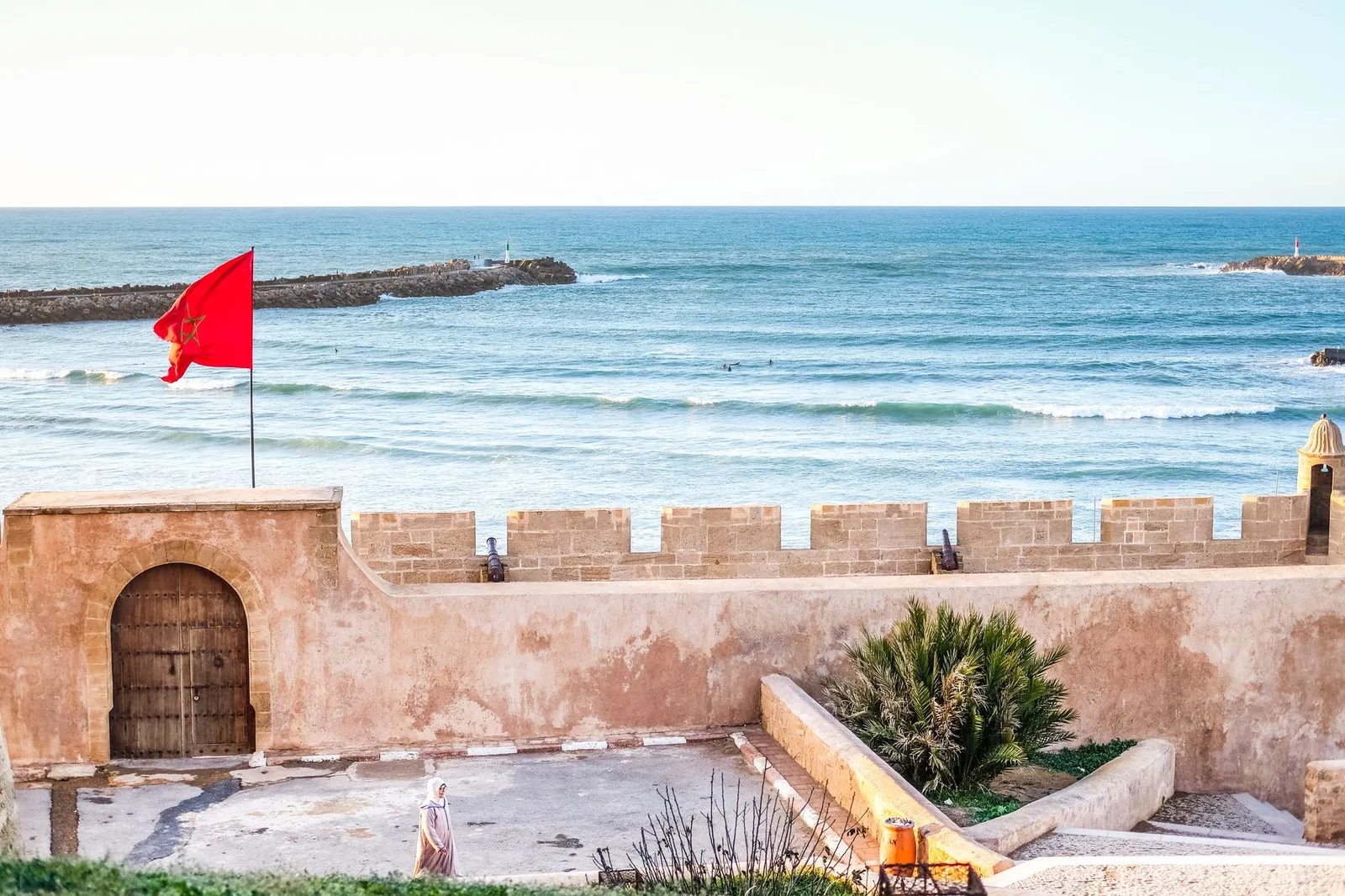
The Kasbah of the Udayas is a fortified enclosure at the point where the Bou Regreg meets the Atlantic, built by the Almohads in the early thirteenth century as a ribat — a fortress-monastery guarding the approach to their capital, Rabat.
Its walls have held an artillery bastion, a palace, a garrison and, since the nineteenth century, the homes of Andalusian families who arrived when Spain expelled its Moriscos. It is a living quarter, not an open-air museum: behind the ramparts people still live, dry laundry and argue about parking.
02. The name
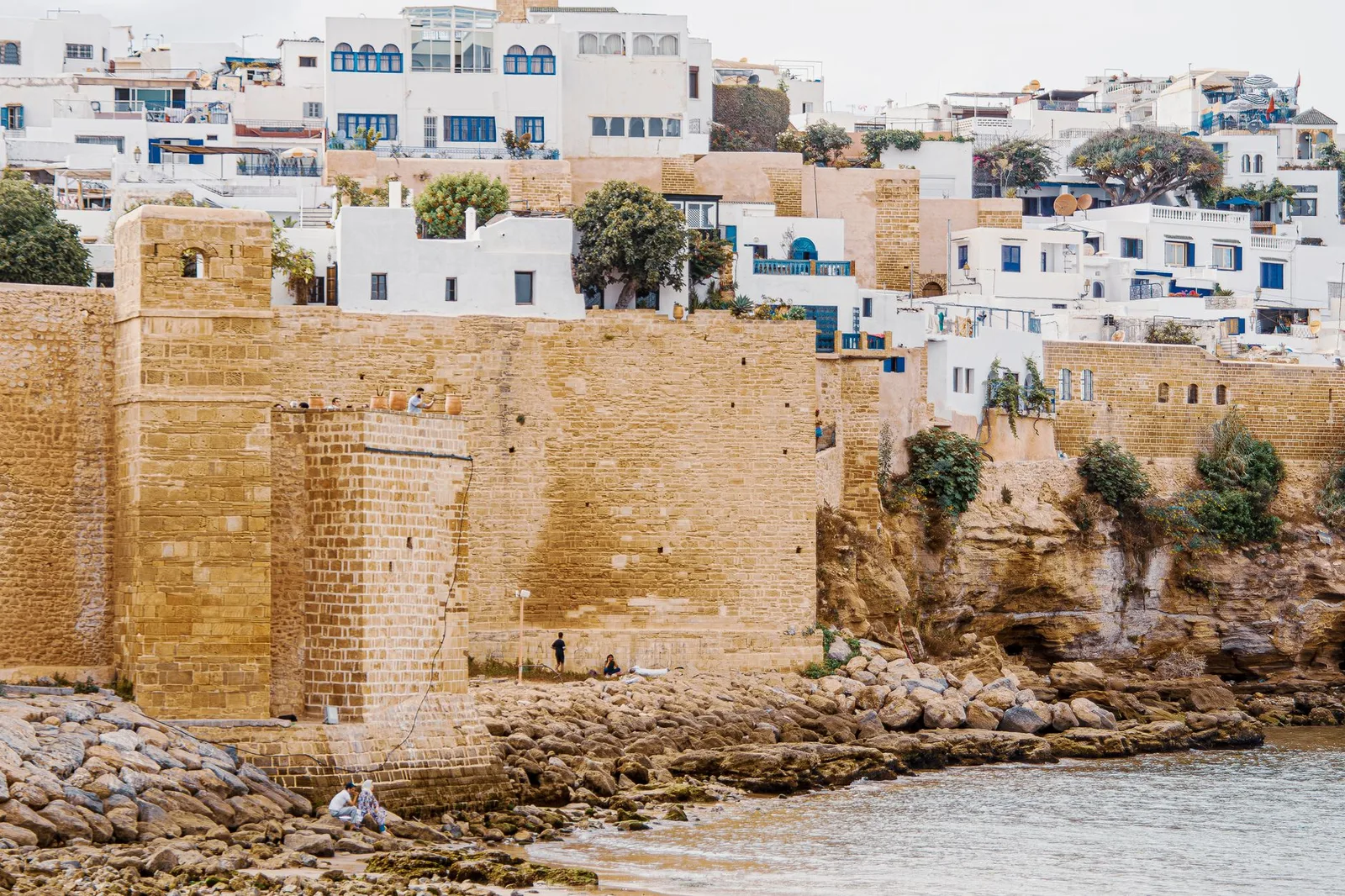
The name comes from the Banu Udaya, the Arabian tribe that settled the fortress in the thirteenth century after the fall of the Almohads. The spelling wanders between Udayas, Oudayas and Oudaïa in every source you will read, including our own — all three are the same kasbah.
Its strategic position is the reason for everything here: the Almohads chose the site to command the river mouth, which is why the walls drop straight to the Atlantic on the seaward side and to the estuary on the other.
03. Bab Oudaia and the Andalusian quarter
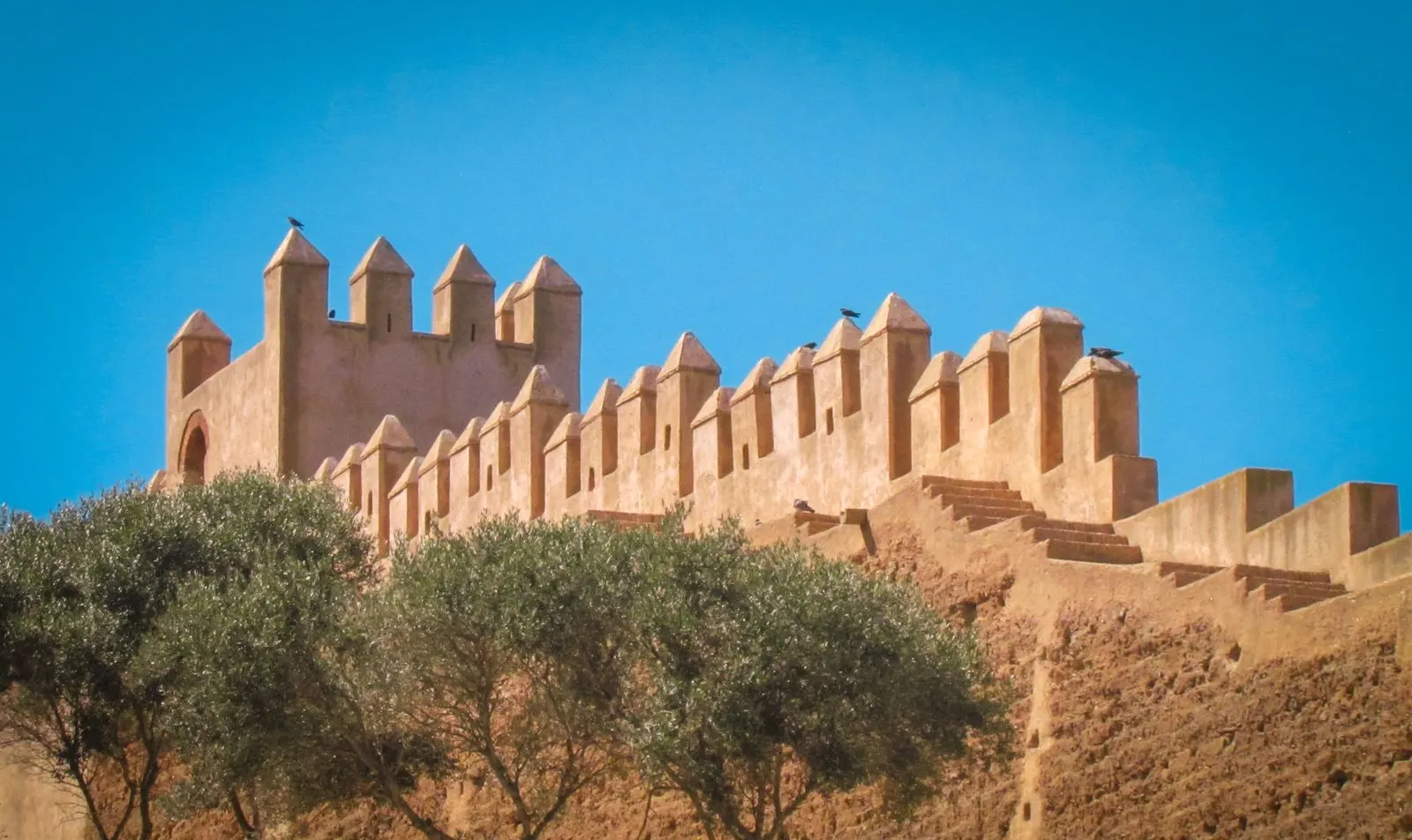
The main gate, Bab Oudaia, is an Almohad monument in its own right: a monumental horseshoe arch of carved stone, flanked by towers, and one of the finest surviving gates of that century anywhere in Morocco.
Through it, the lanes rise into the Andalusian quarter — whitewashed houses with blue lower walls, flower pots on the thresholds, and cats on every step. It looks like the villages of Andalusia because it was built by people from there, and it is quieter than any medina quarter you will have walked.
04. The museum and the Andalusian garden
Inside the kasbah a former sultan's palace holds the Museum of Moroccan and Islamic Arts — ceramics, woodwork and weapons from across the country, in a small building that rewards as much attention as its objects. Entry is cheap, and the hours are limited and irregular; check locally before making it the reason for your visit.
The Andalusian garden inside the main gate is a formal grid of hedges and palm trees with views over the estuary, open in daylight hours. It is a fifteen-minute stop, not an afternoon, and it is the calmest green space in central Rabat.
05. The café terrace over the river
On the seaward ramparts sits the Café Maure, a government-run terrace where a pot of mint tea buys you one of the great views in Morocco: the Bou Regreg estuary, the river traffic, Salé on the far bank and the Hassan Tower on the skyline behind.
Come for the late-afternoon light or at sunset, when the stone walls warm up and the call to prayer starts from across the estuary. It is a tourist institution and the tea prices reflect it; the view is still worth it.
06. The Atlantic side
The western walls stand directly over the ocean. A path runs along the outside of the ramparts down toward the beach at Plage de l'Ocean, and on a clear day the view up the coast toward the Hassan Tower is the full profile of Rabat from the sea.
The sea wind reaches the kasbah whatever the season — in winter this is the coldest, most bracing spot in the city, and in summer it is the reason people come up to the walls at seven in the evening.
07. Practical details
The lanes of the kasbah are public and free to walk at any hour; the museum and garden take a small entrance fee. The kasbah has no closing time as a quarter, though the museum keeps short, limited hours.
It is a ten- to fifteen-minute walk downhill from the Hassan Tower and mausoleum, which makes the two the standard half-day in Rabat. Taxis drop at Bab Oudaia; the climb back up is steeper than it looks, so many people walk down and take a taxi home.
08. Common mistakes
The first is visiting only the café terrace. The gate, the Andalusian lanes and the seaward walls are the actual kasbah, and each takes ten unhurried minutes.
The second is coming only at midday, when the white walls glare and the quarter empties. The kasbah is a morning-and-evening place. The third is expecting medina energy — there are no souks here, and that quiet is the point.
Frequently Asked Questions
Is the Kasbah of the Udayas free?
The lanes and ramparts are free and open all day; the museum and Andalusian garden inside take a small entrance fee.
What are the opening hours?
The kasbah quarter itself is always open. The museum and garden keep limited hours — usually mornings and late afternoons, closed at prayer times and some days; check locally.
What is the best time to visit?
Early morning for the empty lanes, and late afternoon or sunset for the Café Maure terrace over the estuary.
How do you get there?
A ten- to fifteen-minute walk downhill from the Hassan Tower and mausoleum, or a taxi to Bab Oudaia. The return climb is steep, so budget for a taxi back.
What should I pair it with?
The Hassan Tower and the Mausoleum of Mohammed V five minutes away — the two together are the standard half-day in Rabat, with lunch in the Hassan district between them.
More Morocco tours
1 Day
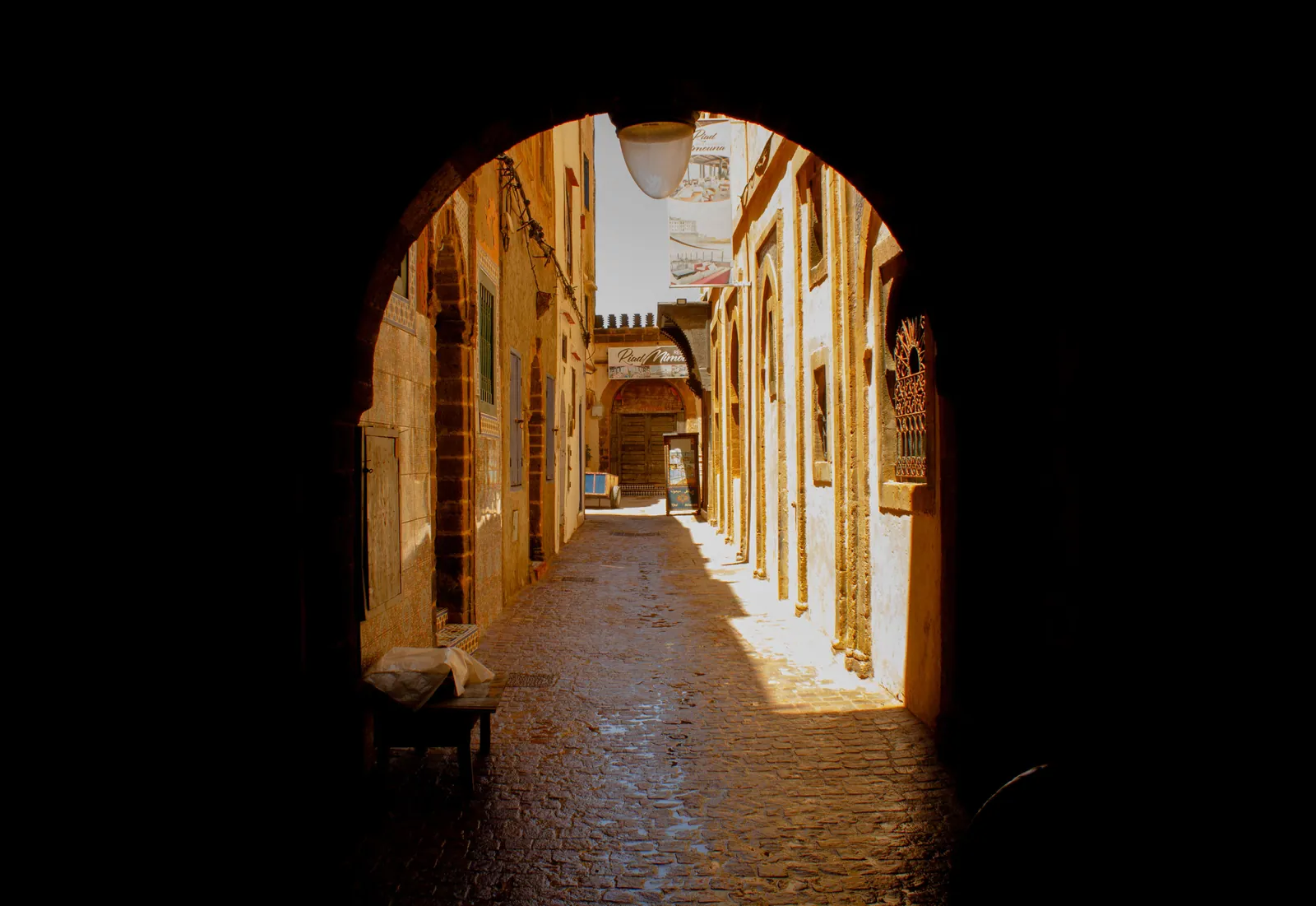
Essaouira Day Trip from Marrakech
A day on the Atlantic: the blue and white medina, the ramparts above the harbour, the workshops behind them. The drive is flat and the town is walkable, so it works as a coast day from Marrakech.
9 Days
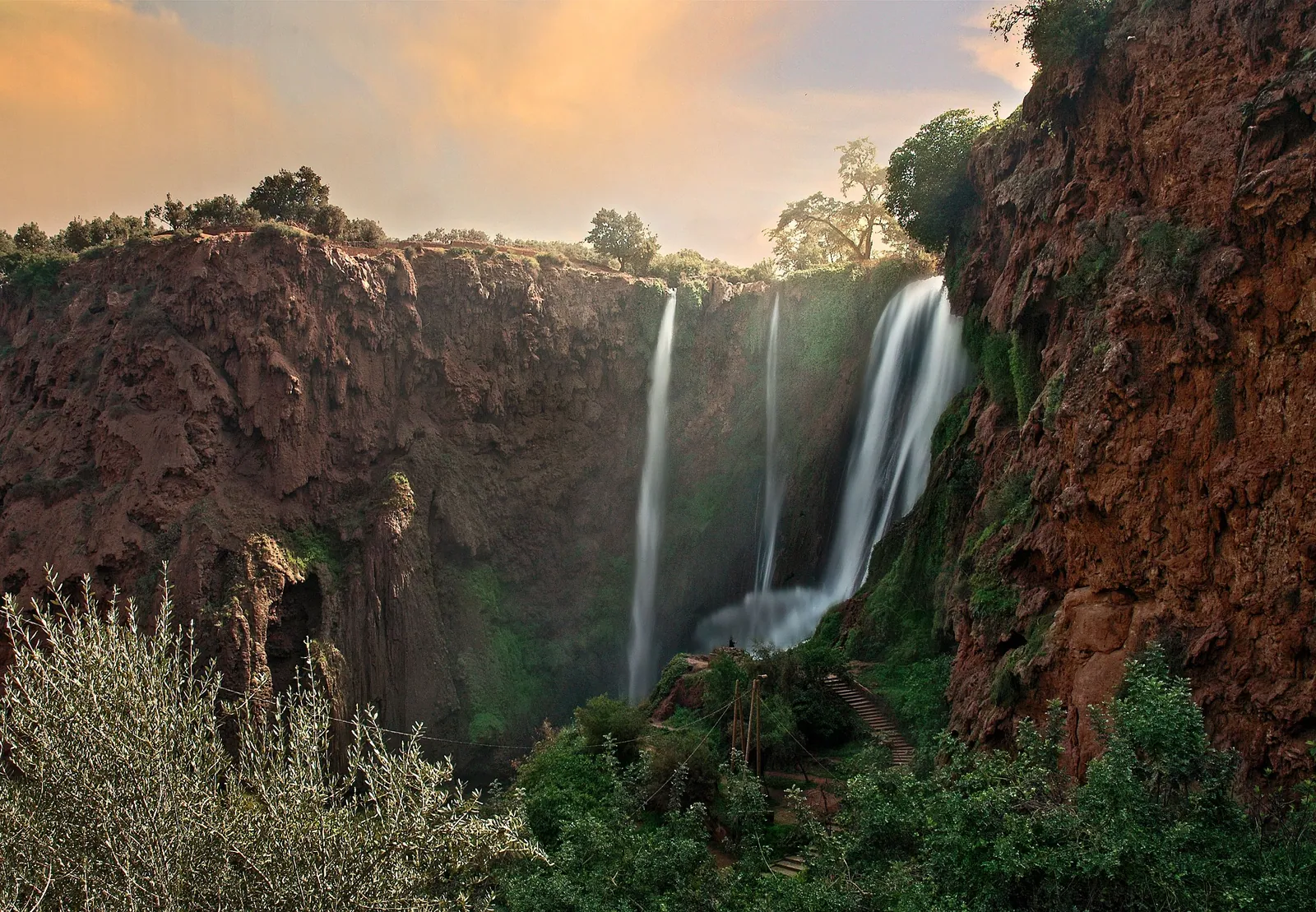
9-Day Morocco Tour from Casablanca
From Casablanca over nine days through royal cities, ancient medinas and a stretch of desert. Long enough for the three settings to breathe, short enough that the trip never becomes a transfer schedule.
Coastal Escape
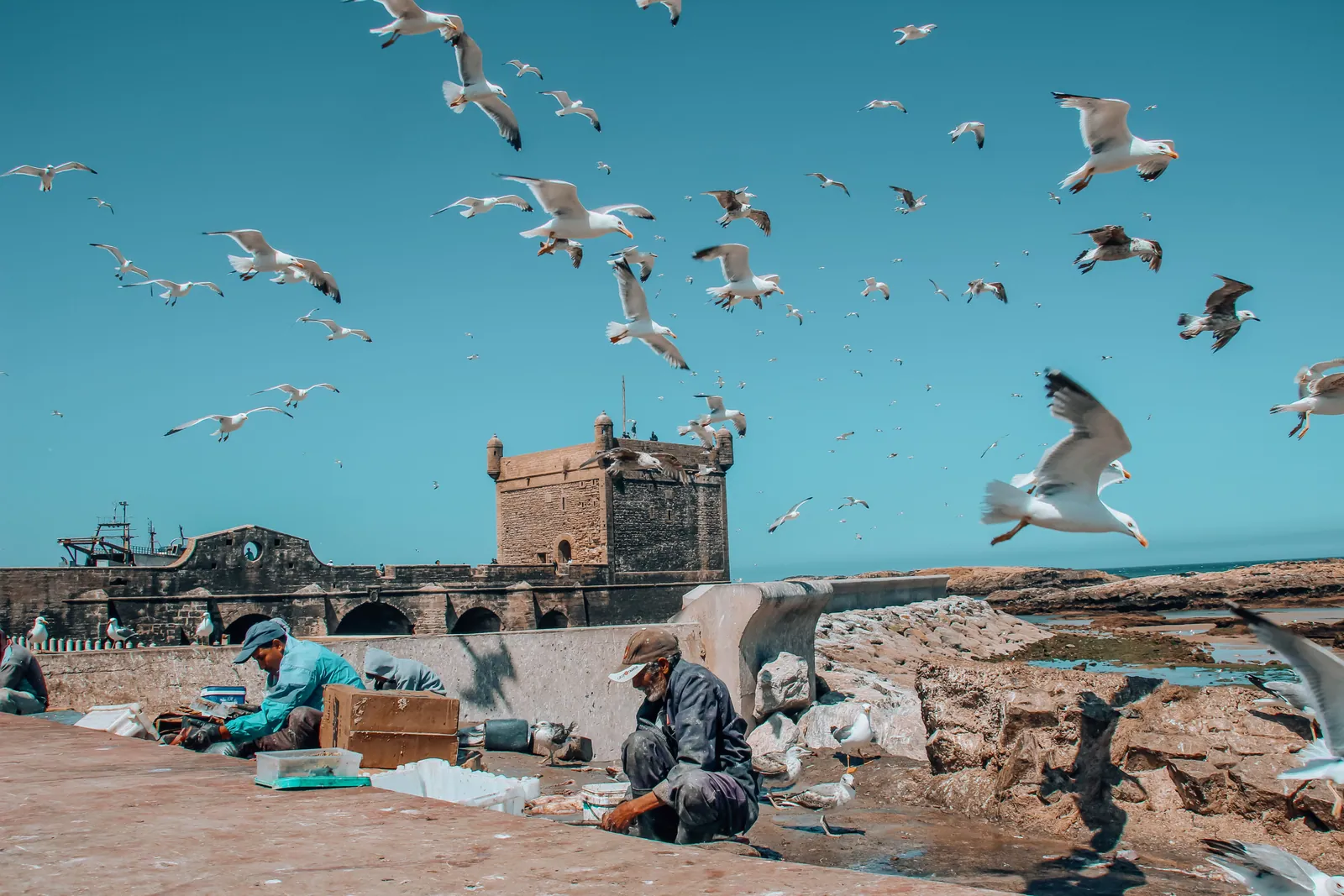
Essaouira Getaway
West to the Atlantic for the day: a walled blue-and-white port, the fishing harbour working below the ramparts, workshops behind them and a long beach to finish on.
Related Guides
Rabat Travel Guide: The Best Things to See and Do
Discover Rabat, Morocco's calm coastal capital, with practical advice on the Kasbah of the Udayas, Hassan Tower, the medina, museums, transport and the best time to visit.
Hassan Tower and the Mausoleum of Mohammed V, Rabat
Rabat's central monument is two buildings in one esplanade: an unfinished 12th-century Almohad mosque with its tower, and the white-marble mausoleum of the Alaouite kings. Both are free to visit — hours, the guard ceremony and how it fits a Rabat day.
Koutoubia Mosque: Marrakech's Minaret and How to See It Properly
The Koutoubia Mosque is Marrakech's defining landmark — a 12th-century Almohad minaret that inspired the Giralda in Seville and the Hassan Tower in Rabat. What you can visit, where the best views are, and the honest answer on going inside.
Liked this guide?
Give it a like on Instagram and tag us from your Moroccan adventure.
Ask us how the Udayas and Rabat's monuments fit into your itinerary
Our Marrakech-based team of local experts designs tailor-made Morocco trips around your dates, budget and travel style.
Request a Quote